Locations


When Magic players decide to start their Commander journey, they have plenty of options. Yes, we can always borrow decks from our friends, but there is something special about having our own deck that we can practice with, tinker with, and eventually make our own.
Today, we're going to talk about what we should look for in our first deck and weigh the pros and cons of building our own deck versus buying a precon. I'll also be providing two examples of decks I'd build from scratch and two precons I'd recommend if you'd rather start with something ready to play.
The most important thing to remember is that your first Commander deck doesn't need to be the strongest deck you'll ever own. In fact, it probably shouldn't be. Your first deck should be a teacher. It should give you a straightforward game plan that lets you learn how Commander works while also giving you enough room to grow as a player and a deckbuilder.
Precon vs. Homebrew Commander Decks
When getting into Commander, every player is faced with the same question: Do you go with a pre-built deck list sold by Wizards of the Coast, or build your first deck from scratch? There are benefits and drawbacks to each type of deck, and we will discuss those below. Hopefully, by the end of this section, you will be able to decide for yourself which pathway works best for you.
Preconstructed Commander Decks
The biggest benefit of starting out with a preconstructed deck (precon) is that everything comes together in one piece. You don't need to figure out which cards belong in the deck, how many Lands you need, or whether you have enough removal. You open the box, shuffle the deck, and you're ready to play.

Precons also tend to have a good amount of synergy. Most of the deck will work toward a recognizable strategy that the Commander supports. There's also no question about the general power level of the deck. If you tell a playgroup that you're playing a specific precon, everyone at the table will generally know what to expect.
There are also negatives. Precons often have alternate Commander options in the ninety-nine, and some of the cards included to support those Commanders can leave the deck feeling like it's trying to do two or three things at once.
Precons also have limited options when it comes to specific strategies. If we want to build around a particular archetype, that product may not exist. Older precons can also become difficult or expensive to find, with some of the Warhammer 40,000 (40K) decks becoming highly collectible.
Homebrew Commander Decks
Homebrew decks have one major benefit over precons: customizability.
As long as there's a Legendary Creature you like, you have a deck to build. You can tailor the deck to the play experience you want, either by yourself or with the help of a friend. Websites like Scryfall and EDHREC can help with the process, and players in your community can provide recommendations as well.
More importantly, homebrewing gives you an opportunity to learn the deckbuilding process itself. You aren't just learning how to play Commander. You're learning why certain cards belong in a deck, how different cards work together, and how to identify what your deck actually needs.
Of course, homebrewing has its fair share of negatives. When we go on a deckbuilding journey, we make mistakes. It's important to learn from those mistakes, but they can also be frustrating.
It's really draining to start out playing with your own list that simply can't keep up with the rest of the table. Keeping track of Land counts, removal, ramp, card draw, and mana curves is a lot. There is a lot to learn in a short amount of time when you're just starting out.
The question of "precon or homebrew?" doesn't have a universal answer. Instead, we should ask what we actually want our first deck to teach us.
What Makes a Good First Commander Deck?
Before we look at our beginner lists and recommended precons, we need to figure out what we actually want from our very first deck. These are the four qualifiers to use when choosing a first Commander deck, regardless of whether that deck comes out of a precon box or starts as a pile of cards on your desk.
#1. Simplicity
We want a deck that has synergy without requiring us to keep track of five or more triggered effects at any given time.
Those types of decks can be incredibly engaging for established players, but when we're just starting out, we want to keep things simple. It can be frustrating to constantly miss our triggers or be reminded by the table that we forgot something.
We want to keep the amount of information we need to track at a minimum to start. Once we understand the fundamentals, we can always build something more complicated.
Simple doesn't mean boring. A deck can have plenty of interesting decisions without requiring us to remember twelve different things every turn.
#2. Deep Card Pool
This might be our most important qualifier.
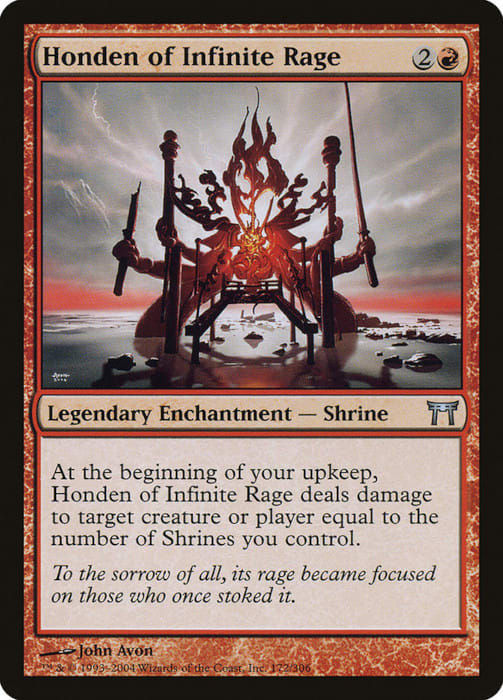
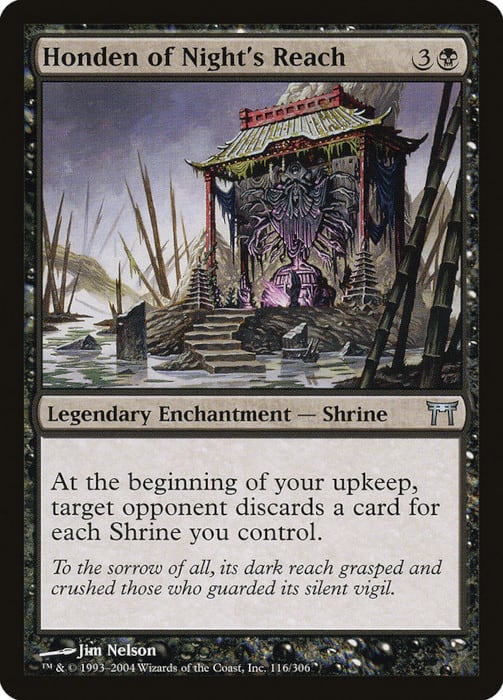
When we're looking at a Commander deck we might like, we should look for an archetype that has a lot of cards that work with it. A Shrines deck is great, but we don't get new pieces for that strategy very often. Once we've found the best Shrines, there isn't a huge amount of room left to experiment.
 |  |  |  |  |
Compare that to an Artifact deck or a +1/+1 counters deck. We get new cards for these strategies all the time, giving us plenty of opportunities to experiment and upgrade.
A deep card pool also means we can find budget upgrades. We don't need to immediately buy every expensive staple to make the deck better.
#3. Clear Objectives
Typically, this means we're winning through combat damage, but it could also be through Commander damage, noncombat damage, or draining effects.
We want the whole deck to be working in the same direction. This makes it easier to identify what cards synergize with our deck and makes our opening hands easier to evaluate.
If our plan is "play Creatures, make them bigger, and attack," it's pretty easy to look at an opening hand and figure out whether it helps us do that.
#4. Interest
Ultimately, general answers can be provided about what is the best place to begin, but the best deck is going to be the one that you're excited to play.
It may not be the best deck. It may not have the deepest card pool. It may not even be the objectively strongest option. But people tend to learn topics that interest them faster than topics they find boring.
The deck is ultimately going to be yours. Whether it's a character you enjoy, a playstyle, or even the art. The best deck is the deck that you are excited to take out of your bag on game night.
With these qualifiers in mind, We've put together two separate decks: one Universe Beyond and one Universe Within. Each deck is around $100 and should hold its own in the types of Bracket 2 pods that a new player is likely to encounter.
More importantly, each deck is built around an archetype that is popular, straightforward, and has a deep pool of cards to choose from when it's time to make upgrades.
Homebrew Commander Decks
If you want to drive right in and learn the deckbuilding process yourself, there are 30+ years of cards out there for you to choose from. This can be daunting, but it also opens almost unlimited possibilities for the cards you can include in your deck. No two decks are the same, even if the Commander's might be identical. Here are two deck lists we've put together for you as inspiration for you to create your own list from. Or you can just copy it card for card!
Miles Morales Commander Deck
Our first deck is a Naya +1/+1 counters deck with Miles Morales as the Commander. Once Miles Morales is transformed into Ultimate Spider-Man, attacking with him doubles the amount of +1/+1 counters on our Legendary Creatures and Spiders.

At its core, though, this is a very simple deck. We play Creatures, put +1/+1 counters on them, make those counters bigger, and attack. We have 25 different Legendary Creatures and plenty of +1/+1 counter synergy pieces that help us put counters on our Creatures to really make counter doubling shine.
Despite having plenty of individual interactions, the deck always has the same basic objective, build a board of increasingly large Creatures and attack.
That's exactly what we're looking for in our first deck. There are plenty of decisions to make, but we don't need to understand every interaction in the deck to play it successfully. We can make mistakes with Miles without a lot of consequence.
We want to win through combat damage, but having a plan B is never a bad idea.
Shalai and Hallar deal damage to an opponent whenever one or more +1/+1 counters are placed on a Creature we control, with the amount of damage based on the number of counters placed. Since we're constantly doubling counters, that noncombat damage can scale into a lethal number surprisingly quickly.
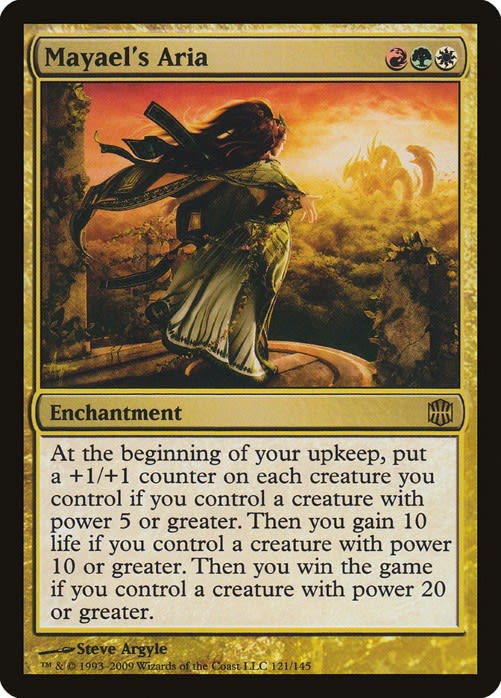
Mayael's Aria gives us another path to victory. It rewards us for having increasingly large Creatures and eventually lets us win the game if we control one with 20 or more power. Neither card goes against our gameplan. We're still making our Creatures bigger. They simply tag along and embrace the synergy.
 |  |  |
This deck is loaded with synergy pieces, and as our budget gets bigger, there are plenty of +1/+1 counter staples we can add as upgrades like Kodama of the West Tree.
It gives us that room for growth. We can start by learning how the deck works and wants to work, then gradually add cards to make it better.
Counting on Spider-Man | Commander | Levi Perry
- Commander (1)
- 1 Miles Morales
- Creatures (34)
- 1 Abzan Falconer
- 1 Araña, Heart of the Spider
- 1 Avacyn's Pilgrim
- 1 Bofur, Reliable Guardian
- 1 Bright-Palm, Soul Awakener
- 1 Brigone, Soldier of Meletis
- 1 Bugenhagen, Wise Elder
- 1 Conclave Mentor
- 1 Duskshell Crawler
- 1 Envoy of the Ancestors
- 1 Fertilid
- 1 Forgotten Ancient
- 1 Gatta and Luzzu
- 1 Halana and Alena, Partners
- 1 Keleth, Sunmane Familiar
- 1 Kutzil, Malamet Exemplar
- 1 Lae'zel, Vlaakith's Champion
- 1 Leinore, Autumn Sovereign
- 1 Metastatic Evangel
- 1 Michelangelo, the Heart
- 1 Mikaeus, the Lunarch
- 1 Mikey & Leo, Chaos & Order
- 1 Mona Lisa, Science Geek
- 1 Rishkar, Peema Renegade
- 1 Shalai and Hallar
- 1 Solemn Simulacrum
- 1 Sovereign Okinec Ahau
- 1 Spider Manifestation
- 1 Spider-Man India
- 1 Spider-Punk
- 1 Teshar, Ancestor's Apostle
- 1 The Duke, Rebel Sentry
- 1 Urdnan, Dromoka Warrior
- 1 Wakka, Devoted Guardian
- Instants (8)
- 1 Chaos Warp
- 1 Hunter's Insight
- 1 Inspiring Call
- 1 Origin of Metalbending
- 1 Path to Exile
- 1 Return to Nature
- 1 Swords to Plowshares
- 1 Unbreakable Formation
- Sorceries (11)
- 1 Blasphemous Act
- 1 Colossal Collision
- 1 Cultivate
- 1 Farseek
- 1 Harmonize
- 1 Rampant Growth
- 1 Requisition Raid
- 1 Shared Roots
- 1 Stump Stomp
- 1 Urza's Ruinous Blast
- 1 Vandalblast
- Enchantments (6)
- 1 Felidar Retreat
- 1 Leader's Talent
- 1 Level Up
- 1 Master's Guidance
- 1 Mayael's Aria
- 1 Resourceful Defense
- Artifacts (3)
- 1 Arcane Signet
- 1 Sol Ring
- 1 The Seriema
- Lands (37)
- 5 Forest
- 5 Mountain
- 5 Plains
- 1 Ash Barrens
- 1 Battlefield Forge
- 1 Cabaretti Courtyard
- 1 Canopy Vista
- 1 Cinder Glade
- 1 Command Tower
- 1 Evolving Wilds
- 1 Exotic Orchard
- 1 Grasslands
- 1 Jungle Shrine
- 1 Karplusan Forest
- 1 Mossfire Valley
- 1 Mountain Valley
- 1 Myriad Landscape
- 1 Radiant Grove
- 1 Sacred Peaks
- 1 Sungrass Prairie
- 1 Temple of Abandon
- 1 Temple of Plenty
- 1 Temple of Triumph
- 1 Terramorphic Expanse
- 1 Wooded Ridgeline
Alela, Artful Provocateur
For our second deck, we have Alela, Artful Provocateur. Rather than being a traditional Enchantress deck, this is an Artifacts and Enchantments token deck that uses anthems to turn a collection of small Faeries into a serious threat.

Alela creates a 1/1 Flying Faerie token whenever we cast an Artifact or Enchantment spell. That gives us a very straightforward engine: cast the cards we were already planning to play, build a Flying army, and then make that army bigger.
Our anthem effects give Creatures that share a color, keyword, or Creature type a bonus to their power and toughness. We'll use these effects to turn our 1/1 Faeries into bigger attackers.
We turn those attacks into card advantage with cards like Coastal Piracy, keeping our hand full so we can continue casting Artifacts and Enchantments to build our board.
 |  |  |  |
The deck also has some redundancy if Alela is removed too many times. Cards like Archon of Sun's Grace and Sigil of the Empty Throne can provide additional token production, allowing the deck to continue functioning without relying entirely on our Commander.
Again, the fundamental plan is easy to understand.
- Cast Artifacts and Enchantments
- Make Faeries
- Make the Faeries bigger
- Attack
We're working from a solid foundation, but we can also upgrade the deck in different directions.
We could add cards that double our token production, lean harder into the Enchantment theme, or build around Faerie typal cards. There are plenty of ways to power up the deck without changing what makes it fun.
A good upgrade to start with is Bitterblossom, an Enchantment that makes a 1/1 Faerie every turn. No matter which direction we take the deck, Bitterblossom helps reinforce the central game plan.
No Tricks, Just Fists | Commander | Levi Perry
- Commander (1)
- 1 Alela, Artful Provocateur
- Creatures (14)
- 1 Alseid of Life's Bounty
- 1 Archetype of Imagination
- 1 Archon of Sun's Grace
- 1 Brazen Borrower
- 1 Celestial Ancient
- 1 Empyrean Eagle
- 1 Entity Tracker
- 1 Kangee, Sky Warden
- 1 Mesa Enchantress
- 1 Obyra, Dreaming Duelist
- 1 Ornithopter of Paradise
- 1 Solemn Simulacrum
- 1 Spirited Companion
- 1 Zur the Enchanter
- Instants (6)
- 1 Arcane Denial
- 1 Despark
- 1 Path to Exile
- 1 Spell Stutter
- 1 Stroke of Midnight
- 1 Swords to Plowshares
- Sorceries (3)
- 1 Distant Melody
- 1 Hour of Reckoning
- 1 Kindred Dominance
- Enchantments (24)
- 1 Air Nomad Legacy
- 1 Coastal Piracy
- 1 Combat Research
- 1 Curiosity
- 1 Darksteel Mutation
- 1 Estrid's Invocation
- 1 Etchings of the Chosen
- 1 Ethereal Absolution
- 1 Favorable Winds
- 1 Feywild Visitor
- 1 Glorious Anthem
- 1 Grasp of Fate
- 1 Imprisoned in the Moon
- 1 Inspiring Leader
- 1 Intangible Virtue
- 1 Military Intelligence
- 1 Paladin Class
- 1 Radiant Destiny
- 1 Rally the Ranks
- 1 Reconnaissance Mission
- 1 Seal of Cleansing
- 1 Sheltered by Ghosts
- 1 Sigil of the Empty Throne
- 1 Tocasia's Welcome
- Artifacts (14)
- 1 Arcane Signet
- 1 Azorius Signet
- 1 Bident of Thassa
- 1 Champion's Helm
- 1 Commander's Sphere
- 1 Dimir Signet
- 1 Heraldic Banner
- 1 Lumen-Class Frigate
- 1 Orzhov Signet
- 1 Patchwork Banner
- 1 S.H.I.E.L.D. Spy Satellite
- 1 Sol Ring
- 1 Spear of Heliod
- 1 Wayfarer's Bauble
- Lands (38)
- 5 Plains
- 5 Island
- 5 Swamp
- 1 Adarkar Wastes
- 1 Arcane Sanctum
- 1 Ash Barrens
- 1 Bad River
- 1 Caves of Koilos
- 1 Command Tower
- 1 Contaminated Aquifer
- 1 Darkwater Catacombs
- 1 Evolving Wilds
- 1 Exotic Orchard
- 1 Flood Plain
- 1 Idyllic Beachfront
- 1 Myriad Landscape
- 1 Obscura Storefront
- 1 Path of Ancestry
- 1 Prairie Stream
- 1 Skycloud Expanse
- 1 Sunken Hollow
- 1 Sunlit Marsh
- 1 Temple of Deceit
- 1 Temple of Enlightenment
- 1 Temple of Silence
- 1 Terramorphic Expanse
Picking a Precon
If you don't want to build your own deck, that's perfectly fine. In fact, that's exactly what precons are designed for.
However, talking to your friends is going to be important when deciding which one to buy. Despite Wizards of the Coast's best efforts, not all precons are created equal. Some perform better than others, and some are notorious for being much stronger out of the box.
For example, Peace Offering, the Bloomburrow precon featuring Ms. Bumbleflower, looks like an innocent Group Hug or political deck. It gives opponents cards and tokens while encouraging everyone to interact with each other. The problem is that it can also build up massive attackers and give them Flying. That's a fun strategy, but it can catch players off guard and attract a lot of attention.

We also want to think about how much room the deck has to grow. It would be silly to tell someone to avoid a deck just because it uses a mechanic that doesn't receive frequent support. If you love Fallout and want to play a rad counter deck, you should absolutely play a rad counter deck.
But if you're buying your first deck because you want something that you can continually upgrade, an archetype that receives regular support is going to give you more opportunities to change and upgrade your deck.
Here are some precons that are well built and won't break the bank.
Riders of Rohan
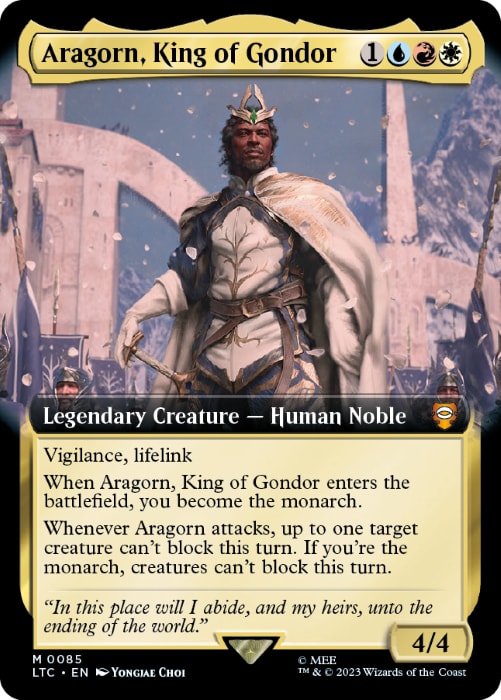
The first deck is Riders of Rohan from The Lord of the Rings. It's a Human typal deck featuring Eowyn, Shieldmaiden as the Commander, though Aragorn, King of Gondor in the ninety-nine is a solid alternate Commander as well.
 |  |
This deck checks almost every box on our list.
Our Commander rewards us for playing Humans and attacking, while also providing card advantage. The deck makes a huge number of Human tokens, encourages us to attack, and gives us a straightforward path toward winning the game.
The deck works as a go-wide machine. No single Creature is essential to the strategy, so losing one or two pieces doesn't completely derail us. The biggest advantage, though, is the card pool.
Humans are one of the largest and most supported Creature types in Magic. New sets regularly give us more Humans, tribal payoffs, and cards that can fit into the strategy. Whether we want to keep it as a precon, keep it entirely within The Lord of the Rings, or upgrade it with cards from across Magic, there is a tremendous amount of potential to work with.
It's a deck that can teach a new player the fundamentals of attacking, developing a board, using combat as a resource, and managing card advantage without requiring them to understand a dozen different mechanics at once.
Riders of Rohan | Commander | Wizard of the Coast
- Commander (1)
- 1 Eowyn, Shieldmaiden
- Creatures (31)
- 1 Aragorn, King of Gondor
- 1 Archivist of Gondor
- 1 Bastion Protector
- 1 Beregond of the Guard
- 1 Boromir, Gondor's Hope
- 1 Champions of Minas Tirith
- 1 Combat Celebrant
- 1 Dearly Departed
- 1 Denethor, Stone Seer
- 1 Eomer, King of Rohan
- 1 Erkenbrand, Lord of Westfold
- 1 Faramir, Steward of Gondor
- 1 Fiend Hunter
- 1 Flamerush Rider
- 1 Frontier Warmonger
- 1 Frontline Medic
- 1 Gilraen, Dunedain Protector
- 1 Gimli of the Glittering Caves
- 1 Grey Host Reinforcements
- 1 Harsh Mentor
- 1 Humble Defector
- 1 Lossarnach Captain
- 1 Palace Jailer
- 1 Prince Imrahil the Fair
- 1 Riders of Rohan
- 1 Selfless Squire
- 1 Theoden, King of Rohan
- 1 Verge Rangers
- 1 Village Bell-Ringer
- 1 Weathered Wayfarer
- 1 Zealous Conscripts
- Instants (4)
- 1 Lost to Legend
- 1 Path to Exile
- 1 Swords to Plowshares
- 1 Unbreakable Formation
- Sorceries (8)
- 1 Call for Aid
- 1 Earthquake
- 1 Forth Eorlingas!
- 1 Increasing Devotion
- 1 Sunset Revelry
- 1 Supreme Verdict
- 1 Taunt from the Rampart
- 1 Visions of Glory
- Enchantments (6)
- 1 Banishing Light
- 1 Court of Ire
- 1 Fealty to the Realm
- 1 Marshal's Anthem
- 1 Oath of Eorl
- 1 Shared Animosity
- Artifacts (12)
- 1 Arcane Signet
- 1 Commander's Sphere
- 1 Crown of Gondor
- 1 Door of Destinies
- 1 Heirloom Blade
- 1 Herald's Horn
- 1 Sol Ring
- 1 Talisman of Conviction
- 1 Talisman of Progress
- 1 Thought Vessel
- 1 Vanquisher's Banner
- 1 Wayfarer's Bauble
- Lands (38)
- 5 Mountain
- 5 Island
- 9 Plains
- 1 Battlefield Forge
- 1 Clifftop Retreat
- 1 Command Tower
- 1 Evolving Wilds
- 1 Exotic Orchard
- 1 Field of Ruin
- 1 Furycalm Snarl
- 1 Glacial Fortress
- 1 Path of Ancestry
- 1 Port Town
- 1 Prairie Stream
- 1 Rogue's Passage
- 1 Secluded Courtyard
- 1 Sulfur Falls
- 1 Terramorphic Expanse
- 1 Throne of the High City
- 1 Tranquil Cove
- 1 Windbrisk Heights
- 1 Wind-Scarred Crag
Quandrix Unlimited
My second recommendation is an in-universe precon with Quandrix Unlimited featuring Zimone, Infinite Analyst.

This is a +1/+1 counter deck that also cares about  spells that can receive any amount of mana. Quandrix Unlimited gives us a relatively straightforward game plan while also teaching us how to survive into the end game where all of our spells really begin to shine.
A card like Primordial Hydra can be played for cheap early in the game to give it time to grow, or we can sink more mana into it later to create a threat that can take a player out of the game with a single hit.
The basic win condition is simple: make increasingly large Creatures and attack.
That may sound almost too simple, but that's a feature rather than a bug for a first Commander deck. We don't need a combo or an essential synergy to work. We need to develop our mana, play our threats, and start swinging.
The deck also gives us plenty of room to grow. Between the +1/+1 counters, spells, and Creature-based strategies, there are several directions we can take the deck as we become more comfortable with it.

We could even change the Commander entirely and add colors. Magus Lucea Kane is a fantastic option if we want to lean harder into spells, while also giving us access to Red  mana.
We might not be the fastest out the gate, but that's part of why this deck is a good starting point. It gives us a simple plan, room to experiment, and the ability to scale as the game progresses.
Quandrix Unlimited | Commander | Wizard of the Coast
- Commander (1)
- 1 Zimone, Infinite Analyst
- Creatures (27)
- 1 Altered Ego
- 1 Benevolent Hydra
- 1 Deekah, Fractal Theorist
- 1 Elusive Otter
- 1 Forgotten Ancient
- 1 Goldvein Hydra
- 1 Guardian Augmenter
- 1 Hangarback Walker
- 1 Hydroid Krasis
- 1 Ingenious Prodigy
- 1 Kami of Whispered Hopes
- 1 Kinetic Ooze
- 1 Lifeblood Hydra
- 1 Nev, the Practical Dean
- 1 Owlin Spiralmancer
- 1 Primordial Hydra
- 1 Primo, the Unbounded
- 1 Quandrix Apprentice
- 1 Steelbane Hydra
- 1 Stonecoil Serpent
- 1 Striding Shotcaller
- 1 Tanazir Quandrix
- 1 The Goose Mother
- 1 Troyan, Gutsy Explorer
- 1 Yavimaya Bloomsage
- 1 Zimone, All-Questioning
- 1 Zimone, Quandrix Prodigy
- Instants (15)
- 1 Beast Within
- 1 Biomass Mutation
- 1 Commander's Insight
- 1 Decisive Denial
- 1 Eureka Moment
- 1 Nexus Mentality
- 1 Perplexing Test
- 1 Pull from Tomorrow
- 1 Quandrix Charm
- 1 Quandrix Command
- 1 Rapid Hybridization
- 1 Silkguard
- 1 Stroke of Genius
- 1 Tyvar's Stand
- 1 Zimone's Hypothesis
- Sorceries (9)
- 1 Animist's Awakening
- 1 Curse of the Swine
- 1 Entrancing Melody
- 1 Expansion Algorithm
- 1 Nature's Lore
- 1 Open the Way
- 1 Oversimplify
- 1 Primal Might
- 1 Three Visits
- Enchantments (4)
- 1 Hardened Scales
- 1 Lattice Library
- 1 Mana Bloom
- 1 Unbound Flourishing
- Artifacts (7)
- 1 Arcane Signet
- 1 Astral Cornucopia
- 1 Brass Infiniscope
- 1 Elementalist's Palette
- 1 Fractal Harness
- 1 Ozolith, the Shattered Spire
- 1 Sol Ring
- Lands (37)
- 6 Forest
- 7 Island
- 1 Alchemist's Refuge
- 1 Command Tower
- 1 Exotic Orchard
- 1 Fabled Passage
- 1 Flooded Grove
- 1 Hinterland Harbor
- 1 Opal Palace
- 1 Oran-Rief, the Vastwood
- 1 Overflowing Basin
- 1 Paradox Gardens
- 1 Path of Ancestry
- 1 Quandrix Campus
- 1 Rain-Slicked Copse
- 1 Reliquary Tower
- 1 Rogue's Passage
- 1 Sodden Verdure
- 1 Study Hall
- 1 Tangled Islet
- 1 Temple of Mystery
- 1 Temple of the False God
- 1 Terramorphic Expanse
- 1 Turbulent Wilderness
- 1 Vineglimmer Snarl
- 1 Yavimaya Coast
Wrapping Up
It's possible to spend hours going over the pros and cons of what your very first deck should be or look like, but the beautiful reality is that there isn't one correct answer.
Precons are designed as an entry point into Commander, and they can do a fantastic job of teaching new players how the format works. If you don't want to build your own deck, there's absolutely nothing wrong with opening a box, shuffling it up, and playing. You should really buy sleeves though.
If it makes more sense to build your own deck, you're not alone. There are always friends willing to help, in addition to several free resources online. The important thing is that your first deck gives you room to grow. Your first Commander deck doesn't have to be perfect. It just needs to be a deck you're excited to play again.