Locations



The fastest way to lose a game of Commander is to end up with no way to cast your spells. Building a mana base in Commander is one of the most crucial skills to your success.
There are several methods and formulas that people use to calculate the number of Lands and how much ramp to include in a hundred-card singleton deck. This guide covers all the math and simulations you need to fine-tune that ratio, as well as some of the best cards to include for a consistent and reliable mana base.
The Right Number of Lands
One of the most heavily debated questions in Commander is how many Lands a deck should run. The oldest preconstructed decks, or precons, contained 40 but now, 37 has become the standard amount.
In 2022, even we advised that 40 Lands was best, but the most highly tuned Bracket 5 decks fall between 23 and 29 depending on their archetype. That leaves a huge range for the other Brackets to fall into, which is truly anywhere between 30 and 40 based on the deck's overall strategy and mana curve.

It's tempting to use the logic of 60-card formats to try to reduce this range to "maximize" your deck in some way, but that doesn't truly work. Unfortunately, most 60 card decks run between 18 and 24 Lands, which is just the same as running 30 and 40 Lands for a Commander deck.
Why Commander Needs More Lands
EDH is truly its own beast. In a singleton deck, every card carries a lot more impact so it's hard to want to dedicate a huge portion of it to mana instead of spells and beaters. There are a few key reasons why it's so important:
Regular formats have fewer ways to smooth out a slow start, like a guaranteed turn-one draw, multiple opponents to draw focus away from you, a social contract encouraging others to help you find Lands, and an expectation that you will have multiple ramp spells in your deck.
There is also the expectation that Commander games will run much longer than games in 60 card formats. This leaves us still stuck with that 30 to 40 Land range. To narrow this range, let's consider the math.
Using Hypergeometric Math
Hypergeometric calculators, available online can be used to model the probability of hitting a desired number of Lands in your opening hand, or after some number of draws. To start, we fill in the population size of our deck, minus our Commander, giving 99 or 98 if we have partners.
Next, we consider the number of Lands in our deck to be the number of successes. The next value we have to enter is the sample size. If you want to consider only your opening hand, this value should be 7.
If you're more interested in having a select number of Lands by turn three and are willing to gamble on drawing the Lands you need, you can instead put 10 here, your opening hand and your draw for turn on turns one, two, and three.
Finally, decide how many Lands you want to see in that many cards, and use that number as the number of successes in your sample.

At the bottom, we will see a number of probabilities. The value we care most about is "cumulative probability: P(X>=x)," where the lower-case x is the number of successful Land draws you selected. Take this number, move the decimal place two to the right, and you have the percent chance you will have at least that many Lands.
Example: A Four-Drop Commander
As an example, imagine you have a Commander that costs four mana, and you want them on the battlefield as early in the game as possible. Let's say you want to have at least four Lands in your opening hand 25% of the time. We can increase the "number of successes in population" (the Land count) until the value for "cumulative probability: P(X>=4)" is at least 0.25. This would tell us that in order to have four Lands in our opening hand in a quarter of the games we play, we need 38 Lands in our deck.
If we instead look at how many Lands we are likely to see by turn four, we change the sample size to 11, and we see we merely need 32 Lands to be able to cast our Commander on turn four half the time. 38 lands lets you cast your Commander on turn four two out of every three games.
If you are happy with a two thirds chance, 38 may be the right amount of Lands for you, that is, until you start...
Considering Ramp
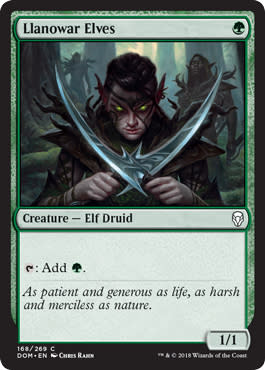
Ramp, named for the card Rampant Growth, is anything which gives you more mana to use.
This is most commonly mana rocks, mana dorks, and spells which put Lands into play. Which ramp you play greatly affects your hypergeometric calculations, in a way which makes the math much less simple.
Can ramp replace Lands?
Consider the simplest case: You have two ramp spells in your deck, Chromatic Lantern and Manalith. You still have your 38 Land deck from the previous example and you still want your Commander out on turn four. Can you cut two Lands because you've added these ramp spells?
 |  |  |  |
In order to cast these on curve, you need exactly one ramp spell and three Lands. This requires another calculation. We need to consider the games we have at least one ramp spell and also the games we don't. Plugging into the calculator that we have two ramp spells, we will have exactly one ramp spell about 18% of the time on turn three.
This one ramp spell takes away a draw that could be a Land, so we reduce our sample size by one when trying to calculate how many Lands we will have on turn three. 38 Lands gives us a 75% chance of having the Lands needed to cast a three-mana rock on turn three.
Multiplying these gives a 13.5% chance of hitting the mana rock on turn three, guaranteeing we can cast the Commander on turn four. 13.5% of the time, it works every time, and the remaining 86.5% of the time can be multiplied by the chance of hitting four Lands on turn four (68%).
We add this result to the 13.5% and get a final value of 72%. In just under one fourth of games, you will cast your Commander on turn four.
How Much Ramp to Run
Using this formula, we can start to think about what happens if we have a more typical amount of ramp spells in our deck. In a previous article, we advised players to run between 8 and 10 ramp spells. Let's take the middle number and assume you have nine Manalith-like spells in your 38 Land deck.
There is a lot of number crunching involved, but the final success rate is about 82%. If we wanted to see the same improvement by only adding Lands, we would need to add 5 Lands - which is fewer. This result is surprising until we consider making our ramp better.
Does the mana cost of our ramp affect the outcome?
Swapping out our two three mana value ramp spells for two mana value ramp spells doesn't actually change our success rate; it's still 72%. Going up to nine two-cost ramp spells increases our rate to 85%.
So now we have some base lines. Adding nine ramp spells that cost two increases your odds of hitting your four-cost Commander on time by a bit under 20%, and gives you a 53% chance of casting them a turn early. With this set-up, you have 47 mana sources in your deck, which is a lot. You may want to know how few you can run and still have a reasonable 80% chance of casting your Commander on curve.
You could, if you wanted, run the calculations above for your specific Commander, and plug in your number of mana rocks, and as long as you assume you'll only draw one ramp spell, the math is doable, but tedious. So how do we save time and get it closer to being right? For this, we can create a simulation.
Using a Monte Carlo Simulation

A Monte Carlo simulation can be programmed to draw sample hands and report a success rate for casting your Commander on curve. Simulating each sequential turn even allows us to mix two and three-cost ramp without tedious math.
Looking at our results, we can see the percent chance of success across 50,000 simulated games for each combination of Commander cost and Land count between two and seven, using 30 to 41 Lands in our deck.
Each of these simulations took about two minutes to run, and there may be slight variations between trials due to the nature of this being a simulation, and not an exact calculation. It is also important to note that these calculations do not take tapped Lands into consideration.
As a control, run the simulation with no ramp spells. When you run a Commander with a cost over 4, it's impossible to have a good chance of performing on curve. This isn't great, but provides a clear goal for our ramp additions.

How important is the cost of our ramp?
Next, it's time to probe how important the mana value of our ramp is. To do this, plot the two-cost ramp vs three-cost vs four-cost ramp for eight, 10, and 12 ramp spells. Looking at this figure, we can see on the left is the eight ramp spell deck. From top to bottom we are increasing the cost of all the ramp spells in the deck, which has a significant impact on four and five-cost Commanders, for which four-cost ramp spells are basically no help at all. In fact, increasing the number of total ramp spells in the deck (moving left to right) does nothing at all, compared to the control with zero ramp spells, if every ramp spell costs 4.

Lowering the cost of the ramp spells from four to three has a significant impact for Commanders which cost between three and five. Increasing the quantity of ramp spells in your deck only makes a difference if your Commander costs six or more, or you have mostly two-cost ramp spells in your deck. This is especially true if you are running less than 40 Lands.
For six-cost Commanders, even at 41 Lands, ten ramp spells is not enough to have a 75% chance of casting our Commander on curve. Outside of a Lands deck, you are unlikely to ever want more than 41 Lands, so can we get there if we increase our ramp count? To test this, look other Commander decks with Commanders that cost six mana.

For each of these, count the ramp spells at each cost and plot them out. An important caveat is that both of the Green decks are budget decks and therefore do not run optimal ramp packages including Nature's Lore and Three Visits. This also doesn't consider that many four CMC ramp spells in Green net you two Lands.
What about zero or one cost ramp spells?
I also count zero to one cost ramp in with the two-cost ramp, as the only one-cost ramp included in these decks is Wayfarer's Bauble and the only zero-cost ramp is Mox Opal, neither of which produce mana before turn three.
Each of these Commanders conveniently had a different total quantity of ramp, ranging from eight to 12. Since these are six-cost Commanders, that is the only column that matters for those specific Commanders, but the data for other costs is included as it may be more relevant for you to figure out how much ramp you want for your Commander.
Generally, we might expect that the specific distribution doesn't matter as much as the quantity, based on the results we saw before. Looking at the results, this is the case. The only way to cross the 75% threshold for these decks is to increase the Land counts to 41 for the decks with 11 and 12 ramp spells.
As we saw before, lowering the cost of all the ramp spells won't change anything significantly for decks with less than 40 Lands.
Don't Forget Modal Double-Faced Cards
Finally, there is one other way we can increase our Land count without decreasing our spell count: modal double-faced cards (MDFCs).
MDFCs from the sets Zendikar Rising and Modern Horizons 3 have Lands on their back faces and useful spells on their front. Generally, you'll be paying one more mana for the spell's effect than if it wasn't an MDCF, but for the added benefit of being able to play it as a Land in a pinch.
Usually, the MH3 cards are better than the Zendikar ones as they enter tapped as a dual Land or have the option to enter untapped for three life, but there are a few notable ZNR MDFCs with effects desirable enough that you won't mind playing them as a tapped Land from time to time.
When adding these to your deck, the best practice is generally not to count them towards your Land count, or to count them as half a Land.
The Best Lands for Commander Decks
It's time to answer Pro Tour champion Reid Duke's question: "Which lands?". Reid is a 60-card format champion, where Commander identity doesn't apply, so his "scale of colored mana necessity" serves as a starting point for our discussion, but can not be the end point.
There are hundreds of nonbasic Lands at your disposal, that all have various effects, benefits, and drawbacks to using them.
Number of Colors Matters
Generally, Commander decks have more evenly distributed mana costs compared to 60 card formats, which often involve one or more color splashes. This doesn't mean Commander players are isolated from color screw, so we still need to be vigilant about how many Lands we include which can provide two or more colors.
The more untapped dual Lands we run, the better.

The question then becomes "what are the best dual Lands we can run?" This is, fortunately, an easy question 60 card formats have already solved. What's better than a Land that can add five colors? Not much.
Command Tower will be the first Land you put into any Commander deck with more than one color. Other five-color options enter tapped, something we'll talk about in the next section. The next cards you might be thinking of are five color Lands which hurt us every turn, such as City of Brass and Mana Confluence.
These are fine options, and staples in Bracket 5, but not what is usually considered the best. That honor falls upon the Lands considered best in nearly every other format, the Fetchlands. For one life upfront, these are sneaky five color Lands in combination with any typed dual Lands.
Shock Lands
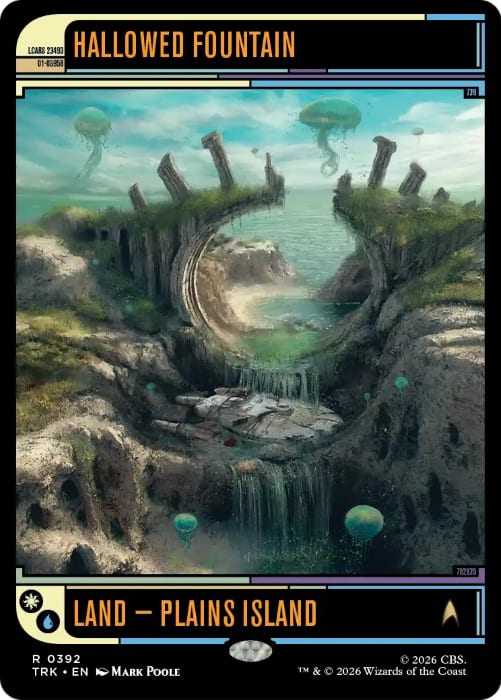
Typed dual Lands have searchable subtypes, such as the Plains and Island on Hallowed Fountain, enabling you to grab them with your Fetches. Hallowed Fountain is a member of the shockland cycle, which enter untapped in exchange for two life.
 |  |  |
If you're buying cards to build the most robust mana base possible, these should be your first choice. They aren't better than fetchlands, but enable the fetchlands to be the best they can be.
Fetchlands
Fetchlands are extremely powerful, some of the best mana fixing available to Commander players. For one life, they let you search for any basic land type and put that land directly into play. Note that fetchlands do not specify the card must be a basic Land, only that it must have a basic Land type. This is why fetchlands and shocklands work so well together.
Marsh Flats 
 will let you search up any Land that has the basic Land type of Swamp or Plains. For example, you can sacrifice it to get the following Lands / colors:
- Hallowed Fountain

- Temple Garden

- Blood Crypt

- Godless Shrine
- Watery Grave
- Overgrown Tomb
- Sacred Foundry
Fetchlands have another powerful synergy worth discussing, they put themselves into the graveyard. If you build around this, you can create exceptionally strong synergies. Cards which let you play Lands from your graveyard, like Crucible of Worlds and Mole Man, Moloid Master seem tame until they represent a guaranteed Land every turn in combination with a fetchland.
Historically, White was considered the weakest color at ramping, but with fetchlands, any card which returns a permanent from your graveyard to the battlefield becomes a ramp spell. Of these, Sevinne's Reclamation has a lot of flexibility and can flash itself back in the late game.
If you have the right Lands in your opener, Brought Back can be the strongest ramp spell in the game, effectively getting two Lands out of your deck for only two mana. Other good fetchlands which get basics into play untapped, like Fabled Passage and Prismatic Vista, should be a consideration in 1-3 color decks.
 |  |  |  |
Best Tapped Dual Land Cycles for Commander
If you don't need your Land untapped, the undisputed new staples are the Surveil Lands from Murders at Karlov Manor. These trade the ability to enter untapped for the ability to Surveil 1 when they enter play. Surveil is deceptively powerful, letting you dig for cards you need or fill your graveyard for relevant synergies.
 |  |
In recent years, new typed duals have been printed, making Fetchlands even more powerful. The Turbulent cycle, premiered in the recent Secrets of Strixhaven release, are fetchable and enter untapped in the late game.
There are also the "Tango" cycle of Lands. First released in 2015's Battle for Zendikar and some 2025 Commander preconstructed decks, these Lands also enter untapped as long as you are playing a healthy number of basics.
 |  |  |
The cycle of Triomes, released in Ikoria: Lair of Behemoths and Streets of New Capenna always enter tapped in exchange for providing three colors of mana, a strong consideration over other options in four and five color decks.

Other fetchable dual Land cycles exist, but they all enter tapped and are not worth including for a fetchland package.
Are the original dual Lands worth it?
Finally, there is one cycle of fetchable duals better than all the rest, with the debatable exception of maybe the surveil Lands. The original cycle of dual Lands do not have any gameplay cost to enter untapped, but have a seriously high price tag. While these are a must in Bracket 5, they're more of an unnecessary flex in all lower brackets.
 |  |  |  |  |
Budget Dual Lands for Commander
Fetchlands are expensive, and if you aren't interested in building a long term collection of mana base staples, cheaper options are likely what you are looking for. The cycle of Lands started in Battlebond and finished in Commander Legends are the best of this batch, at a price point similar to Shocklands.
Fortunately, it seems these are starting to make their way into Universes Beyond Commander preconstructed decks, so it is likely these will become more accessible as time goes on.
Next up is the classic checklands cycle, which check if you have a typed Land of one of the colors of mana it taps for.
Importantly, this works with typed duals, so while you're building up your collection from the previous section, these Lands make for good fill-ins, and regularly enter untapped, even in three color decks.
Filter Lands, Verge Lands, & Slow Lands Explained
 |  |  |  |
One rather tricky cycle is the filter Lands cycle, first printed in the Lorwyn/ Shadowmoor block. Rarely will you need to tap these for colorless, as their ability to filter one mana into two of another color will make them a lifesaver in two- and three-color decks.
The verge cycle from Duskmourn and Aetherdrift and the new cycle from Marvel Superheroes are similar in that they are always untapped Lands that require you to have a typed Land in order to tap for both colors. Both cycles are fine in two color decks if you are not including a fetchland package, though you will want to consider increasing your basic Land count to accommodate these.
The last cycle of Lands which enter untapped often are the slow Lands, first printed in Innistrad: Midnight Hunt and Innistrad: Crimson Vow (and recently reprinted in Secrets of Strixhaven). Slow Lands enter tapped unless they are your third land or later. Generally, this can lead to slow starts if you have too many tapped Lands to play your early mana ramp on curve, but this matters significantly less in Commander than other formats.
 |  |  |  |  |
Which dual Lands should you avoid?
Coming up behind these cycles are the Lands most commonly included as replaceable filler in Commander precons. These get the job done, but either cost you more life than they should, in the case of the classic Ice Age pain Lands, or enter tapped more often than not, like the aptly named Snarls.
The Odyssey signet Lands, named retroactively for the Ravnica: City of Guilds signets, unfortunately end up in this category as well. While they enter untapped all of the time and even have good synergy with many mana doublers, they commit the cardinal sin of making it harder to think about how you tap your Lands.
 |  |  |  |
Lands to Avoid in Your Mana Base
There are several commonly seen cycles of dual Lands not included in the previous section because you should replace these as quickly as possible.
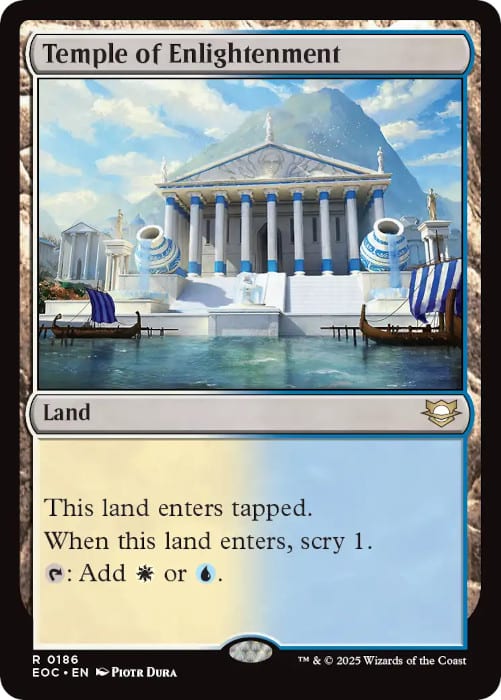
Temples seem similar to the highly praised surveil Lands at a glance, but the difference in power is deceptive. Not only is Scry not as powerful or synergistic as Surveil, the inability to fetch these out makes them nearly unplayable.
 |  |  |
The Ravnica bounce Lands cycle (and also the several colorless options) are actually very useful in low bracket, two color decks, but come with the added downside of causing land destruction effects to appear in your opponents hands, even when there weren't any in their deck at the start of the game. The two-color cycling Lands are not worth running in fetchland packages, and the ability to be cycled is not worth the cost of always being tapped except in a small handful of decks.
Situational & Tap Lands
Manlands, Lands which you can pay mana into to turn into a Creature, have niche uses, and should not be ruled out entirely, but are rarely a generically good inclusion. The cycle of Indestructible Artifact dual Lands from Modern Horizons 2 are an incredible staple in Artifact decks and an equally potent liability in decks which are not taking advantage of their unique typing and ability. Enough exile-based Artifact removal exists that you should not run these outside of true Artifact decks.
 |  |  |  |  |
Finally, there are an abundance of cycles of dual Lands which were designed for limited play, and enter tapped in exchange for one life, the ability to sacrifice them for a minor effect, or a repeatable minor effect. These are generally all to be avoided outside of very strict budget decks. Even in those decks, you probably don't want more than about four total.
The One Worth Playing
Finally there is one always tapped Land that will regularly make it into your decks, Path of Ancestry. If your Commander is a Creature, not a Planeswalker or Vehicle, you will scry once off this every-color Land every time you use it to cast your Commander. This effect happens nearly every turn if you're playing a kindred deck. While the temples scrying once on entry was not enough to make them playable, repeatable scry and the option to tap for five colors in the right deck, make this a worthwhile inclusion.

Utility Lands in Commander
Synergistic effects and utility effects in your mana base can enable big swings in the late game if you're already ahead or allow you to keep up the pace when your deck isn't cooperating.
Generally, this comes at the cost of being colorless, so you can not overload on these effects, so selecting the right ones for your Commander is a critical decision. There are notably several cycles which enter untapped and tap for one color of mana, but at the cost of being Legendary, something that doesn't matter in a singleton format like Commander, or requiring a basic land or a typed Land to enter untapped.
In one and two color decks, you should run these if you own them. Some standouts include Castle Garenbrig, Boseiju, Who Endures, Abandoned Air Temple, and Mistrise Village.
 |  |  |  |
Colorless Utility Lands
Moving on to colorless Lands, these can provide nearly any utility you can think of. Reliquary Tower and Rogue's Passage are common inclusions depending on the game plan of your deck. Less commonly, you'll find card draw effects like the abilities on War Room and Fountainport, which each require some synergy considerations. There is no universally good card draw Land, so consider the best option for your deck. Usually, you won't want more than one. Other useful abilities include the Lifelink granting found on Witch's Clinic and the recent counters synergy piece Hidden Hideout.
 |  |  |  |  |
Utility Lands can propel you far ahead of your opponents if you pick the right ones, and can snowball.
High-Impact Mana Lands
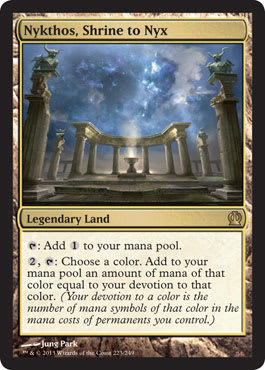
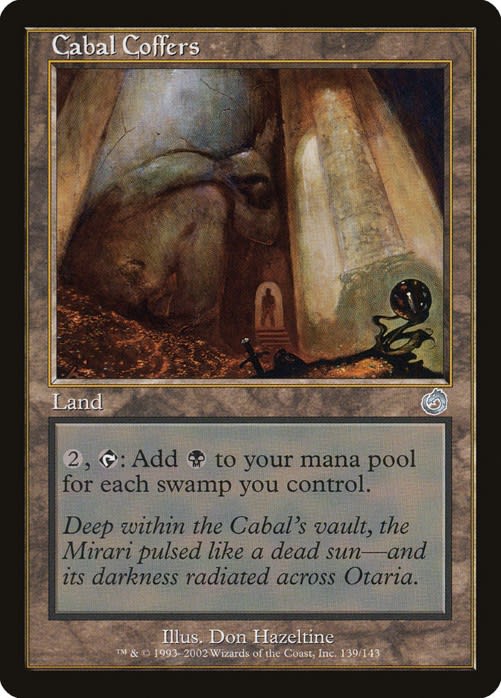
Nykthos, Shrine to Nyx is the face card for Lands which can tap for absurd amounts of mana, followed closely by Cabal Coffers and trailing behind is Bloomburrow's Three Tree City. Also in this category is the loathsome Gaea's Cradle, a $1000 reserved list card that should probably be on the ban list.
A Land doesn't need to tap for absurd amounts of mana to be greatly above the curve, however. Even tapping for two mana is enough if the opportunity cost is low enough. Game Changer Ancient Tomb looks like it is doing a bad Sol Ring impression, and that isn't so far off. Like Sol Ring, it will propel you extremely far ahead in the early game, especially when paired with two mana ramp, like Arcane Signet. At brackets 4 and 5, that two life loss a turn is unlikely to matter. At lower brackets, options which don't cost you life are still present and great. Phyrexian Tower adds at the cost of sacrificing a Creature, which is more often than not an upside in the decks looking to play it. While niche, Muraganda Raceway is a colorless Land that taps for  once you've gotten to max speed.
 |  |  |  |
There is one Land that you should never play:Temple of the False God. Still to this day a regular inclusion in Commander precons, you will draw this card when you are stuck on three Lands and begging for the Magic gods to be merciful.
 |  |  |
Land Interaction and Removal
With all these powerful utility Lands, there must be some way to stop them from accruing value. Land destruction is generally considered a violation of the social construct inherent to Commander, but there are a few Lands you can get away with. Field of Ruin and Demolition Field each take a utility Land off the board and replace both themselves and the destroyed Land, preventing hard feelings.
Field of Ruin is usually considered the worse option but is preferred by some for its ability to help a mana screwed player out when you target another opponent's Land, perhaps making you a friend of the table.
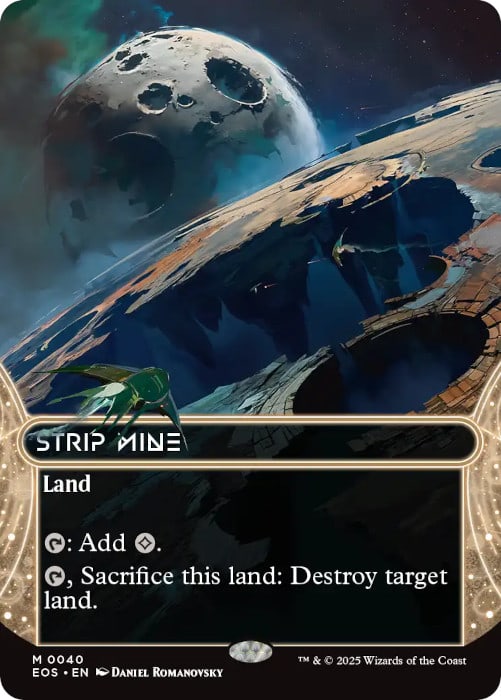
Strip Mine and Wasteland are more straightforward, requiring no cost and leaving nothing behind. While these are better because there is no mana cost to using them, they require more skill to deploy correctly, as using them too early can leave you and one other player far enough behind that you can't keep up with the remaining opponents. It is, however, very funny to Strip Mine someone's basic on turn one. Not good play, but funny - for you.
 |  |  |  |
Being behind on Lands is never funny. Fortunately, the Lands Myriad Landscape and the lesser known Blighted Woodland represent permanent ramp in your Land slots. These come at a major loss of tempo but are often worth it in Brackets 1-3.
On the other hand, Talon Gates of Madara is an extremely useful utility Land which can ramp itself out from your hand for four mana. When doing so, you can phase out any one Creature, protecting yourself from an attack, your Creature from a removal spell, or an opponent's Creature from their own buff effect.
 |  |  |
Protection, Graveyard Hate, and Win Conditions
Protection on Lands is one of the more rare utility effects, but Plaza of Heroes can sacrifice itself for three mana to protect a Legendary Creature from most attempts to remove it. Additionally, in the right deck, it can even be a five-color Land.
Finally, there are a few all stars worth talking about. Bojuka Bog is graveyard hate on a Land. Every deck should have some graveyard hate, and while Bog is likely not enough to stop a graveyard deck on its own, it can slow them down long enough for you or a tablemate to find more interaction.
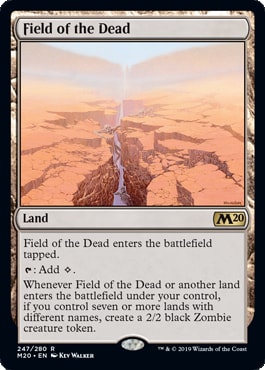
If you instead want to be the threat, another Game Changer, Field of the Dead, can build you a tremendously wide board of Zombie tokens if you build your deck around it. Urza's Cave is a Land which tutors any Land in your deck into play, enabling you to find your best utility Land for any situation.
 |  |  |  |
Mana Fixing Lands
With so many of these Lands being colorless, you must be wondering if there is a way to fix that. Unfortunately, our fixing options are pretty slim. In a five color deck, The World Tree is a steller inclusion, turning into a Chromatic Lantern once you have six Lands on board. Outside of five color, any deck can play Urborg, Tomb of Yawgmoth or Yavimaya, Cradle of Growth.
Generally, you shouldn't though, unless you have some Forest or Swamp synergy, like the previously mentioned Cabal Coffers or Nissa, Ascended Animist. Turning your opponents Lands into Forests or Swamps can also be an upside if you build around it. Chatterfang, Squirrel General decks enjoy making their Commander unblockable die to Forestwalk, and mono-White decks running Urborg and Karma are a niche, but always funny, brew.
 |  |  |  |  |
Basic Lands in Commander
 |  |  |  |  |
Finally, we consider the humblest of Garfield's creations, the basic Land. How many your deck should have is dependent on three things: how many colors your deck is, how much of your ramp specifically gets basic Lands, and how prepared you want to be for non-basic Land hate and Path To Exile type effects. The more colors you are in, the more of your mana base you need to dedicate to making sure you have access to all your colors, and therefore the fewer basics you have.
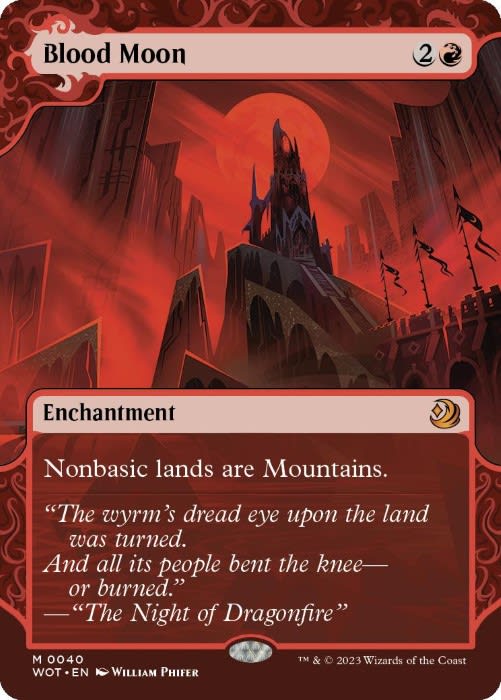
You should still try to be prepared for Blood Moon and Winds of Abandon, so you should start with at least one of each basic and go up to two for the colors that matter most for your deck. An example five-color decks might run all ten fetches, all ten shocks, seven basics, Command Tower, five to ten other fetchable dual Lands, and zero to four utility Lands.
 |  |  |
Basic Land Requirements for Different Types of Decks
As you decrease the number of colors you need access to, the requirement to have most of your mana base be color fixing lightens up. You can either use this freedom to increase the number of basics or to add more utility Lands.
Generally, three- and four-color decks still have about five to ten basics, with more utility Lands. Decks which use ramp spells like cultivate over mana rocks or non-basic Land ramp like Farseek, may want to instead increase the total number of basics up to 14, to minimize the chance of running out of basics in the late game.
Two color decks are unlikely to be color screwed, even with triple or quadruple pipped Spells like Niv-Mizzet, the Firemind, as long as they run at least 13 dual lands. This leaves plenty of room for more utility Lands, but you should also ensure you increase your basic Land count to a minimum of 14 Lands. Basic Lands have many subtle benefits and running out of them is a necessary risk when you have three or more colors, but not at one or two colors.
 |  |
Finally, mono color decks have the most room for both utility Lands and basic Land synergies. If you can take advantage of these synergies, you may want to have as many as 20 or 30 of your Lands be basics. Otherwise, we can take advantage of the lack of need for fixing and maintain the 14 basics from two-color decks while going up in colorless utility Lands, which generally have too high a cost to be worth playing in three or five color decks.
Commander Mana Base Cheat Sheet
- 30-40 lands is the baseline
- 36-38 lands is most common
- 8-10 ramp spells is ideal
- 2-cost ramp is best
- More lands for high-cost Commanders
- MDFCs add flexibility
Conclusion
In summary, building an optimal mana base requires a lot of thought, and often the changes you make will only have subtle results. Increasing Land counts has a subtle effect when your Commander has a mana value of four or five, and the average cost of your ramp matters more than the exact number.
Generally, the data shows that if your Commander costs four or less, you want a minimum of 35 Lands and nine ramp spells, and if your Commander costs five or more, you should consider increasing your Land count up to 38 and ramp spell count up to 10. This is pretty close to the 40 Lands and nine ramp spells we suggested in the past, now supported by simulations.
What Lands you include are determined by your budget and how many colors your Commander gives you access to. Optimal mana bases rely heavily on Fetchlands and fetchable duals, but budget mana bases function well enough as long as you consider how many Lands enter tapped and what colors your ramp gives you access to.
Overall, these findings suggest that, outside bracket 5, the subtle changes you make will only really be noticeable over a long number of games. If you are struggling to cast your spells on curve, adding another Land can only help you, but you might not notice the change for many games
 .