


 Locations


When you were a kid, building a Pillow Fort was the best feeling ever. As an adult, if you play Magic, you can recapture that feeling, all while frustrating your opponents.
Pillow Fort is a unique archetype that does the two things I love to do the most. One, it makes it hard for people to deal damage to you. Two, it allows you to politic for the win. But what exactly is MTG Pillow Fort, how do you play it, and what cards fit into this archetype the best? Let me break it down for you.
What exactly is MTG Pillow Fort?
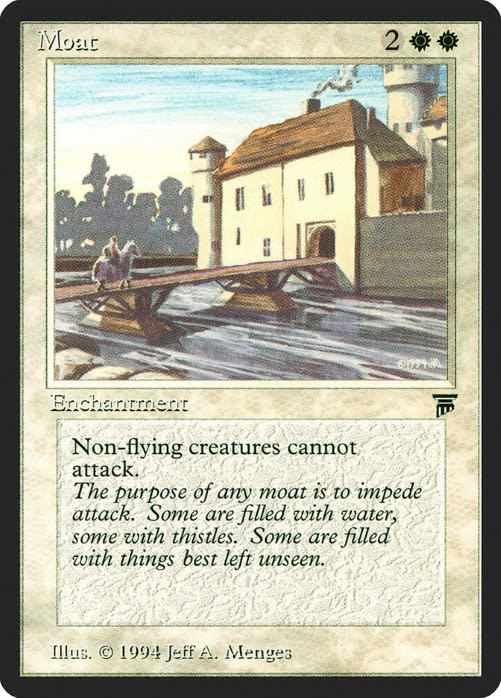
In MTG, Pillow Fort is an archetype that makes attacking you futile or undesirable. Simultaneously, it gives you tools to "buy" the support of the rest of the table. This gives you the time to assemble game-winning combos (or lockdowns) that make it impossible for the rest of the table to respond.
What is the best Pillow Fort Commander?
Constructing your Pillow Fort starts with choosing a Commander. There are several great Commanders that play to this strategy.
 |  |  |
- Isperia, Supreme Judge - Ideal for Pillow Fort since she draws you cards when opponents attack which is as Pillow Fort of a tactic as there is.
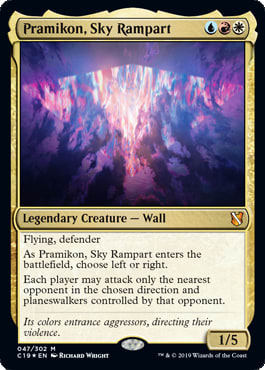
- Pramikon, Sky Rampart - There's no better way to Pillow Fort than making it difficult for anyone to get to you, and this commander does just that.
- Gwafa Hazid, Profiteer - Some would prefer Grand Arbiter Augustin IV as their Azorius (

 ) Pillow Fort commander. Consider, Gwafa Hazid is a Pacifism on a body that you can activate once you have the mana.
 - Oloro, Ageless Ascetic - Probably the most popular MTG Pillow Fort commander, his 2-life-a-turn gain from inside the command zone makes a player difficult to deal with, but necessary.
- Zedruu the Greathearted - Politicking is more fun when you can give people things they don't want. His card-draw engine is very good to keep your hand filled with things to donate to your opponents.
- Grand Arbiter Augustin IV - While he's more of a Stax commander, he also is very good in Pillow Fort decks. The cost-reduction can accelerate your setup and the tax slows down opponents just enough to get the lockdown in place.
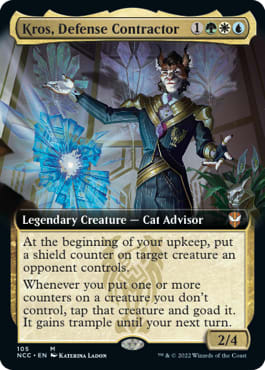
- Kros, Defense Contractor - Shield and goad counters do everything you want. Make your creatures extra-hard to target and remove, and make your opponents' creatures fight on your behalf. It's a classic Pillow Fort setup if there ever was one.


These commanders define the Pillow Fort archetype with what they do and how they do it, but a proper MTG Pillow Fort deck has several directions it can go in. Let me explain.
Taxing Your Opponents in Pillow Fort for Commander

While Stax is a whole other can of worms to open, there are several Stax cards that Pillow Fort decks play because they make your opponent pay for the privilege of hitting you.
 |  | 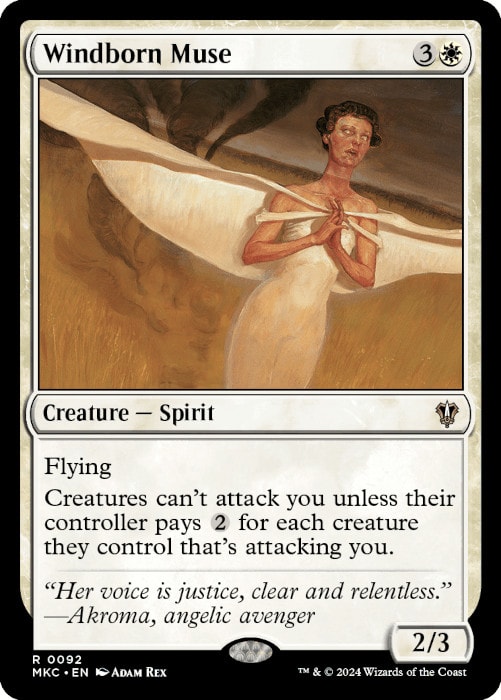 | 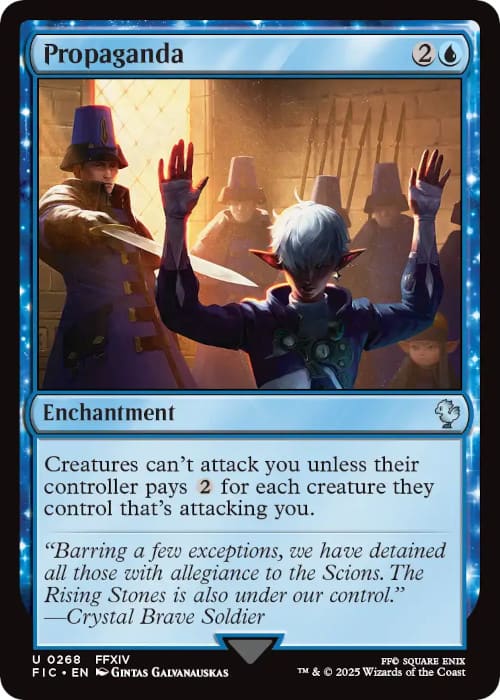 |
Each of these make your opponent pay to attack you, forcing them to keep mana up if they want to have any chance of hitting you. Taxing your opponents is usually a sub-strategy that works to frustrate them and makes attacking other people at the table far more attractive. However, while these tax opponents, those who can pay to hit you, will. There's a far better solution for keeping people from hitting you.
Pillow Fort vs. Stax: A Critical Distinction

I mentioned that Stax tends to overlap with Pillow Fort strategies, but there's a much deeper difference between them. Pillow Fort decks tend to play more non-symmetrical cards that protect their game plan. Stax's game plan is just slowing down opponents indefinitely. Pillow Fort, for example, won't run a Winter Orb, since it Staxes symmetrically. It is more interested in running No Mercy because it punishes an opponent for their decision to attack you.
Pitchforks Are for Goading in Pillow Fort for Commander
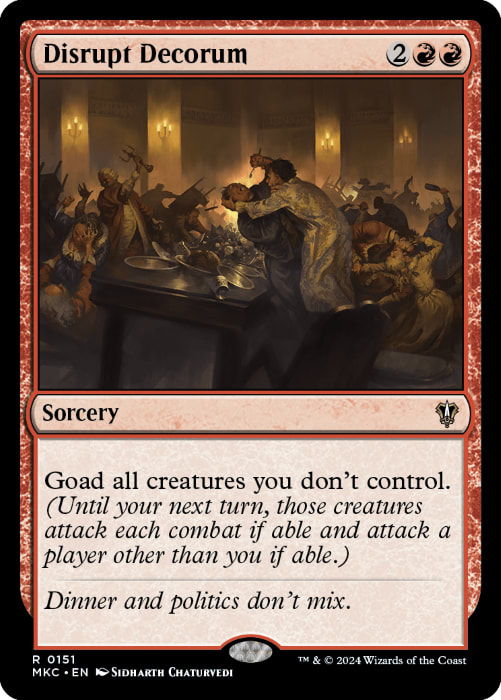
Goad as a mechanic allows you to force one or more of your opponents' creatures to attack opponents (if they can). One of the best commanders for a deck built around this type of Pillow Fort is Kardur, Doomscourge, which has Goad built into his enters-the-battlefield trigger, and also makes you drain life once one of their attacking creatures dies. Here are some other key cards for a Goad-type Pillow Fort deck.
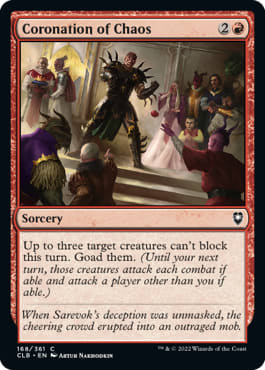 | |  |
- Coronation of Chaos
- Disrupt Decorum
- Geode Rager
- Marisi, Breaker of the Coil
- All the "Impetus" enchantments (Parasitic, Psychic, and Predatory)
Goad is a useful strategy to keep the table attacking each other and stopping them from attacking you. The obvious downside of this tactic is that some players haste-in their creatures. Kardur, Doomscourge is the only Goad-like effect that affects those creatures, so playing against a haste-happy opponent can be trouble.
While Goading your opponents' creatures does avoid them attacking you, sometimes you want utility in your fort, and that's where Enchantments come in.
An Enchantress by Any Other Name...Still Belongs in Commander Pillow Forts

Enchantress is yet another archetype that Pillow Fort overlaps with, but with good reason. A lot of the tax-to-attack pieces are also enchantments, so why not put them together? Enchantress-type Pillow Forts use those tax-to-attack enchantments along with:
 | 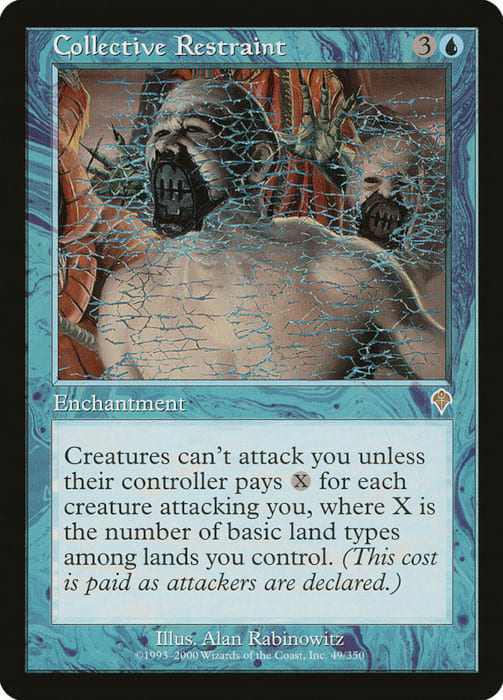 | 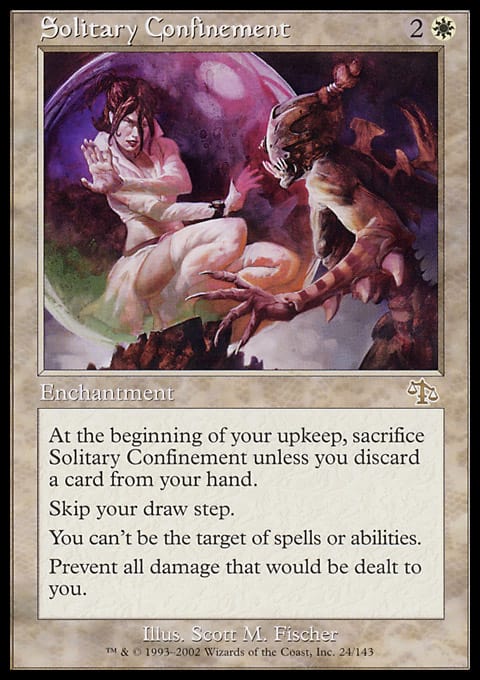 |
Enchantment-heavy Pillow Fort decks try to grind out advantage by both taxing opponents who want to attack while building up their resources for the late game.
Punishing Opponent Attacks in Pillow Fort EDH
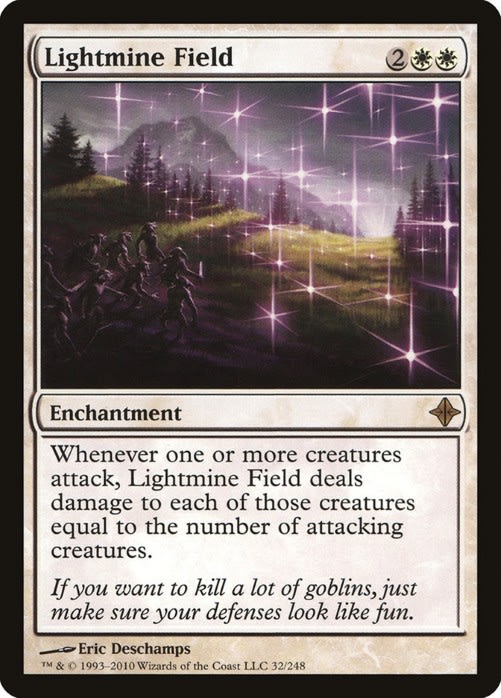
One of the most "political" things a Pillow Fort deck does is tell your opponents that they have better options for their attacks. Some decks lean heavily into this, setting up punishing penalties for any opponent who decides they want to hit you. Here are some of the best choices for decks going in this direction.
|  |  |
- Lightmine Field - This makes your opponent consider how many creatures they're attacking with, because more creatures means more damage per creature.
- Blazing Archon - Expensive, but once it hits the field, none of your opponents' creatures can attack you until someone finds removal.
- Crawlspace - Two creatures maximum per turn can attack you, which works well to limit go-wide decks, but won't stop a Voltron commander from smacking you.
- Spike Weaver and other Fog-based effects - Recurrent Fog effects can blank damage over the course or one or more turns. If they're attached to creatures, they can be recurred by Eternal Witness and other Green return-permanent-from-the-graveyard cards.
Making it less attractive to attack you incentivizes your opponents to attack the rest of the table. That leaves you all the time in the world to enact your plan. Speaking of...
How do you win with Pillow Fort?
 |  |
Whichever version of Pillow Fort you decide to play, you need to figure out how you're going to win. Luckily, there are several different options you can lean into, depending on what colors you're playing.
Alternative win conditions (wincons) are among your strongest options for a Pillow Fort strategy. Cards like Darksteel Reactor, Helix Pinnacle, or Azor's Elocutors make for useful single-card win conditions. They're inevitable, giving you a win once you outlast your opponents and that's exactly what Pillow Fort in Commander is designed to do.
Resilient token generation like Luminarch Ascension is a great way to create evasive threats. It allows you to attack your opponents, but makes it impossible for them to hit you back. Castle Ardenvale, Assemble the Legion, and Court of Grace all provide long-term token production that will eventually take over the game.
One of the cleanest wincons you can pack into a Pillow Fort deck is combo. Since you'll be drawing so many cards, it's only a matter of time until you get your combo pieces assembled for the win. Among the best options for this are Felidar Sovereign with lifegain, Palinchron for infinite mana with Deadeye Navigator, or any of the dozens of combos you can make with Intruder Alarm.
As the Pillow Fort player, you're going to be using your opponents as loaded guns and pointing them at each other. Even so, you'll still have to deal with the last player, but once you set yourself up well, it should be no trouble.
As powerful as Pillow Fort is, however, there are some things you need to pay attention to or else it'll ruin your whole gameplan.
What breaks an MTG Pillow Fort

Pillow Fort is an awesome archetype if you get it working, but there are a few things that usually stick a fork in your plans. One of them is aggro decks. Most Commander players shy away from aggro, but with cards like Winota, Joiner of Forces and Caesar, Legion's Emperor it's more likely you'll run into go-wide threats.
Another problem that Pillow Fort decks typically run into is mass board resets like Cyclonic Rift, Austere Command, Bane of Progress and the like. Since most of your pieces are enchantments or artifacts, one of these coming down can wreck your entire gameplan.
To deal with these, it's best to run a small suite of counterspells (if your colors support it) to stop these things from blowing up your board. Recursion effects like Replenish (which has become quite expensive thanks to Premodern) and Brilliant Restoration might be worth it to include color-permitting.
Why You Should Play Pillow Fort in Commander

Pillow Fort in Commander is a popular archetype, but it's not for everyone. If you're someone who wants a win to happen quickly, Pillow Fort in Commander will bore you to tears. If, however, you value long-term setup, politicking across the table, and making your opponents suffer for daring to hit you, then you're in the right place.
The best thing about Pillow Fort is that you build it how you want. With so many ways to go for the win, it's just a matter of figuring out which strategy you want to use. Once you get yourself set up, winning is inevitable.