


 Locations


Hello and happiest of days to each of you! I grew up playing multiplayer and casual formats like Five Color, and in a Five Color deck and metagame, getting the right colors of mana is key. Recently, I've been doing a deep dive into Ramp and all things Mana with my top Mana Dorks, my Top Land Accelerators like Solemn Simulacrum here, and the many ways to Ramp in general. And you'll be seeing my Top 5 Exploration Effects coming soon! But today, I want to go over the history and evolution of Ramp Spells and how they ultimately led to what I consider the perfect Ramp spell: Cultivate.

Ramp spells have been a part of Magic for a long time, but they weren't part of the first few sets! I started playing Magic in the time of Revised and The Dark. Ramp spells like Rampant Growth weren't around back then, being added in later sets like Nature's Lore in Ice Age, or even Land Tax and Untamed Wilds in Legends. That addition to the game was awesome! Rampant Growth proper and Harrow - two classic ways to ramp out lands - came soon after in the first full three-set blocks. We then got the likes of Avenging Druid and the brokenly strong Hermit Druid, Tithe, and Wood Elves.
 |  | 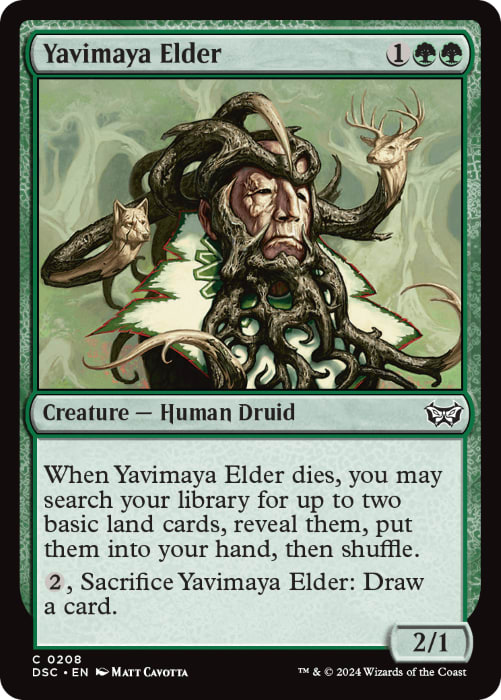 |
Then Urza's block, one of the most broken blocks, arrived and with it Combo Winter, filled with very powerful mana producers things like Gaea's Cradle and Priest of Titania. But there were some good spells that ramped too! We had Skyshroud Claim and some busted Mana Rocks. It wasn't a good time for Constructed Magic. I was playing Wildfire in Standard after Abe's Deck of Happiness and Joy rotated out. We also had things like Exploration and the nasty good Yavimaya Elder that grabs two basic lands to your hand when it dies, and another card if you pay and sacrifice it.
That block also introduced the nasty, broken, restricted-in-Five-Color common one-cost instant called Crop Rotation. Here you would sac a land and then drop an untapped land of your choice into play. Sure, it was card disadvantage, but it was often mana positive. You could get Gaea's Cradle! It was the first tutor for any kind of land, and it didn't even have to go to your hand first!
Then we had Masques block, which was an overcorrection to how problematic the Block before it was. It was so dulled down there is little worth mentioning.
 | 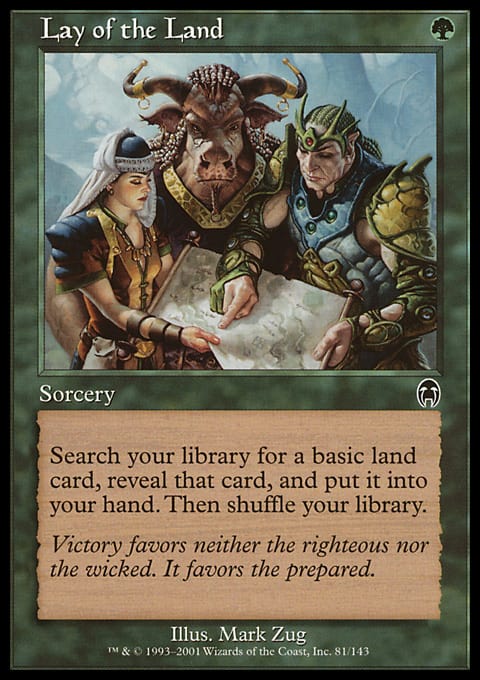 |  |
The beloved first Multicolored Block, Invasion, came around with tons of great cards. We had an uncommon set of comes-into-play-tapped lands that tapped for two different colors. We had a spell introduced called Lay of the Land for one mana that put any basic land into our hand. This is great mana-fixing on the first turn if you're not doing anything more important. Grab the color you need for the next turn. There have been multiple takes on Lay of the Land since, with one even being banned thanks to its use of the Energy mechanic (Attune with Aether). There's even a version that attaches removal in the form of Fighting (Bushwhack).
Onslaught brought fetchlands that changed mana bases forever as well as Explosive Vegetation. We also got landcycling, like the beloved Krosan Tusker that gave us any basic and a card for 3 mana. Everyone adored Eternal Dragon for fetching any Plains and coming back as a recurring threat. This also gave us another strong creature in Weathered Wayfinder, that could tap to tutor up any land to our hand, but only if another had more lands.
Then Mirrodin came along and threw everything into chaos. Affinity was the boogeyman of Standard. I was playing Mono-White Control at the time , and I decided to pull out Standard and just play casual or drafts. We got another land tutor (plus land destruction) called Reap and Sow, this time a sorcery with entwine so you could get both halves (It was quickly restricted in Five Color). This block did have some good stuff for the casual Five-Color format, like All Suns' Dawn and Etched Oracle. And we got Solemn Simulacrum and Gilded Lotus!
 |  |
But then the next block arrived. And with it the answers to all of our ramp-needing prayers. The one that dominated Standard at the time was Sakura-Tribe Elder. It was a common 1/1 that arrived and could be sacrificed for no mana to Rampant Growth! It was heavily played because back then combat damage would use the stack, so you could block or attack and get blocked, and then still deal that damage and ramp as well. The rules changed later, but it's still a strong option now.
However, the card that shifted how casual players and multiplayer aficionados viewed Ramp Spells was Kodama's Reach. It combined the best parts of Lay of the Land and Rampant Growth, but it was cheaper than Explosive Vegetation!
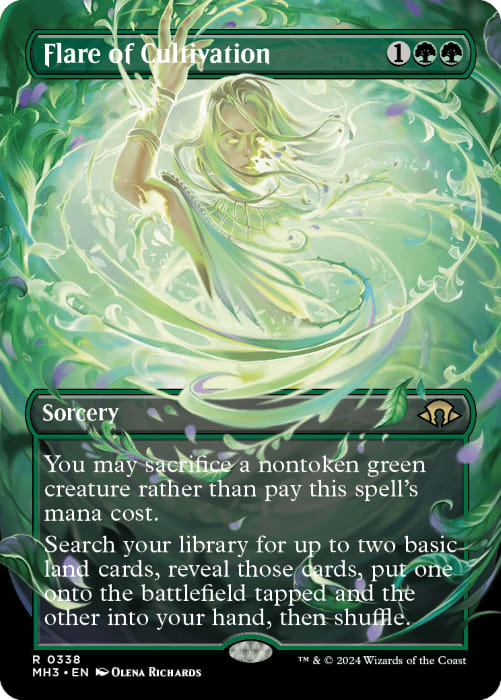
It's great from a few angles! First, and one I think is often forgotten, is that it provides card advantage. Rampant Growth effects are normally good for 1:1 ramping, but the best three-cost ramp spell prior to Kodama's Reach was the three-mana instant cycling Krosan Tusker for any basic and a fresh card. But it only got one guaranteed land. Kodama's Reach is a full mana cheaper than other ramp spells that put two lands into play (except Harrow, but Harrow is a net neutral 2 for 2 on cards). And we even had more versions printed later in cards like Flare of Cultivation or Cultivate proper.
 | |
Now you might be wondering why I am writing this? Cultivate is one of the most played Green cards in Commander brews over at EDHREC.com, after all. But when you look at recent Commander Brews here at CSI or elsewhere you often don't see Cultivate! What are you seeing?
Three two-cost spells that can put any land with a basic land type into play - like Farseek or Nature's Lore. With more dual lands with basic land types being printed, these cheaper ramp spells have been increasingly present. They can get the classic dual lands or even three colors with the 10 Triomes. They can fix colors earlier and for cheaper. For example, on the 2nd turn, if you cast Farseek and then drop Ziatora's Proving Ground you access to two additional colors (Red and Black) on turn three, but with Cultivate on the 3rd turn, you only get access to one additional color that turn and then have to play the other land on turn four. But you're only trading one-for-one on cards, unlike Cultivate which puts you up a card!
My thoughts here are very similar to my The Case for the Manalith article where I talk about three-mana rocks vs. two-mana rocks. The problem is that folks often run their two-mana Signets that tap for fewer colors instead of waiting a turn for a Manalith that taps for all colors of mana. Things are a little different for Ramp Spells since the mana fixing ends up being comparable, but here there are still advantages to Cultivates over Farseeks!
Two-mana ramp spells are easily more efficient, but Cultivates win out on card advantage! Yes, you wait a turn but then you drop a basic and are guaranteed the next land drop (barring being forced to discard). You are up two lands for one card! Sometimes you'll want that card advantage over raw efficiency.
In my opinion, the only time you shouldn't be running Cultivates over Rampant Growths is when you've got a four-drop Commander and want to get it out on turn three. Everywhere else you should get your Cultivates on!