 Locations


While a lot of people pin their hopes on rares and mythics, at the end of the day, it’s the cards in black and silver that comprise the clear foundation of our decks and dreams. Celebrating these cards is important for several reasons. They are cheaper to find, so you don’t have to break the bank for most uncommons or commons. Because they are printed in larger numbers, they are easier to locate; plus, you often have a stash of ten, fifteen, or thirty to draw upon for decks. As such, these cards are both cheap and easy to discover, and that makes them important tools for decks all over the world.
A few weeks ago, I looked at 30 great commons and uncommons for your various decks. I really enjoyed that theme, so today, I have another 30 cards from all up and down Magic’s history. Some of these cards you know already, and some have been obscured by time. Are you ready to look at another 30 cards for your collections and decks? Then let’s get started!
Death Denied
This regularly forgotten common from Kamigawa block grants a massive amount of late-game card drawing for any black deck. I suspect that if this card had been printed as a rare, it would be more renowned and played. Not only will this spell bring X creatures from your graveyard back to your hand, but it’s also an instant. Play it at the end of someone’s turn and reload on your hand. Or you can recur creatures in response to them being exiled by an opposing ability. Death Denied has a lot of power packed into this common.
 | 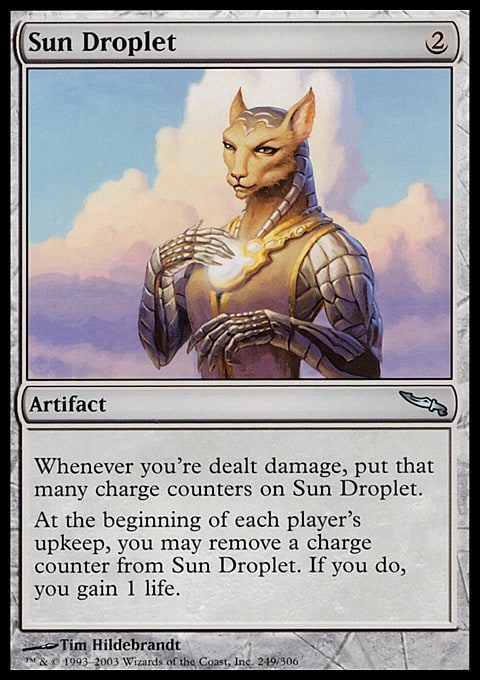 |  |
Sun Droplet
This is a card that basically sucks in duels but amps up massively the more people are at the table. When you take damage, you put counters on the Droplet, then you remove 1 every upkeep (including opposing upkeeps), to gain 1 life. At a four-person table, you will gain 4 life a turn for every 4 damage you take. Someone will have to deal 5 damage to you to make it stick for more than one go around the table. Obviously, the power level ramps up even more from there. At multiplayer tables, it combos well with cards that add counters to things (such as proliferate) and damage-based sweeping removal that deals some hurt to everyone (such as Pestilence and Earthquake).
Fade Away
Anyone who thinks that blue doesn’t have sweeping removal should check this card out. Every creature’s controller must pay 1 mana per creature or sacrifice that creature—this includes you. Since you know it’s coming, you can prepare for it, but many enemies will be completely surprised by it. It brings large armies down to size and often nails creatures thought to be invincible because they had indestructibility, regeneration, hexproof, and so forth. Combine with other cards of a tempo nature (such as Rishadan Brigand or Winter Orb), and you have a nasty 3-mana removal spell for blue.
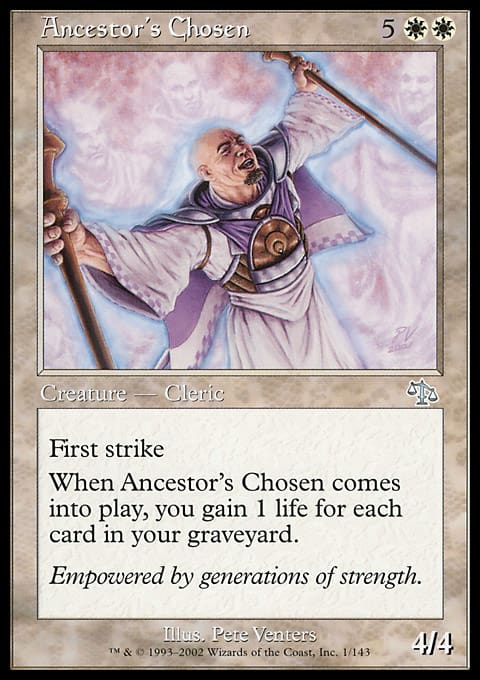
Ancestor's Chosen
At the multiplayer table, life-gain is a little different. I’m not a fan of playing life-gain cards that only give you a few life, such as Heroes' Reunion. If I’m going to bother with life-gain, I want it in spades. Give me cards such as Congregate, Invincible Hymn, or this guy. For an investment of 7 mana, you produce a 4/4 first strike Cleric who is a bit expensive on his own, but at least is pertinent in the red zone. Did I forget to mention that you also gain 1 life for each card in your graveyard? You easily make 10, 15, or 23 life by the time the Chosen arrives. Not only does your 7 mana grab a lot of life, but you are left with a 4/4 dude as well. You can’t argue with that!
 | 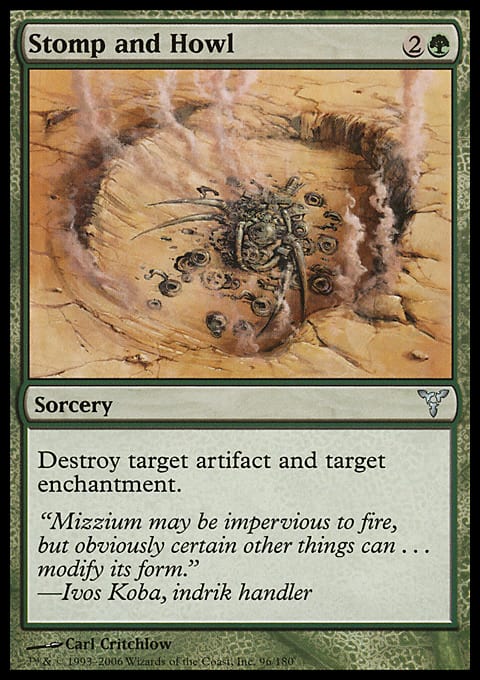 |  |
Stomp and Howl
Stomp and Howl is technically worse than Hull Breach. I know it’s probably not a good way to start a section about why you should play a card by saying that it’s worse than another card, but it’s true. With Hull Breach, you can choose to target just one enchantment or artifact if you want, but with S&H, you have to target both. It also costs 1 more mana, so there’s that as well. So, S&H is worse in terms of total mana cost and the inflexibility of being forced to off two permanents. However, here is where Stomping and Howling is worth playing: It can fit into any deck with green, not just those with red; plus, it can still be used alongside Hull Breach in formats such as Commander. It’s a 3-mana sorcery that offs two opposing problems. That’s the personification of card advantage and cheap casting costs.
Strider Harness
The Harness is pretty underwhelming to most folk. For a 1 mana equip, you give a creature +1/+1 and haste. Sure, that’s better than many equips at 1 mana that give less, but it’s still light compared to the powerful Equipment strewn about. However, the Harness is great at giving your team a powerful ability in multiplayer: haste. Any creature, for 1 extra mana, swings on the turn it’s played for 1 more damage than it would otherwise deal. Turn after turn after turn, it makes a guy have haste and adds 1 damage when it hits. Over the course of a game, you could sneak in three or five extra hits with the haste and 3 or 5 extra damage with the pump. When you look at that analysis, you can see why I’m so high on the Harness, and I think you should be, too.
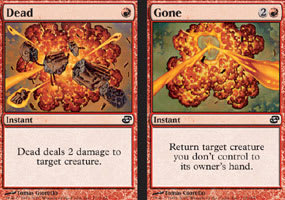
Dead // Gone
One of the most unusual abilities to come out in Planar Chaos was bouncing opposing creatures in red. Bounce is generally poor in multiplayer because you’d rather kill something. Well, Dead gives you that—it’s a 1-mana instant for 2 damage to a creature. That’s right on par with the many other Shock variants around. You can Dead something early or add 2 more damage to something that’s just been hit by anything from a Pyroclasm to blocking a creature. Then, you have Gone for emergency bounce. When you are attacked by a creature or when someone tries to play an Aura on a dude, you can bounce the guy right back to the controller’s hand. In today’s post-M13 printing of Rancor, bouncing a foe to counter the Rancor by not having a target is nifty-keen-cool. There’s often a clever use such as resetting a level up creature or bounce/killing a token creature. With both Dead and Gone giving you a lot of options, this is an interesting and flexible card.
 |  |  |
Ovinize
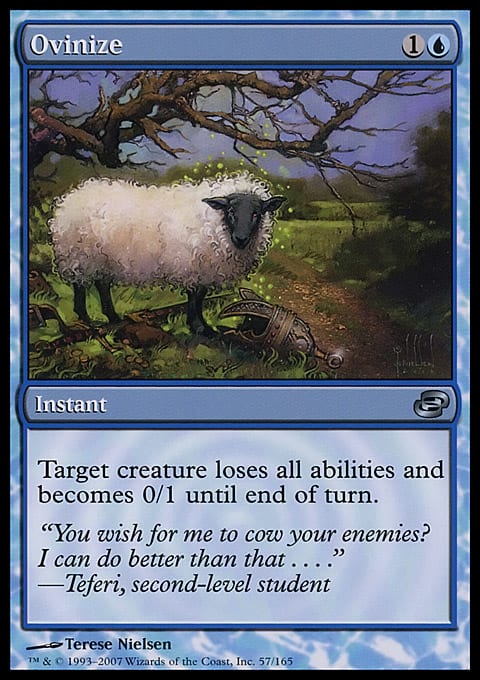
Another potent card from Planar Chaos was Ovinize for blue. One of the great things Ovinize can do is blast any creature it can target because it ends all abilities. Indestructible creatures from Blightsteel Colossus to Stuffy Doll suddenly lose their luster while creatures large are brought down to size. The combination of no power, 1 toughness, and zero abilities means you can easily kill the suddenly ensheeped creature in combat or with other cards. (How about Prodigal Sorcerer?) Turn to Frog also does a great job, but because the creature has a power, it trades or slays a creature in combat with 1 toughness that you might have blocked with a Ovinized creature, but it’s still about ninety percent as good. Because it kills the creature due to reduction in size, Diminish also works, but it’s the worst option because it leaves behind the abilities of the targeted dude. Sure, you can drop an Eldrazi to manageable size, but it still won’t allow you to block and kill Commander Eesha. Anyway, these cards add some removal to your blue, so consider them when building your next deck!
Nirkana Cutthroat
I like bodies on my side of the board. I especially enjoy having creatures in play that are seriously impacting the board but that don’t look like it. Play this guy early, and then level it up into a deathtouch creature that keeps back attackers, and then into a first-striking deathtouch guy who is even worse for enemies. As any player of Glissa the Traitor knows, with this untapped and at its full level potential, no ground creature will attack you for fear of dying while leaving your dude on the battlefield. You can also swing with relative impunity, and only opposing creatures that have first strike or double strike can trade with you (or those that are indestructible or have protection from black or etc.). The result is a creature that both is amazing on defense and offense, but it’s just a 4/3 body. No one expects a 4/3 body to be that good, so they often miss it with removal. That means your mana investment is more likely to witness results.
Grizzly Fate
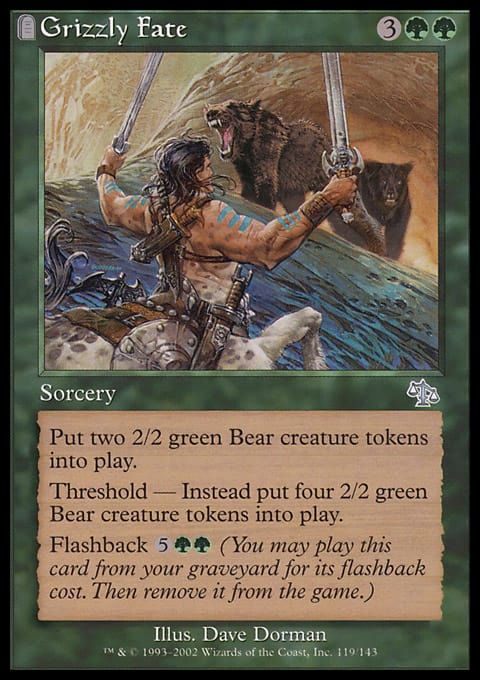
This card used to see a lot of play in casual circles, but it has slowly been taken out of decks over time for newer cards, and that makes me sad. This is one token maker that, for a humble 5-mana investment, can provide an entire army by itself, giving you four 2/2 Bears if you have threshold (you almost always do). It’s a great way to add pressure to a defense that will stop your major threats with Maze of Ith and similar cards. It’s also strong after a Wrath of God, so you can make an army while everyone else is playing one or two creatures. Then, you can flash it back for another go, with a cost of 7 mana. It makes one army, and it promises a second—all for one card. This is just as good today as it was when you first played with it and made a ton of Bears. Make some more.
 |  |  |
Slagwurm Armor
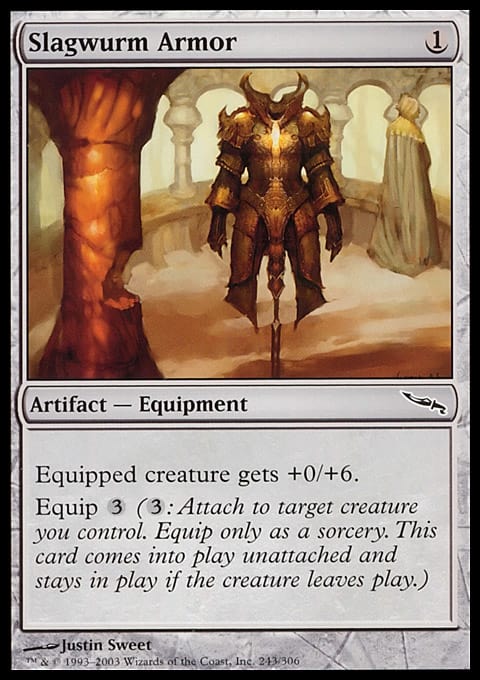
This is apparently Equipment day here at the Casual Nation because I have more after this. I’ve regularly discussed the requirement to survive before you thrive. You need to not die before you can win. This makes one of your creatures massively more likely to survive a block or to stay on the table after damage-based removal. Giving any creature +6 on the butt allows a simple Scryb Sprites to successfully block Akroma, Angel of Wrath. Imagine what it does to creatures such as Deadly Recluse, Phantom Flock, Solemn Simulacrum, Platinum Angel, and Doran, the Siege Tower. Keeping your guys alive and turning anything into a great blocker will help you to live.
Halimar Wavewatch
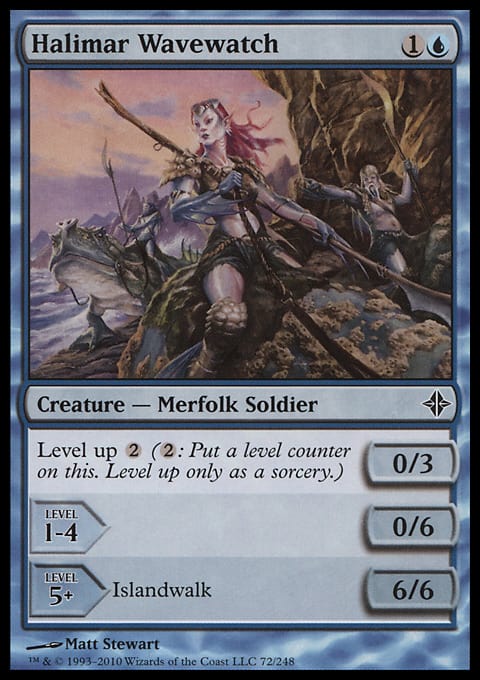
Let’s look at the other level up critter on today’s list. I like playing good defensive creatures early, and netting a 0/3 on the second turn is a bit slow when compared to Fog Bank or Steel Wall, but the Wavewatch has a secret. It turns from a slow-but-acceptable 0/3 dude on turn two to a 0/6 for just 2 mana. That blocks a lot more, and for a while, you can use them to block opposing creatures on the ground. Later, as the game progresses and you have extra mana, toss on a few extra counters to make it a 6/6 islandwalk dude, and you’ve turned your early-game blocker into a late-game beater. You have a nice creature early or late, and either way, the Merfolk Soldier adds flexibility to your squad.
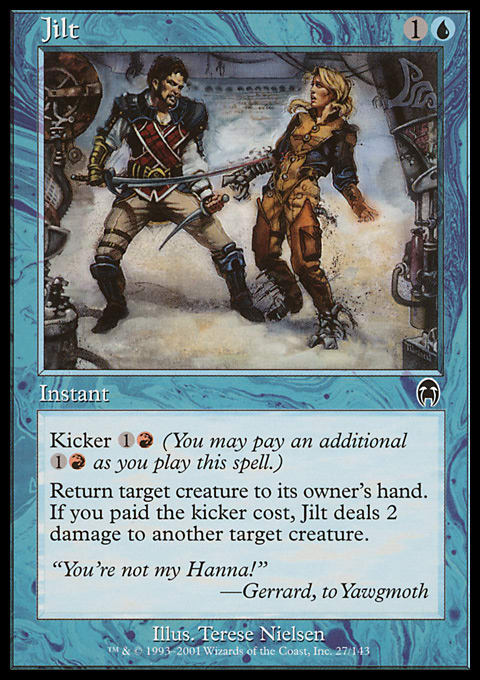
Jilt
As I mentioned earlier when I discussed Dead // Gone, I don’t like bounce that much in multiplayer. When I play it, I want my bounce to do something else so I won’t have lost a card. Jilt is a good example because it’s both Dead and Gone in one card. If you are playing blue and red together, you can bounce any creature (including your own), and with a red kicker, you can deal 2 damage to any creature as well. The total mana spent is 

 , and for a bounce and 2 damage, that seems pretty reasonable. It’s a fine utility card for counter–burn decks looking for a bit more burn while also having a bounce spell for creatures that sneak through counters. (Or you can reuse something like your Izzet Chronarch, protect your own creature, or slay a token creature, or . . . )
 | 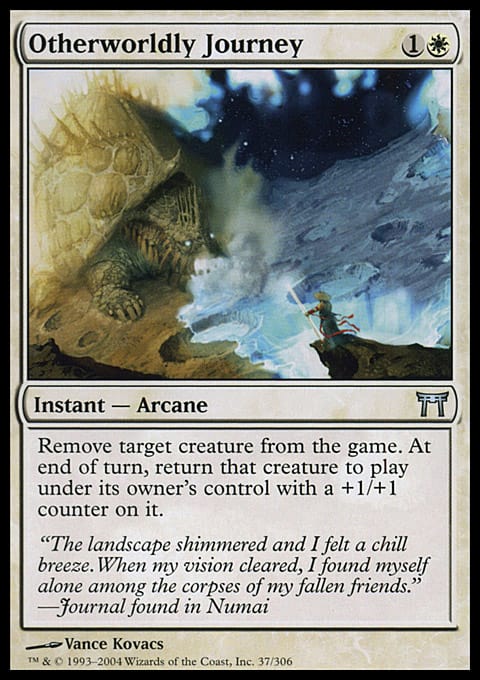 |  |
Otherworldly Journey
In today’s world with many self-blinking effects to reuse enters-the-battlefield triggers, let’s remember this old-school friend. It works very well with creatures that give you a trigger, from Thragtusk to Ancestor's Chosen above. Since it gives a +1/+1 counter, you can use it to pump a creature post-return or to pull off that -1/-1 counter from the flicker and then to add a +1/+1 counter to a persist creature to give it another go. This is the best friend of Woodfall Primus and Kitchen Finks!
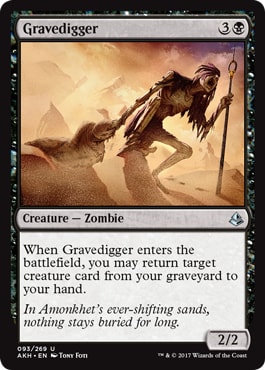
Gravedigger
One of the most-printed black commons of all time is this Zombie of love. For 4 mana, you make a 2/2 Zombie and a Raise Dead effect. The result is a card that gives you your best dead dude for another go and a 2/2 dork on the board to attack or block (or to abuse with things such as flicker, bounce, or removal). It can be used as a combo element with cards such as Deathrender, or it works on its own. This is the sort of subtle card advantage that over the course of the game will result in a win. Cards like Gravedigger don’t announce how good they are, as Tidings and such do, but they work.
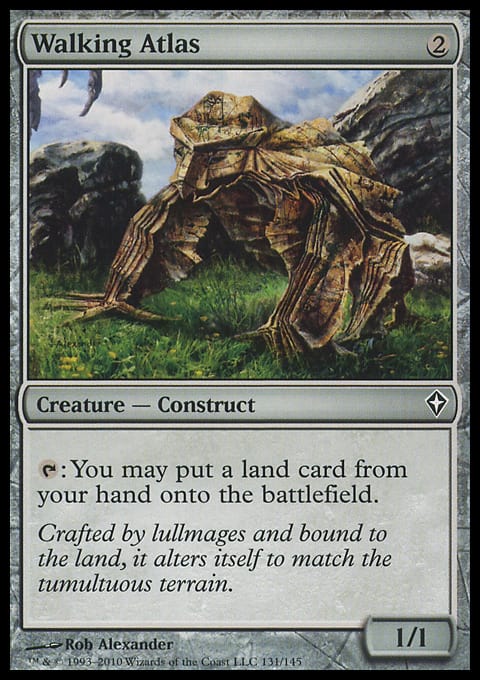
Walking Atlas
Land and mana acceleration is precious in every multiplayer game. Few decks can survive without it. Colorless acceleration (such as Pilgrim's Eye or Solemn Simulacrum) helps you to keep up with green decks while insuring the right colors from the deck. No matter which lands you draw initially, you have the right mana to play these artifacts out to assist. Walking Atlas is another such card, but it focuses on acceleration rather than land-search. Being able to tap it and throw out lands is unique outside of green. Therefore, it fills some useful roles that others can’t. Lands you tutor up with cards such as Armillary Sphere or Journeyer's Kite can be dropped quickly. It works well with raw card-drawing that gives you many cards in a turn: You can drop one land and tap the Atlas to play another. It plays well with others, and many decks and strategies benefit from it, but I rarely see it played. Take a look and see if Walking Atlas has a spot in your next deck.
 |  |  |
Martyrdom
Martyrdom is unique among Magic cards. After playing this instant, for the rest of the turn, you can redirect damage from a player or creature to target creature of your own you chose when you played it. Since it deals damage to one of your dudes, it often slays it. Why not play Safe Passage; won’t that be better? Well, like I said, Martyrdom is unique among cards—let’s see why. First of all, you can redirect all damage dealt, including damage to other players and other creatures. In a multiplayer game, you can keep alive a teammate’s creatures during combat or keep a key creature out or save another player while also saving yourself. Also, because it does not stop all of the damage, but just puts it on one creature, it is particularly nasty with something called Stuffy Doll. After someone plays an Earthquake effect (or perhaps you do . . . ), play Martyrdom and redirect all of the damage dealt to all players and creatures to the Stuffy Doll, and someone is taking lethal damage to the face! I’m sure you can think of other combos and uses if you start looking.
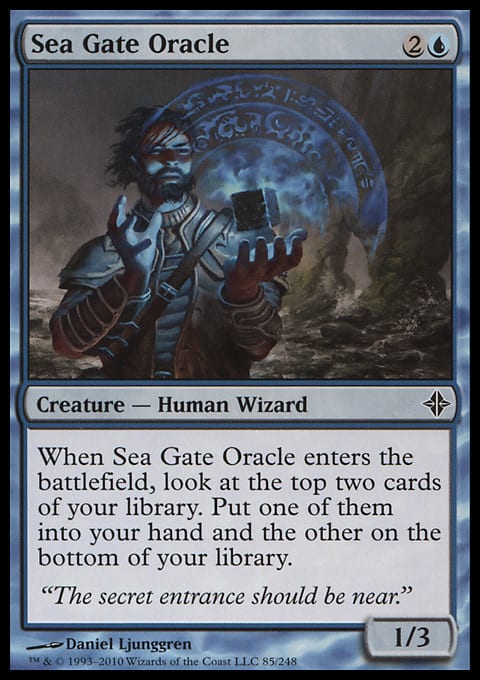
Sea Gate Oracle
Casual players have a real love relationship with all creatures that have beneficial enters-the-battlefield triggers. This card was the fastest to be played and then cut of any I recall. It saw heavy play for about two or three months in Commander and other casual formats, and then nothing. I still don’t know why—everything is lined up for perfection. It’s rocking a 3-mana cost for a 1/3 body, which is a bit on the small side, but it’s adequate for defense. Then, add the ability to Sleight of Hand, and you have a very nice card. You normally spend 2 mana for a 1/3 and 1 mana for a Sleight of Hand, so together, that’s 3 mana—just as expected. Remember to abuse it with the many ways I’ve listed before, such as Conjurer's Closet and Otherworldly Journey. Enjoy this guy again!
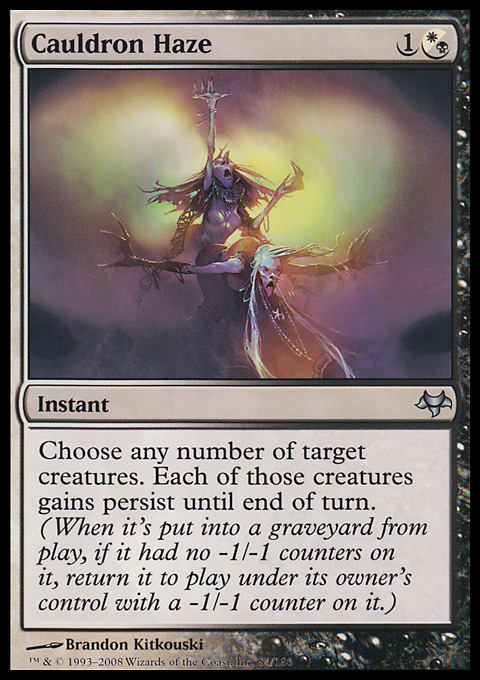
Cauldron Haze
Named after powerful but underplayed Cauldron of Souls (printed in the next set), this is a one-shot Cauldron that comes out of nowhere. You can give any creatures persist and thus let them survive mass removal. You can even keep out friendly creatures controlled by a teammate. Because they die and come back, you acquire another set of ability triggers and another chance to smash face with your team. It works both against someone else’s mass removal and with yours as well. Don’t ignore the fact that this is in the colors with mass removal, and play it alongside Day of Judgment and Life's Finale.
 | 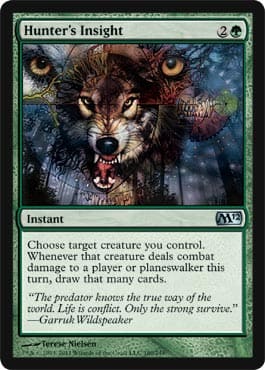 |  |
Hunter's Insight
Green has become the third-best card-drawing color. Blue will always be on top with guys such as Tidings and Fact or Fiction declaring who is rocking the roof. Black’s massive amount of card-drawing tied to life loss goes all the way back to Necropotence and Greed. Recently, green has put on a clinic of valuable card-drawing with cards such as Harmonize and Momentous Fall serving notice of a new card-drawing power in town. Hunter's Insight is a clever little spell because it plays off what green wants to do most of all. Green is happiest when it smashes face with a giant creature. When it does that damage to someone’s face, play this for 3 mana to draw a ton of cards. In particular, combine with tramplers of size to profit from a number of new cards.
Corpse Connoisseur
Reprinted in a theme deck, this Zombie dude fetches a creature from your library and places it right where it belongs: in your graveyard. That’s an investment of 5 mana for a 3/3 guy with the promise of future payoff. You can also unearth the Zombie for another Entomb effect for any creature. It plays very well into reanimation strategies that use cards such as Reanimate, Bloodghast, and Recurring Nightmare. It works in many black decks, and yet I don’t see it often in these reanimation strategies.
Razor Hippogriff
In the last few years, we’ve seen a lot of white cards that bring back an artifact (or sometimes an enchantment) from the graveyard. In my opinion, this is the best. It costs a bit more, but not only do you net a 3/3 flyer to go along with it, you also add a bit of life-gain for free. The addition of 3 or 5 life with a 3/3 flyer and Regrowth on an artifact makes for a tempting 5-mana cost. Sure, I like my life-gain in multiplayer to be big, but this isn’t played for life-gain—it’s the least important thing about the Hippogriff—and yet, that’s still really strong.
 | 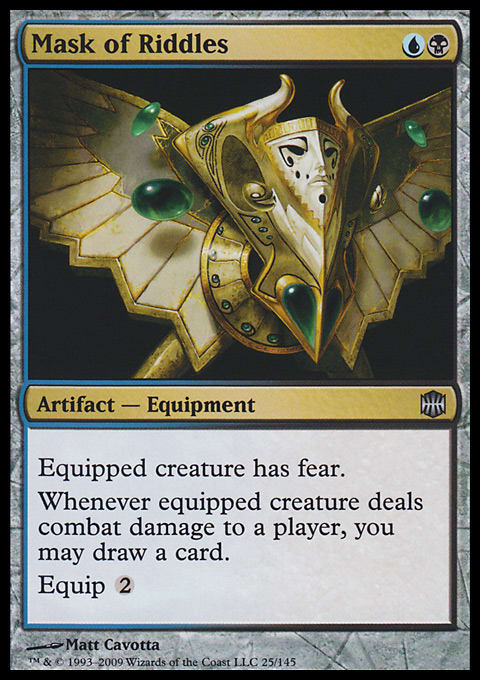 |  |
Mask of Riddles
When Shadowmage Infiltrator was printed, it was one of the most expensive cards from the set and was played quite a bit. It still sees play to this day (although not as much as it should, by the way). When it has the potential to give a card turn after turn, it sometimes sucks up some removal, from Terminates to Crib Swaps. Fight that by playing one piece of Equipment that turns any creature of yours into an Infiltrator by giving it both fear and the ability to draw a card when you smash someone with it.
Flaming Gambit
I like to look at this card as a cross between an Edict effect and a Blaze—as an instant. You deal X damage to a player unless he throws one of his creatures in front. Then, you can flash it back and do it again. I often kill someone by casting it on a creatureless player and then untapping and doing it again for lethal damage. I’ve also killed people by playing it, killing his only creature, and then untapping and slaying him. Don’t forget that you can also just kill a pair of creatures with it. (Like Martyrdom, it also works well with Stuffy Doll.)
Accorder Paladin
Not every card on this list is about enters-the-battlefield triggers, removal, or card advantage. This is about hitting hard early. Despite a powerful tournament pedigree, it’s often absent from white weenie decks in casual circles. Well, knock that off and play it!
 |  |  |
Slaughter
This card is specifically listed today for Commander. When you buyback a spell, you not only produce an opportunity to gain value from the spell again, but you also put the table on notice. Things often are held in hand rather than played. Trust me: When Shattering Pulse is played with buyback, artifacts stop hitting the board. Slaughter does that, but since the buyback is life loss, it doesn’t have the bark of another buyback removal card. But in Commander, where you start with 40 life, the 4 life to buy it back allows you to play it and not suck up your mana (as other buyback cards tend to do) and play it again and again. Grab one for your next Commander deck, and give it a spin!
Customs Depot
When you take a look at your typical decklist, you see a lot of creatures making an appearance. Considering that, Customs Depot is really good at sifting through your deck since you are playing a lot of creatures anyway. Just spend 1 extra mana and then draw and discard. It’s a Merfolk Looter activation for that colorless mana while you play your dude. This enchantment also costs just 2 mana, so it can be played early in the game, and then, you activate it for many lootings as you sift that deck to find the good stuff. This is the sort of card that stays under the radar because you aren’t actually drawing cards. You can easily keep this up most of the game, so pick up a few of this interesting card.
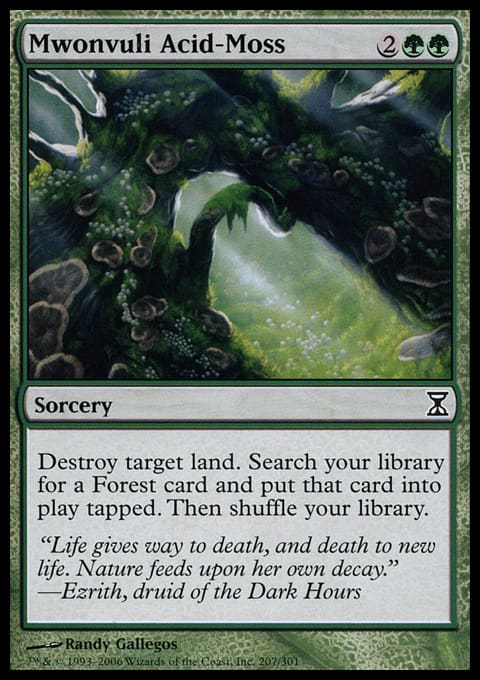
Mwonvuli Acid-Moss
One thing that does not see enough play at the kitchen table is land destruction. Oh sure, a few cards that can blow up a land if needed see play, such as Acidic Slime or Vindicate. And the occasional Wasteland or its friends rises above the fray. People play a lot of powerful utility lands in casual Magic precisely because they are hard to kill. With their Volrath's Stronghold, Maze of Ith, and Kessig Wolf Run, they have a lot of power and abilities triggering. It’s important to have ways to knock them out. I’m not suggesting that everyone should start playing Stone Rain—that would be overmuch. But a few cards such as this one suggest themselves as solutions to your problem. When you play this, not only do you destroy that problem land, but you also fetch a Forest right into play from your library. It’s both land acceleration and deceleration at the same time! (See also: Frenzied Tilling.)
 | 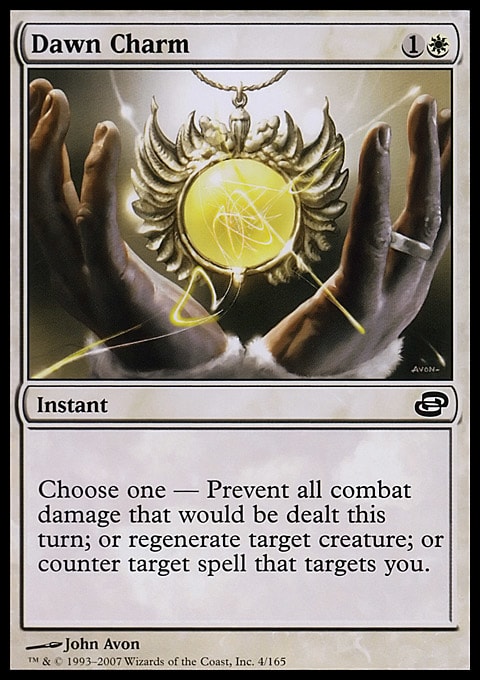 |  |
Dawn Charm
I’ve come to love Dawn Charm in a lot of ways. It has three useful abilities, and I find myself using each of them regularly when I have it. First of all, it counters a spell that targets me. This works well against everything from Mind Twist or Blaze to Diabolic Edict. Second, I can Fog the table. I don’t normally like Fog effects because all they do is delay the game a turn, but sometimes, that turn is enough to win. This is especially true in multiplayer, wherein I may leave a horde in play if I have both a Fog in hand along with a mass removal spell. I can Dawn Charm an attack if someone comes my way and then play Final Judgment. Finally, you can use it to regenerate a creature, keeping someone alive through removal or an unfortunate combat. The ability to counter, regenerate, or Fog is very potent when put together on a 2-mana instant.
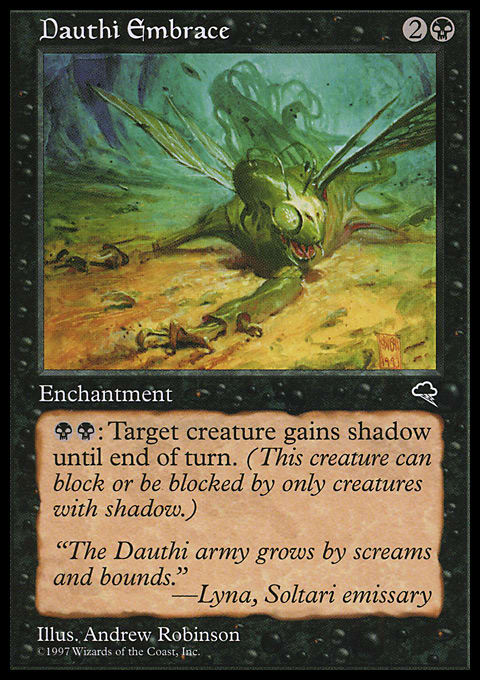
Dauthi Embrace
Our final card for the day is a potent one. Shadow is a powerful ability when attacking because only shadow-wielding foes can block. With such a small number of those in the game, the likelihood that any player has shadow is small enough to virtually ensure that shadow is unblockable. Therefore, you can use the Embrace to basically make your team unblockable. You can also use it to make a guy have shadow so he can jump in front of that rare shadowy attacker. The problem with shadow is that you can’t block anything save shadow, so shadow creatures are horrible on defense. Shadow creatures are essentially Tormented Soul—unblockable and unable to block. But the Embrace fights that because a creature given shadow only keeps it for that turn and can block in future rounds. If you have a vigilance creature, this is even more powerful since you can swing and then keep your guy back for defense immediately. Many players have fallen before the Embrace of the Dauthi.
Today, I looked at another 30 commons and uncommons that I highly recommend. I don’t close the door on anything, but I suspect this is the last go around for this concept for now. If I expand it to another article, I’ll let you know, okay?
Hope that you enjoyed today’s look at 30 cards and found some ideas for your own decks!
See you next week,
Abe Sargent