


 Locations



If you've ever looked into the Chroma vs Devotion discussion across numerous MTG forums and thought, "Wait, didn't Wizards just reprint the same mechanic?" you wouldn't be the first one. And I'll give credit where credit is due: at first glance, the two mechanics do look incredibly similar. Both care about colored mana symbols in mana costs. Both reward you for loading your deck with as many colored-mana-symbols-heavy cards as you can. And both make mono-color mages feel smug in a very particular way (myself included, naturally).
But I'm here to tell you that Chroma and Devotion are not the same mechanics and that the difference actually matters more than it may first appear.
So, in this Mechanics Overview Segment, let's break down Chroma vs Devotion: what Chroma is, what Devotion is, where they overlap, where they differ, and why Devotion inevitably ended up becoming the version most players actually care about.
What Is Chroma?
Chroma - "... for each ... mana symbol in those cards' mana costs." (a rather loose reminder text, I know.)
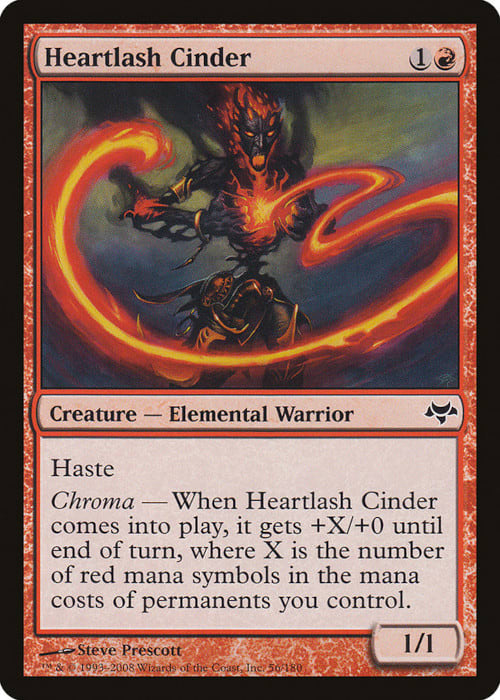 | 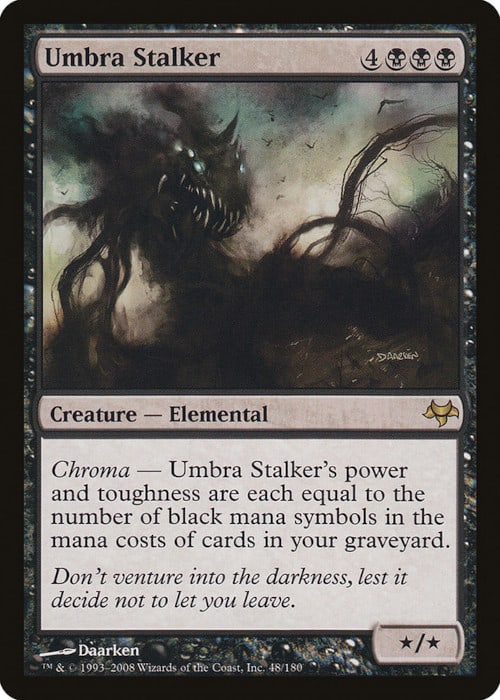 | 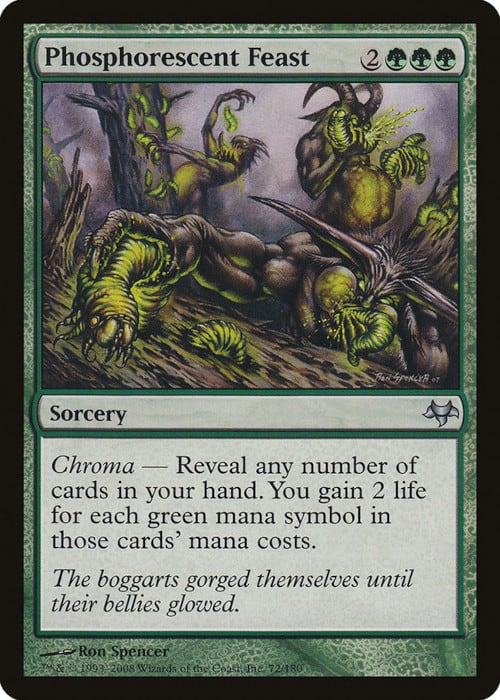 |
Chroma debuted in Eventide as an ability word that cared about the number of colored mana symbols in mana costs. Interestingly enough, the exact zone Chroma cards care about actually depends on the respective card. Some look at permanents on the battlefield. Some look at cards in your graveyard. Some may even look at the cards you reveal from your hand.
But if you're ever confused about what Chroma actually cares about, you just have to remember to look for the number of colored mana symbols up in the top-right corner of your favorite MTG cards.
What Is Devotion?
Devotion to [color] (Each [color] in the mana costs of permanents you control counts toward your Devotion to [color].)
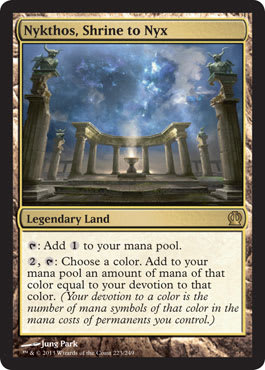
Devotion is a mechanic that was first introduced in Theros, and it essentially measures how committed you are to a specific color based on the amount of colored mana symbols among permanents you control.
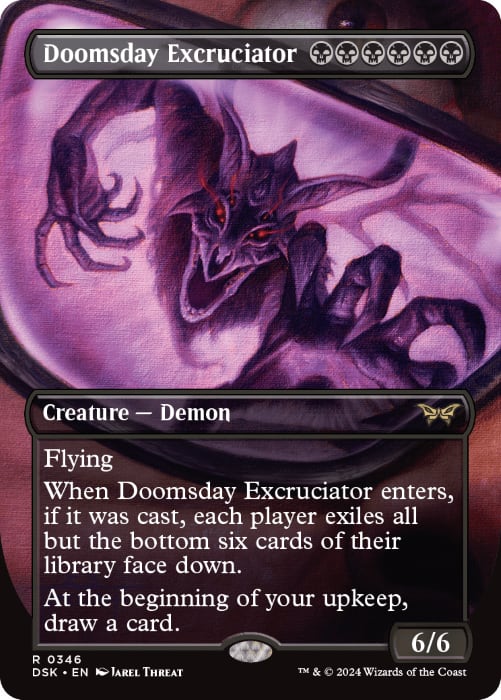
For example, if you control a permanent that costs 
 , that adds two to your Devotion to Blue. A permanent that costs
  adds two to Black. As such, if you've got a battlefield full of cards with colored mana symbols, your Devotion starts climbing fast, and that's exactly what Devotion cards want.
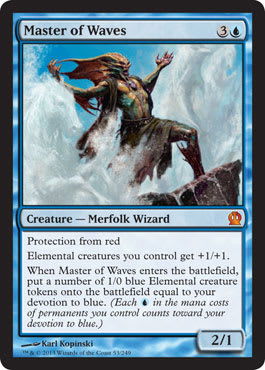
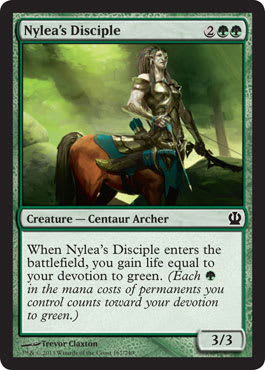
And if you played any amount of Standard during Theros, you don't need me to tell you that the payoffs for amassing Devotion were often well-worth your efforts.
 |  |  |
Chroma Vs Devotion: So, What's The Difference?
Let me efficiently settle the Chroma vs Devotion discussion once and for all:
- Chroma can count colored mana symbols across different zones (battlefield, hand, graveyard), depending on the card.
- Devotion can only count colored mana symbols among permanents you control on the battlefield.
For what it's worth, I'd like to think of Chroma as being more broad with its consideration for colored mana symbols, while Devotion is being much narrower. I'm not saying one mechanic is superior to the other; I'm just saying they have different priorities.
Why Devotion Became More Popular
In my humble opinion, Devotion became more popular because it simply plays cleaner.
Theros, as a set, was built around Gods, worship, presence, and the idea that your board state essentially reflected your commitment to a color, a.k.a, a God of Theros. A battlefield is public. It is present; it is active. The Gods of Theros aren't impressed by the cards in your hand or your graveyard. They want to see what you've actually brought to the table. Now, if this isn't good, clean, flavorful fun, I don't know what is.

And even mechanically speaking, I'd say Devotion plays a bit cleaner than Chroma, too. Players can always take a quick glance at the battlefield and be able to count Devotion without asking to check graveyards every other turn. Not only is this transparency helpful for making board evaluation faster and more intuitive, but it also allows players to plan accordingly when facing off against Devotion strategies:
- How many Evangel of Heliod 1/1 Soldiers are simply too many for me to handle?
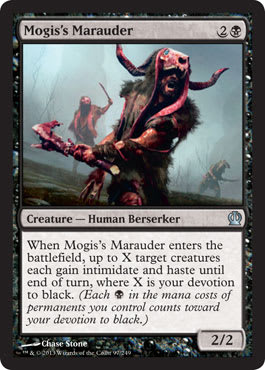
- How many more colored mana symbols do they need before they can rush me down with a Mogis's Marauder?
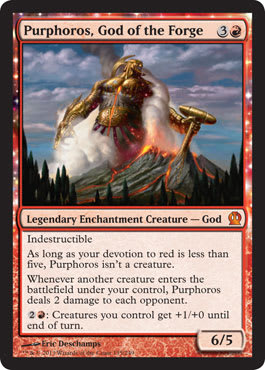
- How many and what creatures do they need to burn me and turn Purphoros, God of the Forge, into a creature for lethal?
 |  |  |
The Sketch and the Painting
At the end of the day, the whole Chroma vs Devotion discussion comes down to one of Magic's favorite design tricks: taking a past idea, touching it up a bit, and turning it into something cleaner, clearer, and more resonant the second time around. And that's exactly what happened here with Chroma and Devotion.
All of this wasn't to say that Chroma is an intrinsically bad mechanic and should be dismissed for all time. Chroma still matters because it can still do things that Devotion simply cannot. And because of this, if Wizards want to design a future set that cares about colored mana symbols in your graveyard, your hand, or some other zone, Devotion is simply not built for that. Chroma is.

But, I digress.
If you must remember only one thing from this whole article, let it be this: Chroma was the sketch, Devotion is the painting. Chroma checks for colored mana symbols wherever the card tells it to. Devotion only checks among your permanents. Chroma walked so Devotion could run. Don't get it twisted ever again.
Until next time, folks!