


 Locations



Buying expensive lands in Magic: The Gathering just feels bad, doesn't it?
When I first started playing MTG way back in 2013, I started in Standard and mostly played mono-colored decks. Part of that was genuine preference. There was something really fun about pushing one color to its absolute limit and seeing just how far a streamlined mana base can take you.
Truth be told, though, the other part was a lot less romantic: I absolutely did not want to spend any money on multicolored lands. And, adding to that, I definitely didn't want to spend money on all fetch lands.
I figured, "if I'm going to be dropping serious money on cardboard, I'd at least want the purchase to go towards something exciting." Give me all them big fat Hydras. Give me that Planeswalker that everyone says is utterly broken. Hell, give me that fringe Mythic that costs $20 more in foil for no good reason.
What I was not in the market for was a land that pings me for a life, sacrifices itself immediately, and grabs me a land that I probably could've just avoided altogether in my mono-color deck.
And yet, the longer you play Magic, the more you inevitably realize that good mana is often the difference between a deck that feels smooth and powerful and one that loses to itself. This is especially true once you move beyond mono-color decks and start exploring other strategies and formats where multicolored mana bases get more ambitious.
And suddenly, the lands you used to dismiss as boring or overpriced start looking a lot more like the glue holding all your decks together.
Yes, even in 2026, buying fetch lands still sucks to a degree. But there are reasons as to why people keep doing it, and that's what I'm here to talk about with you today.
What are MTG fetch lands?
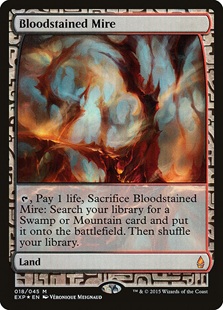
"Pay 1 life, Sacrifice this land: Search your library for a [basic land type(s)] card, put it onto the battlefield, then shuffle."

A fetch land in MTG is a land that lets you sacrifice it to search your library for a land with the specified land type(s) and put that land onto the battlefield. It's like putting a hat on a hat. Oops, I meant using a land for a land, but you get the idea.
Now, when people are talking about fetch lands, they are usually talking about the ten true fetch lands. These are the original five ally-color fetch lands that arrived in Onslaught:
 |  | 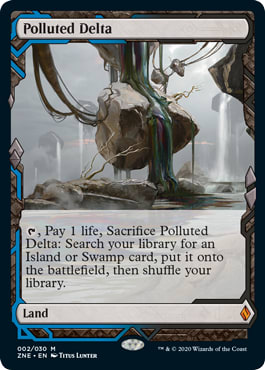 |  | 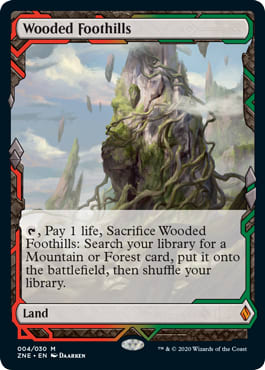 |
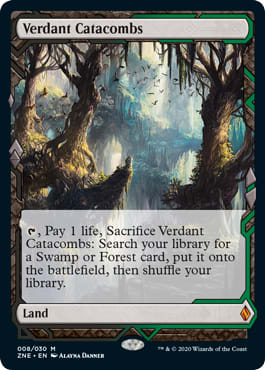
And Zendikar completed the fetch land cycle with the enemy-color fetches:
|  |  |  |  |
Now, why are these original fetch lands so revered?
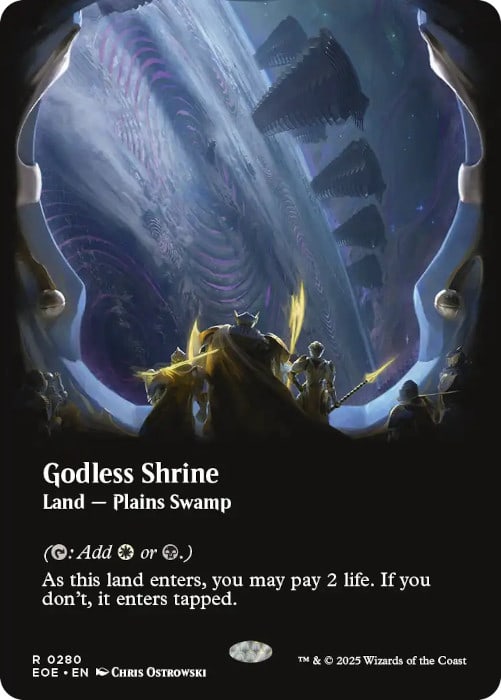
This was something I didn't think about in my earlier years: a fetch land does not specify a Basic Land name; rather, it asks for a land with certain Basic Land subtype, such as Forest or Island.
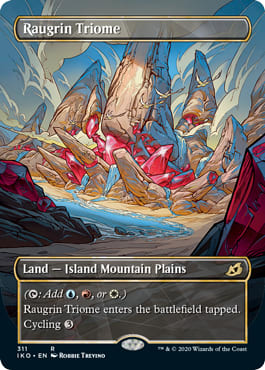
That means that not only can a fetch land find actual Basic Lands, but it can also find non-basic lands that happen to have those Basic Land subtypes.
 |  |  |
How's that for mana consistency?
What makes a true fetch land?
Don't get it twisted; not every land that searches for another land should be considered a true fetch land.
 |  |  |  | 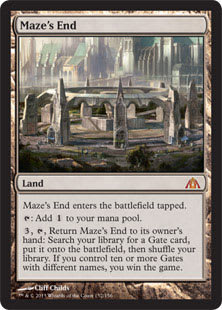 |
Cards like Evolving Wilds, Bad River, Esper Panorama, Fabled Passage, and Maze's End are all examples of lands that search for other lands, but they fall short of what players typically mean when they talk about fetch lands.
These cards are older, budget-friendly alternatives. And while I'll attest that they do similar things as a true fetch land (and in the case of Maze's End, even provide a win condition), they still often aren't comparable to the strengths of true fetch lands.
In practice, these lands usually fail to do one or more of the following:
- Enter the battlefield untapped
- Fetch lands that can enter untapped
- Search for lands with basic land types, allowing them to grab powerful dual lands
And of course, some of them also lack the most important feature of all: premium full-art versions you can shamelessly flex on your friends.
Why You Should Be Playing Fetch Lands in MTG
As you may have guessed by now, there are a plethora of reasons why fetch lands are some of the most played lands in Magic history, but let me break down some of the biggest ones:
Mana Fixing From The Get-Go
This is the biggest reason, and it's not even close.
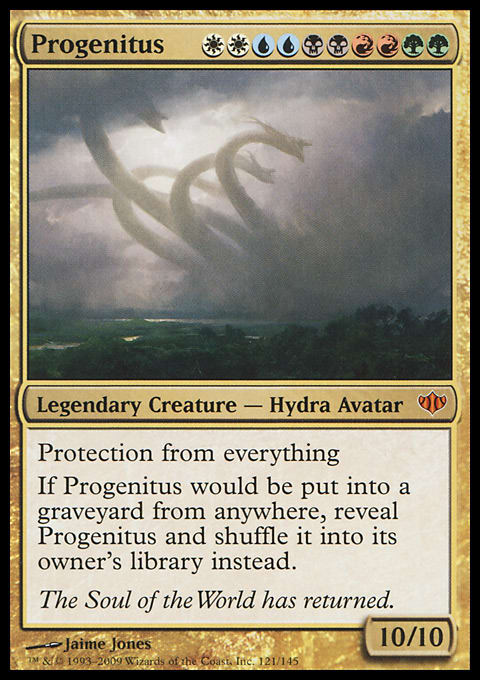
A fetch land helps you get the land you need when you need it. In a two-color deck, that's pretty good. In a three-color deck, it gets even better. In four- and five-color decks, now we're mulliganing aggressively until we find one in our opener.
Like, can you even imagine trying to assemble 


 with just lands off the top or Cultivate?
Thinning The Deck
For years now, this has probably been one of the most argued-over parts regarding whether to slide in fetch lands: Do fetch lands actually thin the deck?
I'm here to tell you that the answer is yes, but also no.
So, when you crack a fetch land, you undoubtedly remove a card from your library. As a result, this ever-so-slightly increases the odds that your future draws are spells instead of lands. Over a long game, and especially across multiple fetches, this idea remains true.
But if someone tells you that deck thinning is the sole reason they're slotting in fetch lands in their mono-red Goblins pile, they are likely overselling it.
I understand that Magic is a game of margins, so small percentages do matter, but when it comes to this particular notion, I'm very much against supporting it. Even more so if it turns your deck from $50 to $200 for only a minute percentage of increasing your win rate.
Fetch Lands and What They Fetch For
For players both new and old, the most common pairing for MTG fetch lands is likely shock lands.

Crack a Flooded Strand and fetch for a Steam Vents, choose to pay two life so it enters untapped, and now your Fetch Land effectively became the exact untapped dual-colored land you needed right now.
It is true that a fetch into a shock land sequence can cost up to three life every time, you have to remember that losing the game because you couldn't cast your spells on tempo will feel worse every time.

And if you happen to have access to the original dual lands (Dang, look at you, baller.), Fetch lands get even better because you get to skip paying the extra life.

I suppose Triomes deserve a mention here as well. Because they have basic land types, your fetch lands can grab them too. In Commander, they're especially popular since a single fetch land can unlock access to three colors at once.
Fetching & Shuffling
 |  |
Top deck manipulation is real, and don't let anyone tell you otherwise.
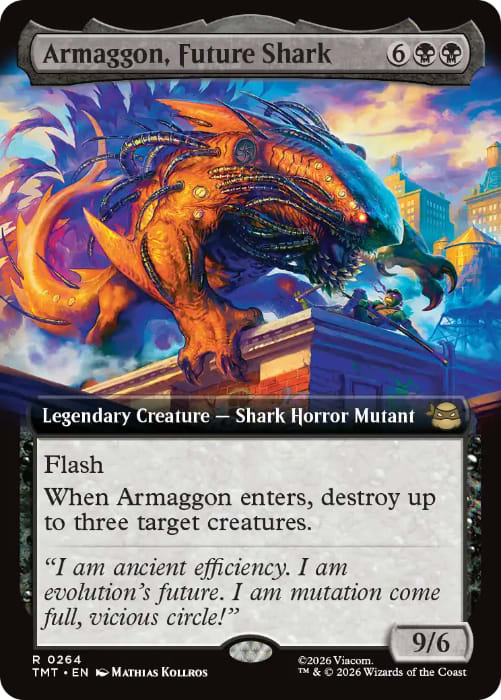
Got an Armaggon, Future Shark in your opening hand? Play a Brainstorm, put it back onto your deck, and shuffle it away when you crack your fetch land.
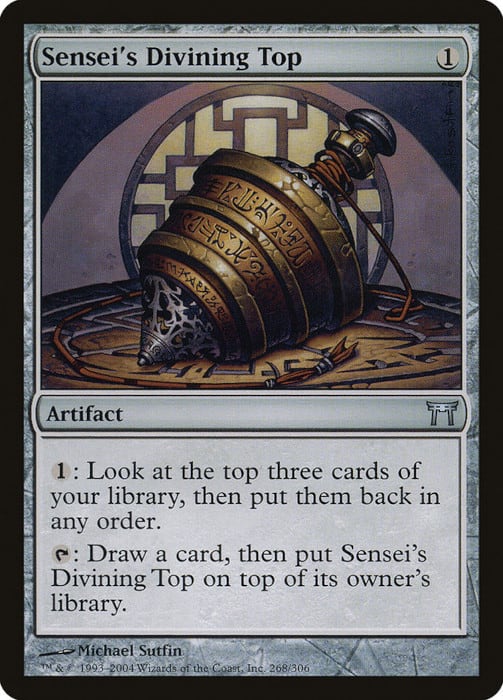
Need some real cards to play with in the early game? Spin your turn-1 Sensei's Divining Top to draw a fresh new card, put your Top back onto your deck, and shuffle it away when you crack your fetch land.
 |  |
Is your opponent casting a Darksteel Monolith even though you clearly have a Counterbalance in play? Now bear with me here, because this really shows what fetch lands do:
- Brainstorm to try and find an eight-mana card to put on top to reveal for the Counterbalance trigger.
- Whiffed? That's okay. Crack your Marsh Flats to shuffle away all the bad cards you've put back with Brainstorm and get a Swamp into play.
- Activate the Sensei's Divining Top that you also happen to have to draw a fresh new card while also putting the Top back onto your deck.
- Sweet! You drew your one Game Changer, Vampiric Tutor. Cast your Tutor with the Swamp we grabbed with Marsh Flats earlier to put your super awesome Armaggon, Future Shark onto the top of your library.
- Let Counterbalance resolve, revealing Armaggon to counter their Darksteel Monolith.
- Before your turn comes back around, crack the Polluted Delta that you played from an earlier turn to shuffle away Armaggon as you realize it's only turn four.
Ahem. So, as you can clearly see, none of this could've happened without fetch lands. Clearly. So, play your fetch lands.
Landfall Synergy
Landfall cards reward you whenever a land enters the battlefield under your control. As such, a fetch land is often one of the cleanest ways to trigger landfall multiple times in a single turn because:
- Landfall Trigger 1: The fetch land itself enters as your land drop for turn.
- Landfall Trigger 2: The land you fetch for enters.
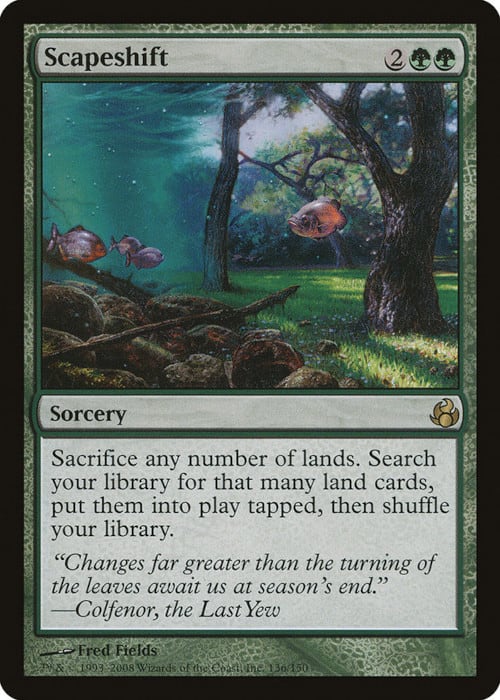
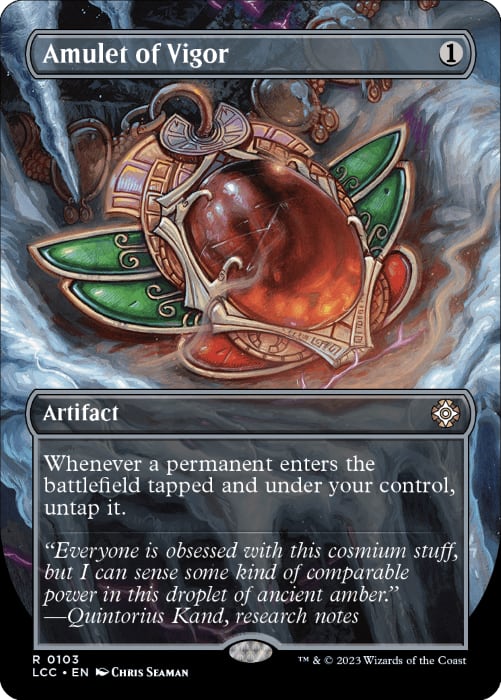
- Landfall Trigger 10+: Play a Scapeshift with an Amulet of Vigor on the field and a graveyard full of fetch lands.
 |  |
That's a lot of Landfall triggers if I do say so myself.
Graveyard Syngery
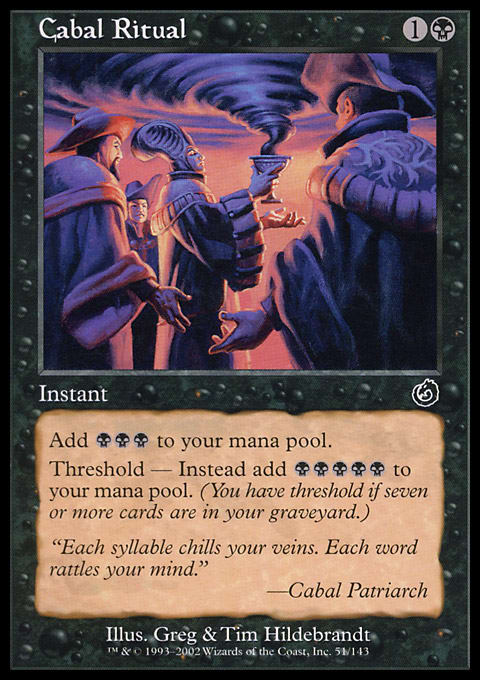
Since a fetch land sacrifices itself as a cost for its ability, this means a land can be effortlessly put into your graveyard without hassle. And this notion matters for a surprising number of mechanics and/or cards:
 |  |  |  |  |
Land Engines
Some cards become genuinely filthy with fetch lands.
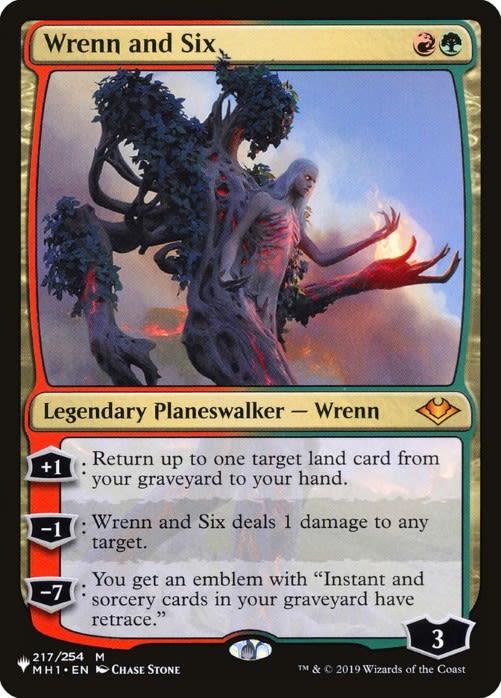
Wrenn and Six, a former Modern all-star, is a classic example. Returning a fetch land from your graveyard to your hand every turn means steady land drops, repeated color fixing, and ongoing shuffle access. Oh, and single-handedly disallowing players from playing one-toughness creatures in the format during its reign (we can't just go about forgetting that part!).
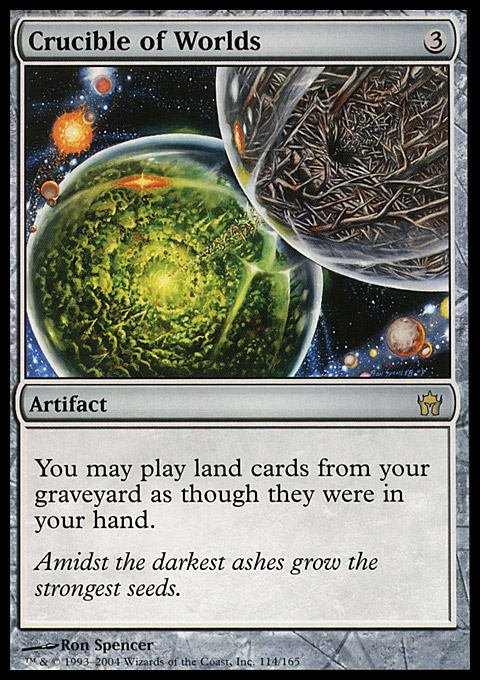 |  |  |
Similarly, cards like Crucible of Worlds, Ramunap Excavator, and Icetill Explorer in lands-matter strategies can turn fetch lands into repeatable value machines.
Once you can start replaying fetch lands from the graveyard, every turn becomes another opportunity to fix, thin a little, and fuel whatever other synergies your deck happens to be running.
And even if your deck is not built entirely around a lands-matter-engine, you have to admit that the floor of this strategy is still solid. The ceiling, on the other hand, sky's the limit.
FAQ: MTG Fetch Lands
Of course, after this lengthy explanation, there are likely some things about fetchlands that need to be cleared up. Here are some commons questions you might have about fetchlands and their answers.
Can fetch lands grant access to any color of mana?
While fetch lands are notorious for mana fixing, a fetch land does not tap to produce mana on its own, nor does it fetch for a land without specified restrictions.
For example, a Misty Rainforest can search for a Forest or Island, which means it can grab a basic land with one of those types, but it can also find non-basic lands like Breeding Pool, Underground Sea, or even Ketria Triome because those cards carry the relevant land subtypes.
With that said, when a deck is built optimally, a fetch land could theoretically grant you access to any color of mana desired at the time it's sacrificed. But in, say, a two-color Simic deck, and you've already fetched your singular dual-land, Breeding Pool, a Polluted Delta will only be able to grab you an Island and not the forest you desperately need.
Do all fetch lands enter untapped?
The main ten fetch lands do, and it is a huge part of why they are so good. The fetch land itself enters untapped, and the land it finds also often enters untapped unless that fetched land says otherwise. This is perfect for keeping up a specific tempo.
What are the true fetch lands MTG players usually refer to?
When MTG players talk about fetch lands, they almost always mean the ten fetch lands originating from Onslaught and Zendikar.
Why are all fetch lands in MTG so expensive?
It's sad to say, but all fetch lands are powerful, widely playable, and desirable across multiple MTG formats. They show up basically anywhere players are allowed to get real ambitious with their mana. As such, their pricing often reflects their wide mass appeal.
The other half of the pricing issue is likely supply. Reprints help, but even after several reprints, fetch lands remain premium staples that a huge number of players actively want. Everybody needs roads, and the roads cost money.
Should I run fetch lands in Commander?
The choice to run fetch lands depends on your deck, your budget, Commander Bracket, and perhaps even your tolerance for shuffling like you are working the floor of a casino.
I'd say that in two-color Commander decks, fetches are nice but not mandatory. In three-color decks, fetch lands get noticeably better because of subtyped dual-lands and triomes. In four- and five-color decks, I'd go so far as to say that you need them.
All this said, though, Commander is still Commander. If your pod is casual and your deck mostly exists to have a good time, you do not need to throw yourself into a financial ravine for the perfect mana base.
Do fetch lands have color identity in Commander?
No, fetch lands do not have a color identity because they do not contain colored mana symbols anywhere.
This means that a card like Windswept Heath can be included in a Commander deck even if your commander is not White or Green, because the land itself is colorless in identity.
What matters after that is what your deck can legally include and what lands you can actually fetch that fit your color identity.
Are all fetch lands MTG staples?
Sometimes, but not automatically. If you mostly play kitchen-table Magic, precon-level Commander, or low-pressure games with friends, fetch lands are more luxury than necessity. They will improve your deck, but not always by enough to justify the cost.
If your deck is multicolored, synergy-heavy, or creeping toward Bracket 3 or 4 territory, fetch lands become much more appealing.
Which is better: fetch lands or shock lands?
This is a bit like asking whether tires or an engine is more important for your car. In practice, the answer is usually both.
Shock lands are excellent because they produce mana on their own and have basic land subtypes.
Fetch lands are excellent because they can become the shock land you need when you need it. The two types of land complement each other incredibly well; as such, both should be included in decks that want a consistent mana base.
Conclusion
Almost every Magic player has lost a game or two due to bad mana. Too few lands, too many lands, wrong colors, wrong sequencing, keeping one-landers in your opening hand, you name it. And in truth, mana is probably still the most honest way to punish a player, and that's why fetch lands matter so much.
Take it from me, a cEDH player who, even noe, absolutely loathes fetch lands. They are expensive. They make you shuffle constantly. They deal you damage. They stay on the board only for like two seconds every time you play one. And did I mention they are expensive?
But, despite all that, boy, are all the fetch lands in MTG absolutely incredible and are mainstays in all my decks that are more than one color.
They fix colors. They let you manipulate the top of your deck. They fuel graveyards. They have all sorts of little synergies.
So, after all this, if you're still wondering why players care so much about fetch lands and why you may need to hop on the bandwagon, here's your answer: fetch lands get you reliable mana, and reliable mana wins games.
At the end of the day, buying fetch lands may still feel rather lame. I don't think that part will ever fully go away, regardless of how long you play. But, if you want your deck to cast its spells on time and your mana to be more consistent, fetch lands are, without a doubt, one of the best investments you can make.