 Locations



Nobody really knows what MTG's Regenerate mechanic does the first time they see it, and plenty of longtime players still get tripped up by it. And to be fair, that's not entirely on them; Regenerate has undoubtedly been one of the most confusing mechanics since its debut in Alpha.
I'm here to break down how Regenerate works, what it saves your Creatures from, what it doesn't stop, and the top cards that still make this retired mechanic worth understanding.
How does Regenerate work in MTG?
[cost]: Regenerate (The next time this creature would be destroyed this turn, it isn't. Instead tap it, remove all damage from it, and remove it from combat.)

So, when a Creature Regenerates, three things typically happen:
- It becomes tapped.
- All damage marked on it is removed.
- If it was attacking or blocking, it is removed from combat.
- It stays on the battlefield, never hitting the graveyard.
Did I say three things? Goodness me, I meant, four things.
See? Regenerate is fairly complex, and we're only getting started.
The History of Regenerate in MTG
Regenerate has been around since the very beginning of Magic: the Gathering, which explains a lot. This is a Limited Edition Alpha-era mechanic, designed back when the game was still figuring out what counted as "simple," "intuitive," or "likely to cause a rules argument in a kitchen somewhere."
 |  |  |
The idea was flavorful enough: some Creatures were just too stubborn, too unnatural, or too deeply connected to the land to stay dead. Green Creatures could heal and regrow. Black Creatures could stitch themselves back together through sheer graveyard audacity. Heck, even early White cards got in on the Regenerate action from time to time, albeit mostly through protection magic.
 |  |  |
And for years, Regenerate was an evergreen part of Magic. Cards like Wall of Brambles, Drudge Skeletons, and Death Ward helped establish the mechanic early.
Later cards like Golgari Grave-Troll, Skithiryx, the Blight Dragon, and Debt of Loyalty showed how annoying and powerful it could be when used well.
The biggest issue was that Regenerate never worked the way most players expected it to. The word sounds like it should mean, "This Creature dies, then comes back." But as we can see from the mechanic's reminder text, this is actually not the case.
With Regenerate, you essentially set up a replacement effect in the form of a "regeneration shield", so to speak, before the Creature would be destroyed, and once that's done, Regenerate replaces the next instance of the destruction of said Creature with: tapping the Creature, removing damage from it, and removing it from combat.
Older versions of the rules didn't make things easier, either. Originally, Regenerate was even tied to the damage prevention step, a now-obsolete part of the turn cycle where players could prevent damage or Regenerate them after damage had been assigned.
Once the Sixth Edition rules changes removed that structure, Regenerate shifted into the "shield" version that players know, but probably don't particularly love, today.
 |  |  |
Eventually, Wizards of the Coast decided to move away from Regenerate altogether. It had all become too confusing, too wordy, and too easy to misunderstand.
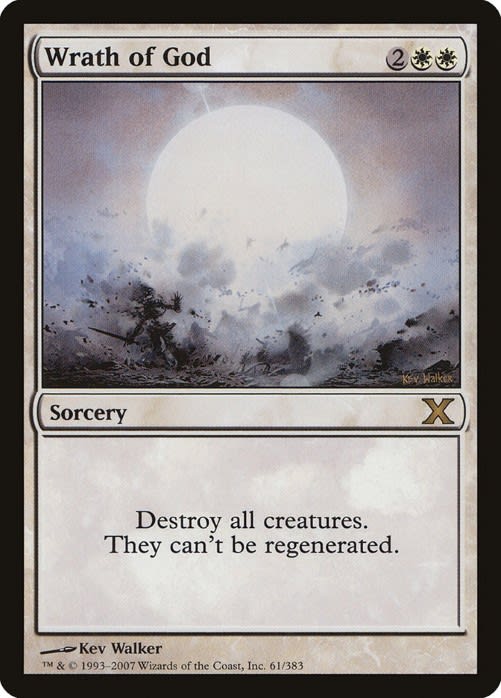
On top of that, many old removal spells included the phrase "can't be Regenerated," which meant the mechanic often needed extra text on cards just to be turned off. And so, understandably, after Oath of the Gatewatch, Regenerate was removed from evergreen status and retired from premier Standard-legal sets.
MTG Regenerate Rules
Before we get into my picks for the top Regenerate cards, let's quickly make sure we are all on the same page about how all rules play out in practice.
Regenerate Prevents Destruction & Not After the Fact
Regenerate effects must be set up before the permanent would be destroyed if you want to save it from being destroyed.
Once a Creature is in the graveyard, Regenerate cannot help it. If you plan to rely on this effect, you should always activate the ability or cast the spell while the Creature is still on the battlefield and before the destruction can occur.
Each Regeneration Shield Saves the Permanent Only Once
A single regeneration shield only protects against one destruction event. If your Creature is destroyed once, the shield applies and is used up. If your opponent tries to destroy it again later that same turn, you won't be able to rely on the same card or ability a second time
Regenerate Creates a Replacement Effect
Regenerate is, at the end of the day, a replacement effect, which means it replaces one event with another.

So, if normally the event would be: "Destroy target creature," via a card like Murder.

Regenerating with something like Boon of Erebos, effectively changes that event to: "Do not destroy this Creature. Instead, tap it, remove all damage from it, and remove it from combat if it's attacking or blocking."
Regenerate Does Work Against Lethal Damage
When a permanent Regenerates, all damage marked on it is removed, which is why Regenerate works against lethal damage. If your 3/3 Creature has three damage marked on it, it would normally be destroyed as a state-based action. But if it has a regeneration shield, that destruction is replaced, the damage is cleared, and the Creature is Regenerated with no damage marked on it.
Regenerate Does Work Against Deathtouch
Regenerate can, thankfully, also save a Creature from Deathtouch. Deathtouch means any amount of damage dealt by that source is enough to destroy the Creature. And since the end result is still considered a destruction effect, Regenerate can replace it effortlessly.
Regenerate Does Work Against Board Wipes

Regenerate can absolutely save your Creatures from most board wipes, as long as the wipe specifically seeks to destroy Creatures and doesn't say "they can't be Regenerated."
 | 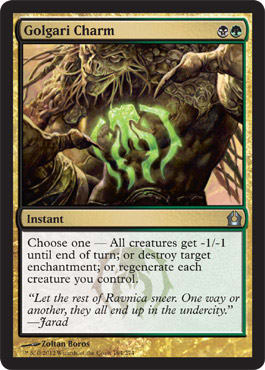 |
This is where cards like Wrap in Vigor and Golgari Charm truly earn their keep. When your opponent inevitably casts something along the lines of a Day of Judgment, these effects can singlehandedly win you a game of MTG by regenerating all Creatures you control while everyone else is forced to reluctantly sweep their Creatures into the graveyard.
Regenerate Does Not Stop Exile Effects
 | 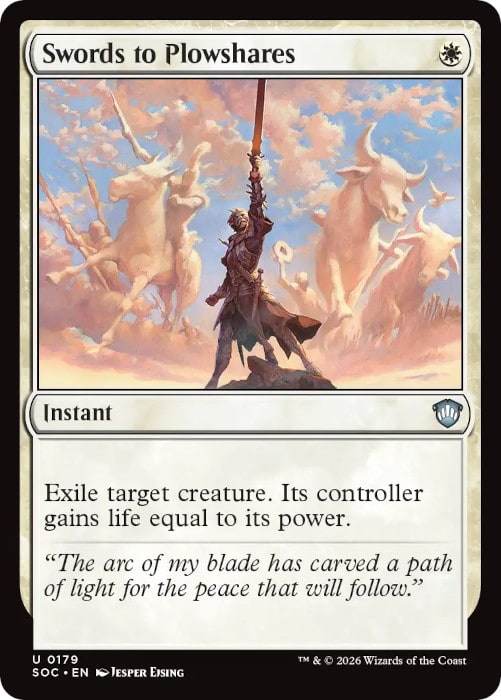 |
If a spell says "exile target creature," Regenerate essentially does nothing because the Creature is not being destroyed but is just being moved to exile.
Regenerate Does Not Stop Sacrifice Effects
 |  |
If an effect says you sacrifice a Creature, that Creature is not being destroyed. You are putting it into the graveyard as a voluntary sacrifice, so Regenerate does not apply here either.
Regenerate Does Not Stop Effects That Affect Toughness
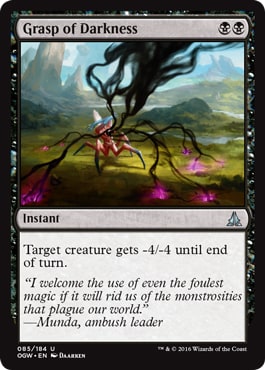
If a Creature's toughness becomes zero or less, it will be put into its owner's graveyard as a state-based action. Yet again, this is another instance of non-destruction, so Regenerate can't do anything to prevent your Creature's demise.
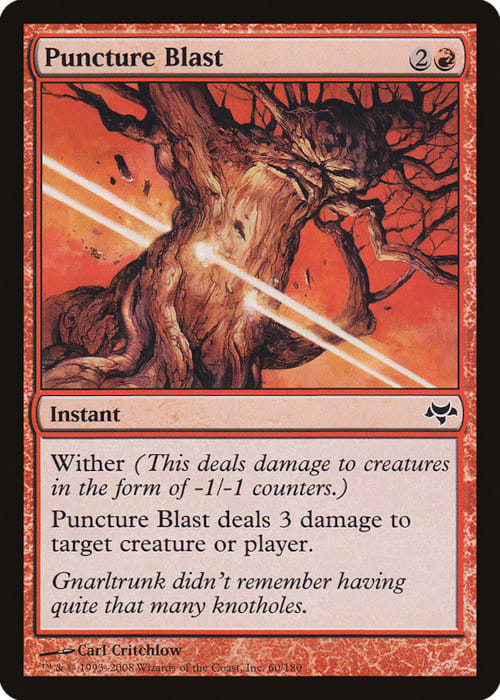
This also means -1/-1 counters can be very effective against Regenerate Creatures. Regenerate removes damage but it never removes counters. So, in short, if there are enough -1/-1 counters to reduce your Creature's toughness to zero or less, it will also be put into the graveyard as a state-based action.
The 5 Top MTG Regenerate Cards
While Regenerate has been retired from mainstream Magic design, that doesn't mean the old cards stopped being annoyingly good at keeping all your stuff alive. Here are my picks for the five top Regenerate cards still lurking about today.
5. Ink-Eyes, Servant of Oni
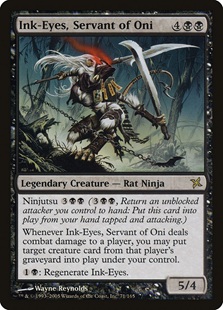 |
Ink-Eyes, Servant of Oni, is already scary before Regenerate even enters the conversation. She has Ninjutsu, meaning she can sneak into the battlefield by returning an unblocked attacker to your hand, then enter the battlefield tapped and attacking. And once she connects, she lets you put a Creature card from that player's graveyard onto the battlefield under your control.
When your opponent finally realizes what an Avengers-level threat she truly is, her Regenerate ability makes it practically impossible to cleanly answer her. Even if your opponent finally lines up a removal spell or tries to trade with her in combat, Ink-Eyes can simply Regenerate, stay on the battlefield, and keep threatening more graveyard theft turn after turn.
Also, if we can all be honest with ourselves for just a second, her art is fantastic.
4. Wolverine, Best There Is
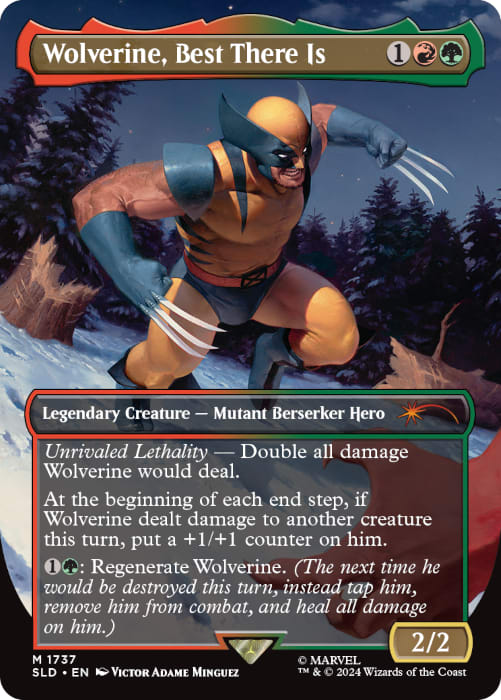
Wolverine, Best There Is, is one of the newer flavor-first returns to Regenerate, and honestly, if any character deserves the mechanic, it's Wolverine. Everybody loves the X-Men, and Wolverine is basically the walking embodiment of "I should be dead, but I'm going to make that your problem."
Just like in the comics, his whole deal is taking absurd amounts of damage, healing through it, and coming back even stronger. And mechanically speaking, that shows up beautifully here as his static ability doubles all damage he would deal, and at the beginning of each end step, if he dealt damage to another Creature that turn, he gets a +1/+1 counter.
Then, of course, he can Regenerate.
And his Regenerate ability is particularly important here because, as I briefly touched on earlier, Regenerate does not cause counters to fall off. This means that your opponents can continue to try to destroy him, but as long as you have the mana, he can keep on surviving and keep on getting scarier, bub.
3. Thrun, the Last Troll

Thrun, the Last Troll, is one of the most infamous Regenerate Creatures in Magic, mostly because answering him fairly feels like trying to argue with a literal boulder.
He can't be countered, he has Hexproof, and he can Regenerate himself for just two mana. That is a deeply rude package of abilities all stapled onto one very stubborn Troll.
 |  |  |
I think it goes without saying that all his abilities make Thrun a literal nightmare for control decks and removal-heavy strategies that rely on one-for-one answers.
He asks your opponent to have something very specific, like a "target opponent sacrifices" effect, a board wipe that gets around Regenerate, and/or a way to shrink him through toughness reduction. And if they can't find those specific answers within four or five turns, well, then I guess that's the game.
2. Ezuri, Renegade Leader

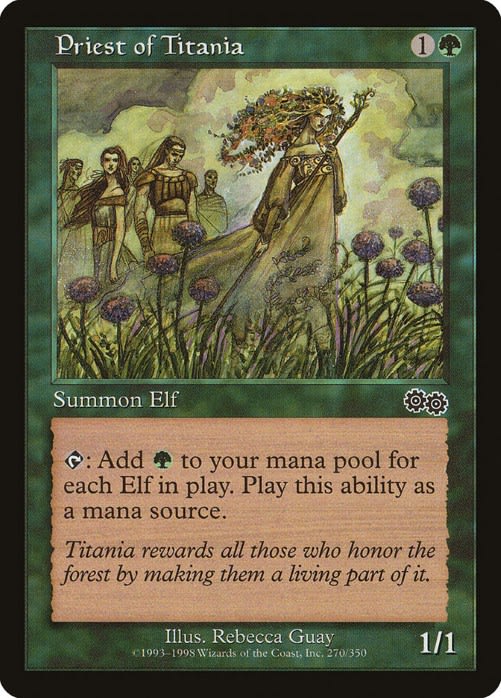
Ezuri, Renegade Leader is undoubtedly one of the best Elf Commanders ever printed, and Regenerate is a big part of why he's so annoying to play against. Elf decks already flood the board with mana dorks, lords, and combo pieces, so having a Commander who can protect those Creatures from destroy effects gives the deck a lot of staying power.
His first ability lets you Regenerate another target Elf, which means your key pieces are harder to pick off as long as you have Green mana open. And when do Elf decks not have Green mana open, am I right?
Your opponent tries to destroy your mana engine(s), your important Elf lord, or the Elf that's enabling your combo? Ezuri can step in for the low, low price of  and keep it alive.
 |  |  |
I will add that it is rather unfortunate that he can't Regenerate himself, but protecting the rest of the army is usually more than enough.
But wait, there's even more to Ezuri. For just  , Ezuri can grant all your Elf Creatures a hefty +3/+3 stat boost as well as Trample until the end of the turn. And in a deck that can produce absurd amounts of Green mana, all while being super resilient to board wipes, Ezuri is truly the Elf payoff Commander of choice in my book.
1. Welding Jar

Welding Jar gets the top spot for me because it is cheap, efficient, and far more versatile than a zero-mana uncommon Artifact has any right to be.
At first glance, I'd say the card's fairly unassuming: sacrifice Welding Jar to Regenerate a target Artifact. Probably not worth a Counterspell, right?
 | 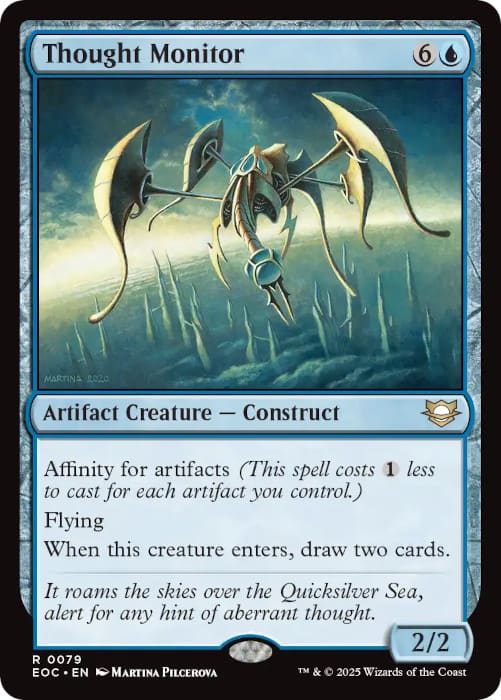 |  |
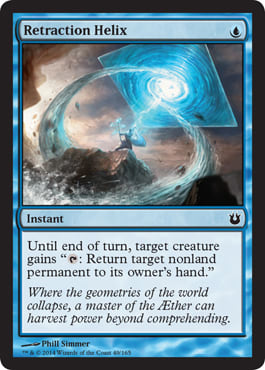
Not exactly. The real strength of Welding Jar is how easily it fits into not only Artifact decks, but practically any deck. Since it costs nothing, it can instantly help turn on cards and mechanics like Mox Opal, Affinity, and Metalcraft without ever stumbling.
 |  |  |
And since, again, the Jar costs literally nothing, it can also support combo decks, Storm decks, and basically any strategy that just wants more free spells at any given time.

And then, when your opponent finally points removal at your combo piece, Commander, Stax piece, or even your Blightsteel Colossus, Welding Jar will always be there, ready to bite the bullet, all so you can win the game uncontested.
Conclusion
So, is Regenerate actually a good mechanic?
Kind of. Which is probably the most honest answer I can give you for a mechanic this, er, sophisticated.
At the end of the day, Regenerate is clunky, confusing, and not exactly beginner friendly. It asks you to understand replacement effects, timing windows, combat rules, and the difference between being destroyed, sacrificed, exiled, bounced, or put into the graveyard for having 0 toughness.
That's a whole lot of understanding needed for a mechanic that sounds like it should've just meant, "My creature revives because it Regenerated."
 |  |  |
It makes total sense that it eventually disappeared. Modern mechanics like Indestructible, Shield Counters, and Death-and-Return effects (i.e., Supernatural Stamina) are all much more intuitive to understand at a glance.
If a Creature gains Indestructible, you know it can't be destroyed. If it has a Shield Counter, you can physically see a counter protecting it. And if you're triggering a Death-and-Return effect, it's at least very clear in how the whole interaction plays out since it's clearly presented on the card's textbox.
Regenerate, meanwhile, always just asks someone to pull out the rules.
While it is not the cleanest mechanic, the easiest mechanic, or one you'd want to explain to someone during their first game, it certainly tends to make its way as one- or two-of in your decklists once you understand all its intricacies.
But really, is Regenerate good, though?
In the right deck and strategy, absolutely. And I'm not even saying Regenerate's good because it was a well-thought-out mechanic, either (Heck, this was a mechanic that was dreamt up well over 30 years ago).
It's good, though, because it gives us players just another way to make board states awkward, protect key pieces on the cheap, and punish opponents who assume their removal spells will always land just because you're not playing Blue.
And, if for nothing else, I'd say it's still good enough, even today, to remind everyone why they had to print "can't be Regenerated" so many times in the first place.