

 Locations



Nearly every game of Magic ends the same way: a player reduces their opponent's life total to zero (or there's an obviously clear path to this outcome, causing a concession). It's the classic outcome designed by Richard Garfield when he invented the game over 30 years ago.
For almost as long, the game also contained unique situations and card combinations that could lead to an "alternate win condition." According to the MTG fandom Wiki, "Alternate-win cards provide additional means for winning the game other than reducing all opponents life totals to zero." Some of the more common examples include running your opponent out of cards or killing them with poison counters, but could also leverage specific cards that contain text, "...you win the game..."
This begs a question. Why would a player choose to include an alternative win condition as a part of their strategy? Is this a distraction from the primary purpose of the game, or are there true benefits to leveraging an alternate win condition?
The Strategy of Alternate Win Conditions
Rule 104 in the official Magic rule book touch on alternate win conditions. It discusses the various was of losing the game. Of course, dropping an opponent's life total to zero or less is a popular choice. However, 104.3c-e talk about alternative ways for a player to lose the game (when all your opponents lose, you win by definition):
- 104.3c If a player is required to draw more cards than are left in their library...
- 104.3d If a player has ten or more poison counters...
- 104.3e An effect may state that a player loses the game.
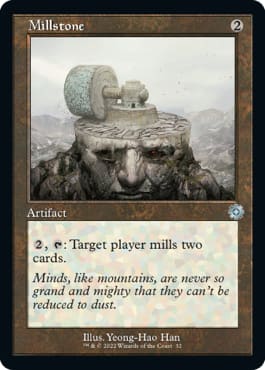
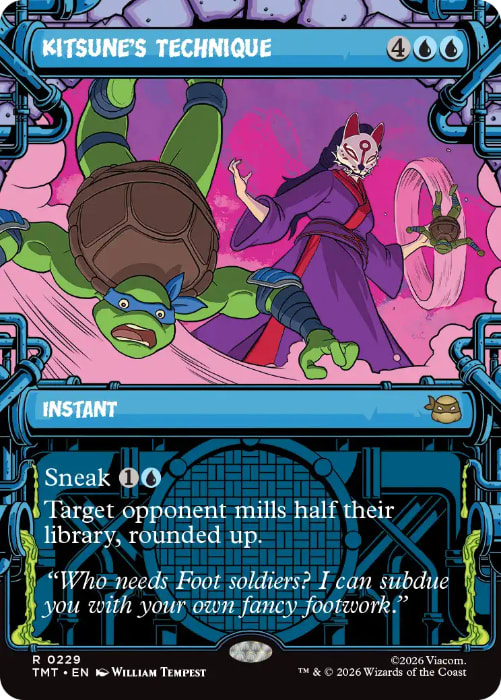
Right away, we note three possibilities. First, there is the strategy of running your opponent out of cards. This strategy dates all the way back to Magic's beginnings, with Antiquities' Millstone being the first card deliberately designed to accelerate the consumption of your opponent's deck. Since then, there have been numerous options that force cards from your opponent's library into their graveyard.
 |  |
Second, created in 1994's Legends set, we have poison counters. Inflicting an opponent with ten poison counters causes them to lose the game.

While Magic's early poison cards were clunky and cost-ineffectively, they have since evolved into an aggressive, competitive strategy in various Constructed and Limited formats.
Finally, there's the third catch-all bucket, describing an effect on a card that explicitly states a player loses the game (or wins the game). There are dozens such cards - Abe Sargent wrote a thoughtful piece on some of the strongest such cards.
I won't rattle off the full list (MTG fandom declares there are 59 win conditions), but I'll discuss a few highlights in a moment. As you can imagine, not all alternative win conditions are created equally; some merit strategic consideration for competitive play while others are mostly available for the memes. You may be wondering... how do you decide an alternate win condition is the right approach for a deck?
Why Include Alternate Win Conditions
On the surface, alternative win conditions seem like a distraction. If reducing your opponent's life total to zero is such a consistent, effective method (most Magic cards are designed to enable this objective), wouldn't including alternate win conditions be a distraction? For example, attacking your opponent with creatures while also milling them each turn with Riverchurn Monument may seem counterproductive.
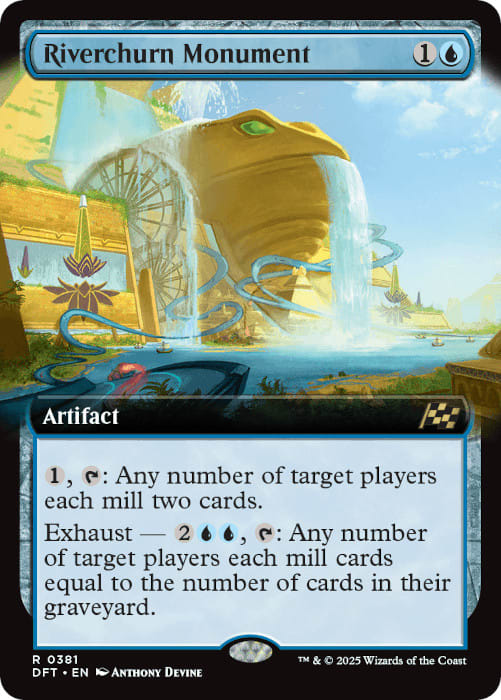
If you manage to win the game, you'll either end up milling your opponent or you'll kill them with damage. Accomplishing the former means all that damage was pointless and the latter means the mill strategy was pointless.
Despite this contradiction, there are multiple reasons to consider leveraging alternate win conditions.
One key reason is to provide your deck with versatility. For example, in some Standard Jeskai Control builds, players include a single copy of Riverchurn Monument as an alternate win condition for certain matchups. The mirror can be difficult to win with damage because the Jeskai Control deck packs a ton of removal and interaction and very few win conditions. If you've cast all your Jeskai Revelations and Lightning Helixes, but your opponent had the answers each time, Riverchurn Monument may be the only live card remaining in your deck. Without it, your deck would effectively be drawing dead.
Another reason to include alternate win conditions is to introduce a new vector of attack, one which your opponent may not have anticipated. When a card with an alternate win condition hits the battlefield, it has a tendency to warp gameplay around itself. Triskaidekaphile is a good example of this. You are playing a typical game of Magic, but once this creature hits the battlefield, your opponent suddenly has to worry about their life total and your hand size.

Playing a card that declares you as the winner if a certain in-game metric is achieved can create a game within the game when your opponent least expects it.
This goes hand in hand with another reason players include alternate win conditions in their decks: it creates an asymmetric dynamic in a game. In a standard game of Magic, both players sling cardboard with the common goal of reducing the other players' life total to zero. When you include alternate win conditions in your deck and build your deck around that condition, it creates an asymmetry. Suddenly, you and your opponents are playing along a different vector.
For example, consider the card Mortal Combat, originally from Torment.
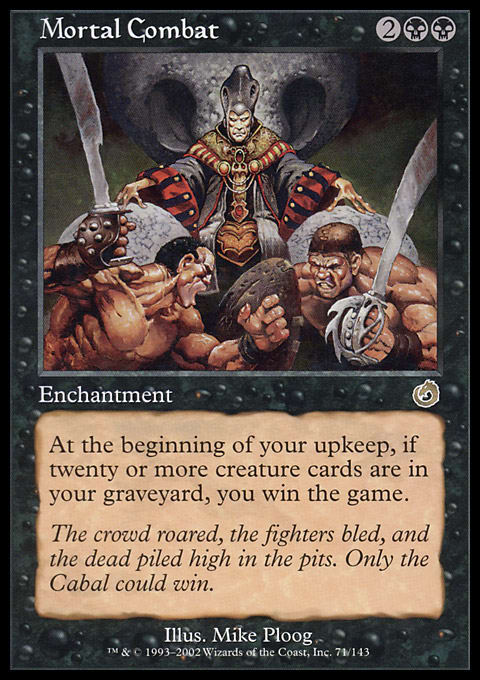
This card couldn't care less about your or your opponent's life totals. This card can do only one thing: win you the game if you have 20 or more creatures in your graveyard.
When you sit down at the kitchen table with a Mortal Combat deck, you know that this is a possible path to victory, but your opponents may not. Since many decks include a bunch of creatures, your opponents may continue killing your creatures and attacking your life total thinking they were playing a typical game. Then when you drop this enchantment on the battlefield after milling yourself a bunch and casting Damnation, your opponents suddenly realize their strategy needs to change immediately. This gives you the upper hand.
Combos and Memes
In addition to the strategic advantages, pursuing alternate win conditions in a deck can provide shortcuts to victory. Hundreds of combo decks have been successful across various formats over the years, and some of these combos focus around an alternate win condition. One example is the classic Thassa's Oracle and Demonic Consultation win:
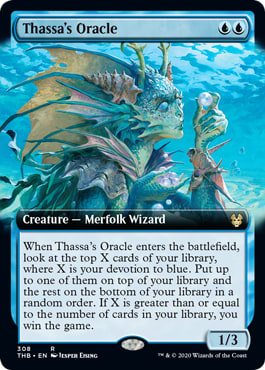 |  |
When successfully resolved, this two-card combination is an instant win. Step one, get to three mana (two Blue and one Black). Step two, cast Thassa's Oracle. Step three, with Thassa's Oracle on the stack, cast Demonic Consultation. Step four, name the silliest card you can think of that's not in your deck (I always liked "Ach Hans, Run!"). This process exiles your entire deck, so Thassa's Oracle sees an empty library when it enters, thereby winning you the game.
Combos like these are quick and powerful ways to victory. While you need to draw both cards together in order to succeed, tutors, cantrips, and card draw are tools you can use to dig through your deck. With a little luck and smart gameplay, an alternate win condition can become a powerful Constructed strategy.
In addition to being fast and powerful, there's one final reason you may want to include alternate win conditions in your deck: the meme value. There is a bit of social media equity earned when you successfully defeat a player using some obscure, oft-overlooked scenario. Imagine actually winning with a card like Barren Glory.
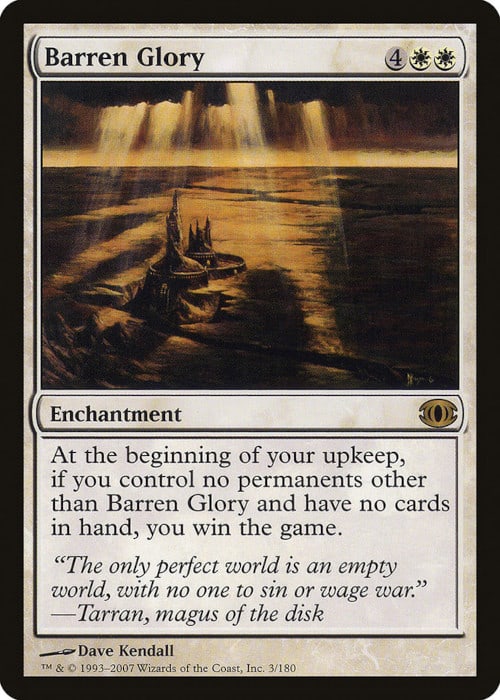
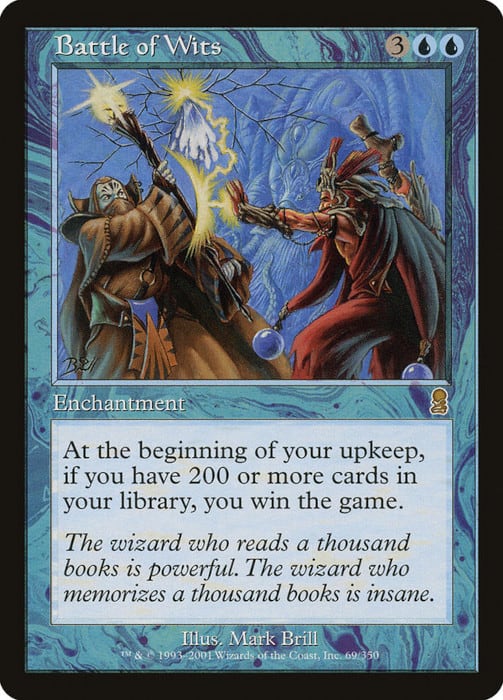
Such a feat is very difficult. Should you build your entire deck around the card, you might be able to steal a win one out of ten or twenty games. Those victories are so much sweeter, however, because you'll have accomplished something many players have only dreamt about. The more obscure the win condition, the better the meme!
 |  |
Wrapping It Up
Alternate win conditions have been around in Magic for virtually the entire history of the game. It began as a strategy to deck your opponent, then incorporated victory through poison counters. Since then, dozens of individual cards can lead you to immediate victory.
Sometimes, a combination of cards is powerful enough to play in competitive environments. Other times, it's worth pursuing for the surprise factor alone. I like dusting off the most obscure win condition cards for the challenge. Whatever your motivation, consider including alternate win conditions in your next deck. You never know what memories you'll forge and stories you'll build by shuffling up these outside-the-norm cards.
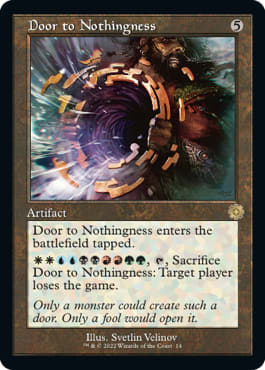
Bonus points if you win with my favorite alternate win condition, Door to Nothingness, because who doesn't want to play a card that literally says, "Target player loses the game."