


 Locations



Monstro OTK Is a Real Deck, Not a Meme
It's not often that Lorcana gives us a combo that feels like it belongs in a different game. Amethyst/Amber Monstro OTK is one of those. It's flashy, it's a little rude, and it rewards tight sequencing more than people expect.
The best part is that it isn't "hope they don't interact" nonsense. You still have to earn the win. You're playing a real early game, you're managing your ink choices, and you're picking your spots. When it comes together, though, you can go from "I'm behind on board and lore" to "good game" in one turn.
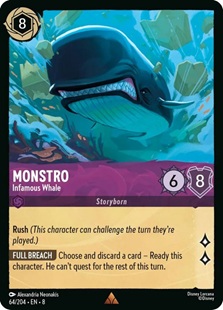
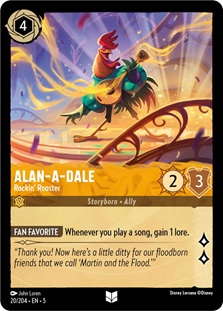
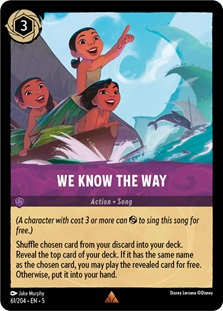
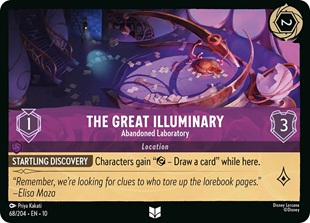
This build is built around Monstro plus The Great Illuminary as the engine, then Alan-a-Dale plus We Know the Way as the win button.
 |  |  |
The Concept
You're trying to do three things:
- Survive the early turns without falling so far behind that you're dead on arrival.
- Land Monstro safely so you start a turn with him ready and under your control.
- Loop songs to 20 lore using a draw-discard engine and a song recursion trick.
That middle step is the real skill test. People read "OTK" and assume the combo turn is the hard part. It's usually the turn before that.
The Core Combo Pieces
Here's the package you're assembling:
- Monstro - Infamous Whale (the engine body)
- The Great Illuminary - Abandoned Laboratory (turns Monstro into a repeatable draw outlet)
- Alan-a-Dale - Rockin' Rooster (your lore payoff for chaining songs)
- We Know the Way (two copies enable the back-and-forth song loop)
- Circle of Life (insurance if Alan-a-Dale gets discarded while you're cycling)
- Donald Duck - Coin Collector (a redundant "one turn only" version of the location effect, which can be all you need)
Here's an example deck from Zan Syed, which won a CCS event not too long ago:
Monstro OTK | Zan Syed
- Characters (40)
- 1 Alan-a-Dale - Rockin' Rooster
- 1 Donald Duck - Coin Collector
- 2 Huey - Reliable Leader
- 2 Iago - Stompin' Mad
- 2 Madam Mim - Elephant
- 4 Cheshire Cat - Inexplicable
- 4 Demona - Scourge of the Wyvern Clan
- 4 Elsa - The Fifth Spirit
- 4 Genie - Wish Fulfilled
- 4 Hades - Looking for a Deal
- 4 Monstro - Infamous Whale
- 4 Rafiki - Mystical Fighter
- 4 Royal Guard - Octopus Soldier
- Actions (4)
- 4 The Horseman Strikes!
- Items (8)
- 4 Junior Woodchuck Guidebook
- 4 Lantern
- Locations (4)
- 4 The Great Illuminary - Abandoned Laboratory
- Songs (4)
- 1 Circle of Life
- 3 We Know the Way
If you're wondering why this deck is Amethyst/Amber instead of Amethyst plus something else, it's basically Alan-a-Dale. He's the cleanest payoff that turns "I can loop actions" into "I actually win."
How the Loop Actually Works
The short version:
- You start the turn with Monstro in play and ready.
- You play The Great Illuminary.
- You pay 1 ink to place Monstro into the location.
- Now you can:
- Exert Monstro to draw
- Discard a card to ready Monstro
- Repeat until you've churned through your deck
Once you've "cycled" enough, you set up the win:
- You want one We Know the Way in hand and the other in the discard.
- You cast the one in hand, name the one in discard, and keep bouncing them back and forth so you can keep casting songs.
- With Alan-a-Dale in play, those repeated song casts generate enough lore to close immediately.
If Alan-a-Dale gets pitched while you're cycling, Circle of Life can bring him back, and Monstro can sing it because it's a big song.
That's the OTK moment. The deck is mostly about everything that happens before it.
What Your Deck Does Before turn eight
You're not Sapphire. You're not casually dropping eight ink on schedule every game. So, the shell is built to do two jobs:
1) Reach Monstro Faster
Cards like Lantern and Pluto show up specifically because shaving even one turn off Monstro changes your matchups a lot.
2) Keep the Board From Getting Out of Hand
You'll see lists lean on cheap bodies that trade up, plus a few action-based tools that double as tempo plays.
A few examples you'll run into a lot:
- Royal Guard - Octopus Soldier as an early stabilizer that can take a punch.
- Hypnotic Strength to turn small characters into real challengers and keep trades favorable.
- Dumbo - The Flying Elephant plus The Horseman Strikes! as a surprisingly clean way to answer Evasive threats (yes, including giving an opposing character Evasive so the removal line works).
And then the glue cards:
- Be Our Guest helps you find Monstro or your missing combo piece when your hand is half setup and half panic.
- Junior Woodchuck Guidebook refills your hand and doesn't get in the way of the combo turn because it's cheap.
Concrete Play Patterns (What Turns Look Like)
Here are a few real "this is what I'm trying to do" sequences.
Ideal Early Keep
If my opening hand has a ramp piece, a search piece, and something that contests the board, I'm happy.
Think:
- Pluto or Lantern
- Be Our Guest
- Any 1 to 3 cost character that trades well
Your first few turns are about avoiding the trap of "questing because I'm Amber." You do not need to race. You need to not die.
Midgame Setup Turn
This is the turn that matters most, and it's usually where people get sloppy.
You play Monstro when you can either:
- protect him (bodyguards, board presence, forcing awkward trades), or
- play him when your opponent is tapped low and can't cleanly answer him
If you play Monstro and he survives to your next turn, you're heavily favored to win on the spot if you already have Illuminary access.
Combo Turn Checklist
Before you go for it, do a quick scan:
- Did I start the turn with Monstro in play and ready?
- Do I have access to The Great Illuminary or Donald Duck - Coin Collector?
- Is Alan-a-Dale available, or can I recover him with Circle of Life?
- Do I have both copies of We Know the Way available between hand and discard?
That last bullet is huge. If you rush the cycling and accidentally leave both copies in the same zone, you can brick your loop.
Flex Slots and Tuning Ideas
The combo core is fairly tight, but the support cards move around a lot depending on what you expect to play against.
A few common directions:
- More early bodies if your locals are full of fast decks and you keep dying with combo pieces in hand.
- More draw and digging if your games go long but you're failing to assemble Illuminary plus Monstro consistently.
- More spot answers if Evasive boards or sticky threats keep slipping through your challenges.
The key rule: do not cut so many inkables that your opening hands turn into "cool, five uninkables and a dream." This deck already asks you to manage resources carefully.
Matchup Notes (Quick and Practical)
Into Aggro
Your job is simple: trade, trade, trade. Let them take a few early lore if it means your board stays intact.
When you stabilize, you can win from almost anywhere because your finish doesn't care what the lore total looks like.
Into Control
Control decks tend to give you time, but they also have cleaner answers to big characters. Your Monstro turn needs to be planned. If you can force them to spend removal earlier on your midgame threats, that's perfect.
Into Discard and Hand Pressure
This is where you treat Be Our Guest and Guidebook like MVPs. If your opponent can shred your hand, the combo becomes a lot more about redundancy and recovery lines.
Also, do not be afraid to ink a "nice" card early if you already have overlapping combo access. You'd rather be able to play the game than stare at a perfect combo you can't afford.
Common Mistakes I See (Even From Good Players)
Playing Monstro too early. If you can't protect him or can't combo next turn, you're handing your opponent a clean window to answer your entire plan.
- Over-questing with early characters. You're not an aggro deck with an OTK. You're a combo deck with survival tools.
- Cycling without a plan. On the combo turn, know what you're trying to place in hand, what you're trying to place in discard, and when you stop drawing. Your deck can absolutely beat itself.
Closing Thoughts
Amethyst/Amber Monstro OTK is the kind of deck that makes people sit up in their chair, even if they've played the matchup a dozen times. It asks you to play clean defense, then rewards you with a finish that feels like flipping the table over in the nicest possible way.
If you've been stuck in "play the best midrange deck or suffer," this is a great palate cleanser that still holds up against real competition. Give it a few reps, track why you lose (it's usually the Monstro timing), and tune your flex slots from there.
If you try it this week, what's the first thing you'd change: more protection for Monstro, or more tools to slow the early game down? Let me know what changes you would make and tell me about it on X at @_EmeraldWeapon_.