 Locations


Commander color identity in Magic is one of the first elements that new players to the format learn. In Commander, your color identity determines which cards can be included in your deck.
As a rule of thumb, the color identity of a Commander consists of all the colored mana pips in their casting cost and rule text box (but excludes reminder text).
What this means is that if a Commander has an activated ability in its rule text that has mana colors, the color identity of the Commander includes those, but if there's reminder text or flavor text with a symbol it doesn't.
Each card in a Commander deck must fit into the color identity. For example, if a Commander's color identity is Blue, Green, and White (also known as Bant), you can't include any cards inside that deck that are Red or Black.
Why Color Identity Exists in Commander
"Restriction breeds creativity." - Mark Rosewater, Head Designer

Color identity is one of the core rules that help make Commander what it is. It forces every deck to fit a specific flavor and theme, contributing to a distinct identity. This limited card pool creates an environment where every deck is truly unique, rather than packed with one-of-everything strong.
Without color identity, the meta in Commander would only ever be a hundred-card pile of the same good-stuff. With this rule in place to limit the card pool and steer every player in a unique direction, creativity and politics have become fundamental personality traits of the format.
How to Check a Card's Color Identity

There's a surefire way to tell what a card's color identity is. Here's how:
- Look at the card's mana cost. All the colors in the cost are part of the color identity, but that's not all.
- Look for colored mana symbols in the card's rule text. Those also form part of the card's color identity.
- If it's a double-faced card, check the other side.
- If there's no casting cost on the card, there's usually a colored dot along the type line that tells you what color that side of the card is.
Examples of Color Identity
Let's take a look at a few examples so you can get a feel for what color identity should look like.

The first one we'll look at is Thrun, the Last Troll. His casting cost is only Green, which means his entire color identity is Green. If he's the Commander, only Green cards can go into your deck. If he's in a deck, he can only be in a deck that has Green as part of the color identity.

Aether Spellbomb is an Artifact so it's technically colorless, but it has an activated ability that requires Blue. According to the rules, that makes Aether Spellbomb a card with a Blue color identity.

Lastly, we'll examine Pontiff of Blight. Pontiff's casting cost contains Black, meaning that it has a Black color identity, but what about that reminder text for Extort?
Since the symbol appears on reminder text, it doesn't count towards the card's color identity. If Extort had the symbol inside the textbox for activation, then it would be a 
 card, not just Black.
Color Identity Is Not Always the Same as Card Color
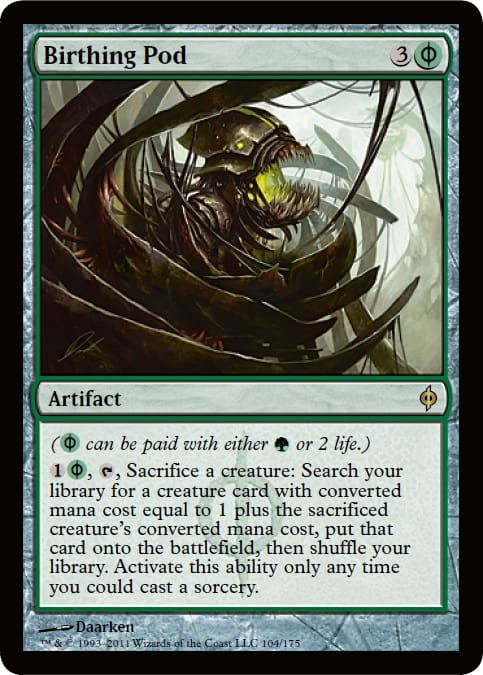
Color identity and card color are sometimes used interchangeably, even though the two terms aren't the same. We looked at Aether Spellbomb, but there are other cards that aren't as obvious (or are more obvious) that their card color and color identity don't match.
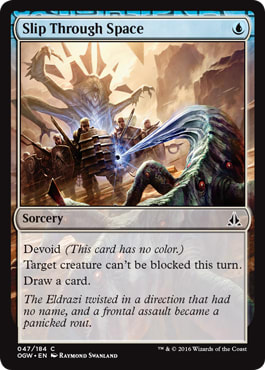
Slip Through Space literally tells you that it's colorless because of the Devoid keyword, but the casting cost has Blue in it. Despite being a colorless spell, the color identity of Slip Through Space is Blue.
Devoid doesn't change the color identity as a whole, but it does get around things like protection from Blue, since it's colorless.

Crimson Wisps says target Creature is Red, but color identity only matters outside the game as a deckbuilding restriction. So, if the Creature changes color on the field, it doesn't affect the card's color identity.
The long and short of it is that game effects don't change color identity, even if they change the color of the card.
Cards That Cause the Most Color Identity Confusion
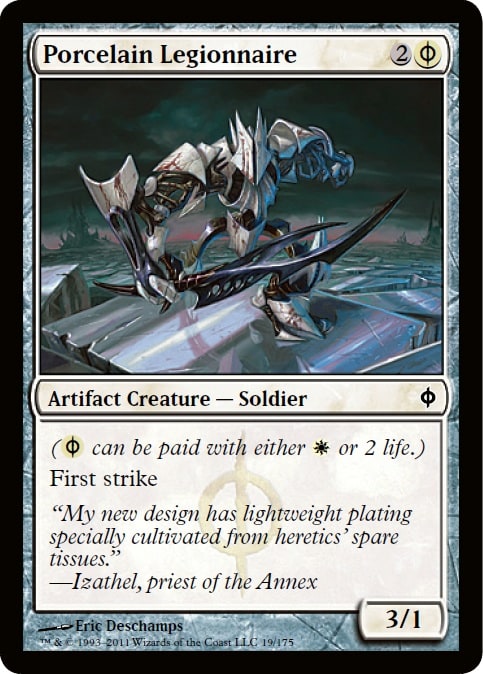
Because color and color identity mean two different things, there are a lot of edge cases that have to be considered. These are the most common cases that come up:
- Hybrid Mana: Hybrid mana spells count as both colors.
- Phyrexian Mana: While players can pay life instead of the mana type, it still takes the color of the alternate mana value. So, for example, Gut Shot counts as a Red card, even though the card can be cast without Red mana.
- Devoid: Devoid cards take the color identity of the casting cost of the spell, even though the spell in-game remains colorless.
- Reminder Text: Some keywords have reminder text with mana pips on them, but these have no impact on identity.
- Lands: While Lands are colorless, if they contain an activated ability, their color identity is whatever's in that activated ability. For example, Academy Ruins has a Blue activated ability, giving it a Blue color identity.
A lot of these things become second-nature as you gain experience building decks.
FAQ: Commander Color Identity
How can I play cards outside my Commander's color identity?
Color identity only matters for deck construction. If your Commander "steals" a card from an opponent's deck, then you can cast it, even if it couldn't legally go in your deck.
Are Devoid cards colorless for Commander?
During deck construction, a Devoid card's color is based on its casting cost. During a game, the card is counted as colorless for abilities (protection from Green doesn't affect a Devoid card's ability to target a Creature, for example).
Can any deck use colorless cards?
Yes, unless that colorless card has an activated ability or a casting cost that contains a color. Then, its color identity is tied to the color of mana in its casting cost or activated ability.