


 Locations


One of the first more complicated aspects of Magic which players really must learn is how to interact with the Stack. We learn first-in-last-out, how to respond, all about priority, and APNAP (Active-Player-Non-Active-Player).
Then someone tries to turn over their Morphed card, and you respond with a Doom Blade. They proceed to tell you you can't do that. You calmly explain how the Stack works to what is clearly a brand new player, and they say "actually, turning a card over is a 'special action' and you can't respond". Guess what? They're right. Magic went and made a whole new crop of actions which work outside the Stack. Jerks.

Mechanics of Magic: Special Actions
Isn't that special?
A special action is an action "a player may take when they have priority that [doesn't] use the stack." (Comp. rules 116.1) It's important not to confuse these with turn-based actions (a game action generated when a certain part of the game begins or ends, like things phasing back in when the untap phase begins) or state-based actions (like a Creature being put in the Graveyard when its Toughness drops below zero), which are generated by the game. A player initiates a special action.
A key to remember is that you must have priority to initiate a special action. In the previous example, turning over a face-down card, you can do that at Instant speed... but you have to have priority. To do it on someone else's turn, you have to be responding to something, since that's the only way you have priority on someone else's turn. Also, once the special action has completed, you will retain priority until you pass it.
Something special happens
There are, it turns out, 12 special actions. (Comp. rules 116.2)
 |
 |
- Playing a land. If you have priority and can play a land legally, you can just do it. No one can respond.
- Turning a face-down card face up. Morph and Manifest are the most common examples.
- An effect which allows you to take an action at a later time (normally to end a continuous effect or stop a delayed triggered ability from triggering). Dominating Licid is a great example with "You may pay {U} to end this effect."
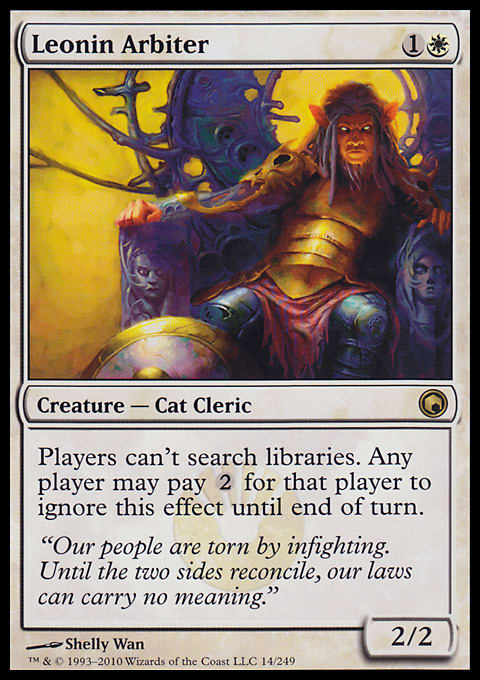
- If you may take an action to ignore an effect from a static ability, that's a special action. Leonin Arbiter says "Any player may pay {2} for that player to ignore this effect until end of turn." Paying that {2} is a special action.
- Circling Vultures gets its own entry. It says you may discard Circling Vultures any time you could cast an Instant. That's a special action.
- Suspending a card is a special action. You may do this any time you have priority, but note you have to be allowed to cast the spell normally by putting it on the stack to initiate the Suspend.
- Paying {3} to put a Companion in your Hand.
- Using a Foretell ability.
- When playing Planechase, rolling the Planar die is a special action.
- When drafting in Conspiracy, turning a face-down Conspiracy card face up counts.
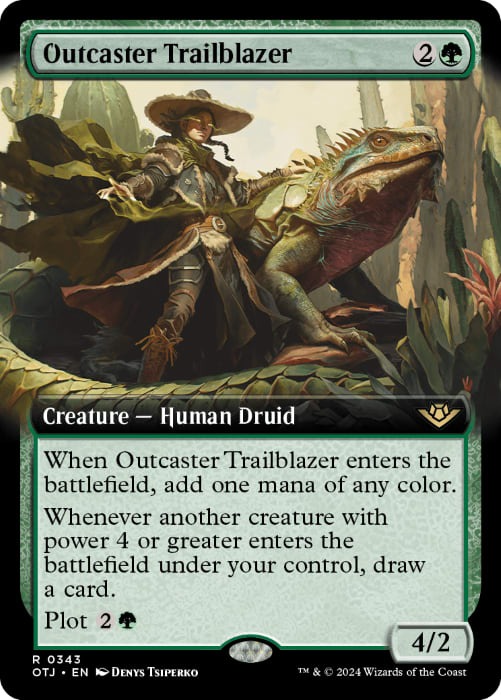
- Using the Plot ability to exile, although casting it later is not a Special Action
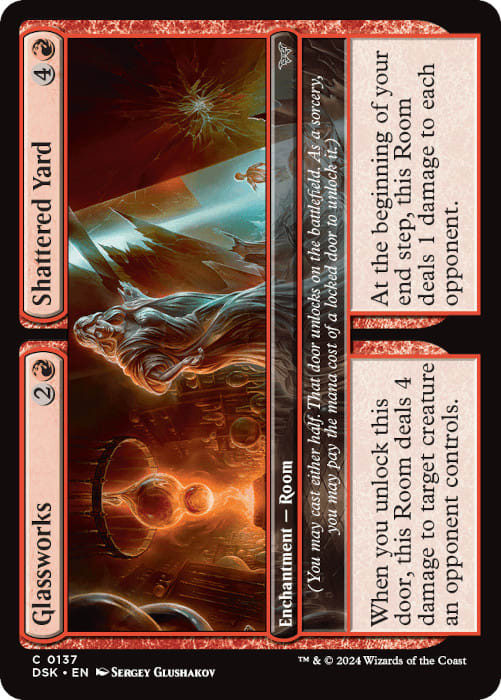
- Using the Unlock ability, which allows you to unlock a Room.
 |
 |
Part of something special
That's it. Any of those actions are special. You have to have priority. You have to be able to meet the requirements of the rest of the action (you can't go playing Lands on other people's turns because it's a special action - you have to have some other external reason to do that). No one can respond or stop you as long as those conditions are met.
In a tournament, it's very important to understand how this stuff works. If you're in a tournament where any of these actions are possible, make sure you fully understand the ramifications of your own deck and those of your opponents'.
From a casual game perspective, it matters less often and is fairly intuitive in most cases. However, if you build a deck around Rooms or Morph or Plotting a bunch of cards, I recommend you understand the rule and are both prepared to explain it and show this article on your phone so you can prove it!
Thanks for reading.