


 Locations


What are the fastest formats in MTG Arena's history? The answers may or may not surprise you (I suspect one of them will), but there is one thing I wanted to mention before we get into it: the spread here is minimal. Whatever you may think of Arena's draft formats, the difference in speed is minimal. The slowest format recorded ended, on average, on turn ten (if you round to the nearest integer). The fastest format only reached turn eight. Not a huge difference.
A quick note on methodology. I am not a data scientist or anything like that. I looked at the average (mean) number of turns in a game of each format and put them into a spreadsheet. It's not a perfect approach, but it paints enough of a picture to suit my brief.
3. Phyrexia All Will be One - Mean Turns 8.434
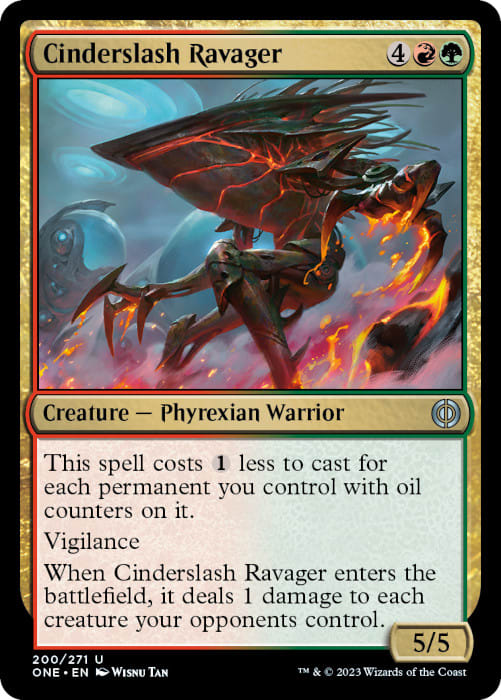
It won't shock you to learn that the format where infect (kind of) came back was pretty fast. What might surprise you, though, is that toxic wasn't the main reason for the speed. Red aggressive decks were arguably more integral, and certainly they accounted for more of the top uncommons. Both Boros and Gruul had a signpost uncommon in the A category on 17lands. Bladehold War-Whip was the second best uncommon in the entire set, with Cinderslash Ravager just behind it. Admittedly, Annex Sentry was number one, which is technically a toxic card, but it also went nicely into boros decks that didn't care about poison counters.
 |  |  |
This set came out a while before play boosters, so the fact that the commons painted a similar picture is even more telling. Both Chimney Rabble and Barbed Batterfist want to go into an aggressive deck and with a little help from Hexgold Slash, they could end games quickly. This was a format where the best deck was Gruul and the second best was Boros. Remember Basilica Shepherd? Contagious Vorrac? Incredible commons. Honestly, it's barely even worth getting into the higher rarity cards because they tend to be expensive and a lot of games ended before something like Blue Sun's Twilight for five could even go on the stack.
2. Bloommburrow - Mean Turns 8.699
If you only play Constructed, you probably expect this to be another section about Boros aggro. But Red-White mice decks were merely "good," with 17lands users clocking a 54.9% win rate. Selesnya was the best pair, which means one thing: overwhelming hordes of rabbits. Where's Myxomatosis when you need it?
The thing about Bloomburrow is that it was a typal set, and typal sets often end up being aggressively-slanted. The easiest way to make kindred decks work in Limited is to give them "lords" that make creatures of a particular type bigger and better in combat. The second best colour pair was Rakdos, which was all about triggering your Lizards via life loss. While WotC has tried to move toward more interesting synergies in recent years, with some success, it's clear from Bloomburrow that making your creatures better at killing opponents is still the best strategy.
If that doesn't tell the whole story, take a look at the typically slow Blue decks. The only Blue colour pair anywhere near the top of the pile is Simic, which was more of a tempo/flicker deck, and was much better at bridging to the late game than the birds and rodents of other Blue decks.
1. Wilds of Eldraine - Mean Turns 8.727
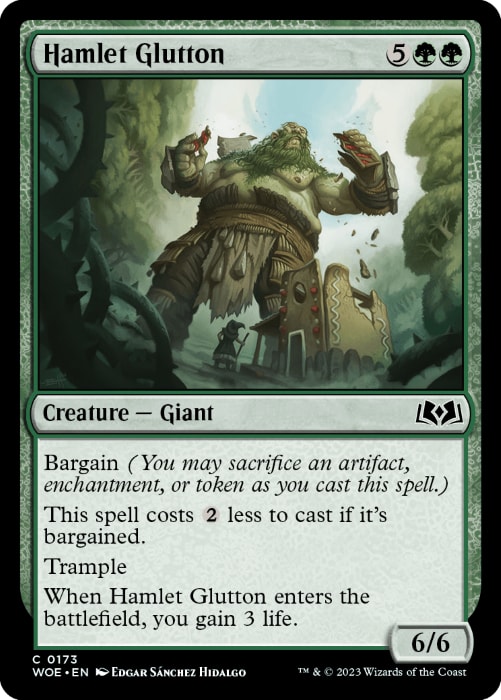
Now here's an odd one. The best deck, by win rate, was Golgari - a slow, attrition-based deck that often stalled games out with food and removal. However, both Rakdos and Boros - typically aggressive colour pairs - were a mere 0.02% behind Golgari. A little behind that was Gruul, and everything else is even further back. While, games of WOE could go long, but it was unlikely for a few reasons. Red decks were ending games as quickly as they could, that much is obvious, but what happens if you're a Red mage staring down a board full of Hamlet Gluttons and Gingerbread Hunters? You're hitting that concede button, right? Essentially, games that might go long in WOE were often over without either player hitting zero.
 |  |
Why was this the case, though? Well, the Blue colour pairs were doing little to slow the games down. Azorious was abysmal, barely topping 50% wins for 17lands users (bear in mind, 50% is below average for these players). Izzet was fine, not great; Simic was almost as bad as Azorious and while Dimir was good, it was much more of a tempo deck, ending the game somewhat quickly with fliers and removal. In a lot of ways, this format came down to "can you stop the Red decks?" and a lot of colour pairs simply could not.