 Locations



Pokemon collecting is all the rage right now. If you're part of the trading card collection world, this is probably a fact you're very familiar with. From people camping out at big box stores for the newest releases to celebrities getting invested, and massive card shows, Pokemon has been blowing up, and it's not going away any time soon.
It's not exactly clear why Pokemon has become so popular. Some say it's because people who collected as kids now are old enough to have disposable income, so it reignited their passion for the hobby.
Others think Pokemon is just a good investment, as sealed product prices have pretty much increased across the board for most products over time. Pokemon, an IP that I grew up with in the early 2000s, is still holding strong to this day.
However, for better or worse, Pokemon's explosion of popularity in recent years has led to a rise in card collecting, with lots of new vendors popping up at Pokemon card shows across the country.
My Start with Pokemon
I'm no stranger to Pokemon collecting, but I am new to collecting in the current era.
2026 marks the first time I've been collecting Pokemon cards since about 2008. I started collecting as a kid right around when Pokemon: The First Movie came out and stopped once I started playing YuGioh! with my friends in middle school, probably around the Diamond & Pearl era.

Roman at Pokemon Center NYC, circa 2001
I wasn't really interested in Pokemon card collecting for a long time until a few key things happened...
I lost touch with Magic: The Gathering. Now don't get me wrong, I'm still an avid Magic fan - I draft with my friends weekly and still travel to competitive events.
However, I lost sight of what Magic meant to me with the advent of the Universes Beyond sets and inclusion of other IPs, in addition to the aggressive release schedule. This year has seven major expansions - almost one every month and a half.
The beautiful art design in Pokemon really caught my eye, especially the Illustration Rares. I absolutely love the direction Pokemon has taken with the collectibility of its card game.
After looking at some of the new cards that were coming out in the Mega Evolutions set, I began looking back at the last few years of card design. The illustration rares and gallery cards of the last couple of years are incredible.
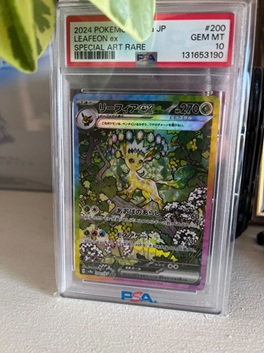
I love the idea of showcasing full-art cards that portray Pokemon in tremendous battles, their natural habitats, or just hanging out with their human companions. Check out this PSA 10 Japanese Leafeon ex I picked up! I put it right by my plant:
Lastly, I was impressed with the amount of card shows in my area. Los Angeles has major card shows almost every weekend.
It's a major hub for TCGs like Pokemon, Magic: The Gathering, and Flesh and Blood so, there's a ton of people here into the hobby. We even have our own collectibles show, Frank & Sons, that's open multiple days a week -- a whole building of vendors of card games and more.
It didn't take long for me to discover that there was multiple card shows in my area throughout every month. The fact that I could travel only ten or 20 minutes and find myself in a room full of vendors looking to make deals was an exhilarating thought, and it's been a reason I've been able to collect a lot of cards fast.
My Tips for Pokemon Card Shows
Pokemon collecting can be an overwhelming hobby. It was definitely hard for me to find a good place to start, due to the volume of cards I found intriguing and the vast sea of vendors who had them.
However, after a few card shows, here are some of the best pieces of advice I can give you. Whether you're starting for the first time or getting back into the hobby, this is sound advice whenever you're travelling a Pokemon card show.
1. Pack Light
Be sure to bring as little as you need. This is one thing I did correctly from the beginning, thankfully.
You never want to bring your entire collection to a show. The biggest thing is you should never risk losing your entire binder or having it stolen. These shows can be insanely crowded at times so, if you're in the middle of a deal, you could lose track of them fast. You want to have your eyes on your cards at all times.
At my first few shows I packed just a drawstring bag, but I put the cards I was considering selling or trading in a bulky deck box. In hindsight, I should've brought just a few cards I knew I wanted to get rid of in a much smaller box.
I ended up doing a big deal at my first show, where I traded some of my older childhood cards for a handful of new Illustration Rares, but the vendor honestly didn't have the space or manpower to help me effectively.
We kept getting bombarded by other customers looking to buy cards. The vendor helped me achieve a fair deal, but the stress of being crowded by people throughout the exchange made it feel like it wasn't worth the stress.
At Magic events, in comparison, vendors are more spread out since they're selling in a big convention hall. Pokemon card shows are different in that there are no games going on, so smaller events are just wall-to-wall tables.
I've rarely found vendors that have a place to sit down to sell your cards, so at Pokemon shows you're usually standing and doing a deal right on top of their display case. One thing I wish Pokemon shows had is dedicated "buy-stations," where people can do deals in a more controlled environment.
I usually pack a small shoulder bag for these events, large enough that they can hold graded cards and a small deck box, and some cash for buying, but not much else.
2. Scope Out Everything Before Buying
It's critical to walk around and look at everything at least once before you spend any money. I forget which Pokemon content creator taught me this trick, but it's honestly just common sense and really helps you pace yourself at a big show.
At the last Pokemon card show I went to I did a complete walkthrough of the vendor hall before doing any major deals. I did this to get an idea of people's prices and which vendors might be overcharging.
For example, I saw a Mega Froslass EX at one booth for $140, but another booth had it for $70 - half the price! Granted, the conditions of each card could've been different but, seeing as it's a fairly new card, it's not surprising that prices were all over the place.
Now, imagine if I had just done business with the vendor who listed it for $140; I would've missed out on $70 of value had I not just taken the lap. The differences in prices won't always be this drastic, but by doing your diligence, you can make sure you're getting the best value out of every deal.
I also like to note which vendors have cards or sealed products I'm interested in buying, and I make a written note of their booth name and prices on my first go-round. You can also ask vendors more specific questions like if they're buying cards and what percentage they're giving.
Keep an eye out for which vendors' prices are closer to market. I've found that vendors who have fairer prices are usually the ones who are easier to work with on deals.
3. Learn to Negotiate
Coming from the Magic: The Gathering community, I didn't know that wiggle room on prices at shows was really a thing. When going to MTG Grand Prixs or Magic Cons (large events with lots of vendors) I always just assumed you paid the sticker price that vendor was asking and that's that.
However, in the Pokemon collecting world it's common practice to try and negotiate better prices, especially if the vendor's sticker is a bit above market or if you're buying a lot of items. Another thing I noticed across my first few Pokemon shows, coming from the Magic community, was the stark difference in buy prices.
In Magic, vendors pay around 60-70% of a card's value, usually closer to 60% if you want cash and 70-75% if you want store credit. In some cases, you'd get up to 80% cash if the card was on their "hot list" for the weekend, like if it was a card people needed for that weekend's tournament.
In Pokemon, I've found that vendors frequently pay close to 70% cash and 80-85% credit on mostly everything. I assume this could be temporary. At the time of writing, this is a particularly popular TCG so there is a high turnaround of cards.
Every show I've been to so far has been packed - I've never seen anything like that in Magic, except for maybe Magic Con Vegas. Magic events are more about playing the game, though, so the focus isn't on the vendors compared to Pokemon shows.
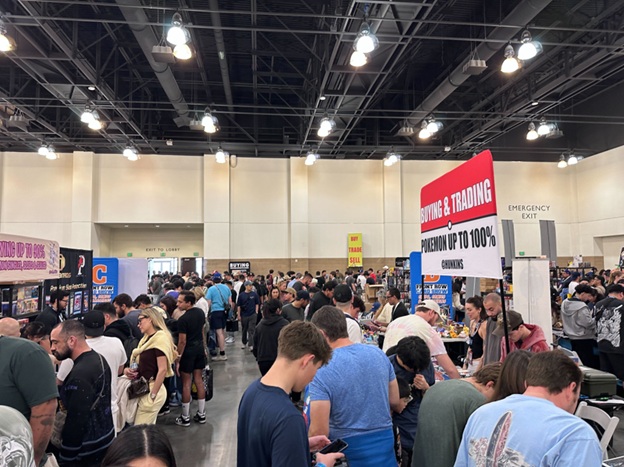
In Pokemon, there's higher turnaround and better deals to be had.
In most cases, it's totally normal for customers to ask vendors for a lower price on something they want. You probably can't get anything crazy like 50% or 80% off but, the few times I've asked, I've gotten close to 10% off, just by asking nicely.
However, the discount it's appropriate to ask for can fluctuate with the state of the market. For example, at my first show, I was able to get some good wiggle room on cards from the set 151.
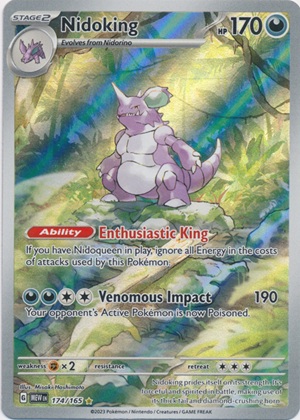 | 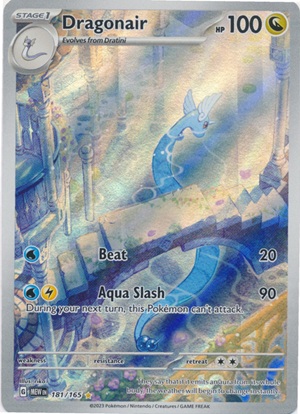 |
I was able to get a Nidoking for $14 and a Dragonair at $25 and got a "yes" from the vendor when asking if I could do both for $35. Since then, 151 as a set has exploded in popularity, with some cards doubling in price almost overnight.
At my third card show, I was not able to get as good deals as I did the first time around, vendors had caught on that set is now out of print and demand is high - why should they give a discount if they can sell the card for a higher price?
The amount of wiggle room a vendor has on pricing can give you insight into how they operate.
Vendors that have more flexibility when it comes to pricing usually have a larger inventory and are making more deals per day than their peers. Vendors that have smaller collections that need to cover their "working wages" and table fee for the weekend seem to be a little bit firmer.
At my last show, I had asked a vendor if he could do $10 on a $13-priced card. I was expecting them to counter with maybe $11 or $12, but instead the vendor flat-out refused. I was a little surprised because the card was not super high in demand, and I would've taken even a $1 discount.
I respect the vendor sticking to their price but, now I wonder if I had gotten a few more cards if they would've given me a bundle deal.
Two last notes on negotiating prices - know the average price before making an offer and sometimes, timing matters.
If a vendor has a card priced at $80 and its market price is around $60, chances are they haven't updated the price on their end, and they might be willing to work with you to get it down.
Sometimes they'll just charge higher to see if someone will pay that much, and that's fine - but that's a good sign to shop around before giving them your money.
In terms of timing, it's harder to make deals at the start of a show than at the end.
If you try to make deals on a Saturday morning of a two-day event, vendors probably won't budge too much if they think the card you want a discount on is going to sell at some point that weekend for full price.
However, when you get to Sunday afternoon vendors will know if they've met their desired quota or not for the weekend, so you can get better deals by offering cash after things wind down.
All in all, don't lowball but keep in mind, trying to negotiate a lower price is common practice at a Pokemon card show. It doesn't hurt to try and get a few bucks off here and there.
4. Know when to Take Breaks
Taking breaks is a skill I picked up after years of burning myself out at Magic: The Gathering tournaments. Card game tournaments and shows are similar in that they're both physically and mentally taxing.
Walking around for a few hours in a crowded hall can be overstimulating. My first show was packed almost wall-to-wall with people, with security limiting how many could enter the hall at once. It was absolute madness, and after an hour I was beat.
This might seem like a no-brainer, but trust me, you'll want to keep this in mind at your next show, especially if it's a larger convention spread out over two days. Drink water, pace yourself, and find a quiet place to sit when you're feeling burnt out.
Make time to get food, pack snacks, and have some electrolytes to keep you going throughout the day.
Overall, you're at a show to have fun. If you have a bad experience with someone or just need to take a break - find a seat and put in your headphones for 15 minutes. This will help pace yourself throughout the day, especially if you're making big deals or trading. You want to keep a clear head.
While card shows are nowhere near as mentally taxing as ten-hour competitive Magic tournaments, the same principles apply when it comes to taking care of your physical and mental well-being, and it's something a lot of people forget.
Going to card shows has helped me fall back in love with collecting Pokemon cards. These events are fantastic ways to hunt that chase card you've been after and make new connections with other fanatics.

Funny enough - I ran into one of my childhood best friends randomly at a card show in LA a few weeks ago. We hadn't seen each other in over 15 years, probably since our middle school graduation in New Jersey in 2010.
It was such a surreal experience, and now we're hanging out again at Pokemon shows!
Conclusion
At the end of the day, your first Pokemon card show doesn't need to be overwhelming. A little planning goes a long way - pack light, take a lap before buying, don't be afraid to negotiate, and give yourself time to recharge when things get hectic.
More than anything, these shows are just a fun way to enjoy the hobby. Whether you're hunting for specific cards or just seeing what's out there, being in a room full of people who love the same thing is what makes it all worth it.