


 Locations



What percentage of the cards in your collection would you say you actually play? When I first started playing Magic back in 1997, I played with nearly every card I owned. The minute my collection was too large to fit into one deck box, I built a second deck. Many years later, however, I'd guesstimate that I play with around 5% of the cards in my collection. Before I built more Commander decks, that number was more like 1%. If you primarily focus on Limited, your percentage could be even lower.
What's to be done with all these bulk cards? Some are decent enough to play in Limited, but just aren't powerful enough to earn a spot in one's Commander deck. If you're primary focus is on sixty card formats, then the pool of cards worth playing shrinks even further, leaving us with boxes and boxes of cardboard.
I suspect many players have found creative ways of using their cards for one purpose or another. What I want to share today is a pair of made-up formats that I developed with a friend that helped us find use for all those useless draft cards and bulk rares we accumulate throughout years of playing Magic.
The Worst Deck Challenge
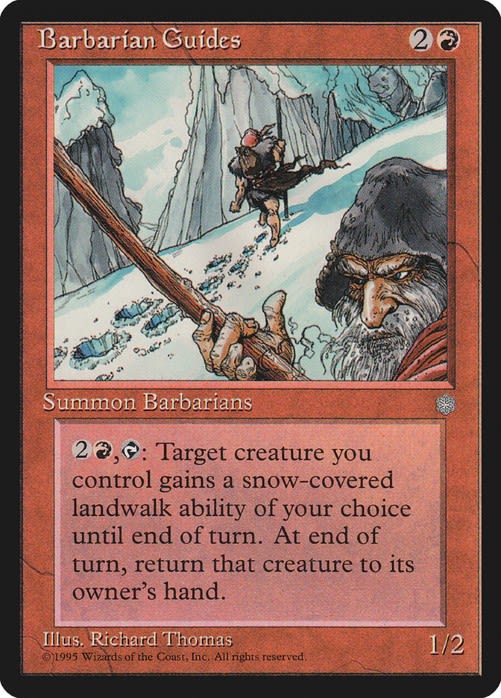
There are some really bad Magic cards that have seen print over the years. Like... horrendously bad. In modern day Magic, Wizards of the Coast strives to design sets where every card could at least be relevant or have utility in a game. This wasn't the case back in the 90s, where many cards printed would actively reduce your win rate if you included them in your deck.
 |  |
What can you possibly do with all these terrible cards, likely never to see the light of day again? My friends and I came up with the perfect solution! I call it the "Worst Deck Challenge."
The Objective: You and your friend(s) build the worst 60 card deck you can out of the cards you own, following the guidelines below. Then exchange decks with each other so no one pilots their own decks. Play a normal game or match of Magic, and the player whose deck loses is the winner, since the deck they built was the worst of the worst!
Deck-building Guidelines: You can modify these restrictions based on your tastes, but I've found that a few important deck-building rules are necessary to ensure this format works as intended.
- A deck must be 60 cards, with ~23 basic lands. Things fall apart too quickly if you allow players to purposefully build a terrible mana base. It's no fun if you build a deck with 0 or 60 basic lands, nor would a deck with 23 Ice Floes be all that interesting. The intent here is for your friends to actually cast these horrible cards, so we need to give them a chance to do that.
- I find sticking to one color decks works best so you don't get into mana base questions. It would be unfair to build a Red/White deck with 22 Mountains and 1 Plains, so it's best to keep decks to mono-color unless you and your friends come to a very clear agreement on expectations.
- Each deck must have a minimum of fifteen creatures that can attack for damage. This bars shenanigans where a deck runs 37 walls and 23 basics. You have to give your opponents an actual win condition, even if it's an 8 mana 1/1 creature.
- I suggest banning any card with Sunburst. It would be too easy to jam a bunch of Sunburst creatures like Arcbound Wanderer and Etched Oracle into these mono-colored decks. Also banned are any cards that only function if you or your opponents are playing a certain color. Elephant Grass and the Circle of Protections, for example, do absolutely nothing if your opponent isn't playing the proper color. Please don't include those.
- Optional: I prefer to make this a singleton format, forcing players to flex their creativity muscle and dig deeper through their collection.
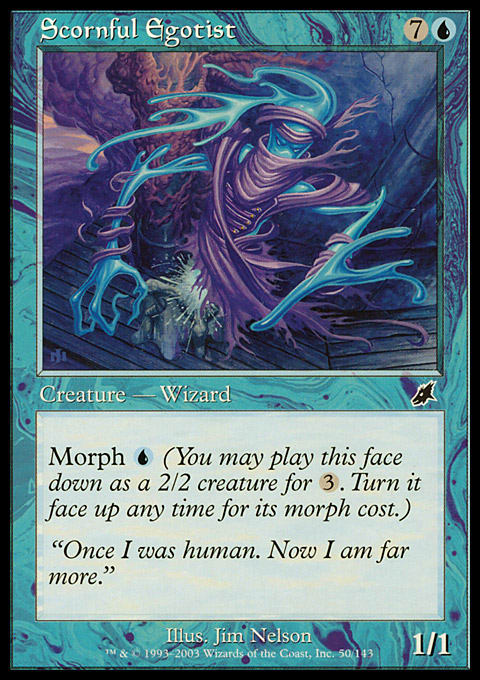
Those are the restrictions I've found most helpful to enforce, though you may discover others you want to add in order to truly achieve the spirit of this format. If you try to min-max this format, you'll find things can grow unfun quickly. I suggest you try to avoid this as much as possible. The intent is that you and your friends have fun laughing at each other when they draw a card they'd never expect to cast, such as Karplusan Giant off the top, and are perplexed at how a 3/3 vanilla creature could possibly cost 7 mana!

Create-Your-Own Win Condition
Over the lifetime of Magic, Wizards of the Coast has created some pretty niche cards. As a player of about 28 years, I've opened my share of rare and mythic rare cards that leave me wondering, "What deck would ever be able to take advantage of this effect consistently?!"
This is the time for those cards to shine, in what I've dubbed the "Create-Your-Own Win Condition" format! Here's how it works.
The Objective: You select a card from your collection that demands something obscure or difficult to accomplish. Provide that card to your opponent and challenge them to accomplish that obscure objective - if they manage to pull it off, they win the game regardless of life totals!
This concept is a bit abstract, and best explained with specific examples. When I tried this out with my friend, I loaned him my copy of Ayumi, the Last Visitor.
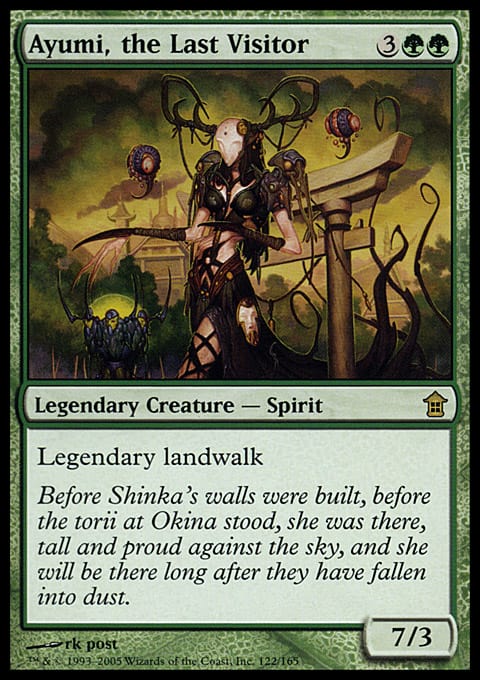
My challenge to him was simple enough: attack with this creature while unblockable due to its legendary landwalking ability. Seems simple enough, right? I mean, in a typical game of Commander, the average deck may actually have a smattering of legendary lands. In a 60-card casual deck, however, legendary lands aren't nearly as common, especially if we're playing a goofy format like this one. Therefore, my friend had to play legendary lands in his own deck that he could give to me via Donate or Political Trickery, so that he could then attack to win the game.
Here's a more challenging idea: Play the spell Fossil Find and have it be relevant that you were able to change the order of your graveyard, such as returning Nether Shadow into play after placing three other creatures above it.
 |  |
Thinking about this combination starts churning the ideas through my head of other cards I could include. Entomb, Buried Alive, maybe a couple mill effects to fill my graveyard, and a bunch of creatures. When the goal isn't to reduce your opponent's life from 20 to 0, but instead to put creatures into my graveyard with a Nether Shadow in the mix, I start thinking very differently about deck construction.
Here's one more fun one: cast Knight of Mists and destroy an opponent's Knight because of its ability.
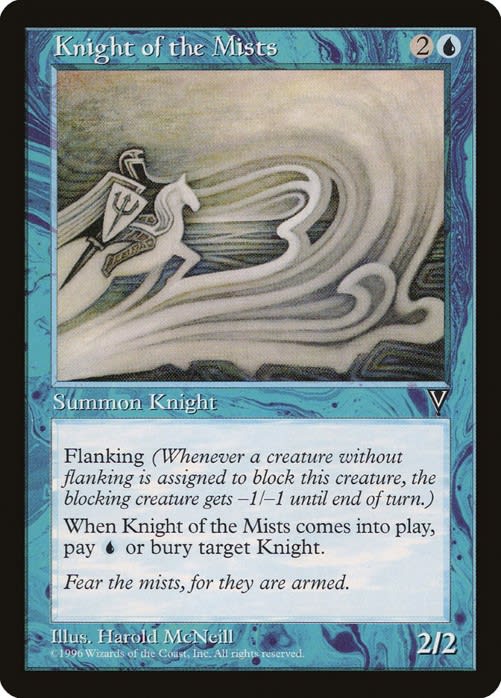
I like this one because Blue doesn't usually get ETB destroy effects on creatures. Blue normally bounces things, a-la Man-o'-War. Straight up destroying a creature is outside what I'd consider Blue's color identity, but only being able to target Knights is awfully specific. Of course, if there are no other Knights in play then you need to destroy Knight of the Mists - that doesn't count! You need to find a way to get a Knight under your opponent's control so that you can destroy it. That's where the real challenge comes in!
As you can see, this format taps into some of the truly obscure cards from Magic's history. As a result, you will probably need to allow proxying, so that you can tap into all the cards the game has to offer. Perhaps a limit of ten proxies would be fair - it will depend on your play group and the collection they have available to them.
Again, the goal here isn't to optimize aggressively. The idea is that playing this Choose-Your-Own Win Condition format gives you and your friends a reason to dust off those offbeat, bizarre cards that are otherwise rotting on the shelf.
Wrapping It Up
I will conclude with one more fun little idea I heard about some years ago. This one involves cracking booster packs, so it doesn't quite fall in the same category. The next time you have some boosters to open - maybe some prize packs you won from your pre-release event - try adding a twist and playing Rainbow Vale Pack Wars with them.
What is Rainbow Vale Pack Wars? It's quite simple! You and your opponents open a booster pack without looking at the contents. Each players shuffles in ten copies of Rainbow Vale. Then you battle!

While this idea is far from perfect, it does help overcome two common problems with a basic game of Pack Wars. First and foremost, it fixes the mana color challenges of playing a five color deck with random cards. Rainbow Vales overcome the issue of drawing a hand with Plains, Mountain, and Forest plus four Blue or Black cards.
Second, it balances out games when one player cracks open a pack with lower mana value / higher aggression cards. When I used to play Pack Wars with my son, if one of us opened a 1-drop 2/1 creature and the other player couldn't interact with the board until turn three, the game would often snowball to rapid conclusion. With Rainbow Vales, a player who chooses to start aggressively will give their opponent a mana advantage on their turn, enforcing some sort of balance.
The system isn't perfect, especially when there are only two players, but it adds a fun and creative dynamic to an otherwise stale format. Plus, it gives you a way to have a little extra fun while cracking open those booster packs you were planning to open anyway.
Whether it be Rainbow Vale Pack Wars, Choose-Your-Own Win Condition, or Worst Deck Challenge, hopefully these ideas will motivate you to dust off the useless, "unplayable" cards from your collection for a little time in the spotlight. It requires a little bit of patience and good sportsmanship, but I can't think of any other way to bring to light cards like Coral Reef and Winter Sky. After all, in what other formats can Homelands and Fallen Empires finally have their day?