 Locations



This past weekend was a big one for Pauper, the all-Common format for Magic: The Gathering.
Paupergeddon took place in Italy with 1,109 players, the highest turnout they've seen to date. At the same time, the Liga Magic Circuit in Brazil had an event with 308 players in attendance.
In addition to these, the very first Paupergenesis event was held in Baltimore, Maryland. This event, ran by the NYC Pauper League, took place alongside the DMV Legacy Classic and CubeCon DMV. It quickly took the North American Pauper scene by storm, with the event quickly capping and then doing so two more times to reach 256 players.
I'm a member of the Pauper Format Panel. At the same time, I'm also a sucker for a great competitive event and was eager to get into the fray as well.
Good morning from Paupergenesis!
Hype to check out the biggest U.S. paper Pauper tournament today, get some games, and talk to people about the format.
If you see me around, say hey!
— Paige, TheMaverickGirl (@themaverickgirl.bsky.social) July 12, 2026 at 8:54 AM
[image or embed]
After players were dropped due to no-shows, we ended up with 237 combatants ready to sling some Commons.
The event was structured with eight rounds of Swiss play - in other words, you play until the end or when you drop from the event. From there, it cut to a top 16 where matches became single elimination until one was left standing at the end.
My Deck: Mono-Green Elves
The deck I took with me to play with was my beloved, Mono-Green Elves.
Mono-Green Elves | Pauper | Paige Smith, 7th Place Paupergenesis 2026
- Creatures (39)
- 2 Fyndhorn Elves
- 2 Sagu Wildling
- 3 Elvish Mystic
- 4 Avenging Hunter
- 4 Generous Ent
- 4 Llanowar Elves
- 4 Masked Vandal
- 4 Nyxborn Hydra
- 4 Priest of Titania
- 4 Quirion Ranger
- 4 Timberwatch Elf
- Sorceries (8)
- 4 Lead the Stampede
- 4 Winding Way
- Lands (13)
- 12 Forest
- 1 Gingerbread Cabin
- Sideboard (15)
- 1 Pulse of Murasa
- 1 Viridian Longbow
- 3 Faerie Macabre
- 3 Spinewoods Paladin
- 3 Vitu-Ghazi Inspector
- 4 Monstrous Emergence
Elves wins by spitting out a ton of small mana dorks like Llanowar Elves and Priest of Titania and then using that mana for big threats. In the past, this would be spamming more Elves into a big Go-Wide finish, but in recent years has leaned into bigger threats.
These include Avenging Hunter, Generous Ent, Sagu Wildling, and Nyxborn Hydra - giving the deck more resilience than ever before.
I've been playing Elves for years, making it an easy fit for me. I wasn't sure if I wanted to play it at first, since for the past several months I've been bouncing between a bunch of other decks instead. This meant that I didn't really know how to sideboard effectively with these newer builds.
Ultimately, I decided to play it and lean on my long-term proficiency with the archetype. I didn't feel like I was good enough with the other decks I'd been playing to put up a strong result. This made falling back to what I already knew the best play.
Let's see how it ended up playing out.
Round 1: Mono-Blue Terror
My first opponent was Mark DeMonbreun on Mono-Blue Terror.
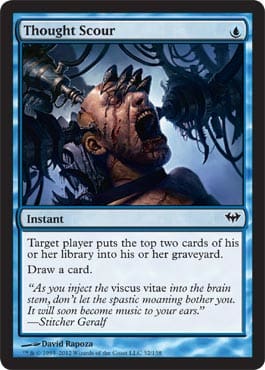
This deck draws cards and counters spells while filling its graveyard with Mental Note and Thought Scour. Once the graveyard is filled up enough, you play low-cost copies of Tolarian Terror and Cryptic Serpent to dominate the game.
 |  |  |
Typically, this is a good matchup for Elves. The Terror player doesn't have nearly enough ways to deal with the deluge of Creatures and Elves' larger threats block the Serpents effectively.
But in game one, I couldn't find a decent threat early and ended up staring down two early Delver of Secrets instead. These flipped very easily and allowed Mark to defeat me. The later games played out more as expected, though, with me swarming the board faster than he could deal with it.
In the end, I finished Round One with a 1-0 record.
Round 2: Mono-Green Elves
Next came a mirror match as I faced Linus Hsu on Elves.
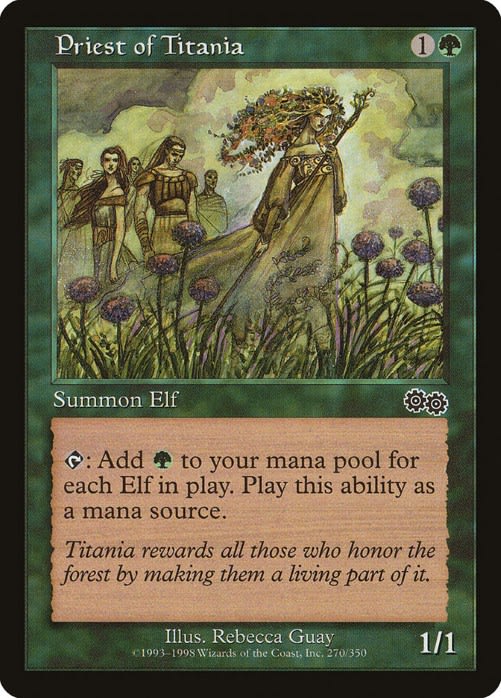 | 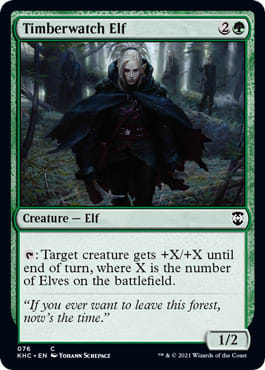 |  |
When two Elves clash, it typically becomes a race to see who can overwhelm their opponent first. Since cards like Priest of Titania and Timberwatch Elf care about the number of Elves on both sides of the field, it's very easy to snowball fast.
This snowball factor caused me to lose game one quickly. I didn't know what Linus was on at first and kept a bit of a slower hand that plays into the wider field better. This meant his lead with Priest and two Timberwatches took me down fast.
The post-board games got a lot more scrappy. With removal on both sides with Monstrous Emergence, Lignify, and even Masked Vandal, there was plenty of back-and-forth gameplay.
In the past, cards like Wellwisher could bring games down to a crawl, but not in 2026. Eventually, I was able to lock up a solid footing and win the match.
2-0.
Round 3: Azorius Cawgates
When Round 3 rolled around, I was called up for a feature match on camera. Here I was paired against Christopher Jackson on Azorius Cawgates.
 |  | 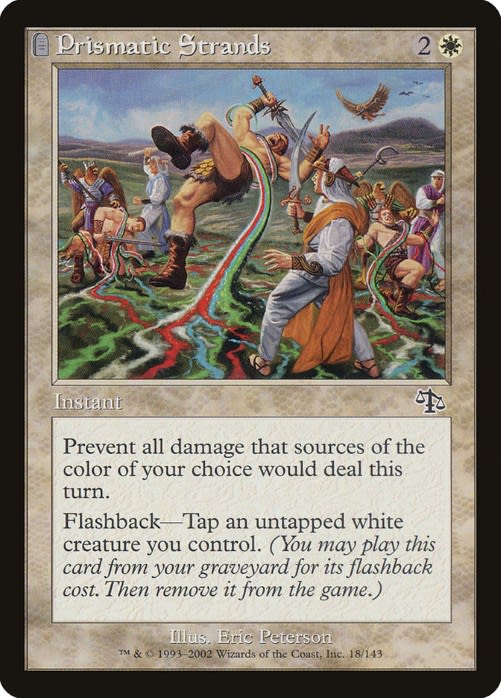 |
Cawgates is a deck that takes its name from the combination of Squadron Hawk and Basilisk Gate, backed up with a Gates package.
While Squadron Hawk is the most well-known Creature to buff, cards like Sacred Cat, Outlaw Medic, and Guardian of the Guildpact aren't slouches either. Combine this with card selection, removal, and countermagic, and you end up with a deck that can play pretty well even in a long game.
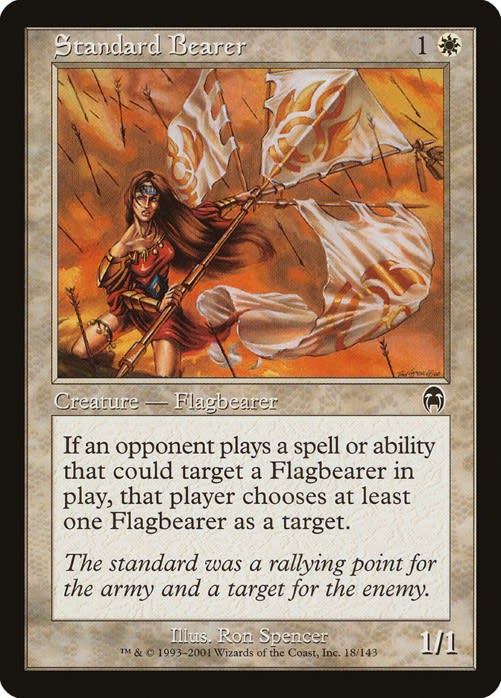
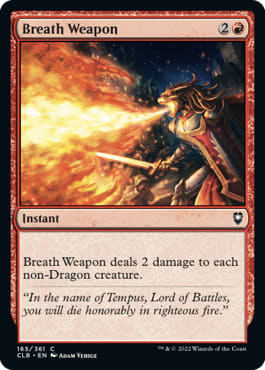
Cawgates tends to struggle a bit against Elves, as Elves often goes off much faster than it can deal with it. The best hope Christopher would have is for me to have a slower game so he could gain control of the board. This is especially important in the post-Sideboard games where Breath Weapon becomes particularly relevant.
 |  |
Game One got off to a fast start that allowed me to overtake the game quickly. The duo of Timberwatch Elf and Quirion Ranger - which untaps Timberwatch - meant the game ended in just a few turns.
Game Two turned into a grind, with cards like Standard Bearer and Breath Weapon slowing me down enough for Christopher to get a foothold and win.
In Game Three, Christopher mulliganed to five cards. He telegraphed a Breath Weapon with a Sea Gate naming Red, leading to me Bestowing a Nyxborn Hydra on a Llanowar Elves with X being  . This would allow my Elf to survive and continue applying pressure to eventually deal exact damage to take the match.
3-0.
Round 4: Bogles
For Round Four, I found myself up against Robert White on another favorite deck of mine: Selesnya Hexproof, aka Bogles.
 | 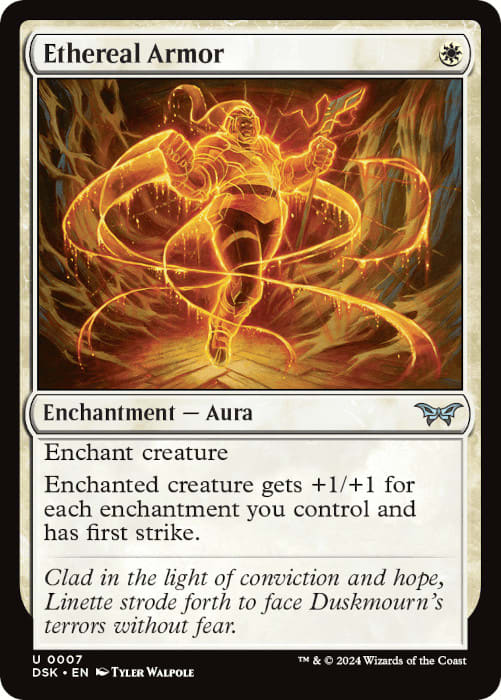 |  |
This deck takes lots of small Creatures with Hexproof and puts lots of Auras on them. Using cards like Rancor, Ethereal Armor, and Ancestral Mask can end games fast.
If you're unable to win fast, you can use cards like Armadillo Cloak and Spirit Link to gain life so you can stabilize to obtain victory.
Game One was once again a case of rough mulligans preventing me from gaining a solid footing. In both of my post-board games, however, I was able to set up fast and close the games quickly.
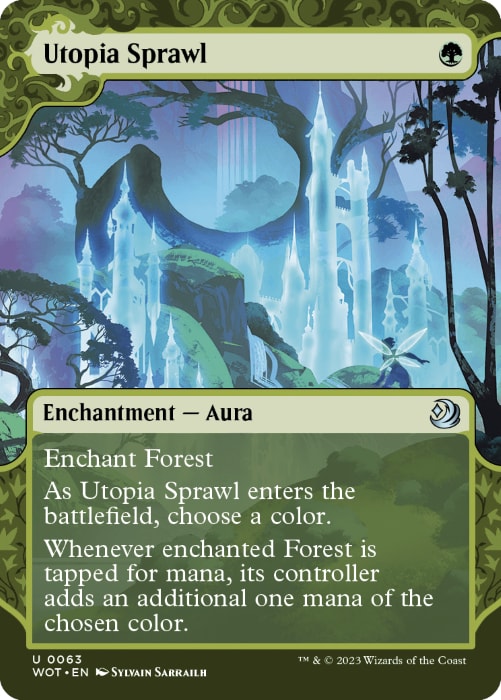 | 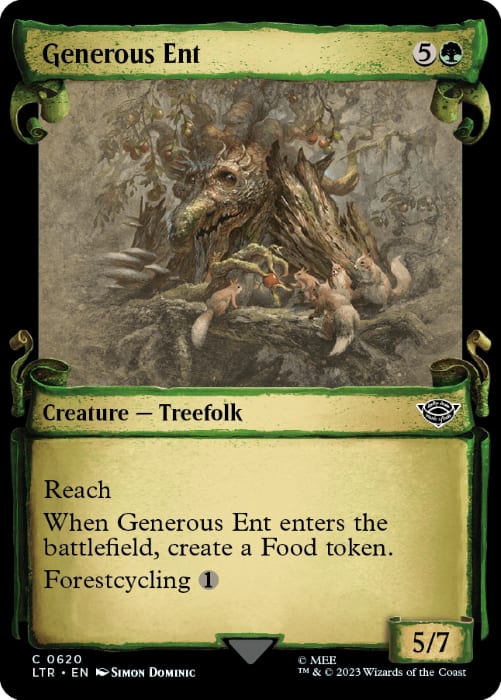 |  |
Game Three was a little intense. Robert put a copy of Utopia Sprawl on his one Forest while missing his second land drop. I used the Forestcycling ability of Generous Ent and then followed it up with a Masked Vandal, exiling the Ent I just discarded.
This let me exile Robert's Utopia Sprawl, which made him unable to do anything with his lone Slippery Bogle on the board while I went off.
4-0.
Round 5: Grixis Affinity
Up until this point, most of my matchups were relatively favorable ones for me. That changed when I faced John Campbell on Grixis Affinity in Round Five.
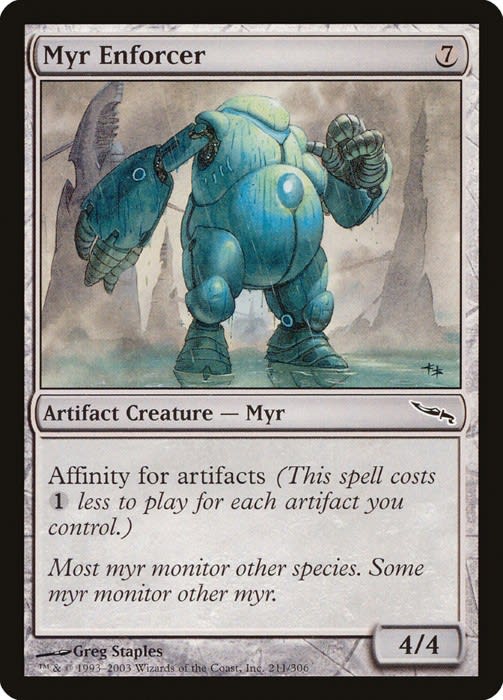 |  |  |
Grixis Affinity is a Midrange deck that utilizes lots of cheap Artifacts to cast cards like Myr Enforcer, Refurbished Familiar, and Utrom Monitor cheaply. To reach these, it grinds through the deck with cheap card draw effects and a strong removal package.
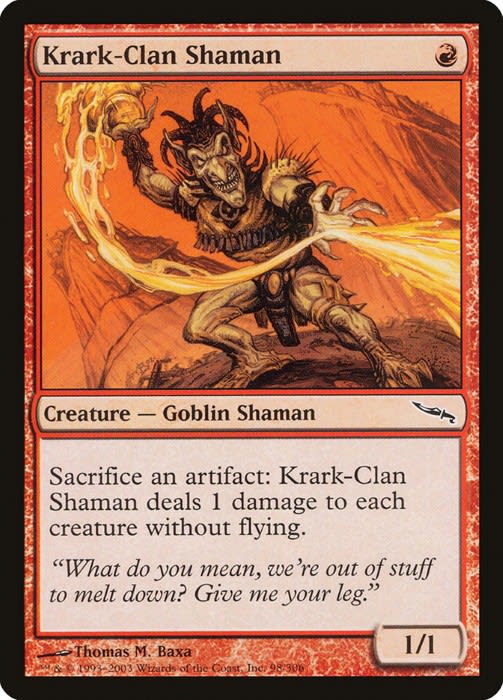
Cards such as Krark-Clan Shaman and Makeshift Munitions pose a massive threat to Elves, which makes it a fairly difficult matchup to navigate.
Game One saw multiple early Krark-Clan Shamans that tore apart my board, preventing me from getting a good foothold in the game. The post-board games saw a lot more interaction, though, with my copies of Monstrous Emergence proving pivotal at forcing threats like the Shaman off the board. This led to some extremely long and sweaty games with a surprising amount of back-and-forth play.
The final game kicked off with me putting some real early pressure on John with a Masked Vandal exiling his one Red source: Drossforge Bridge. From there, I got John down to four life.
I was facing a Krark-Clan Shaman and Myr Enforcer against my Timberwatch Elf, a Masked Vandal Bestowed with a Nyxborn Hydra for  , and one other Creature.
| |  |
When I attacked and activated my Timberwatch Elf, John activated his Krark-Clan Shaman for two. This put two damage on his Myr Enforcer, meaning that the Trample damage from the Masked Vandal would still deal four damage, giving me the win.
If he activated the Shaman on his turn, he would've survived but was still in a bad position. That made for a fun scenario to talk through afterwards and gave me my most interesting win of the event.
5-0.
Round 6: Mono-Red Rally
Going into Round Six, I was getting pretty excited. Since the event had a Top 16 cut instead of the usual Top 8, that meant it was possible to draw into the Top 16 with six wins. If I could close out one more win, that should lock me up for the endgame of the event.
Sadly, that wouldn't happen when I sat down against Carson Bispels and realized what I was up against: Mono-Red Rally.
 |  | 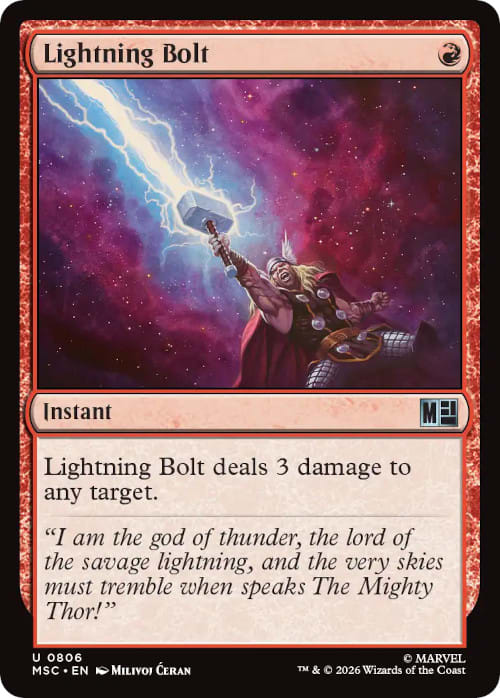 |
Mono-Red Rally is all about the explosive attacking wins. While the more popular Mono-Red Madness uses burn spells like Lightning Bolt with pingers such as Kessig Flamebreather, this takes a slightly different approach.
It takes advantage of cards to attack and end games fast:
Thanks to the deck's explosive starts and multitude of removal spells, it's often a pretty bad matchup for Elves. Decks like this and Mono-Red Madness were the ones I was trying to avoid most.
I ended up matching Carson's raw aggression in Game One, leading to a board stall that he couldn't push through. Though I won that one, the later two games would be much different. Carson had some very brutal openers and dominated the games quickly.
 |  | 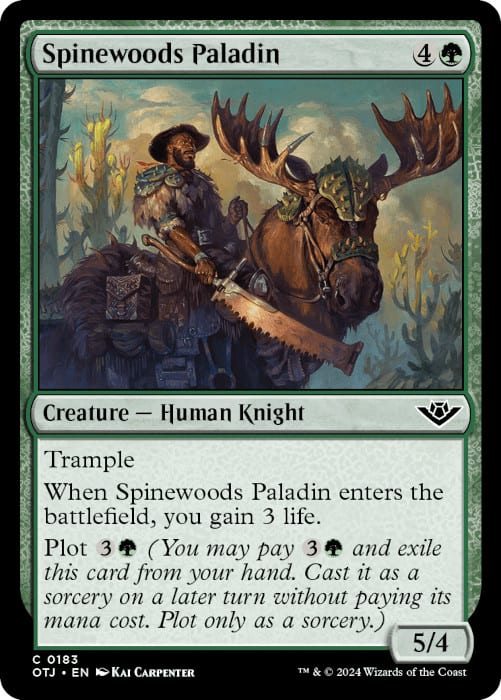 |
I unfortunately punted in Game Three, blocking a Goblin Tomb Raider rather than a 1/1 token with my Vitu-Ghazi Inspector. I'd end up losing the game to exact damage thanks to that extra 1/1 while having a Spinewoods Paladin in Plot that could gain me three life to help me stabilize.
There was no guarantee I could've gotten there anyways, but this misplay ended up costing me the match.
5-1.
Round 7: Grixis Affinity
Based on my estimations, if I wanted to make it into the Top 16, I was pretty sure I needed to win this next match. Unfortunately, I was once again paired into another Grixis Affinity pilot, Kairin, and knew I'd be in for a fight.
In Game One, I was able to get a quick start that led to me snowballing into an easy win. In Game Two, however, Kairin was able to land early copies of both Krark-Clan Shaman and Makeshift Munitions. He wasn't able to find very many threats, though, which let me stabilize and nearly come back.
That second game went on so long that I ended up losing it when Kairin had no cards in his deck. It was very intense, sweaty, and saw a surprisingly high amount of back-and-forth play between the two decks. This only left us with five minutes left on our clock, though, meaning Game Three needed to be played very fast.
Thankfully, I was able to get a quick start very early. With the help of some mana dorks, three Nyxborn Hydras for modest numbers put lots of pressure on my opponent. It wouldn't be long until I took the game and likely locked my way into the Top 16.
6-1.
Round 8: An Intentional Draw
For the final round of Swiss, I paired into someone with the Melee username of TheDiabetical, better known as Christopher Jacobs.
Since we were both 6-1, we took a look at the standings to see how things would shake out. What we saw was:
- There were 12 players with a record of 6-1 or better
- 7 players had a record of 5-1-1
This meant that for a Top 16 finish, all players with at least a 6-1 record could draw. After that, three or four of the 5-1-1 players who won their matches would advance as well. Given this, me and Christopher drew our match and advanced to the Top 16.
Congratulations to Paupergenesis' inaugural Top 16!
— Jenn the Judge (@jenn-the-judge.bsky.social) July 13, 2026 at 1:15 PM
[image or embed]
As expected, with four 5-1-1 players winning their matches, we had a nice clean cut for the Top 16. Of course, there was me, but I was with quite a few well-known players like Brian Coval (aka Bosh N Roll) and StrataGames.
After discussions on whether to split prizes and filling out the requisite tax forms, we got ready to play our games.
Top 16: Mardu Synthesizer
For my Top 16 match, I found myself up against Azeem Lyons on Mardu Synthesizer.
Mardu Synthesizer | Pauper | Azeem Lyons, 13th Place Paupergenesis 2026
- Creatures (13)
- 1 Mukotai Ambusher
- 4 Glint Hawk
- 4 Kor Skyfisher
- 4 Refurbished Familiar
- Instants (8)
- 4 Galvanic Blast
- 4 Lightning Bolt
- Sorceries (4)
- 4 Cleansing Wildfire
- Enchantments (1)
- 1 Makeshift Munitions
- Artifacts (13)
- 1 Navigator's Compass
- 1 Tithing Blade // Consuming Sepulcher
- 3 Black Mage's Rod
- 4 Experimental Synthesizer
- 4 Lembas
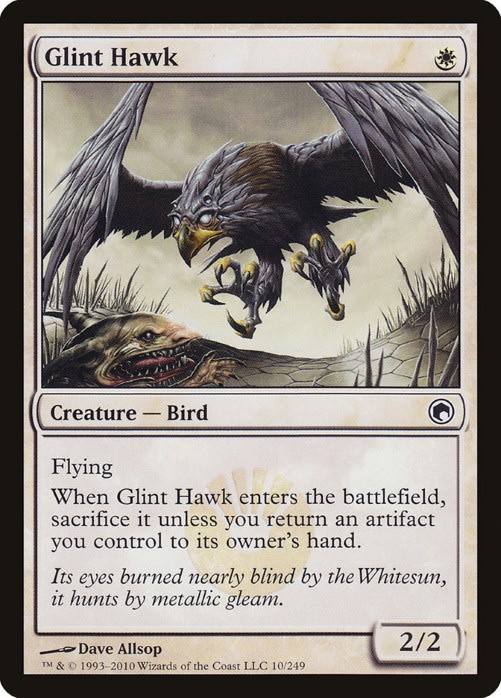
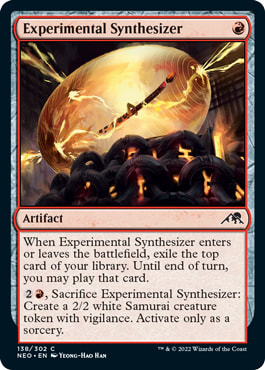
This deck is a midrange list that used cards like Glint Hawk and Kor Skyfisher to bounce permanents and generate card advantage.
By bouncing cards like Experimental Synthesizer and Lembas, you can get access to more cards. You can also pick up a Refurbished Familiar to rip cards out of your opponent's hand or a Tithing Blade to kill Creatures.
 |  |  |
The other key strategy here is Cleansing Wildfire to ramp your mana base by targeting one of your lands like Drossforge Bridge or Rustvale Bridge.
Doing this lets you get the most out of your other spells faster. Once you control the board enough, you can launch a massive attack and take full advantage of your Lightning Bolts and Galvanic Blasts.
In Game One, I was able to land a lot of powerful threats quickly while Azeem somewhat struggled to set up a solid board presence. In Game Two, I made good use of a couple copies of Masked Vandal to exile his Bridges, thus making it impossible for him to stabilize and get the ball rolling on his strategy. I won both games, locking myself into the Top 8.
Azeem told me he'd been a fan of the format but hadn't played it for some time and was very happy with his performance overall. While he may not have made it onwards past the Top 16, it shows just how well you can do with a little experience and skill.
Top 8: Azorius Familiars
Now I was in the Top 8 and I was facing down against someone I knew well. Gavin Clark is a well Magic Online player who goes by his username Gn42. He's known for his prowess with the Azorius Familiars deck and, of course, he brought it to Paupergenesis.
Azorius Familiars | Pauper | Gavin Clark, 2nd Place Paupergenesis 2026
- Creatures (18)
- 3 Archaeomancer
- 3 Sea Gate Oracle
- 4 God-Pharaoh's Faithful
- 4 Mulldrifter
- 4 Sunscape Familiar
- Instants (11)
- 1 False Summoning
- 1 Ghostly Flicker
- 1 Thraben Charm
- 2 Ephemerate
- 2 Prohibit
- 4 Snap
- Sorceries (8)
- 2 Deep Analysis
- 2 Lorien Revealed
- 4 Preordain
- Enchantments (3)
- 3 The Modern Age // Vector Glider
- Lands (20)
- 2 Plains
- 8 Snow-Covered Island
- 1 Contaminated Landscape
- 1 Glacial Floodplain
- 1 Mortuary Mire
- 3 Ash Barrens
- 4 Azorius Chancery
- Sideboard (15)
- 1 Last Breath
- 1 Murmuring Mystic
- 1 Stonehorn Dignitary
- 2 Blue Elemental Blast
- 2 Destroy Evil
- 2 Dust to Dust
- 2 Envelop
- 2 Hydroblast
- 2 Negate
Familiars is a deck that uses Sunscape Familiar to lower the cost of your many Blue spells.
With the costs lowered, this lets you cast spells like Snap to generate extra mana or cast spells like Ghostly Flicker for minimal cost. With an Archaeomancer and Ghostly Flicker, you can lock down the board and attack with threats like Mulldrifter or gain tons of life with God-Pharaoh's Faithful.
This is the sort of matchup that can really go in either direction. If the Elves player, can get an explosive start, they're likely to take over. A skilled Familiars player like Gavin would no doubt know how to slow me down enough to set up a controlling position and take over the game.
 |  | 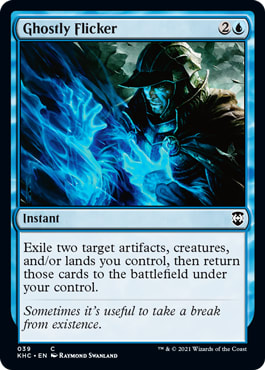 |
This is precisely how our first game played out. After a lot of back and forth, Gavin stuck two Sunscape Familiars, a God-Pharaoh's Faithful, and an Archaeomancer onto the battlefield. By using a Ghostly Flicker targeting the Archaeomancer and an Island, he could repeatedly buy back and replay the Flicker gaining one life each time. This resulted in him having infinite life, making it impossible to win Game One.
Game Two went in much the same way. I was able to stop Gavin's loops with some well-timed Faerie Macabres and won that game. It would all come down to Game Three.
This game started in the most unexpected and hilarious way possible. Both of us took several mulligans, with Gavin keeping two cards and me keeping three. His hand was two lands and mine was a Forest, a Sagu Wildling, and a Lead the Stampede. It would all come down to who could draw more gas first, which Familiars exceeds at.
Despite a strong early start from me finding multiple Lands and Lead the Stampedes/Winding Ways, Gavin ultimately locked things up. I was unable to remove the Flickers this time and a Stonehorn Dignitary stopped me from attacking. Thus, my run at Paupergenesis came to an end.
The Tournament Ends
While I may have lost in the Top 8, I was pretty happy with my results. It's hard to feel upset at a great showing while piloting a list that I wasn't 100% sure I knew how to play effectively thanks to the sideboard. It also gave me an opportunity to watch the remaining matches and talk to players about the format as a member of the Pauper Format Panel.
The semifinals featured Gavin Clark (Azorius Familiars) vs. Daniel Sweat (Jund Wildfire) and Christopher Jacobs (Dimir Terror) vs. Markus Leben (Grixis Affinity). Gavin and Christopher won their matches and ended up facing off against one another for a tight finale.
Ultimately, it would be Dimir Terror coming out on top with Christopher Jacobs taking first place.
Dimir Terror | Pauper | Christopher Johnson, 1st Place Paupergenesis 2026
- Creatures (10)
- 2 Gurmag Angler
- 4 Sneaky Snacker
- 4 Tolarian Terror
- Instants (27)
- 1 Cast Down
- 1 Suffocating Fumes
- 1 Unexpected Fangs
- 2 Abandon Attachments
- 2 Spell Pierce
- 4 Brainstorm
- 4 Counterspell
- 4 Mental Note
- 4 Snuff Out
- 4 Thought Scour
- Sorceries (7)
- 1 Deep Analysis
- 2 Ponder
- 4 Lorien Revealed
- Lands (16)
- 10 Island
- 2 Ice Tunnel
- 4 Contaminated Aquifer
- Sideboard (15)
- 1 Envelop
- 1 Extract a Confession
- 1 Thorn of the Black Rose
- 1 Unexpected Fangs
- 2 Arms of Hadar
- 2 Nihil Spellbomb
- 3 Annul
- 4 Blue Elemental Blast
This list is a different take on the previously covered Mono-Blue Terror. Rather than relying solely on Blue sources to tempo out your opponent, this deck also makes good use of removal like Snuff Out, Cast Down, and more out of the sideboard.
It also allows you to take advantage of Sneaky Snacker as you mill cards over into your graveyard while drawing lots of additional cards.
Christopher was brought into the coverage booth to talk about his win a bit and wrap the event up. I poked in afterwards as well as the lone Pauper Format Panel member in attendance to talk about how great the event and Pauper were.
Once I exited, Jenn the Judge - the event organizer - came on to wrap things up and confirm Paupergenesis would return once again in the future.
Conclusion
Paupergenesis was an absolute blast. The event was well run overall, with most rounds having solid turnover and all the players being extremely enthusiastic.
For my seventh-place finish, I took home $200 in winnings, as well as some Heavy Play supplies and Magic Online Treasure Chests and Play Points. Not a bad deal and shows that you can win more than just the standard cash prizes from an event like this!
It was a wonderful first time, especially as part of a weekend full of big Pauper tournaments. I'm already eager for the next Paupergenesis. With luck, it'll be even bigger than this one, with lofty goals of reaching the scale of Paupergeddon in the States.
Pauper is great and is very much on the upswing. Give it a try and see what all the hype is about.

Paige Smith
Check out my streams: twitch.tv/themaverickgirl
Watch me on YouTube: TheMaverickGal