

 Locations



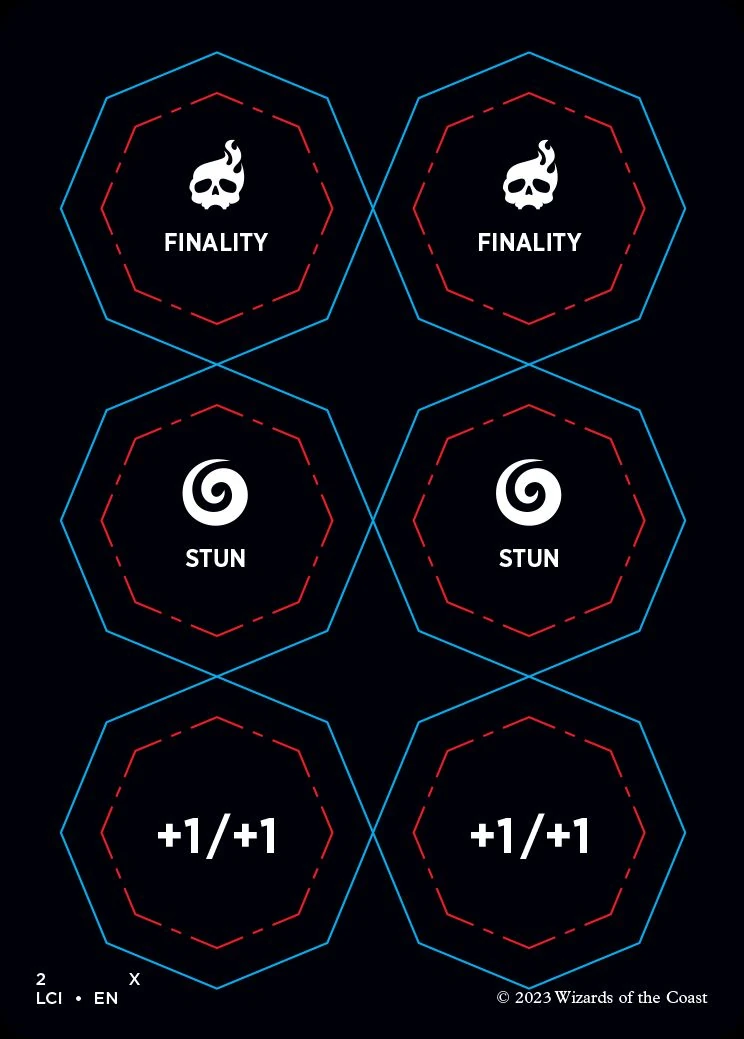
You know that moment when your opponent keeps bringing a creature back from the graveyard and you just know it's not ever going to stay dead? You kill it once, twice, maybe even three times, and still it keeps coming back with no consequences. Well, Wizards of the Coast finally said, "Enough is enough," and finally gave us a way to keep these undead nuisances truly dead: Finality Counters.
Grab your shovel and all your exiling spells because in today's Mechanics Overview Segment, we're digging deep into how Finality Counters work, why they exist, and how they're actually the perfect solution towards graveyard management in MTG.
What Are Finality Counters?
(If a creature with a finality counter on it would die, exile it instead.)
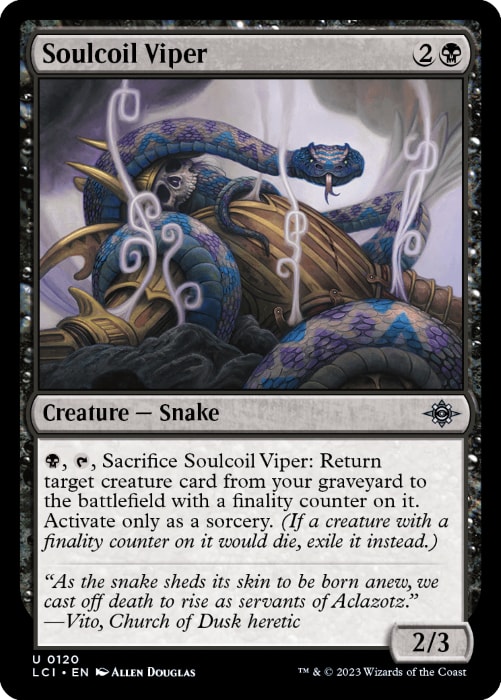
So, fairly self-explanatory here, if a permanent has a Finality Counter on it, and that permanent would die, it doesn't hit the graveyard. It gets exiled instead.
Oh, I suppose it is important to note that this is a replacement effect and not a trigger, which means it never goes on the stack and cannot be responded to.
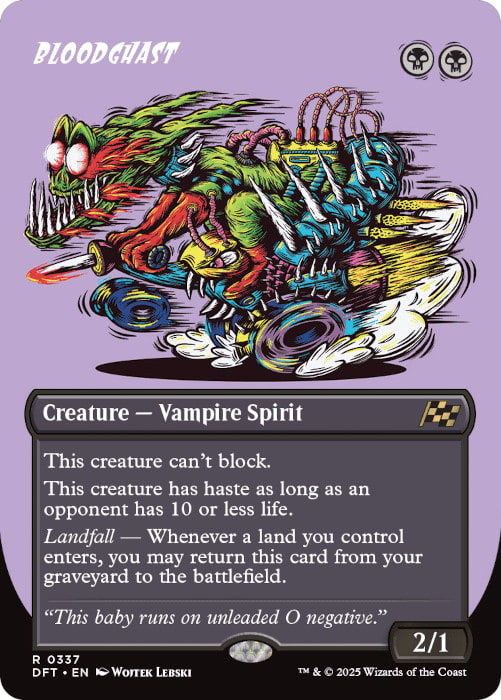
That's right. This means not even a Bloodghast dragged from the grave by a Winter, Cynical Opportunist can cheat death with a fetchland.
The History Of Finality Counters
 |
 |
Before Finality Counters came along, Magic's relationship with death and exile was... let's just say complicated.
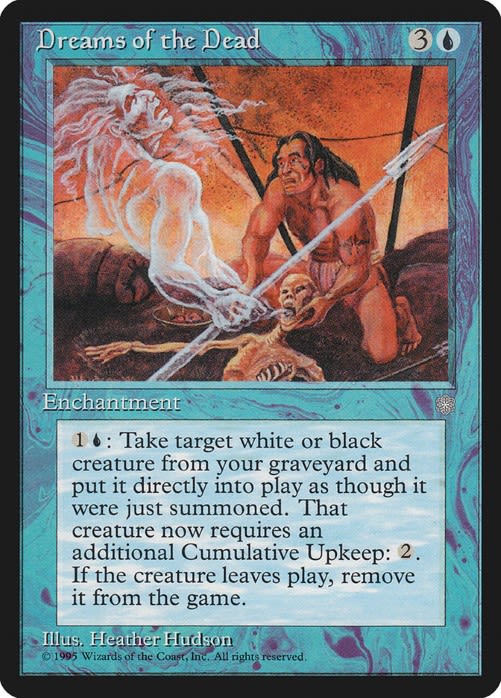
Way back in the frosty era of Ice Age (1995), there was a card called Dreams of the Dead. This powerful enchantment allowed you to revive White or Blue creatures from your graveyard at the low, low cost of just two mana per activation! But there was a catch: if those creatures ever died again, whether it be in combat, by a card destruction effect, or via their own Age Counters, they'd be removed from the game. (That's old-school phrasing for "exile," by the way, kids)
As you can see, not only was this clunky and wordy, but it was also incredibly easy to forget. You'd be halfway through resolving three triggers and suddenly remember that the thing you just killed should've been exiled like four turns ago. Naturally, this led to arguments, exasperated sighs, and quiet apologies to local judges the world over.
 |
 |
Fast-forward a couple of decades, and cards like Isareth the Awakener, and From the Catacombs started to flirt again with the concept. Both used Corpse Counters as reminders for which creatures had been brought back and were thus destined for the exile zone if they died again.
This was definitely a step in the right direction, but there was still a problem. At the end of the day, those Corpse Counters were just reminders. So, this meant that even if one somehow removed the counter, the exile clause still applied, because the card's text carried the effect and not the counter.
Now, this was all fine and good for casual play, but in competitive environments or large board states, it became a logistical nightmare. People would forget which creatures were reanimated with which ability, especially when tokens, clones, or long turns entered the picture.
So when The Lost Caverns of Ixalan (2023) finally rolled around, Wizards decided it was time for a mechanical cleanup using Finality Counters, a bold, elegant solution that turned that "you're dead for real this time" clause into something a bit more physical.
By making the effect part of the counter itself (instead of baked into the card's text like Corpse Counters), Wizards achieved two major things:
- Memory Clarity: Players can now instantly tell which permanents are "marked for exile" without needing to reread the card or remember what happened six turns ago.
- Gameplay Flexibility: Since counters can be moved or removed, Finality Counters became interactive. Got a way to remove the Finality Counter? Congratulations, your creature will now go to the graveyard as usual to be reanimated again later!
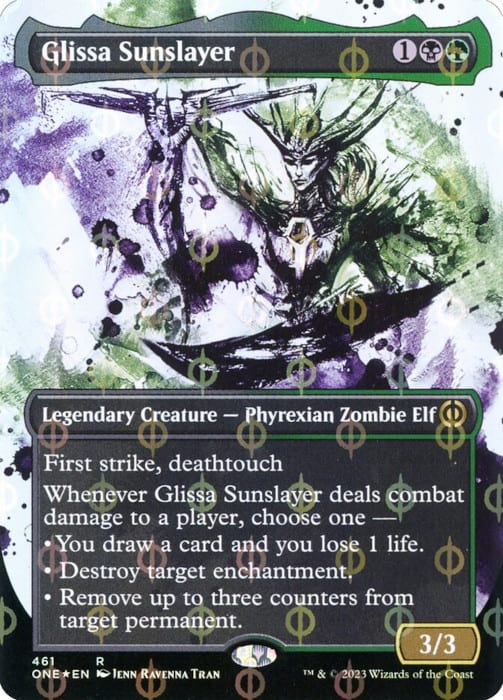
Eat your heart out, Glissa!
It's also worth noting that the mechanic is "deciduous," which means Wizards can essentially bring back Finality Counters cards whenever they feel like it.
It's been a pretty poetic journey, really. Thirty years ago, we had walls of text trying to say "this thing dies forever." Now, we just put a tiny counter on it, and the message is crystal clear: You can go outside. You can die. But you can't come back. Well, not easily, at least.
Finality Destination
Finality Counters may not be the flashiest mechanic Magic has ever introduced, but they're one of the more brilliant ones that make you realize just how far the game's design philosophy has come.
They solve a very real problem that has existed since the early days of "removed from the game" text boxes and "wait, wasn't that supposed to be exiled?" debates. By turning what was once a line of forgettable reminder text into a visible, trackable counter, Wizards essentially gave us a tiny, elegant fix for decades of graveyard confusion.
And mechanically, they hit that sweet spot between simplicity and depth. You don't have to remember them, but you can still play around them: remove them, move them, exploit them. They give both deckbuilders and rules nerds something to chew on, without overcomplicating the game state. And as a bonus, they look surprisingly great on a punch card.
With all that said, though, I've probably spent more time talking about Finality Counters than most tables will spend deciding whether to remove one with Thief of Blood or Power Conduit. As always, happy brewing, and may your graveyards stay lively, your recursion strategies stay clever, and your Finality Counters only show up when you want them to. Until next time!