


 Locations


All good necromancers know that the graveyard is a valuable resource, and Magic: The Gathering features several mechanics to make sure that Black-aligned mages have plenty of ways to dig up the good stuff. And one of those ways is Threshold.
Threshold can be a particularly useful ability, because it allows you to benefit from a full graveyard without using anything buried in it. Instead, it simply powers up every card with the ability word once you've turned enough of your lands, spells, and permanents into fertilizer.
That's why, for today's Mechanics of Magic, we're taking a look at Threshold!
What is Threshold?
Threshold originally appeared as a keyword ability in 2001's Odyssey, where it was written as "Threshold -- [text]". Any card with Threshold has whatever abilities and modifications described after the em dash as long as your graveyard contains at least seven cards.
As a keyword ability, Threshold was mechanically complex. You could have and lose Threshold on creatures and spells in the middle of actions and phases, making it difficult to track when it was active throughout the course of a game. This was largely cleaned up with the introductions of ability words four years later, with all older cards receiving errata to turn the keyword ability into an ability word.

Threshold can be used to represent a lot of different flavor mechanically. For example, Krosan Beast, the first Squirrel, can appear either as a 1/1, representing a small, acorn-eating rodent, or as an 8/8 after reaching Threshold, representing the enormous monster the Squirrel metamorphosed into. It was used the same way to represent an early version of the transform mechanic on cards like Dirty Wererat and Werebear.
Threshold made another major appearance in Bloomburrow, where it was a major mechanic in the Black/Blue Rats archetype, and in Foundations. These were the first two sets to see a heavy focus on Blue Threshold cards, since Blue's ability to fill its own graveyard made Threshold such a powerful ability that it was largely absent from the original Odyssey block.
Threshold Rulings
One of the most confusing parts of Threshold is when you check the number of cards in your graveyard. The problem is, it changes based on the type of card you're using!

For Instants and Sorceries, like Epicenter, you check for Threshold as the spell resolves. This gives your opponent time to remove cards from your graveyard, and gives you time to discard or mill to fill it back up.
Activated and triggered abilities, on the other hand, check for Threshold when you activate or trigger the ability. Even if your opponent manages to exile your graveyard before the ability resolves, you still have Threshold if you had it when you activated the ability.
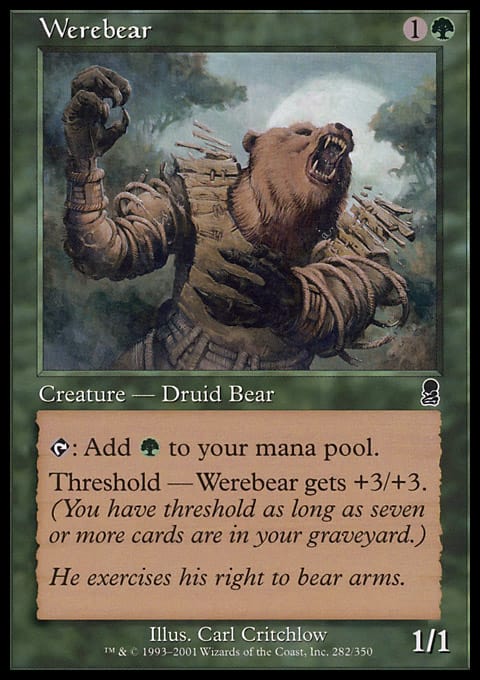
Static abilities, like Werebear's +3/+3 boost, turn on and off as cards enter or leave your graveyard, making them the easiest ones to keep track of.
Cards Like Threshold
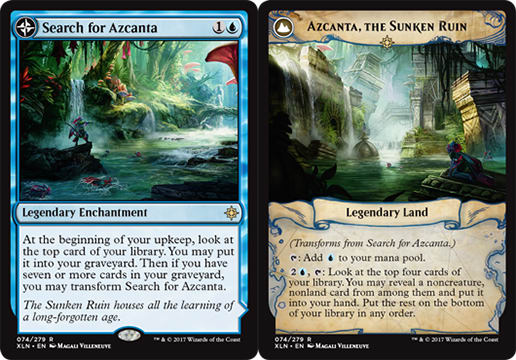
Since Threshold is an ability word, cards can be printed with similar or identical effects without the word itself printed on the card. Wizards of the Coast has done this a few times, most notably with Search for Azcanta.
 |
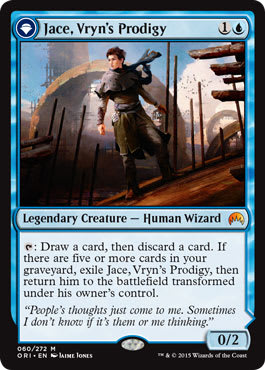 |
Almost identical effects have been seen on other cards, like Jace, Vryn's Prodigy, which can transform when you have five cards in your graveyard. Mark Rosewater, Magic's lead designer, voiced a preference for a variable form of Threshold, where cards like Jace, Vryn's Prodigy would be printed as "Threshold 5" to indicate the required number of cards in the graveyard.
Best Cards With Threshold
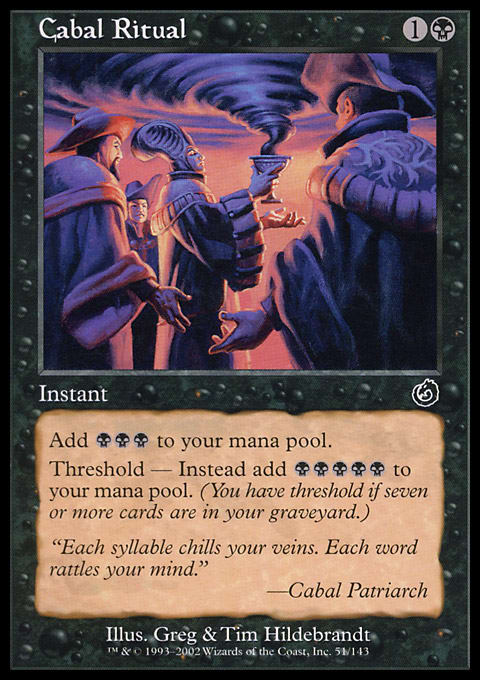
Cabal Ritual was one of the last mana rituals printed before the mechanic was transferred from Black's slice of the color pie into Red. Without Threshold, it's a worse Dark Ritual, giving you three Black mana for one Black and one generic. With Threshold, though, it makes five instead. It's also pretty easy to get seven cards into your graveyard in Black, where you'll find most graveyard-centric strategies anyway.

Far Wanderings has the same mana cost as Cultivate and Kodama's Reach, but only tutors for one basic land to put into play tapped, not giving you one in your hand like those more popular spells. If you have Threshold, however, it tutors for three basic lands and puts all three into play tapped. Three mana for three lands is about the best rate you could hope for from land ramp!

Stitch Together is an excellent single-target reanimation spell, since it costs only two Black mana to put a creature into play from your graveyard with no drawback aside from the Threshold requirement. Compare that to Animate Dead, which lowers the creature's power and kills the creature when it leaves play, or Dread Return, which costs twice as much mana for the same effect.

Most of the lands with Threshold are pretty underwhelming, with the exceptions of Nomad Stadium (which is incredibly bad) and Cephalid Coliseum. It taps for one Blue mana, but deals one damage to you, which isn't great, but it's mostly used for its Threshold ability: Once you have Threshold, you can sacrifice it to draw and then discard three cards.

Cleansing Meditation is a boardwipe for Enchantments, but an asymmetrical one if you have Threshold. While it technically destroys all of your enchantments as well, it brings them back into play immediately afterwards, triggering any on-enter effects that they have and allowing you to move your Auras around to new targets, if you feel like it.
The Future of Threshold
Prior to the release of Bloomburrow, Magic's lead designer, Marc Rosewater, said that Threshold would likely return as "Threshold [x]", allowing the developers to set individual Threshold requirements for each card. Since then, we've seen Threshold in two premier sets using the original layout and mechanic.
Threshold also continues to make appearances outside of Limited and Standard formats, most recently being included in Sultai Arisen Commander precon.
While Threshold has been on the same card as Flashback, allowing you to cast from your graveyard while counting it as part of your graveyard, it's never been on the same card as Madness, another important ability introduced in the Odyssey block. This may have been an issue with the way the two abilities would have interacted, but updated rules for Madness in Shadows over Innistrad should have cleared this up, creating design space for a new set of interactions.