


 Locations



Magic players are almost constantly discussing the answer to the following question. Which cards are the best of all time? Your answer to that depends entirely on your perspective. For example, if you were to ask many players what the best designed card of all time is, common answers tend to be Birds of Paradise and Lightning Bolt for their simplicity and elegance. It could also depend on the era you most fondly remember, like the way many players look back fondly on the early days of Modern even though many of the cards have been outmoded since.
But then there's another angle to approaching this question. What is the most broken card ever printed?
I found myself thinking about this somewhat recently when the phenomenal Shivam Bhatt posted this on Bluesky.
1/20 #scryfallrandom is probably in the top 3 most broken cards ever printed
— Shivam Bhatt (@shivambhatt.bsky.social) January 20, 2026 at 10:04 AM
[image or embed]
If you're not aware, Shivam does daily Scryfall Randoms where he'll hit the random card button on Scryfall and give some small thoughts on it. It's a fun little something to catch on your feed here and there in addition to the other stellar content Shivam puts out like Casual Magic and Shivam and Wheeler Love Magic.
The post itself wasn't the most interesting part, but the comments beneath it are worth talking about. Shivam noted that Tinker is probably one of the top 3 most broken cards of all time. There's certainly an argument for this as Tinker has led to some of the most broken decks ever, still sees play in Vintage despite being restricted, is a staple of Vintage Cube, and is banned in several formats. Despite this, there were numerous people calling out Tinker as closer to being in the top 30 over the top 3.
Tinker can enable turn one kills with the right setup before your opponent can even respond, so what could be more busted than that? That's exactly the question I want to take a crack at answering. Which cards can be considered among the most busted cards of all time, why, and how much context might matter for certain cards?
if you take anything from this video let it be that wotc should print snapcaster in standard
— Blames Jake (@sevenmanacleric.bsky.social) February 3, 2026 at 3:36 PM
[image or embed]
Tolarian Community College's recent video on old cards that simply might not be as good as they once were provided a lot of inspiration for this article. I encourage you to go check it out because, frankly, I'm about to spoil it a bit.
Okay.
Have you watched it?
Cool.
Broken No More
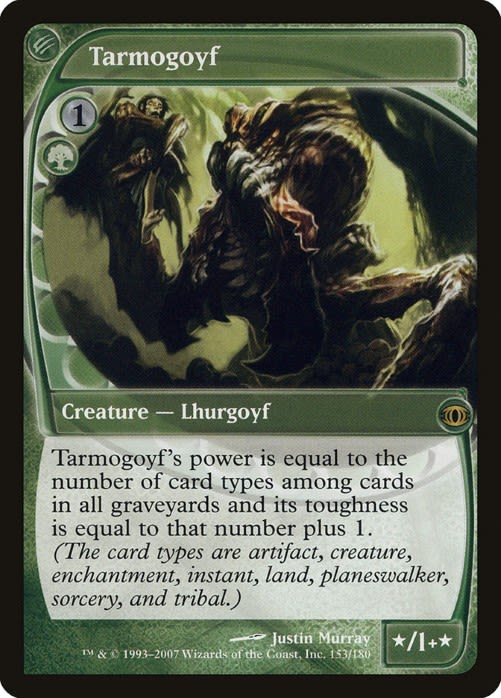
What I find interesting about Prof's video are some of the cards mentioned were once widely considered to be broken. Some, not so much. Tarmogoyf gets a pretty loud shoutout, for example, as a card that was once extraordinarily powerful. These days, most people would simply consider it an extremely efficient beater.

You'd apply the same kind of logic to something like Delver of Secrets. Delver decks continue to be extremely popular in Legacy well over a decade after the card's printing in Innistrad. However, I doubt you'd find anyone who considers Delver to be a busted card outright. Rather, it's just a good, efficient creature that's easy to turn on and back up with a powerful selection of countermagic and removal.

Several of the cards mentioned, however, were once considered among the most powerful cards ever printed, no questions asked. The number one card in the Professor's video was Jace, the Mind Sculptor, and that's famously one of the most powerful cards of its era. It earned the nickname "Wallet Sculptor" for its high price tag, was banned in Standard thanks to the Cawblade deck, was pre-banned in Modern, and continued to dominate in Legacy for years. Heck, players of a certain Vintage know the phrase "Jace, the Mind Sculptor, better than all" quite well.
Nowadays, Jace has fallen by the wayside. In almost every format, he languishes in relative unplayability compared to his past pedigree of performance.
Suddenly Broken

Meanwhile, you can look at things from the opposite side of the spectrum, where a card can underperform or not really show up anywhere then suddenly break in half. A great example is Parallax Tide, a card that hasn't seen any kind of play since its Standard days yet managed to break Premodern wide open. Would you consider that broken though? After all, the same format allows you to play a full playset of Tinker no problem!
The Most Broken Cards in Magic
That brings me back to my original point: if Tinker isn't in the top 5 most busted cards of all time, or even in the top 20, what are some of the other contenders, and why? I'm going to take a look through several options, though it's worth mentioning that I'm not going to get to cover every card I'd like to. The initial list of cards I pulled numbered close to 100, and I definitely can't fit all of that into a single article. Instead, I'm going to talk largely about sets of cards, why they're strong, and the contexts they're utilized in.
Let's start with something obvious: the Power Nine!
The Power Nine
 |  |  |
 |  |  |
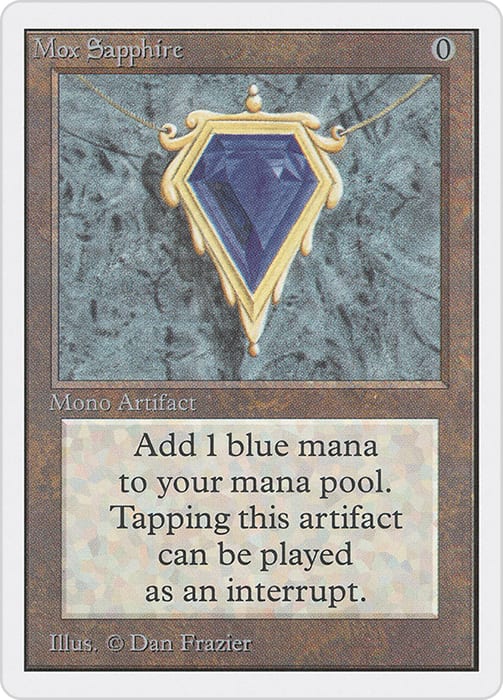 |  |  |
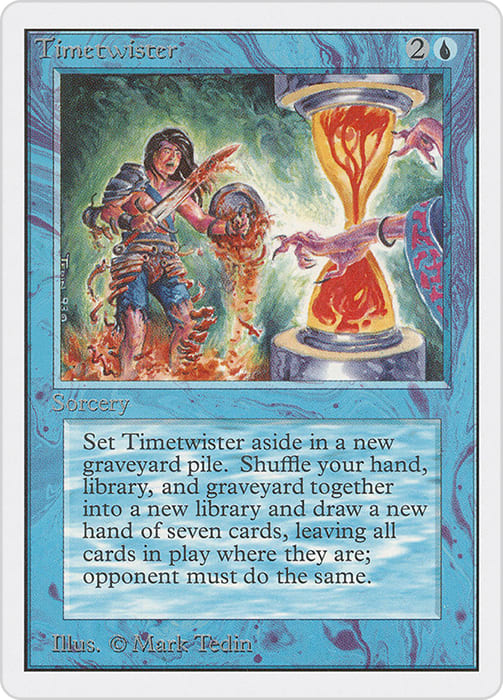
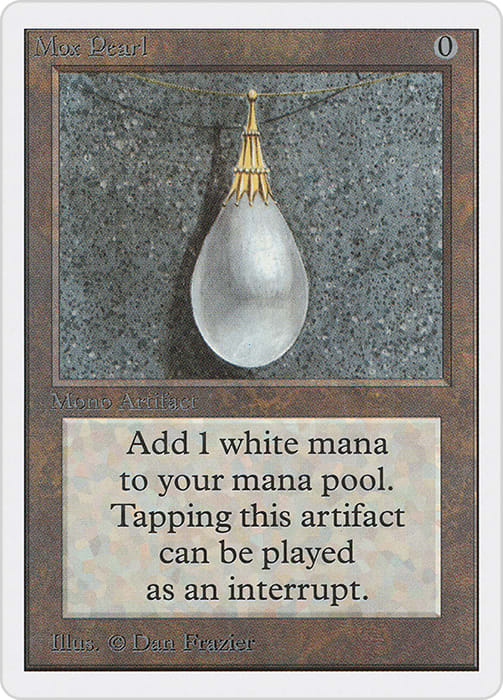
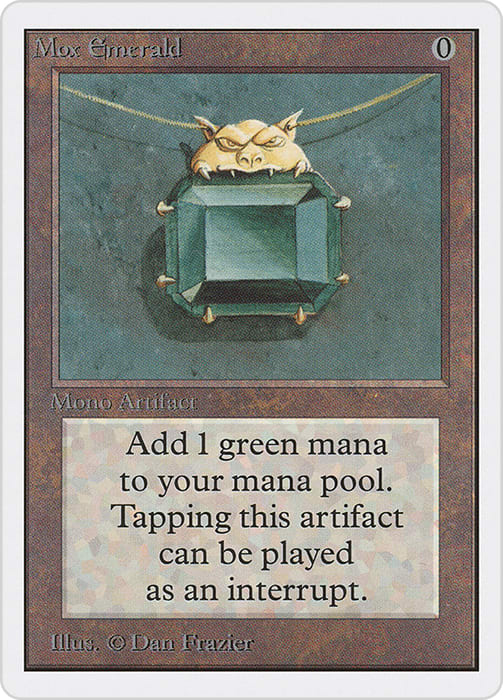
The Power Nine are the poster children for broken cards in Magic. Many of these cards have been banned from the game's earliest days, offering effects so powerful and potent that they had to be removed from the game with lightning speed.
Ancestral Recall is the best draw spell in the game, Time Walk is stupidly undercosted for the effect, Timetwister refills your hand for minimal investment, and the set of Moxen plus Black Lotus ramp you like crazy. Heck, the Moxen are so broken in concept that versions of them that would come out years later - like Mox Diamond, Chrome Mox, Mox Opal, and Mox Amber - have all proven themselves to be pretty broken as well.
Are the Power Nine absolutely busted? One hundred percent. But it's also important to remember how Alpha was designed. The original intent was for players to only buy a starter deck and maybe a few packs. The idea that players might min-max this and go out of their away to acquire multiples for one deck wasn't even a consideration. As such, it was deemed okay to have power outliers in the mix since you'd rarely see them.
This was also the reason why several other powerful cards made their way through in Magic's first expansion.
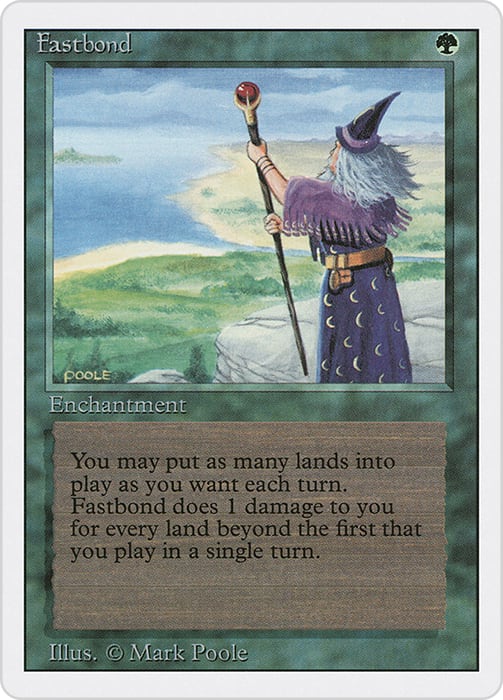 |  |  |
There's no world where you could print cards like Fastbond, Wheel of Fortune, and Balance today. In 1993 when access was limited, though? It made a lot more sense! Each of these does something fundamentally broken to the game. Fastbond lets you spit out absurd amounts of lands, which breaks the mana system at a foundational level. Wheel of Fortune does basically the same sort of thing as Timetwister. The only difference is it doesn't put your graveyard back into your deck.
Balance can be a bit tougher to understand if you're not familiar with how it plays. In a normal world where it's meant to be played as intended, it makes a lot of sense. Both players playing lands, creatures, and using their hand in rough parity? It seems modest. It breaks down when one player has a ton of fast mana - like the Moxen and Black Lotus - and dumps their hand, then forces their opponent to discard everything they have access to when they cast Balance. In control decks, it can simply act as a hard two-mana Wrath of God. That's way too much value and flexibility for such a low cost.
 | 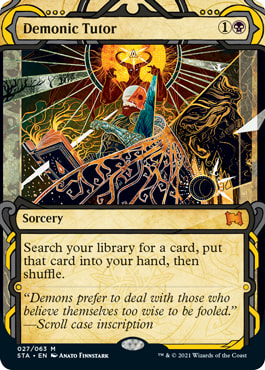 |  |
I'm a bit less forgiving to these cards, though. While it makes sense that you would expect rare cards to not be accessed so easily, uncommons are much easier to come across. Demonic Tutor makes it too easy to find what you need on the cheap and I doubt Sol Ring needs any introduction. However, it is worth noting that Sol Ring is way better in 60-card formats where you could play four copies. There's even that age old debate about whether Sol Ring or Black Lotus is a better pick in Vintage Cube draft - a testament to its strength.
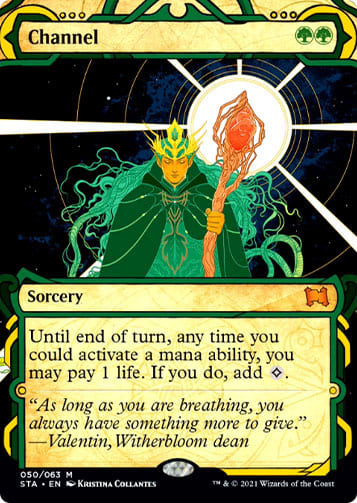
Channel is probably the most egregious of the bunch. At least in those early days, a card like Sol Ring couldn't ramp you into much nor could Demonic Tutor find you too broken of a strategy... unless it included Channel.
Nowadays most players likely know Channel from seeing it come up in Vintage Cube alongside massive threats. Cast a turn one or two Channel into an Emrakul, the Aeons Torn - another super broken contender in its own right - and you just win the game on the spot. You could do a quick kill with it in the early Alpha days too! Channel Fireball isn't just the name of a defunct gaming retailer/content producer - it's a famous combo where you can cast an early Channel, dump your life into the mana, and kill your opponent with a giant Fireball. It's always been broken clean in half.
The funny thing, though, is that I haven't even mentioned what could be considered the most broken card in the set. In fact it's quite possibly the most broken card in the game! What could be more broken than Black Lotus? Ancestral Recall? Sol Ring and the Moxen? Well, you might not even know about this one!
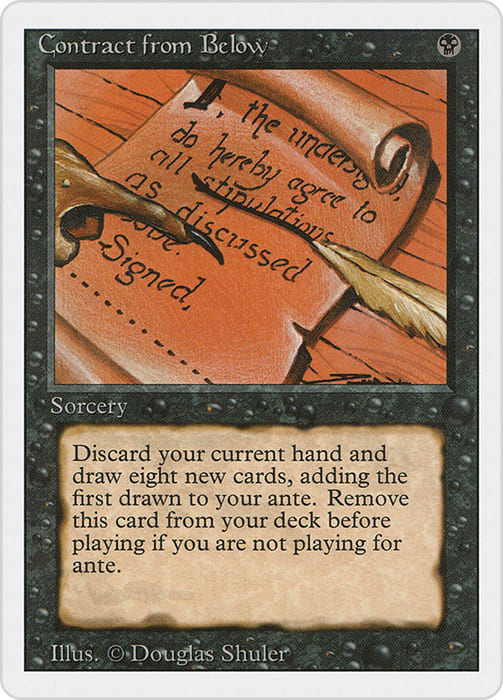
Oh yeah, Contract from Below. You thought a one-mana draw three was powerful? How about a one-mana draw seven? Oh, and you discard your entire hand as well, which opens you up to reanimation. The reason you've probably never heard of this one is that it requires ante, which most people simply never play with. If you are though? Good luck beating this monstrosity of a card.
That's the thing when it comes to some of these cards. Context is extremely important. Take this next card for example.
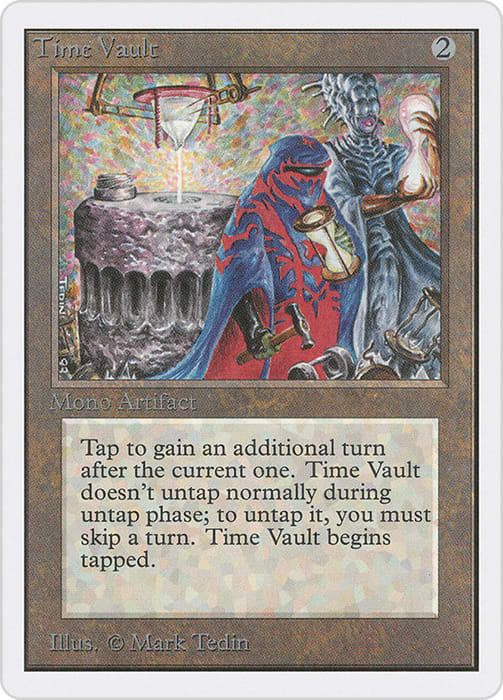
Just about anyone you ask would say what we all understand now: Time Vault is busted. It's broken in half, no two ways about it. A great example of how broken it can be is to look back at the one time it was included in the MTGO Vintage Cube for a time and was quickly removed due to its dominance.
By using something like a Voltaic Key or other permanent that untaps another permanent, you can repeatedly take extra turns without giving up a turn. This has made it super broken because of just how easy it is to abuse to take infinite turns. Back in Alpha, though, you could only use Twiddle, and even then it wasn't even clear if you could do such a thing. Not to mention that as the years went on, Wizards would famously try to errata it numerous times.
Broken in Context
This context can really make or break certain cards. Here's another set of cards that really weren't all that great when they first came out. If you ask most players today, though, they would instantly tell you how cracked they are.
 |  |  |
When these cards were all released, they were largely seen as either fine or bad.
Make no mistake, no one was saying Bazaar of Baghdad was truly heinous or anything, but the drawback on the card is real. It doesn't tap for mana and it's card disadvantage every time you use it, meaning that you really need to be doing something specific. But it wasn't even close to becoming the Vintage powerhouse it would turn into once the dredge mechanic was printed in Ravnica: City of Guilds.
In fact, that was arguably the block that helped recontextualize all three of these cards. In the case of Lion's Eye Diamond, it was seen as a useless bulk card... until it wasn't. Once you got Storm cards and access to Infernal Tutor, suddenly tossing away your hand wasn't such a bad thing! Of course, Flash also broke from a Dissension card, owing to its powerful interactions with Protean Hulk that dominated a Legacy Grand Prix before being turbo banned out of the format for good.
 | 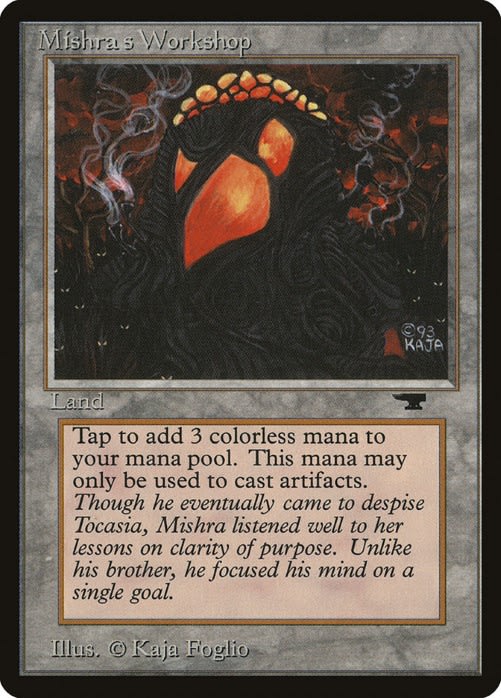 |  |
Other cards got this treatment over the years as well. For example, Hermit Druid requires a mass of non-basic lands, which didn't really exist at the time. Similarly, Mishra's Workshop couldn't get you many good artifacts early on, but as their quality went up, so did the potential for play of this particular land. Even Brainstorm - notoriously strong card - wouldn't become good until fetch lands and shuffle effects would become more prevalent.
But my favorite nutso-busto card that got recontextualized a bit is one that might make you go "huh?"

Yeah, Mana Drain has always been kind of cracked in half. It's one of the strongest cards in the game and is well known for its prowess today in Commander and in Cube. Back in the day, though, it did have a drawback, believe it or not! Mana burn existed in this era, meaning there was a nonzero risk to countering something big and not being able to spend the mana.
But let's be real: even then you could probably find something to do with the mana. That made it crazy broken and it would only get better as the rules changed and time went on.
Now, I'd like to speed through a couple other batches of cards. I'm already going pretty long as is, but I still want to cover some major pieces!
 |  |  |
First off are these three mana rocks. We've already covered the power of cards like the Moxen, Black Lotus, and Sol Ring, but Wizards wasn't merely satisfied with those! Mana Vault would also appear in the same set with Mana Crypt following soon after as a promo. Urza block would push this to its limits with Vault legal in Standard as well as cards like Grim Monolith, Mox Diamond, Worn Powerstone, and Thran Dynamo. But hey, I'm getting a little ahead of myself on that one!
 |  |
This pair of lands became infamous in the game's early years. Library of Alexandria was stupid from a raw card advantage standpoint. Simply play it on the draw and you'd always ensure you'd have an extra card each turn! With no legendary lands at the time, you could have as many as four of these at once, making it absolutely cracked!
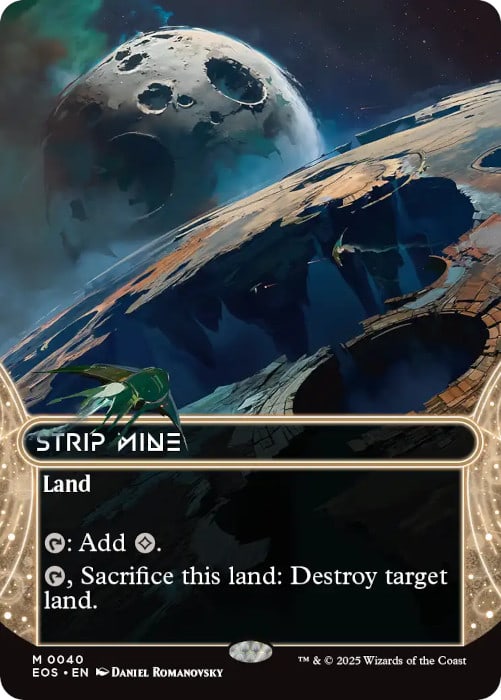
Speaking of cracked lands as four-ofs, let's talk about Strip Mine! This powerful land just blows up any other land from an opponent. Even doing it as a simple one-for-one feels awful and just makes the game miserable. As it happens, the card got even worse once Crucible of Worlds - and later similar cards - eventually made it to print. Want to experience this for yourself? It's still legal as a four-of in Timeless on MTG Arena, so give it a chance!
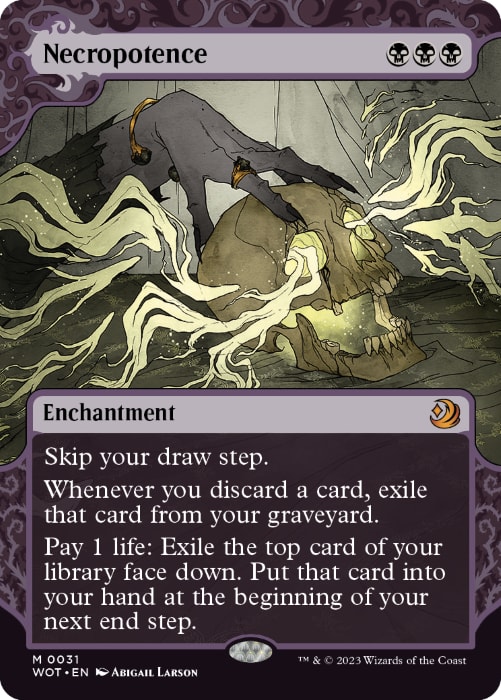 |  |  |
Necropotence is probably one of the most infamous examples of an underrated card in the game's history. Players simply didn't understand it, leading to the now infamous one-star rating by former TCG magazine Inquest. As it happens, casting this early with fast mana means you constantly restock your hand to seven every turn with basically no downside - especially if you could gain life back in the process.
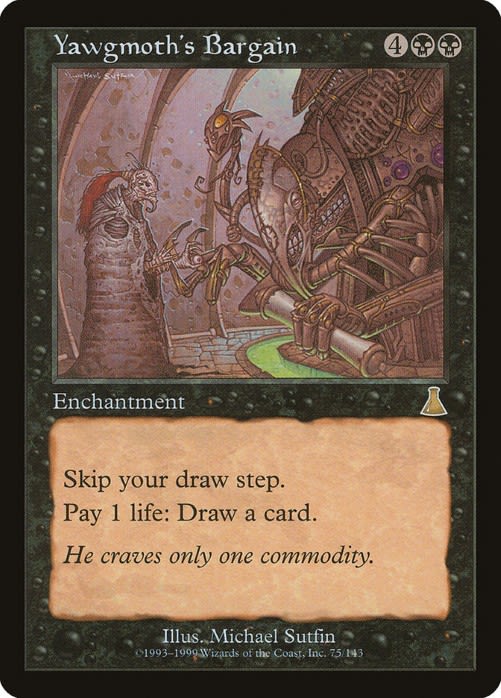
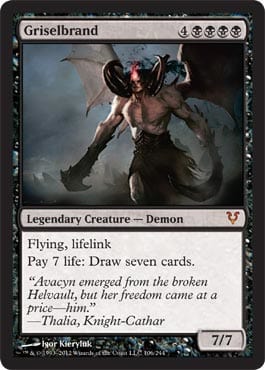
This card would be so influential that it would spawn other broken cards down the line. Yawgmoth's Bargain is the most well-known of these, breaking during the Urza block thanks to multiple ways to get it on the board quickly. This would also be revisited on the powerful demon Griselbrand, who would go on to be the de facto Reanimator target until Atraxa, Grand Unifier came out over a decade later.
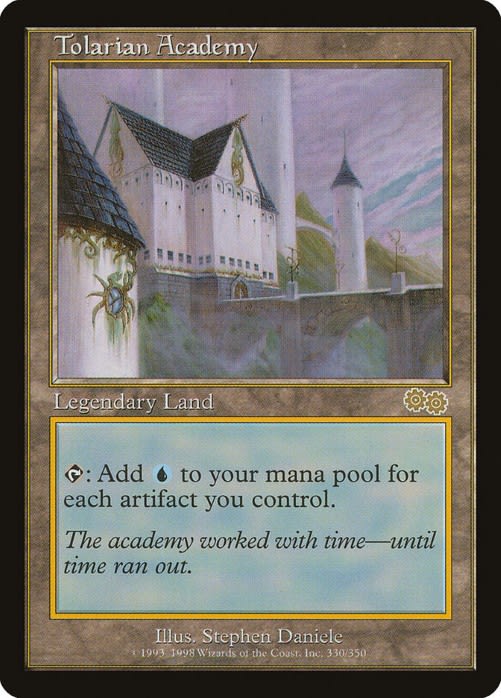 |  |  | 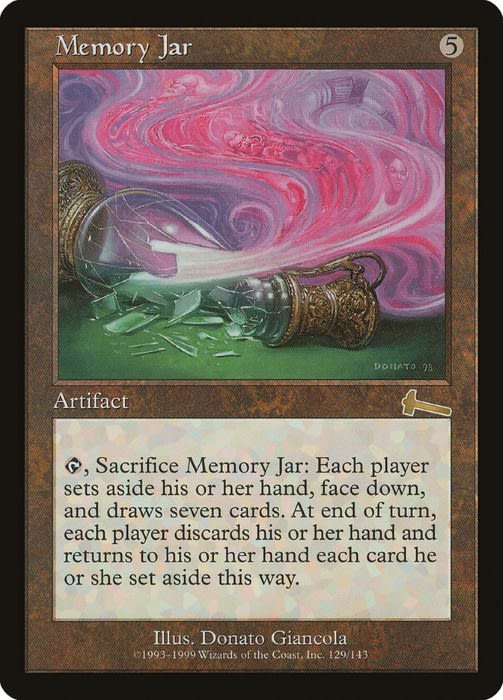 |
Speaking of Urza block, it's time to touch on one of the most broken eras in the game's history. Tolarian Academy just broke everything, full stop. The powerful land would be used in combination with other cheap, powerful artifacts to generate hilarious amounts of mana. From there you could refill your hand with cards like Windfall and Time Spiral - the latter of which would also untap Tolarian Academy in the process! This led to one of the most broken decks ever, enabling turn one kills in Standard.
That's not all, though! Memory Jar came out soon after and had to be emergency banned so that it too wouldn't cause any problems. Urza block was a disaster for a reason, and I haven't even touched on some other broken as hell cards like Yawgmoth's Bargain, Gaea's Cradle, or the various "free" spells either! Just an outright failure of game design on practically every level.
 |  | 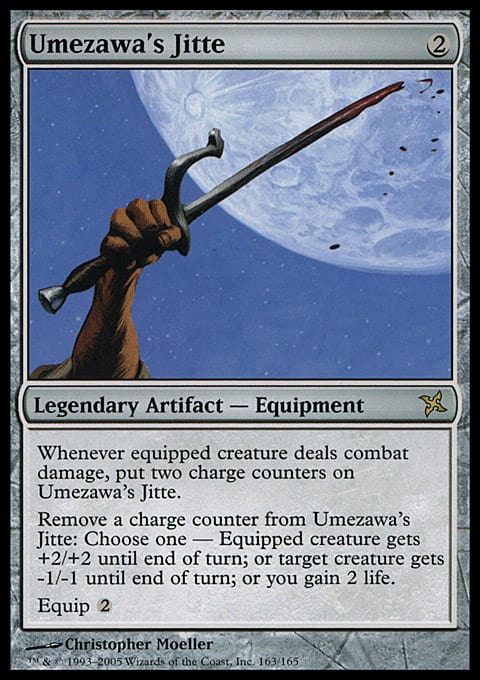 |
The Affinity era probably also deserves a shout. Funny enough, though, this is a great example of an era where the cards might not hold up quite as well today. The artifact lands are very strong, but their potency is debatable, with full playsets being legal in formats like Legacy and Pauper, and Arcbound Ravager doesn't see much play anymore. Even Umezawa's Jitte, also from this era, has been thoroughly outclassed by most modern equipment.
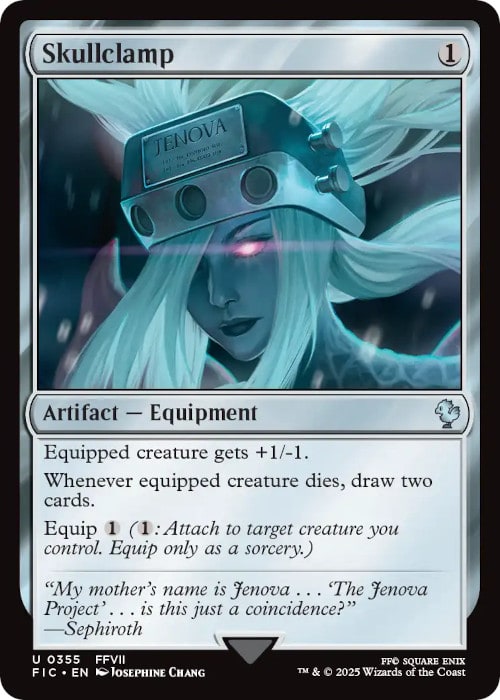
The one real exception to this is Skullclamp. The card was and remains a truly heinous draw engine. Consider putting this in a deck with a bunch of zero mana Kobolds and watch yourself churn through your deck. Now imagine sticking two onto a Frogmite you cast for free and drawing four cards. Broken doesn't even begin to describe Skullclamp and it deserves to remain banned for all time.
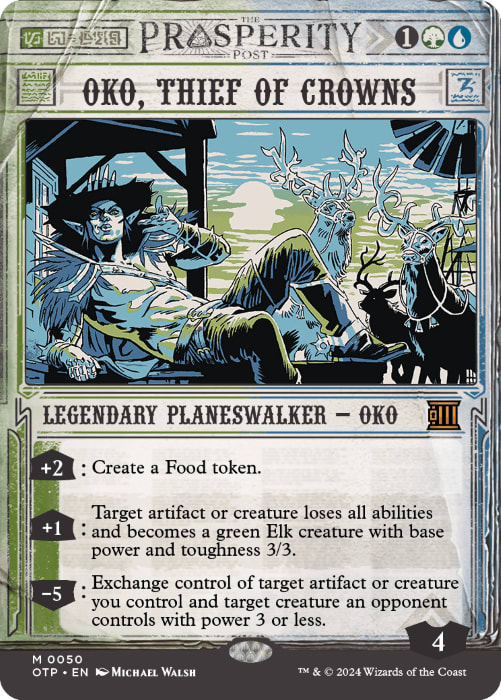 | 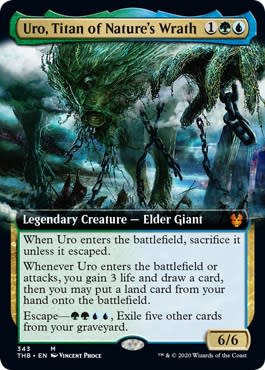 |  |
As we enter the modern era, it feels like we're starting to see more and more cards pushed to an extent that things are breaking more and more. 2019 and 2020 were indicative of this, with Throne of Eldraine, Theros Beyond Death, and Ikoria: Lair of Behemoth bringing some of the most powerful cards of all time.
Who could forget Oko, Thief of Crowns - a card so strong it's been banned from just about every major format? Or what about Theros Beyond Death creating a combo era that made several cards get banned in Pioneer? And, of course, there's the companions - a mechanic so powerful it needed an errata and still has proven to be too strong.
Take your pick of busted card here, because there sure are an absurd number of contenders for the most broken cards ever printed here!
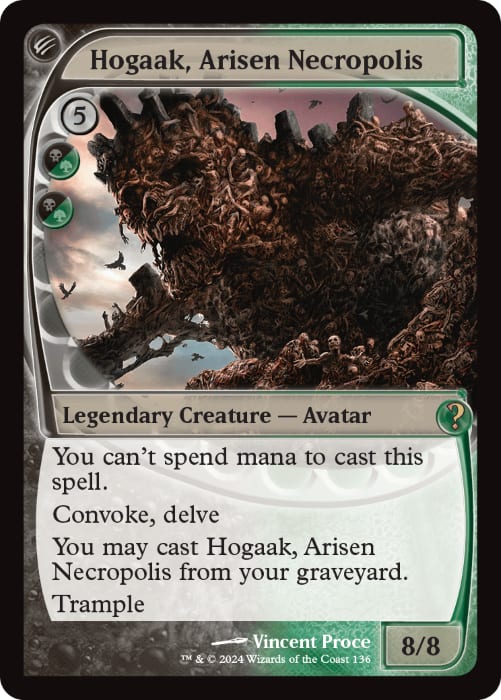 |  | 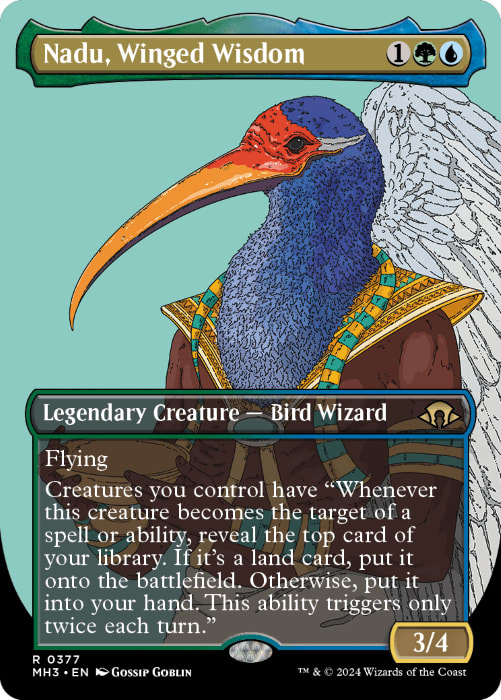 |
You could also include Modern Horizons and the many broken cards there, but I'd rather talk about them all together. Every single Modern Horizons release has broken multiple formats, leading to a wide swath of bans. Every one of these sets has caused at least one ban in Modern, Legacy, and Pauper - and usually several!
Hogaak, Arisen Necropolis and Nadu, Winged Wisdom are far and away the most egregious examples of this. Both of these cards completely broke Modern entirely, and arguably continued to do so in other formats after - particularly Nadu. That's not even getting into the likes of Grief, which was banned in Modern and Legacy, or Arcum's Astrolabe - a mana fixer so efficient it was banned in three different formats.
The track record for these sets has been so rough, that it calls into question whether or not Horizons sets will continue going forward. Every one of them has done some cool things, but has left a trail of ash in their wake.
What's wild are the broken cards I really didn't get a chance to talk about on this list. Things like Ancient Tomb, the Mirage block tutors, Gush, Dark Ritual and friends, Show and Tell/Sneak Attack, Treasure Cruise, Gitaxian Probe, Mental Misstep - and more! I could even cover something like Force of Will, one of the strongest counterspells of all time, but I chose to stick mainly to cards that have been banned in major formats.
Just about every one of the cards I've covered here could be a contender for the most broken cards ever made. The question simply remains: which is the most broken? Well that's ultimately subjective, which is what made Shivam's post and the comments within so interesting to me. Everyone has different opinions on what cards are stupid broken and why, and there's no true answer which is best.
Every one of these cards is cracked in half and then some. Which do you think deserves to be number one?
Paige Smith
Bluesky: https://bsky.app/profile/themaverickgirl.bsky.social
Twitch: twitch.tv/themaverickgirl
YouTube: TheMaverickGal