


 Locations



Sideboarding is one of the most valuable skills you can learn in Magic: the Gathering. Relevant to both Limited and Constructed, sideboarding involves understanding how your deck works in a variety of contexts and matchups, so you can know how to swap cards in and out of your main deck for best-of-three matches
What is an MTG sideboard?
A sideboard, in Magic: The Gathering, is a customizable set of cards, separate from your 60-card main deck; in Constructed, it is typically 15 cards, though the number will vary in Limited decks.
In best-of-three matches, you can utilize these cards to make changes to your main deck between games. This is useful in games where cards that might not be helpful against an opponent's deck can be removed for anything more efficient, giving you flexibility.
Since you can only have a maximum of 15 cards in your sideboard in Constructed matches, it's vital that every single card in your sideboard is chosen carefully. You also can play up to two games using your sideboarded cards in best-of-three matches.
In a tournament you could end up playing more games with your sideboarded deck than with your original main deck. It's important to choose wisely.
What cards should you play in your sideboard?
No matter what type of deck you run or what strategies you like to employ, sideboard cards can be broken down into a few specific categories.
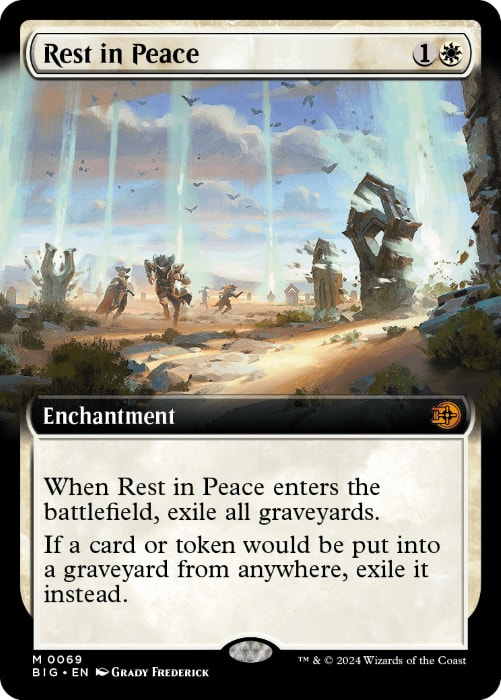 |  |  |
- Silver Bullets: Silver bullets, or "hate" cards, are the type of card you bring in to stop a specific part of your opponent's gameplan. For example, if your opponent is playing a Superior Spider-Man deck with Bringer of the Last Gift, you might consider a card like Rest in Peace or Ghost Vacuum as a hate card to stop your opponent's graveyard shenanigans.
- Diverse Threats: In some matchups (for example, Aggro against Control) you might want to bring in more threats that make it harder for your opponent to deal with. If you're playing a Mono-Red Aggro deck against an Azorius

 Control deck, you might consider a card like Chandra, Spark Hunter to get around removal spells and board wipes. If you're playing a Control mirror, you might consider a card that stops you from being countered.
 - Flexible Removal: Similar to silver bullets, some decks will want cheap and efficient ways to deal with threats, especially in aggressive matchups. As a Midrange strategy, you might board into a cheap card like Stab to deal with an early one or two-drop, like Monastery Swiftspear or Slickshot Show-Off. You can also board into cheap ways to counter your opponent's spells, like Dispel or Spell Pierce.
How to Build the Perfect MTG Sideboard
When building your MTG sideboard there are a few key things to keep in mind.
The first thing is that you must understand the type of deck you are playing. Knowing whether you're playing an Aggro, Control, Combo, or Midrange strategy will influence what cards you want in your sideboard, and how many.
You also want to make sure you don't dilute your main strategy and that the cards you include make sense. It's important to have a balance among types of sideboard cards, so you don't get stuck defenseless against a certain strategy.
At this level, it's more than beneficial to understand the metagame. The current metagame will entirely influence what cards you want in your sideboard. Decks change with every new set and major tournament, so you want to include cards you think will be good against the major decks you expect to end up running against.
You don't want to be caught with cards in your sideboard that don't come in handy and end up feeling like wasted slots.
Before you go, figure out a general plan instead of grabbing what looks good and going in blind.
That means paying attention to what cards you plan to bring in or swap out for the matchups you're expecting. If you know that you'll need to cut five cards from your main deck in a matchup, you should have four or five cards that you want to bring in to replace them.
How many cards do you need?
You won't always have clear swaps for every single matchup that exists in the meta, but by pinpointing the popular decks you want to prepare for, you can more accurately come up with what cards you actually want to board in and out. That's one of the key philosophies I work from.
On average, if you're playing a more dedicated strategy, your sideboard usually has three or four copies of specific cards to make dedicated swaps. This is more often the case in Aggro and Combo decks.
However, if you're playing a Midrange or Control strategy, you sometimes want a little more flexibility in your slots, so you might have more one-of's or two-of's. Here are two decklists I've won tournaments with a Red-White Aggro Burn deck and an Azorius Control deck, each with vast differences in the number of cards I played in their sideboards:
Boros Burn | Modern | Roman Fusco, SCG IQ/1st
- Creatures (12)
- 4 Eidolon of the Great Revel
- 4 Monastery Swiftspear
- 4 Goblin Guide
- Instants (16)
- 4 Lightning Bolt
- 4 Lightning Helix
- 4 Boros Charm
- 3 Searing Blaze
- 1 Shard Volley
- Sorceries (12)
- 4 Rift Bolt
- 4 Skewer the Critics
- 4 Lava Spike
- Lands (20)
- 3 Mountain
- 4 Sunbaked Canyon
- 4 Inspiring Vantage
- 3 Bloodstained Mire
- 2 Scalding Tarn
- 2 Sacred Foundry
- 2 Fiery Islet
- Sideboard (15)
- 4 Smash to Smithereens
- 4 Skullcrack
- 3 Kor Firewalker
- 2 Path to Exile
- 2 Searing Blood
With the Burn deck being a dedicated strategy of every card trying to deal three or more damage to my opponents, my sideboard options were very limited.
The only card that technically can't do any damage is Path to Exile, with Kor Firewalker existing only for the mirror match. I would make dedicated swaps in specific matches, such as sideboarding out four Boros Charm for a set of Smash to Smithereens against Artifact-based Affinity decks.
On the flipside, my Standard Azorius Control deck has a game plan that's more about amassing cards and having the right answers for my opponent's threats, aiming to win a longer game.
Azorius Control | Standard | Roman Fusco, SCG Con Las Vegas ReCQ/1st
- Creatures (5)
- 2 Beza, the Bounding Spring
- 2 Marang River Regent
- 1 Overlord of the Mistmoors
- Planeswalkers (1)
- 1 Elspeth, Storm Slayer
- Instants (16)
- 4 Consult the Star Charts
- 4 Get Lost
- 4 No More Lies
- 3 Three Steps Ahead
- 1 Essence Scatter
- Sorceries (7)
- 1 Split Up
- 2 Ultima
- 2 Day of Judgment
- 2 Stock Up
- Enchantments (5)
- 2 Seam Rip
- 3 Aang's Iceberg
My sideboard has more one-ofs for more specific matchups like Overlord of the Mistmoors against Dimir  Midrange and Rest in Peace for graveyard-centric decks. It's worth noting that cards like Devout Decree are both good against Mono-Red Strategies and Dimir strategies, making it a flexible removal spell.
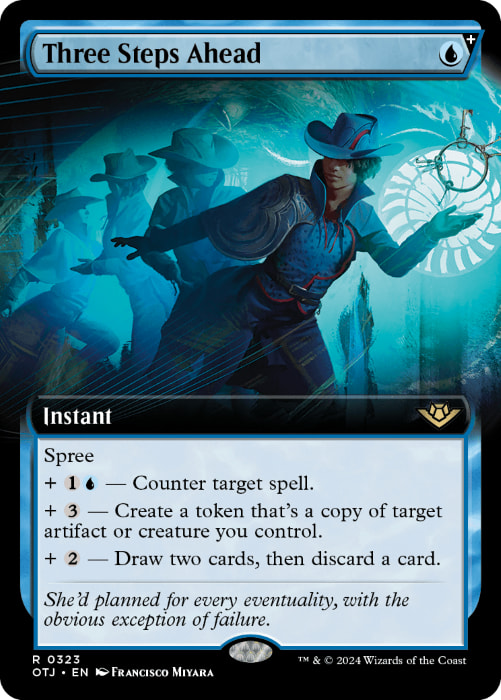 | 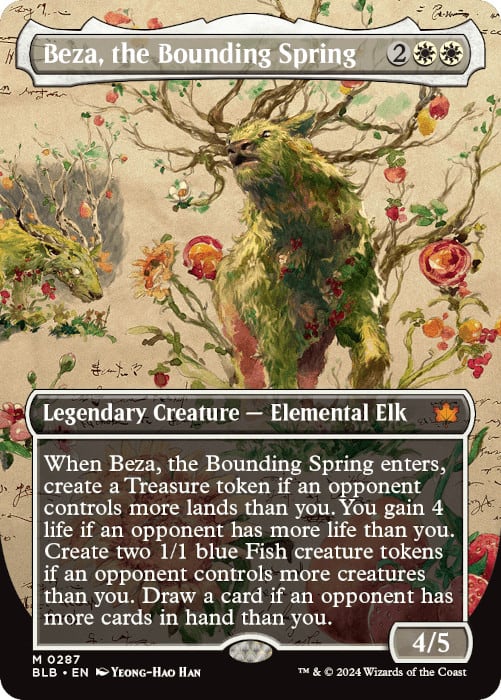 |
Because this deck also has three copies of Three Steps Ahead in the main deck, it in a way gives me more copies of random one-of Creatures in my sideboard, or at least some protection. If my Mono-Red opponent goes to kill my Beza, the Bounding Spring, my Three Steps can make me a new copy and get the enter the battlefield effect again, rather than simply counter the spell.
Even though Riverchurn Monument is better in multiples, I can safely afford to play one for any Control mirror because my Three Steps Ahead can copy it. This is important because I can utilize a card in my main deck to justify only having a single copy of a threat card in my sideboard. This gives me more room to dedicate cards for other matchups.
Common Sideboard Mistakes
There are some critical things that players can do that make their sideboard weak. Here's a quick and dirty list of my most important advice.
- Remember that your sideboard is a limited resource, and every card in there is valuable. Don't waste slots on a fundamentally bad matchup. Make every card earn its slot. If you don't know when you're bringing it in, it shouldn't be there.
- You can't try to beat everything; you have to pick a lane and stay in it if you want to have success. Have a clear plan. Know exactly what comes in and out for your key matchups before the event.
- It's crucial to prioritize the meta, not your fears. Don't overprepare for matchups you hate if they rarely show up. Don't weaken your deck to fix a niche problem. It's not worth it.
- Stay flexible. Adjust your sideboard as the meta shifts instead of locking into a "standard" build. Question stock lists. Always ask why a card is included and what matchup it's for before copying it.
The Bogles Lesson
Back when I played Boros Burn in Modern the absolute worst nightmare for me was sitting across from the deck, Bogles.

Bogles, an Aura-themed deck built around slapping Enchantments on the card Slippery Bogle, was my hardest matchup. Not only could I not target their Slippery Bogle with my Lightning Bolts, but they also had ways to give it Lifelink using Spirit Link and Daybreak Coronet.
To make matters entirely worse, these decks also boarded into (or sometimes had main deck) Leyline of Sanctity. This lethal combo meant that I was never able to target any of their Creatures, their life total directly, or even attack in combat - making my deck completely fall apart.
However, in the hundreds of competitive Modern matches I played, I only really got paired against Bogles maybe half a dozen times. I learned a vital lesson in watching other Burn players approach this matchup.
At the time, the premier Burn deck to play was Naya Burn. The deck was 99% Boros - the only Green card in the entire list was a few copies of Destructive Revelry in the sideboard.

Destructive Revelry kills Enchantments, Leyline of Sanctity and Daybreak Coronet are our biggest headaches out of Bogles, so it must be the correct choice, right?
Bzzzzzt! Wrong!
My MTG mentor and fellow CoolStuff content contributor Mike Flores actually developed the perfect version of Boros with an unbeatable sideboard in response to these Naya decks. We got paired against Bogles so little in our tournaments that the Enchantment clause on Destructive Revelry rarely came up.
Playing Revelry meant we were also forced to play a third shockland in our mana base, Stomping Grounds, in addition to the two Sacred Foundry cards we already had. This meant that in any Burn mirrors, where life total preservation was paramount, that the Stomping Grounds was a huge liability.
To make matters even worse, Destructive Revelry only dealing two points of damage meant that we were missing out an extra point of damage by not playing Smash to Smithereens, which was entirely relevant to the various Affinity and Hardened Scales decks that were lurking around in the format.
It's making sense now, right?
This is a very specific example, I know. However, at the time the status quo was to play Stomping Grounds and Destructive Revelry in your Burn deck, but the status quo was wrong! The point of all of this is to teach you a few key lessons.
- You can't have answers for every single matchup, especially in a diverse format like Modern
- Pinpoint which of the popular decks you want to beat, but also you can beat
- Do your due diligence in understanding how the meta is changing week to week
- Question every sideboard you see
When you copy and paste a deck into MTG Arena or build it for your next RCQ make sure you're asking yourself questions like "why did this player include this card?" and "what matchup am I bringing this card in?"
You don't want to risk wasting your slots on cards you'll never bring in during an event. Know your local meta, the meta at large, and be ready to adapt.
Effective MTG Sideboards
Now let's look at a couple of examples of some of the best sideboards in MTG's history.
Coincidentally, we'll be looking at a few sideboards from again, Mike Flores, arguably one of the best deckbuilders of all time.
First up, let's look at Naya Lightsaber, a deck Flores built that was used to win Worlds in 2009:
Naya Lightsaber | Standard | Andre Coimbra, Worlds 2009/1st
- Creatures (25)
- 4 Baneslayer Angel
- 4 Bloodbraid Elf
- 4 Noble Hierarch
- 4 Ranger of Eos
- 1 Scute Mob
- 4 Wild Nacatl
- 4 Woolly Thoctar
- Planeswalkers (3)
- 3 Ajani Vengeant
- Instants (8)
- 4 Lightning Bolt
- 4 Path to Exile
- Lands (24)
- 3 Mountain
- 4 Forest
- 4 Plains
- 4 Arid Mesa
- 1 Oran-Rief, the Vastwood
- 4 Rootbound Crag
- 4 Sunpetal Grove
- Sideboard (15)
- 1 Ajani Vengeant
- 2 Burst Lightning
- 4 Celestial Purge
- 4 Goblin Ruinblaster
- 4 Great Sable Stag
At the time, the dominant Standard deck was Jund Midrange (
 ), and while Naya Lightsaber played better into the metagame than Jund, it needed a surefire way to combat Jund since it was so popular.
This is a metagame where Naya didn't just sideboard one or two cards to make the matchup better - it sideboarded 13 cards on average to tilt the matchup in its favor.
In Flores' deck, he would swap Wild Nacatls and cheaper removal spells for four Great Sable Stag, four Goblin Ruinblaster, four Celestial Purge, and one Ajani Vengeant.

Great Sable Stag dodged the majority of Jund's Black-based removal and could attack through a Bloodbraid Elf if you had a Noble Hierarch on the battlefield. Goblin Ruinblaster denied them mana when comboed with Ajani Vengeant's +1 ability.
While this may seem like a lot of cards to dedicate for one matchup, the Naya deck being so good against the majority of the meta warped its sideboard to be able to combat Jund, the one main matchup it needed a leg up in.
Next up is Izzet Splinter Twin, from 2011:
Splinter Twin | Standard | Mike Flores, 2011 TCGPlayer.com WWS Big Apple/1st
- Creatures (11)
- 1 Pilgrim's Eye
- 2 Inferno Titan
- 4 Deceiver Exarch
- 4 Sea Gate Oracle
- Planeswalkers (6)
- 2 Jace Beleren
- 4 Jace, the Mind Sculptor
- Instants (9)
- 2 Spell Pierce
- 3 Mana Leak
- 4 Into the Roil
- Sorceries (4)
- 4 Preordain
- Enchantments (4)
- 4 Splinter Twin
- Lands (26)
- 10 Island
- 8 Mountain
- 4 Scalding Tarn
- 4 Tectonic Edge
- Sideboard (15)
- 1 Basilisk Collar
- 1 Consecrated Sphinx
- 1 Dispel
- 1 Elixir of Immortality
- 1 Jace Beleren
- 1 Jace's Ingenuity
- 2 Manic Vandal
- 2 Pyroclasm
- 2 Spell Pierce
- 2 Spellskite
- 1 Trinket Mage
Splinter Twin is sort of a hybrid Midrange/Combo deck. It has an innate turn-four combo of casting Deceiver Exarch at the end of your opponent's turn and then untapping with Splinter Twin to make infinite Exarch tokens.
However, this deck can also win with its Planeswalkers, Jace Beleren and Jace, the Mindsculptor, as well as its two copies of Inferno Titan.
Looking at the sideboard, this deck has a much different configuration compared to Naya Lightsaber. At first glance, this sideboard looks kind of a mess. It has a bunch of one and two-ofs, with no four-ofs to be found. However, upon a closer look you can see the brilliance of some of its inclusions.
Basislik Collar (which you can fetch with Trinket Mage) is exceptionally strong when equipped to Inferno Titan, letting you wipe out your opponent's Creatures as you can divide the Deathtouch damage.
Consecrated Sphinx can help you out-draw your opponent in the mirror, and it's hard to deal with effectively if your opponent doesn't have hard removal.
 |  |
The real combo is in Trinket Mage with Elixir of Immortality. With Splinter Twin attached to your Trinket Mage, you can repeatedly sacrifice your Elixir to keep recycling your deck and gaining life, a sure way to outlast your opponent in long, grindy games.
You also get access to Manic Vandal, a way to destroy and keep your opponent's equipments at bay, with Batterskull and Sword of War and Peace being prevalent in the Azorius "Cawblade" decks of the time, which utilized Stoneforge Mystic and Squadron Hawk.
Did I mention you can Splinter Twin your Pilgrim's Eye for a blocker each turn?
Overall, the Splinter Twin deck has a dedicated plan with a variety of choices in the sideboard so you can adapt to how you think your opponent will try to beat you.
Maximizing Your Sideboard in Limited
Unlike Constructed, where you carefully pick and choose the 15 cards that make up your sideboard, in Limited your sideboard is just whatever cards you don't end up playing in your initial main deck.
In Limited, you really have to "use every part of the buffalo" when building your deck. Whether you're Drafting or playing Sealed you must effectively utilize what you have available to you.

In Limited, you want to note which cards in your pool play like sideboard cards that are similar to Constructed. Unforgiving Aim is the perfect example of this - it's an inflexible card that you probably wouldn't play in your main deck, since three-mana is a pretty hefty price for the effect it provides.
However, if you find out your opponent has a Kindbinding or Eirdu, Carrier of Dawn in their deck, Unforgiving Aim goes from a random card in your sideboard to premium removal.
If your opponent is aggressive and you're on the draw, you might consider sideboarding in another two-drop to try to guarantee you have a play on turn two. Similarly, you might board into a card like Cry of the Carnarium to deal with their first few plays.
If you're a grindy deck playing against another grindy deck, you might want to board out a weak two-drop Creature for a card like Fight On. In Limited more so than Constructed, being on the play or draw has a greater influence on what types of cards you want to bring in.
Conclusion
At the end of the day building a sideboard and using it effectively are skills that only come with practice. Maximizing your MTG sideboard will come from both understanding your own deck and the current metagame you're preparing for.
The most important note I can leave you on is to always prioritize the goals of your sideboard. Know what matchups you need few or no cards at all for, and what your worst matchups are and how to improve them. It's more important to greatly improve a matchup you already have a decent shot in that to slightly improve a matchup that's already bad.
Sideboarding is a vital skill to have in Magic. It is a key component that you will have to understand thoroughly if you want to win both Limited and Constructed tournaments.
Do your homework, playtest accordingly, and make thoughtful decisions, ones derived from your own playtesting and experience. It could make all the difference in you hoisting the trophy at the end of the day.