 Locations


The Bracket System is a brand new way to introduce your deck to a table to try and create a balanced environment for a game of Commander. This system has been introduced by Gavin and the rest of the Commander Format Panel and has been received rather well. They recently have made a couple of updates that I love, especially digging deep into the difference between what is considered a Bracket 4 deck and what is considered a Bracket 5 deck. If you are interested in reading on the other three brackets, you should go give Mark's articles a read if you are looking for some lighthearted fun games of Commander. So, let's dive into what the definition of a Bracket 4 deck is.
Check out the other articles in this Bracket Series here:
- Building Commander Decks for Bracket 1 by Mark Wischkaemper
- Building a Commander Deck for Bracket 2 by Mark Wischkaemper
- Building Commander Decks for Bracket 3 by Mark Wischkaemper
- Building to Bracket 5 in Commander by Nigel Kurtz
What is Bracket 4?
From the most recent Commander Bracket System update:
- Decks not to adhere to the cEDH metagame reserved for Bracket 5
- Decks to be lethal, consistent, and fast, designed to take people down as fast as possible
- Game Changers that are likely to be fast mana, snowballing resource engines, free disruption, and tutors
- Win conditions to vary but be efficient and instantaneous
- Gameplay to be explosive and powerful, featuring huge threats and efficient disruption to match
Generally, you should expect to be able to play at least four turns before you win or lose.
This should give you a pretty solid idea of what a Bracket 4 game entails. The goal is to win the game as efficiently as possible, without adhering to the cEDH metagame. Firstly we need to define what the "cEDH metagame" is:
What is considered to be"cEDH Metagame?"
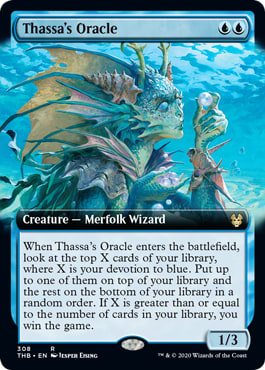 |  | 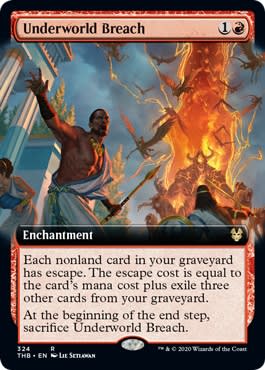 |
cEDH is the fastest and most efficient way to play Commander. The goal is to set up with fast mana rocks such as Mox Diamond and win using combos such as Thassa's Oracle or Underworld Breach. cEDH is also defined by draw engines. Rhystic Study and Mystic Remora being the best two, but are these cards not allowed in Bracket 4? No, definitely not.
I believe the huge difference between Bracket 4 & 5 is player intent. People that often play cEDH know what a cEDH deck looks like and wouldn't play it in a casual game of Commander. Casual players may give a deck the wrong label by throwing out the term cEDH on someone's Bracket 4 build. So, let's dig into how to craft a Bracket 4 list.
Building Bracket 4
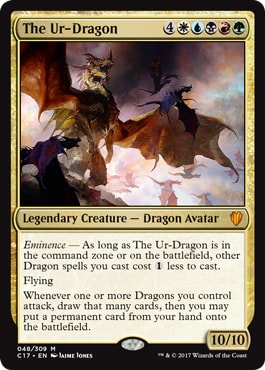 |  | 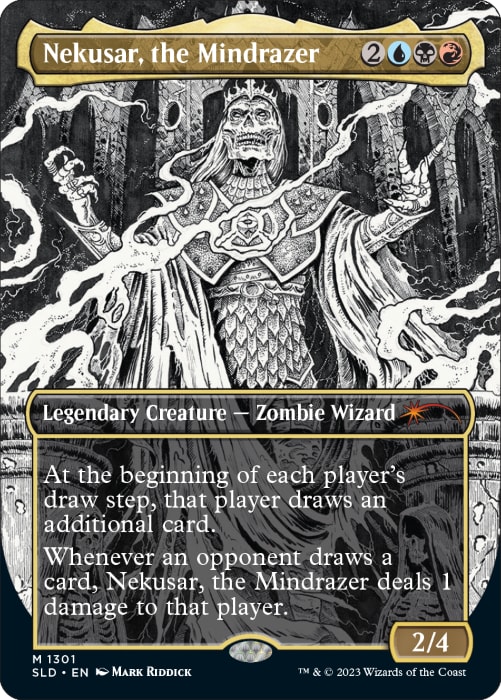 |
Bracket 4 Commanders are fast and/or efficient. A fully tuned The Ur-Dragon deck will dominate a table if left unchecked thanks to its powerful effect on or off the table. Does Ur-Dragon see play in cEDH? No, definitely not. (but nothing is stopping you from giving it a try). Bracket 4 decks are built around consistent wins and explosive plays so you are able to play all of your most expensive and powerful cards that get shunned in casual, but will never quite reach the scope of cEDH play.
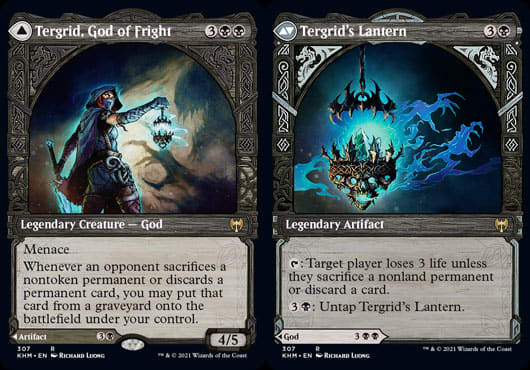
Some Commanders sit in this awkward position in the format. Tergrid, God of Fright is always the first one on the top of my brain. Tergrid is an oppressive legend that takes over the game so easily, but the strategy it's built upon crumbles at a cEDH table. So where on earth do you play a Tergrid, God of Fright deck?...(dramatic pause)...well that would be Bracket 4!
This bracket is described as fast cutthroat games where the goal is to win as efficiently as possible. You shouldn't be surprised if your opponent is packing heat (or a lantern in Tergrid's case). That also means that you can bring the same amount of spice in the deck you decide to bring to the table.
 | 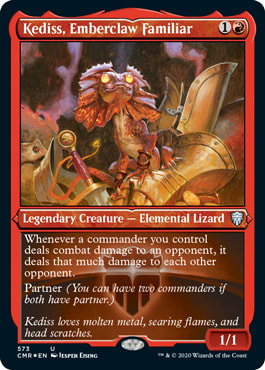 |
My Bracket 4 deck is a fast-paced Voltron style deck focused around Yoshimaru, Ever Faithful and Kediss, Emberclaw Familiar. This deck plays cards like Mox Amber and Lotus Petal to help speed up the process of growing Yoshimaru. Most of the time, Mox Amber and Lotus Petal are reserved for cEDH play for fast efficient turns, but I doubt you have ever seen the partner pair of Yoshi/Kediss at a cEDH table. That is how I perfectly define what Bracket 4 is and how I interpret the layout of the bracket from the format panel.
There's one more topic I want to discuss regarding building to higher bracket levels, and that's budget.
Building Bracket 4 Budget?
 |  |
The price of an individual Magic card has nothing to do with its relative power, occasionally. For example, Swords to Plowshares is the most efficient one-mana removal spell in all of Commander and even sees some play in cEDH. This card is less than $2 for the cheapest printing and gets a reprint as often as Sol Ring.
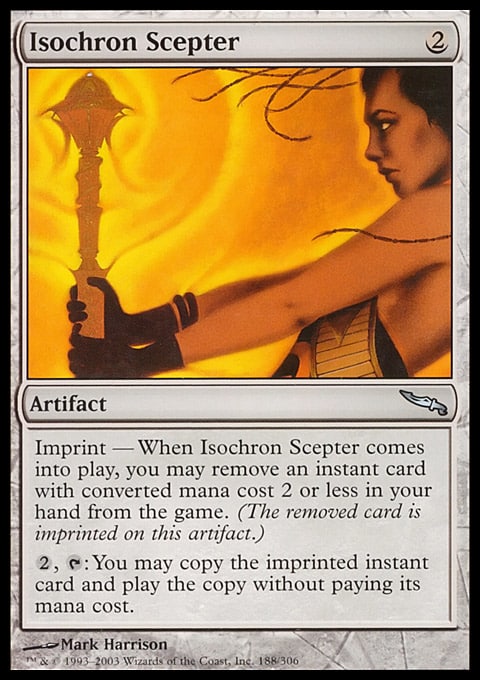
If you decide to build a "budget" deck, that does not immediately put it in a certain bracket. Isochron Scepter and Dramatic Reversal are a relatively cheap combination of cards to purchase and could easily fit into a $100 budget deck. This combo is an efficient two card infinite mana combo that can lead to easy wins. This powerful combination needs to be reserved for Bracket 4 play and above, even if the deck you are piloting is on the cheaper side.
Budget can impact a deck's overall performance, but it doesn't perfectly set it into a bracket. The Brackets are all based on the intent of the person piloting the deck and should present it to the pod accordingly during pregame discussions.
I hope this article has been helpful in defining the difference between Brackets 4 & 5 and how to build up to the power that is Bracket 4. If you are interested in building to the maximum and digging your teeth into cEDH, I will have an article on that as well.
See you on the battlefield!
-Nigel