



 Locations


Gavin Verhey describes Bracket 2 as "Core." This means, apparently, the level that serves as kind of the "baseline" for Commander. I actually don't love that - my personal experience tells me Bracket 2 is lower power than most pods - and I think it diminishes Bracket 1, which should get a lot more love. However, this is what we've got, so let's break it down.
Check out the other articles in this Bracket Series here:
- Building Commander Decks for Bracket 1 by Mark Wischkaemper
- Building Commander Decks for Bracket 3 by Mark Wischkaemper
- Building to Bracket 4 in Commander by Nigel Kurtz
- Building to Bracket 5 in Commander by Nigel Kurtz
What is Bracket 2 in Commander?
From the most recent Commander Bracket System update:
Bracket 2 players can expect:
- Decks to be unoptimized and straightforward, with some cards chosen to maximize creativity and/or entertainment
- Win conditions to be incremental, telegraphed on the board, and disruptable
- Gameplay to be low pressure with an emphasis on social interaction
- Gameplay to be proactive and considerate, letting each deck showcase its plan
- On average, you should play at least eight turns before someone wins
Beyond that, the read I have is the real point here is fun. This is the level where you're not running some insane theme ("look at my everyone-is-petting-a-bunny deck!") or trying to do something other than win ("no one loses, so no one wins! Hooray!")... but you're also not trying to kill everyone at all costs as quickly as possible, and it's unlikely you're trying to make the game miserable for everyone else with all sorts of game stalls and prison effects. It's just... Magic, you know?
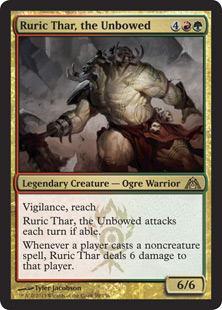
I would like to make a quick observation: Much as Bracket 1 is about intent, so is Bracket 2. You kind of have to decide to be suboptimal - when the best option is Sol Ring, we run Thran Dynamo - because you're valuing the experience and fun over the win. And the thing is, you're not doing it with some specific purpose in mind - you're not making sure everything has an Elk somewhere on the card or something - you're just choosing to prioritize fun over victory. That's a specifically higher calling.
I would also argue their decision to exclude the precons from this Bracket's identity was smart, because by-in-large, the precons are not prioritizing fun. They're prioritizing power and consistency, and they get evermore powerful with each release. I like a good precon, but when there's one at the table I assume it will be a threat.
So we're going to have a larger card pool and more thematic options than when building to Bracket 1, but we're going to choose not to optimize and instead try to create an enjoyable gameplay experience for everyone at the table, no matter who wins. Cool, but it takes attention and skill.
How do we build to this Bracket?
We take a breath. We relax. We don't say "that will be better." We say "that will be more fun." Let's say we crack a pack and we pull this guy:

Nice. Orzhov color scheme. Five mana for a 4/4 is fine. Plus we get built-in removal with all kinds of tricky stuff. Like these guys:
We could use the effect on ourselves if we wanted to, cycling Creatures through the Graveyard and Exile back into our hand by putting The Spot back on the bottom of our Library. That seems complicated, though, and honestly, we just want to kind of throw together a deck with stuff we have around, not go out hunting for all these crazy cards.
So we're going to use his effect offensively, both with regular effects (Conjurer's Closet, Teleportation Circle) and surprise Flicker effects to ward off attacks (Restoration Angel, Ephemerate). We'll keep letting our friends attack each other, slowly building up enough of an army to kill the last opponent standing.
See? The deck does a thing. (It controls the Battlefield and protects itself with a bizarre flicker effect from the Commander.) That thing attempts to help the player win the game. (It protects itself so well it winds up one of the last two, in a much stronger position than the other remaining player.) But that thing doesn't ruin everyone's fun. (It removes things, but it does so selectively and relatively slowly. That slows the game, sure, but it only ruins everyone's night if you choose to make it do that. Careful play decisions to maximize fun should have the desired effect.) It makes for fun and exciting board states. (Does he have the flicker effect in Hand? Or can I finally attack?)
The difference between this and a Bracket 3 deck, though, requires some very specific decisions, all designed to be more fun than aggressive. It starts with this:
- Probably no Sol Ring, and absolutely nothing faster than Sol Ring. (Yes, every deck has Sol Ring. They probably shouldn't, though, and the deck would probably be more fun with another big spell anyway.)
- No overly aggressive board control. (We don't have to take shots to the jaw, but we're not going to prevent our opponents from playing at all.)
- No quick or unstoppable combos. (A three- or four-card pocket combo is fine, and even going for a combo finish is probably okay, as long as it takes a while to assemble and a decent removal package can stop it.)
- Limited tutors, and absolutely no face-down tutors. (A couple of Transmute cards or even an Idyllic Tutor are fine, but if you're searching every turn, you're probably out of line.)
Instead, we're going to do some fun things. We might play at a theme, but we're also just going to use what we've got.
 |  | 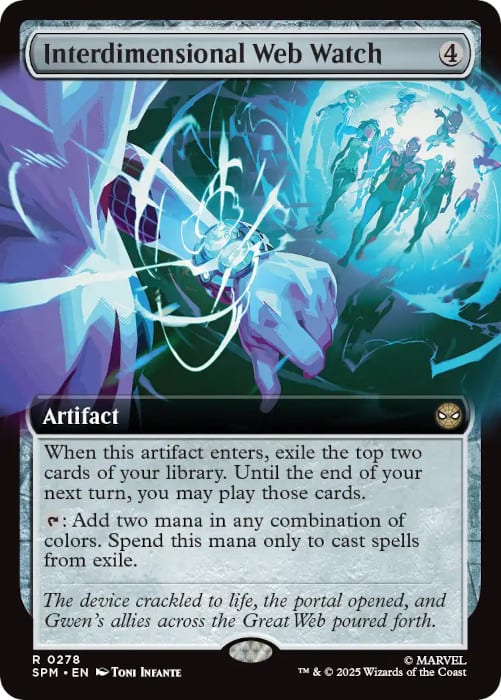 |
These are great! They work well for what we need. Bender's Waterskin keeps giving us mana, Pristine Talisman gains some extra life, and Interdimensional Web Watch gives us some goofy interactions with our flicker effects. They help keep us in the game and feeling able to play, but they don't explode ahead from the very beginning and take over the game. Similar is choosing Cultivate or Peregrination over Rampant Growth - slow down and pay a bit more for a bigger effect.
I really want to build a Bracket 2 deck, I swear
Sticking with The Spot example, in addition to slowing down your ramp, we make other choices to encourage fun and interaction over power. Consider these two cards in the higher-mana slot:
Angel of Despair and Anticausal Vestige undoubtedly powerful in a flicker deck. But one of them messes with your opponents (doubling up on the threat from The Spot) and the other draws you cards and lets you play fun stuff from your Hand for free. Both are great effects, but one adds to how mean this deck can be and the other just adds fun and excitement to the Battlefield.
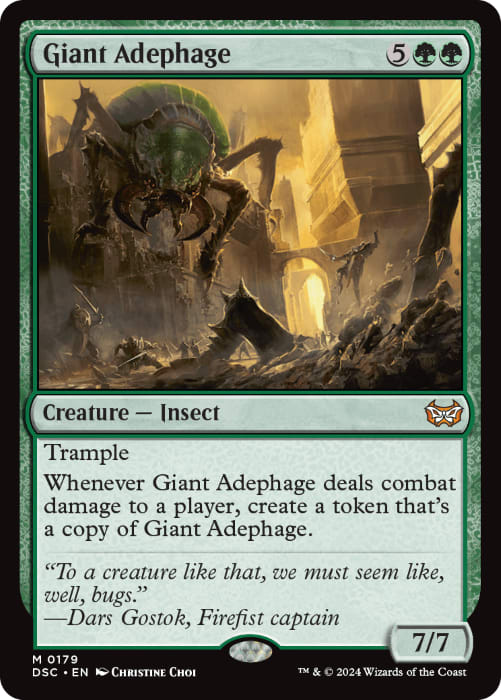
It's like looking at Craterhoof Behemoth and deciding to run Giant Adephage instead.
 |  |
It's choosing to put Avatar Enthusiasts in your Allies Kindred deck because if you're lucky one day you might be able to kill someone with a peasant holding a Sharpened Pitchfork.
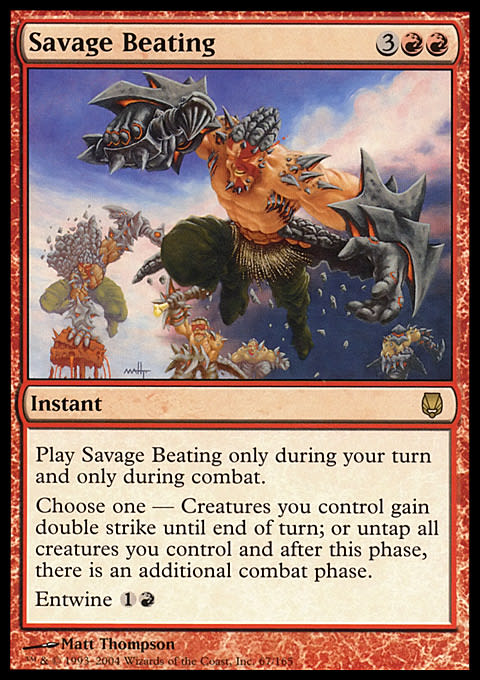
It's running Savage Beating kind of as a potential win-con but mostly because you cracked the super cool Todd McFarlane-illustrated version.
In some ways, building like this is easier than Bracket 1, because you have a much larger card pool to attempt to achieve a win. But honestly, in most ways, building to Bracket 2 is the hardest. Bracket 1 gives you a clear set of limitations, and you stick to the rules to make your deck be hilarious or awesome or beautiful. Bracket 3 makes a number of decisions for you - you're going to run Sol Ring, you're going to pretty actively try to beat your opponents, and you're going to do it however you please. Brackets 4 and 5 are really variants on cEDH where variation is minimal and the goal of the game is understood by everyone to win at all costs.
But in Bracket 2, we have to constrain ourselves with nothing more than our force of will, choosing to skip the "better" card for the more fun option.
So... what now?
Let's look at a few cards and talk a bit about how they may fit in a Bracket 2 context.

This is really nifty. It's decently powerful, with a card advantage effect and a static ability, both of which can be exploited. Or you can lean the Land direction and do some fun things with that. Consider something like Jyoti, Moag Ancient for great synergy all around.
Yup, Yidris, Maelstrom Wanderer is better. The First Sliver is nasty. But that's why we choose this guy instead. He's a ton of fun! Ramp like crazy and run hilarious cards with great Enters effects and ways to bounce the Wanderer back so you can recast him next turn. You never know what you're going to get, but it'll be spectacular.
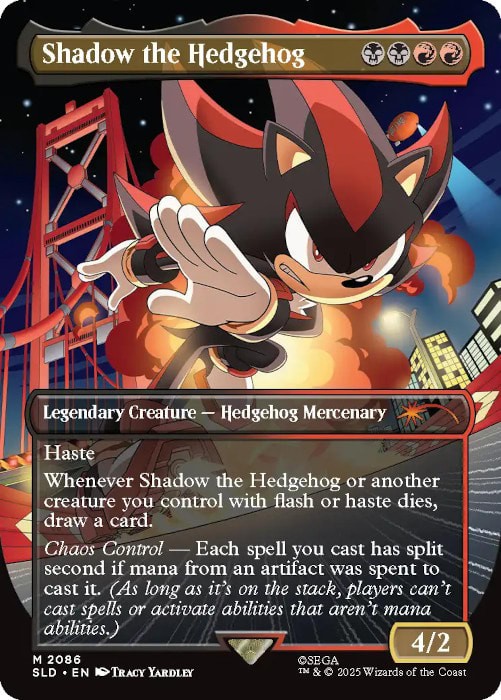
This is another fun example of some fun build-around abilities which creates fun and interesting board states. I've been playing this deck a lot recently, and it's a blast to have at a table without feeling overly powerful. But you could do a cool Treasure-powered Spellslinger deck that can't be countered, or do a funky permission deck where you use Flash Creatures for your effects.
You're allowed to make more mana, even a lot more, just don't do it as fast as possible. Ur-Golem's Eye and Hedron Archive are other ways to make more than one. Also, the three-mana ramp spell is almost always the better choice than the two-mana: Rampant Growths and Arcane Signets suggest speed and power, while Bonder's Ornaments and Nissa's Expedition do more later, allowing your friends to develop their own boards and gameplans.

This is a cool card that costs six mana and is way too slow. It's exactly the kind of effect you want at this point in a slower, more relaxed game. You're probably on turn five, six, or seven, and people are throwing down some problematic stuff. So you tap out to slow their rolls, surgically removing key pieces without wrathing, and sit back with a smile. Yes, Vraska's Contempt is faster, but this has the potential to be really fun.

Back in the day, Jason Alt basically invented the concept of the 75% deck, which is a great way to think about this Bracket. One of the tenets of 75% decks is it's always fair to play with other peoples' stuff, because if they have it they shouldn't mind playing against it - thievery automatically scales with the power level of the table.
So maybe Bracket 2 should be the core of Commander, and we should all be a bit more conscientious to not super-power every deck we build. A world where everyone carries a Bracket 2 deck to Commander night means no matter what, the option to just have fun and hang out with your friends is always available.
Thanks for reading.