


 Locations


Eternal formats are always fun, and the One Piece TCG Eternal format seems like it's going to be just as fun. As someone who has never been a huge fan of rotation in card games (I get why it exists, but I don't like it), seeing OPTCG adopt an Eternal format has made me quite happy.
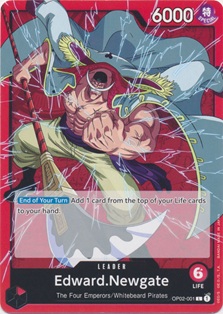
Even my old OP02-001 Edward.Newgate leader deck, which rotated out of Standard alongside Block 1, gets to stay in the fight instead of collecting dust in a binder.
Extra Regulation is OPTCG's new non-rotating Eternal format which became an officially supported format on April 1st, 2026. Standard remains the rotating format, but cards that rotate out of Standard can be played in Extra Regulation. That means, if you have a deck you really love and it's rotating out, you don't need to sideline those cards forever. Let's look at the One Piece TCG Eternal format a little closer to figure out exactly what we should expect.
What is Extra Regulation?
Simply put, Extra Regulation is the format where players can use the full One Piece TCG card pool, except for cards affected by the official banned, restricted, or banned-pair list. This was confirmed in Bandai's official Extra Regulation announcement. Banned cards include all cards on the banlist today and when they were originally printed. Restrictions in Standard apply to the card pool in Extra Regulation as well.
Extra Regulation doesn't mean that the format will replace Standard. Extra Regulation runs alongside OPTCG's current Standard format, but it gives older cards an official place to shine. That also means if you spent a ton of money on Mr.2.Bon.Kurei (Bentham) EB01-061, you can absolutely continue using them in whatever deck you want.
The format doesn't change deck construction or limits either. You're still allowed a maximum of four copies of a single card in a deck, and the deck must still contain exactly 50 cards. The only difference is that you can use cards and leaders in your decks that have rotated out of Standard.
Extra Regulation isn't a casual, kitchen-table format either. Bandai states that they intend to support the format fully, including having regular Eternal format tournaments with prize structure in flagship stores. Each of the formats are important in their own way, and they perform a job the other doesn't.
How Block Icons Affect the Format Split
Before you can understand the difference between Standard and Extra Regulation, it helps to understand block icons. Block icons are the numbers in the bottom right corner of the cards. They matter the most for Standard, since the numbers tell you which cards are Standard-legal. Cards that are outside the Standard block range are still playable in Extra Regulation.
Extra Regulation doesn't care about the block number. Any card that's legal in the game is legal to be played. As Bandai prints new sets, they may opt to add reprints of older cards into the set. That makes those cards legal in Standard.
According to the official documentation, if a card is reprinted, then players can use any version of the card. They don't necessarily have to use the new reprint if they already have the older copies of the card.
Here's an example. If an older OP01-029 Radical Beam!! printing is treated as legal because that card number receives an updated block number, the older OP01-029 copy should be playable too.
What matters is that the card number is covered by Bandai's legality update, not that your copy physically shows the newest icon.
Standard Regulation vs. Extra Regulation
So, where does Standard stop and Extra Regulation start? The easiest way to think about it is by looking at one of your OPTCG cards and checking its block icon. Based on what is active, that block will tell you which sets are legal and which aren't.
Extra Regulation doesn't care about the set symbol at all. It encompasses any card that was ever printed in OPTCG's history.
Standard decks tend to be very controlled in their power level. Extra Regulation wants to see what old cards can do with new cards. Naturally, that means the power level of Extra Regulation decks are likely going to be far higher than those in any Standard rotation.
Extra Regulation also gives veteran players a chance to keep using their older cards, which is a godsend for some of us who are sitting on ancient cards that cost us a lot to acquire and are currently unable to be used.
The best way to consider the formats is what they ask of players. Standard wants to see players take the current block and make something fun and competitive out of it. Extra Regulation wants players to experiment to make the most powerful decks they can with any card they want to use.
Why Bandai Added an Eternal Format
Eternal formats exist in several games, including Magic: the Gathering and Hearthstone. Eternal formats come about because having all the cards legal in every iteration of Standard encourages power-creep. Bandai created Extra Regulation as a way to ensure that they could balance the Standard card pool without forcing them to make new cards more powerful than older ones.
By limiting what cards and leaders are in Standard, they can control the speed and power level of the format. Extra Regulation allows cards that have left Standard to retain their value and their usefulness in a supported format. Older decks that have rotated still have a reason for existence. Extra Regulation also allows Bandai to support accessibility and long-term depth for the cards.
Without Extra Regulation, rotation would feel like a hard cutoff. With Extra Regulation, rotation becomes more like sorting: newer cards dominate Standard, while older cards move into a broader Eternal environment. It's the same balancing act games like Magic: the Gathering have leaned on for years.
What cards are legal in Extra Regulation?
It might be tempting to think that anything goes in Extra Regulation, but the format is surprisingly well-controlled. A card is generally legal in Extra Regulation if:
- It is an official One Piece TCG card.
- It has been released for the relevant region or event.
- It is not banned.
- It does not violate a banned-pair rule.
- It follows normal deck construction rules.
So, for example, my old OP02-001 Edward.Newgate leader deck rotated out of Standard the moment Block 1 left the active range, but the card itself was never banned, restricted, or tied to a banned pair. That means the deck is fully legal in Extra Regulation exactly as it was built years ago, copies, leader, and all. It's a good example of what this format is actually for: keeping legal, playable decks alive instead of forcing them into retirement.
The best rule-of-thumb for this is to remember that Extra Regulation doesn't mean "anything goes." It means "everything is considered legal unless the official rules say otherwise."
Banned Cards, Restricted Cards, and Banned Pairs
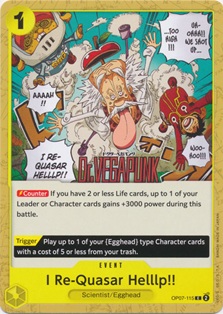 | 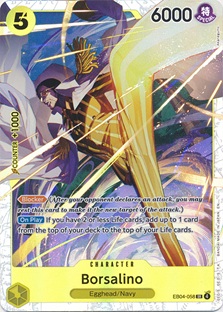 |
OPTCG has several methods of banning available to control the power level and accessibility of the game, as laid out on the official Banned/Restricted Card list. They are:
- Banned: The card is not able to be played at all in any deck.
- Restricted: The card is limited to a certain number of copies in the deck less than the typical legal limit of four.
- Banned Pair: The cards are banned from being played together in the same deck.
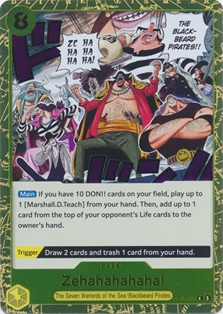
Banned pairs are especially interesting in the game because games usually break because of two cards working together in a way the designers never intended. Eternal formats especially tend to break the game because newer cards may not always take older cards into account when being designed. It's also important to remember that all variant card art is also covered under the pair ban. Using fancy art doesn't sidestep the pair ban.
Early Questions Players Will Have
Is Extra Regulation the same as Standard?
No. Standard uses the current legal block range, meaning only cards within the active block numbers are tournament-legal. Extra Regulation throws that restriction out entirely and uses the broader historic card pool instead, pulling from every set OPTCG has ever printed. The only cards excluded are those on the official banned, restricted, or banned-pair list, which applies across both formats.
Is Extra Regulation replacing Standard?
No. Standard remains the main rotating format and the one used for most sanctioned events, including Store Tournaments, Release Events, and Store Treasure Cups. Extra Regulation exists alongside it as a separate, equally supported format rather than a replacement. Bandai built Extra Grand Battle events specifically to give Extra Regulation its own competitive spotlight, so the two formats are meant to coexist long-term.
Can I use old cards in Extra Regulation?
Generally, yes. As long as a card was officially released for your region or event, isn't on the banned list, doesn't exceed restricted-copy limits, and doesn't form part of an illegal banned pair, it's fair game in Extra Regulation. That includes leaders and cards that rotated out of Standard entirely, which is the whole point of the format existing in the first place.
Is Extra Regulation an official format?
Yes. Bandai has officially announced Extra Regulation and backed it with real competitive infrastructure, not just a casual label. Extra Grand Battle tournaments are planned for local game stores, alongside Finals and Regionals as side events, with prize support similar to Standard events. That level of investment signals Bandai intends Extra Regulation to be a permanent fixture of the competitive scene.
Will Extra Regulation be more powerful than Standard?
Probably. A larger card pool usually means stronger synergies, more efficient engines, and more complicated deck-building, since players can mix mechanics and card types that were never meant to coexist in the same Standard environment. Bandai's banned-pair system exists specifically to catch the worst of these unintended combinations, but expect Extra Regulation decks to generally hit harder and faster than their Standard counterparts.
Should new players start with Extra Regulation?
Usually, Standard is easier for new players because the card pool is smaller, which makes the format less overwhelming to learn and budget for. Extra Regulation may be better suited for players who already own older cards from past blocks or who specifically enjoy deeper, more complex deck-building. If you're brand new to OPTCG, start with Standard and graduate to Extra Regulation once you're comfortable.
Why the One Piece TCG Eternal Format Matters
Having played OPTCG for a while, rotation is something lots of players have been keeping at the back of their minds. No one wants to build a deck that'll just be useless when rotation happens. My own OP07-097 Vegapunk deck was built specifically to avoid rotation, but it was built before Extra Regulation was announced.
Despite all its shortcomings, the One Piece TCG Eternal format is the right move for the game. It gives Bandai a chance to keep veteran players engaged, but at the same time, offers them flexibility in printing new sets and mechanics.
It comes at a very good time as well, as some of the more popular decks of the past are getting hit by rotation. Let's hope we see more moves to make Extra Regulation a true part of the OPTCG experience.