


 Locations



It's been a couple of months now since the release of Magic: the Gathering - Final Fantasy yet I'm continuing to go strong on my coverage of the lore on the set's cards! Today, I get to talk about one of my personal favorites in the series: the fantastic Massively Multiplayer Online Role-Playing Game Final Fantasy XI: Online.
When I first got hooked on the Final Fantasy series, it just so happened to be at the right time for the rise of MMORPGs in the early 2000s. As a result, I was a pretty early adopter for the first MMO Final Fantasy title when it released in North America in 2003. Despite some breaks here and there, I've continually played ever since - and still play to this day!
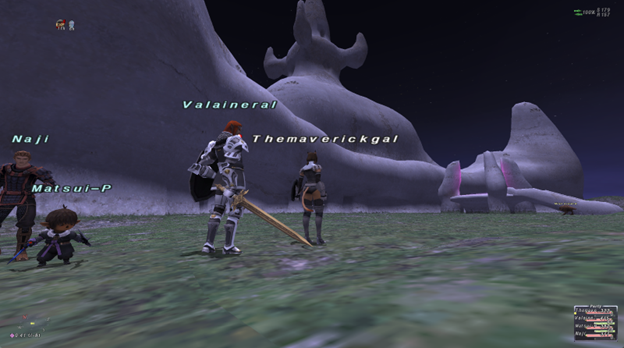
I've made tons of friends throughout my time playing the game and it's become one of my all-time favorites of the series - even if it's ultimately less popular. Still, it's an extremely fun game that I'm eager to discuss! Despite having one of the lower representations among games in the Magic: the Gathering - Final Fantasy expansion, there's still plenty of cards to cover. Let's board the airship and dive in!
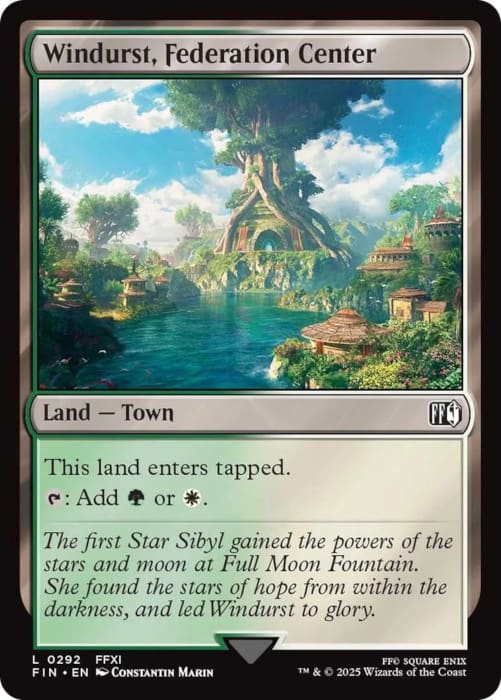 |  |  |
Windurst is one of the three possible starting nations of Final Fantasy XI, alongside San d'oria and Bastok. Whereas San d'oria is medieval court-like home to the Elvaan and Bastok the industrial home of the Humes and Galka, Windurst is founded on the concepts of nature and Magic. Tarutaru scholars study spells and the stars while the female-only race of cat-like Mithra aid in supporting the country in other ways, such as crafts. It's a gorgeous place with incredibly playful music.
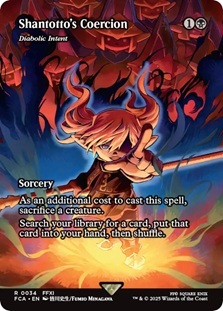
Shantotto acts as one of the major Black mages of the nation, residing in its central hub of Windurst Walls. Here she largely acts as a means to fulfill minor roles in missions and quests, but players loved her and her rhyming couplet speech so much that she became used much more heavily later down the line. This was most prominent in the expansion scenario A Shantotto Ascension (as seen on the Through the Ages Diabolic Intent) which involved Shantotto being sent to a parallel world and two other Shantottos - one light and one dark - entering the game's world.

When a player progresses on from their starting towns, they eventually find themselves at the central hub between each of the three nations: Jeuno. Here players can take on more advanced quests and missions, as well as access newer and more powerful areas. More importantly, though, once a player reaches level 20, they can gain access to the quest to obtain their chocobo license. While the player feeds an abused chocobo Gausebit Wildgrass to help it recover, Gysahl Greens are usually the more common chocobo feed, used to entice a chocobo to dig for items while riding them.
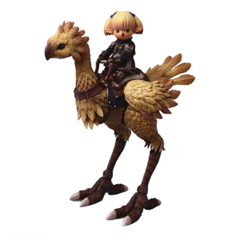
Funnily enough, the chocobo depicted in this art isn't actually a Final Fantasy XI chocobo. The chocobos of Vana'diel are known for having dark brown beaks and fully browned eyes as opposed to the cartoony look on this card's art.
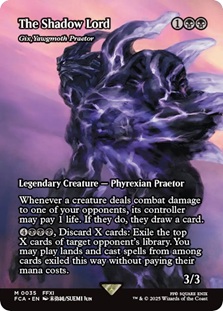
The Shadow Lord is the primary antagonist of the original Final Fantasy XI release, prior to the release of any of the later expansions. Born as a Galka named Raogrimm, he was the Talekeeper of the Galka. You see, when a Galka dies, they are reborn again, but lose all their memories of their past life - except for the Talekeeper. Raogrimm bore the anguish of the most painful memories.
Following a savage assault from fellow countryman Ulrich that was fueled by Black Magicite that left his friend Cornelia dead, Raogrimm snapped. He transformed into the Shadow Lord where he ruled over the beastmen of the Vana'diel and waged war against each of the nations. You defeat him after his resurrection in the dark depths of Castle Zvahl in the snowy land of Xarcabard.
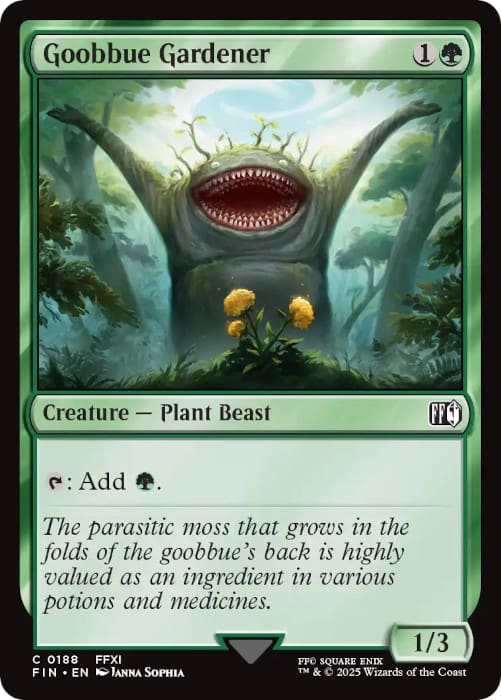
Goobbue are huge hulking creatures who lumber around and cultivate plant life wherever they appear. While seemingly goofy and docile, the goobbue won't hesitate to attack you to defend the wildlife they preserve. While my best memories of goobbue are the ones in the Pashhow Marshlands on my walks to Jeuno, Goobbue Gardeners specifically reside in the tranquil Sanctuary of Zi'tah. This leads to the legendary Boyahda Tree where even more goobbue reside within.

Of all the characters whom I wish could've gotten to see as a legendary creature in this set, it's Prishe. She's one of the major characters of the fantastic Chains of Promathia expansion, an Elvaan of the Tavnazian region who does not age. She has an intensely fiery and passionate spirit about her that fuels a rebellious nature to try figuring out the mystery behind the expansion's storyline. As you complete missions, she'll disappear off to the next location as she only appears in cutscenes, thus making this an excellent representation of her character. Fun extra fact: the location here seems to be one of the entrances to Jeuno based on the architecture behind her..
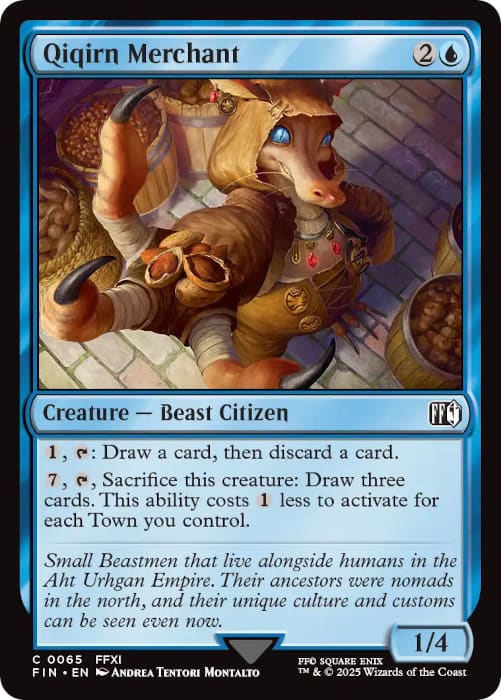 |  |
Both the Qiqirn and the Qutrub are creatures one finds in the land of Aht Urghan in the similarly titled Treasures of Aht Urghan expansion. Qiqirin are rodent-like beings who speak in a quirky manner due to their struggles at humanoid languages. They often act as dealers and shop aids, though are also not uncommon to run into as enemies either. The Qutrub are zombies who players can run into in the field, though the Forayers specifically come out during the Besieged battles which take place in Al Zhabi near the Aht Urghan Whitegate.
This amazingly gorgeous Yoshitaka Amano art piece represents one of the key arts for the Wings of the Goddess expansion. In that story, the player is hurled through a Cavernous Maw - an extension of the temporal warping Atomos that you can see in the background of the art - and is hurled back in time to the era of the crystal war. This is the first rule of the Shadow Lord and depicts the original war he carried out prior to his defeat and later resurrection.
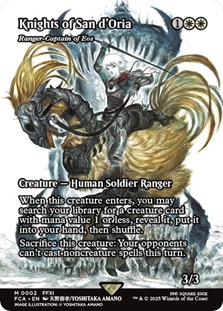
The knight of San d'oria depicted here is Excenmille, the leader of the Young Griffons. This elite group of knights train would-be soldiers to battle in the great war against the Shadow Lord. For players, he acts as an NPC who helps to allow you entry as part of the Ballista program to battle against the beastmen and protect the various nations. Ballista was quite a popular method for leveling once upon a time, though there are much easier ways of doing so nowadays.
I'll be the first to admit that Final Fantasy XI: Online is one of the least accessible titles in the franchise. It's a MMO that predates the massively popular World of Warcraft and as a result lacks a lot of the quality of life features many players have come to expect from games of this nature. Still, if you can put the time in, it's well worth the experience. Chains of Promathia in particular is one of my favorite video game stories of all time, and I encourage you to look into it, if only to check out the story's cutscenes. The cards here are really sweet and it's great to show this underrated gem some of the love it so appropriately deserves.
Paige Smith
Bluesky: https://bsky.app/profile/themaverickgirl.bsky.social
Twitch: twitch.tv/themaverickgirl
YouTube: TheMaverickGal