 Locations



Khans of Tarkir remains one of my favorite Limited formats to date. It was a format filled with powerful multicolored cards, lots of fixing, and elements of surprise with the various Morph creatures. I distinctly remember playing the first 70-person PPTQ in Midtown Manhattan, barely missing Top 8 with a 5-Color deck I had built. If there's anything I remember about the Limited environment it was slow, grindy, and all about resource management.
Tarkir: Dragonstorm Sealed seems to be no different upon first glance.
As I prepare for Spotlight Series Denver, I've been play-testing with my local team of Los Angeles players. To prep in a more competitive environment, this past Friday we played an 8-player Sealed event - which I ended up winning!
I also ended up winning two Prerelease events and splitting the finals of a third, with decks all very similar to each other (check out the end of the article for more).
While my pool was certainly incredibly strong, I do think there's merit in looking at how I built, and why my choices matched up well against my opponents' decks.
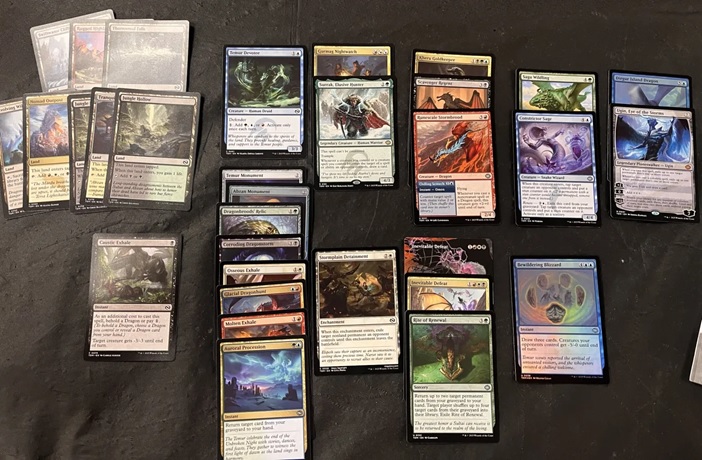
When it comes to Sealed, the first trick I learned from Sealed superstar Michael Jacob (aka DarkestMage) is to separate your entire pool into playable and non-playables. For me, this means separating out all of my fixing, removal, bombs, multicolored cards, and any sort of two-for-one effects.
For example a card I'd put in my playable pile is Lie in Wait. One I'd probably push to the side is Poised Practitioner. You want to find the cards that do the work for you!
This helps immensely in a format like Tarkir: Dragonstorm because it'll help you understand what's within the realm of possibility. If you have a Dragonback Assault, but your pool is leaning more Abzan, it might seem too difficult to cast. However if you have a few Red dual lands, a Roamer's Routine, or a Temur Monument, it's actually a pretty easy card to cast.
Traditionally, I go for Green/Blue/Black cards first, as they're usually better in slower formats like Sealed. I piece out my White and Red removal as well. In a wedge format like Tarkir, I'm looking to separate out all my multicolored cards as well, because usually they're more powerful and sometimes easier to cast than your mono-colored cards.
I knew from looking at my pool I wanted to be defensive and win the long game, which is why I included cards like Auroral Procession and Corroding Dragonstorm. Auroral Procession was able to buy back my Dragonbroods' Relic multiple times over the course of the event, plus it also buys back the Omen cards if they've died as a creature.
I also wanted to shore up my defenses as much as possible, which is why I included most of my removal spells in my pool in this deck. I opted not to play a copy of Piercing Exhale because of my low creature count, and the fact that you can get two-for-one'd easily if your opponent has a removal spell to foil your plans.
Lesson #1 - The Format is Slow (Most of the Time)
...in Sealed that is. I can't attest to Draft just yet, but Draft is pretty much always faster. Similar to Khans, formats that have gainlands or just other forms of life gain are slower because each player essentially starts out at 22 life. Combine that with lots of other random lifegain, from cards like Sagu Wildling and Defibrillating Current, and you've got much slower games on your hands. It feels tough to put up an aggressive draw, when there's both a lot of efficient removal at common like Caustic Exhale, Twin Bolt, and Stormplain Detainment, and really beefy cheap creatures, like Traveling Botanist, Krotiq Nestguard, and Temur Devotee.
Another reason this format appears to be slow is that decks are topping out at 6-mana dragons that have a cheaper spell stitched onto them in the form of Omens. Both halves of Dirgur Island Dragon aren't necessarily strong, but stapled together on one card (especially if you have Flurry or Dragon synergies) makes this card a solid inclusion to any Blue deck.
With games being slower on average than recent sets, it makes me wonder when to...
Lesson #2 - Know When to Be on the Draw
In a format that's so bulky, the extra card matters. Drawing isn't always correct, especially if your opponent has a fast deck with good tempo cards. I think I would be afraid to be on the draw against my Mardu opponent that could curve out a Dalkovan Packbeasts into Starry-Eyed Skyrider, especially if they also had a 1- or 2-drop.
However, against bulkier opponents that might also have a 4-5-color deck akin to yours, drawing is pretty great. In the Sealed event I chose to be on the draw against my round two opponent that had a four-color deck. After he mulliganed he told me how awful it felt to be down two cards against my grindy deck. I won that match 2-0 on both the power of my deck, but also out-resourcing them.
Lesson #3 - It's a 5-Color Format
While I've already touched on this point I want to reiterate the statement that Sealed is about playing your best cards. In formats like this where there's so much plentiful fixing, recursion, and bombs/two-for-ones, you just always want to be playing your best cards. This format has fifteen dual lands, five monuments, and a handful of other fixing in Green and Artifacts. It is much easier to splash an Inevitable Defeat in your Abzan deck than you may initially realize.
Lesson #4 - You Don't Have to Play All of Your Two-Drops
I think one mistake newer Sealed players make is that they treat the format too much like Draft. In Draft you usually want a decent amount of 2-drops, to either put on pressure early or not get out-tempo'd by your opponent. However, in a slower environment like Sealed, 2-drops get outclassed very easily.
This kind of goes beyond just 2-drops, but the point is that you don't want to fill your deck with "small-ball" cards as I call them, just to fill some sort of "status-quo" notion that your deck needs to have a certain number of 2 or 3-drops to fill out your curve. Worry more about how you're actually planning on winning games and making sure your best cards actually make it in your deck. Unburied Earthcarver or Fortress Kin-Guard is not going to win you the game, no matter what cool synergies you might have with them.
The lesson here is that you don't need to play random non-impactful cards just to fill some void your deck might appear to be missing. I'd rather fill my 2-drop slot with the Exhale cycle or Monuments to stabilize and fix my mana for my more impactful spells later in the game.
While I have some strong opinions on this format (mostly due to my knowledge of playing the original Khans block), don't take everything in this article as hard truth. The great part about Magic and new formats is that anyone can be wrong about any card or set aspect. These are just aspects of this Limited format I've noticed from some gameplay, theorizing, and prior knowledge.
Go out there, play in some more events, and get your hands dirty with the new set. Whether or not you come to a similar conclusion on the format as me isn't important, but I hope that this article gave you some perspective and insight. Talk amongst yourselves.
Author's Note:
I actually wrote this article before playing Prerelease events, and I ended up going undefeated in two and splitting the finals of another! Here are the pictures of my winning decks (spoiler alert - they all look pretty similar):
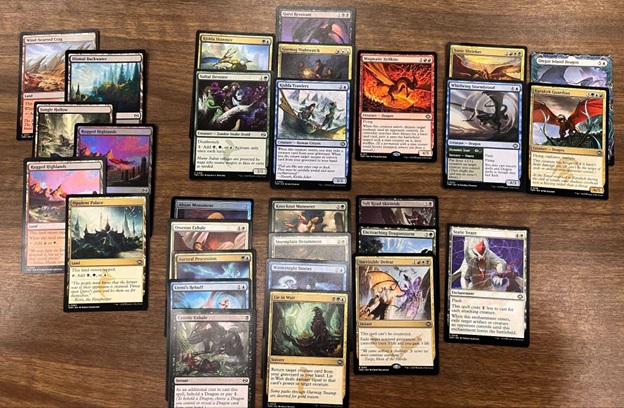 |
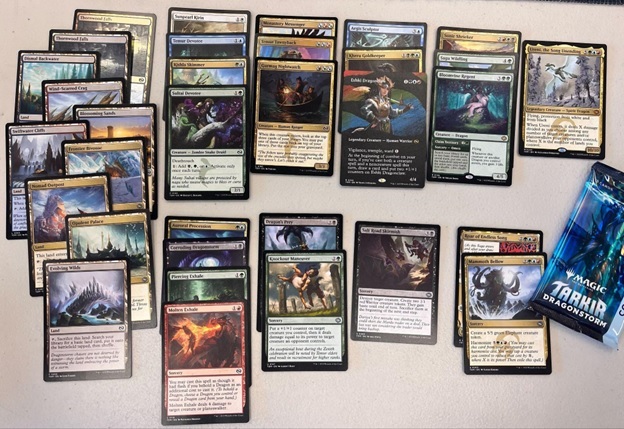 |
-Roman Fusco