


 Locations


Magic: the Gathering players have a tendency toward the oppositional when the game changes. Collectively, we've kvetched about everything in Magic's history, from the consequential, like the creation of Universes Beyond, to the miniscule, like the introduction of the Beleren font. One of the more recent controversies that brought out the most vocal critics and a surprising amount of hatred was the introduction of Loot.
What is Loot?
For those who aren't in the know, Loot was imprisoned or sequestered inside the Fomori vault on the plane of Thunder Junction. Loot was broken out of said vault by the heist squad hired by Jace Beleren and Vraska.
He was protected/exploited by the pair until he was captured by Valgavoth, the sinister demon who controls and molds the plane of Duskmourn. In Aetherdrift, as a living map of the Omenpaths, he was forced to serve as an indentured navigator for Winter and the rest of the Duskmourn racing team.
So, what exactly is Loot? We know little about his provenance, but we know that he has been locked up for a huge stretch of time and that, since he has a functioning map of the Omenpaths in his brain, he's crucial to Jace's plan to recreate the Multiverse.
Loot is orange, round, and has a metal tail with a glowing, blue plasma orb inside it. Aside from that, he's a mystery.
Back in 2024, loremaster Jay Annelli responded to a question inquiring into Loot's background that Loot is "Fomori-like, but he's also just a little guy. And has that tail thing going on." We don't know the full story on Loot just yet, although with Reality Fracture coming up, Jace no doubt has further plans for the little Beast.
Why Do Magic Players Hate Loot?
1. Loot's design is cute-ugly, and he looks more like a Pokémon card than a Magic card
There have been multiple depictions of Loot, but the first impression wasn't great. Rudy Siswanto's depiction of Loot, the Key to Everything is hard to read at card size, with the teeth not matching the gape on Loot's grin and the ears weirdly stuffed full of fur instead of lined. The showcase art by Gaboleps is crisper, giving Loot a sense of scale and practical weight within the tableau with Jace and Vraska.
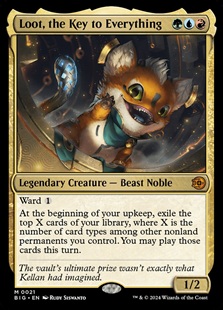 | 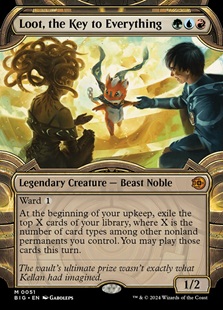 |
Simply put, Loot doesn't look like a Magic character. This isn't inherently a critique, as he is designed to be alien to reference the weirdness and otherworldliness of the Fomori. In the context of Outlaws of Thunder Junction, though, he was off-putting, seeming more like a mascot for Overwatch or League of Legends than a Magic card.
His color palette is garish and his silhouette is illegible, which makes him read more as a video game character than a cartoon character. He's partly feline, partly draconic, and partly cybernetic, and it all feels mashed up for maximum cuteness and audience accessibility.
The immediate response to Loot from the enfranchised players on Reddit and Twitter was visibly negative, but there have been similar Magic mascots that the same audience took to. Fblthp and Fleem were both adapted to sell merch, with plushies made of Fblthp and Arena cosmetics for Fleem, so why was Loot hated by a vocal subsection of the player base?
Notably, Fblthp and Fleem are both on the uglier side of the cute-ugly spectrum, with Fblthp's single gawking eye and Na'vi-colored skin and Fleem's fanged grin and translucent wings. Loot is coded as childlike, with a large head and eyes, and a rounded and feline silhouette. His skin is featureless, digital, compared to the texture of Fblthp's visible musculature and Fleem's flushed and impish visage.
In general, Fblthp and Fleem read as Creatures, while Loot reads as a mascot.
2. Loot felt forced
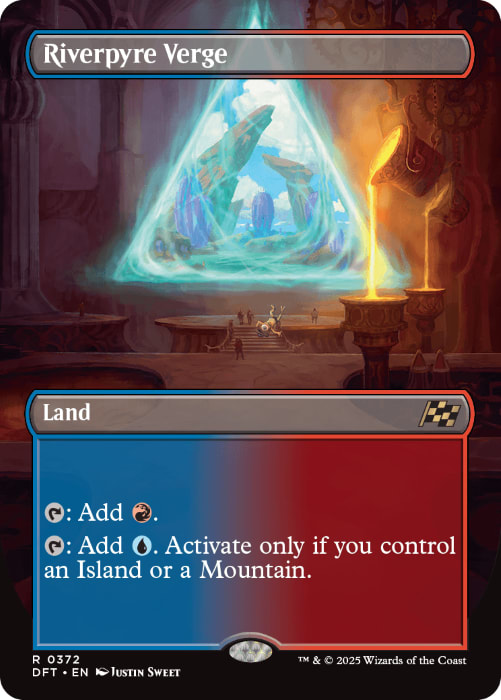
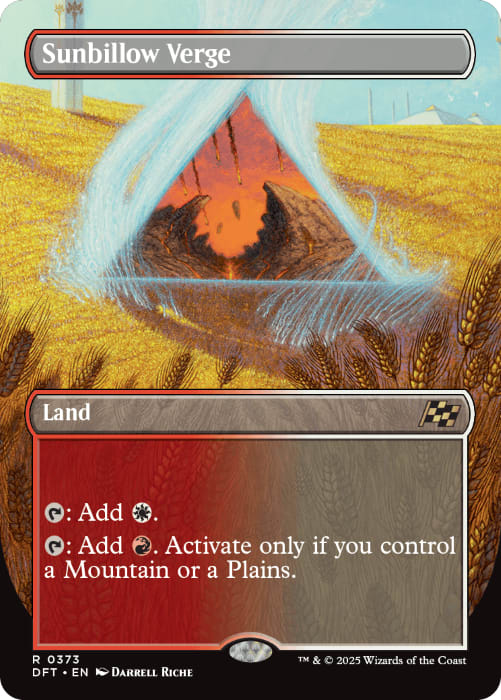
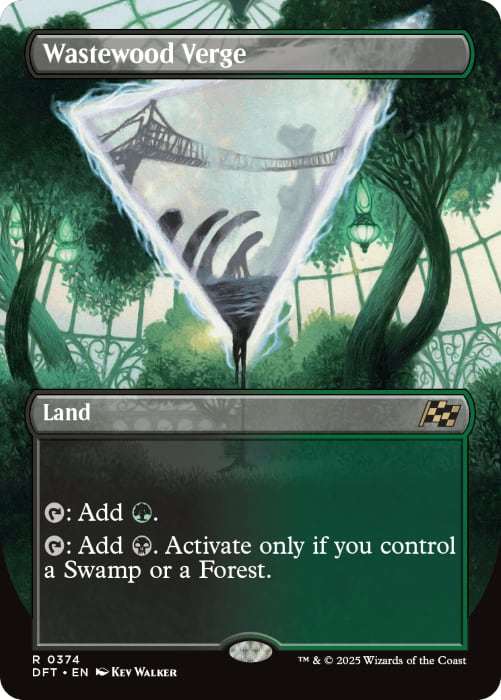
The Verge cycle from Aetherdrift (Bleachbone Verge, Riverpyre Verge, Sunbillow Verge, Wastewood Verge, and Willowrush Verge) have flavor text that don't just reference Loot, but feature another character, including the set's villains, lauding Loot for his brilliance, resilience, or competence. It comes off as a teacher writing "Loot is a pleasure to have in class" at the bottom of a report card.
 |  |  |  |  |
There's also the Grogu factor. The Mandalorian premiered in November 2019 and introduced the world to Disney's little green moneymaker, and customer sentiment was immediately apparent. Outlaws of Thunder Junction debuted in April 2024, which means it would have been in early concepting during the peak of Grogu fever.
The creation of Grogu is as mercenary and cynical as any other merchandising opportunity, but he was a legitimate cultural phenomenon, which by definition imparts cultural legitimacy. Loot's introduction, with a roguish antihero tracking down a mysterious target, only to reveal a big-headed mute gremlin, felt like Wizards trying to recapture the Baby Yoda or the Baby Groot wave. Above all else, it feels like marketing considerations taking dominance over design.
3. Loot's initial card was wordy and awkward
Difficult to cast and comically understatted, Loot, the Key to Everything is an annoying Mythic to see in a pack of Outlaws. He was clearly designed to play into Duskmourn's emphasis on Delirium, but the general card is so underpowered and verbose to little effect. Paying 

 only to eat a Shock (even if the Ward ability makes that Shock cost
  ) is suboptimal.
 |
Things improved later that year, with Foundations' Loot, Exuberant Explorer. An Exploration tacked onto a low-power but relevant body, Loot builds to a threatening ability that can toss out massive Creatures mid-combat.
 |
Loot's third and final iteration, Loot, the Pathfinder, is what Loot, the Key to Everything should have been. It's still difficult to cast, but a 2/4 Creature with Double Strike, Vigilance, and Haste for only  more mana is a big upgrade to the purported Key to Everything. In addition, the Pathfinder presaged the Emeritus cycle by coming in with a one-time Lightning Bolt, Ancestral Recall, and Verdant Ritual encoded on the card.
4. Red string and aluminum foil
The most obscure and unusual reason to hate Loot delves into the conspiratorial, so know that I'm simply reporting the following without endorsing it.
Some people hate Loot because they believe that he was named to undercut regulatory oversight over the gambling aspects of Magic: the Gathering. The argument is that, by calling Loot "Loot," which shares a word with the common term for randomized drops in video games, i.e., "loot boxes," Wizards of the Coast can organically stifle search engine results for "mtg loot boxes," "magic gambling loot box lawsuit," etc.
There is a similar theory/urban legend that Bandai named the horse in Elden Ring "Torrent" to drown out people searching for a pirated copy of the game by typing "Elden Ring torrent" into a search engine.
Again, neither myself nor CoolStuffInc subscribe to or support these conspiracy theories. I just report back from the fever swamps of online discourse so you don't have to contract mental malaria.
Onto the Ontology of Loot
Thirty years ago, there was an episode of The Simpsons lampooning the longevity of the show (then in its eighth season, now about to start its thirty-seventh), and the meddling of TV executives who demanded new characters that were more relevant to newer audiences. Concerned about focus group feedback, a mercenary executive mandated the creation of Poochie, a dog character designed to update and disrupt the "dramaturgical dyad" of Itchy and Scratchy in their hyperviolent eponymous cartoon.
Poochie was a flop. He altered the dynamic between the preexisting characters and, more importantly, he was clearly the result of a focus group mindset. They were trying to create a four-quadrant hit that could be all things to all viewers, from a cuddly cartoon dog to an edgy Gen X mascot.
It's a cautionary fable for anyone trying to design a new character: there's a fine line between pleasing everyone and pandering to everyone. If you're trying to sell products, then the goal becomes making something so generically appealing that it becomes meaningless. It's better to swing for the fences with something strange and memorable like Fleem.
Some mascots are so hideous that they loop back around to iconic. David Shrigley's design for "Kingsley," the mascot of Scottish football club Partick Thistle, was panned as one of the worst mascots of all time when it launched in 2015. A decade later, after a huge merchandising push and widespread coverage of the naff mascot, it remains part of the team's brand. Similar pushback and adoption as a quasi-ironic antifascist icon greeted Gritty, the Philadelphia Flyers mascot, when he debuted back in 2018.
The "Baby Nut" debacle of 2020, during which the century-old "Mr. Peanut" Planters mascot was killed off in a Superbowl commercial in a way that accidentally referenced the recent death of Kobe Bryant, could be the subject of an entire book. We won't delve into it here, but it's an important lesson: introducing or revamping mascots can be perilous work.
Case in point, consider the Olympics, a global phenomenon that has millions of dollars of branding behind it and billions of eyes upon it every couple of years. The Olympics have stumbled numerous times in creating merchandisable and appealing mascots. From the 1996 summer games in Atlanta, Georgia, where the over-designed Whatsit/Izzy drew ire, to the 2024 Parisian games that were embodied by a stylized Phrygian cap that came off more Smurfian that revolutionary, some of the buzziest ad firms have beefed it when coming up with an iconic creature to embody their brand.
Wrapping Up: The Lootness with the Cuteness
Magic players aren't allergic to cute, as Bloomburrow proved, and marketing mascots work just as well on us as on anyone. Loot is hated by a vocal contingent of the player base because his cuteness and importance to Magic's in-universe story feels inorganic and forced. If you're doing marketing right, your audience will embrace it and feel like it's their idea to adopt it (c.f. Fleem).
That's not to say Loot is still as hated now as he was upon his initial reveal. With any controversy in media, the heat will die down and those who pushed back will either stop engaging with the work in question or will quietly accept it.
In "The Itchy & Scratchy & Poochie Show," the unpopular pup gets euthanized off screen, "[dying] on his way back to his home planet" and his death canonized with a signed affidavit from the show's producers. I doubt a similar fate awaits Loot, who is a load-bearing character in Magic's current storyline, but player blowback was significant enough that Wizards may have pivoted.
Or perhaps Wizards has something planned for Loot that will make all the initial grumbling over the Beast Noble look foolish in retrospect. Perhaps he knows the Omenpaths because he's Yawgmoth reincarnated. Perhaps he was locked in the Fomori vault because he's Typhoid Mary for a multiplanar disease. Whether you love Loot or wish his arc ended as roadkill on Muraganda, he's important enough to have more cards than Greven il-Vec ever got.