 Locations


Tonight, we dine on turtle soup! I'm doing a deep dive on all the flavor in MTG's latest set.
If you want to know more about the history of the franchise before you start harnessing all the turtle power of the set, you can read Gearing Up for MTG's Teenage Mutant Ninja Turtles, or TMNT, in general.
Ready? Cowabunga!, let's dive in.
Sai vs Jitte
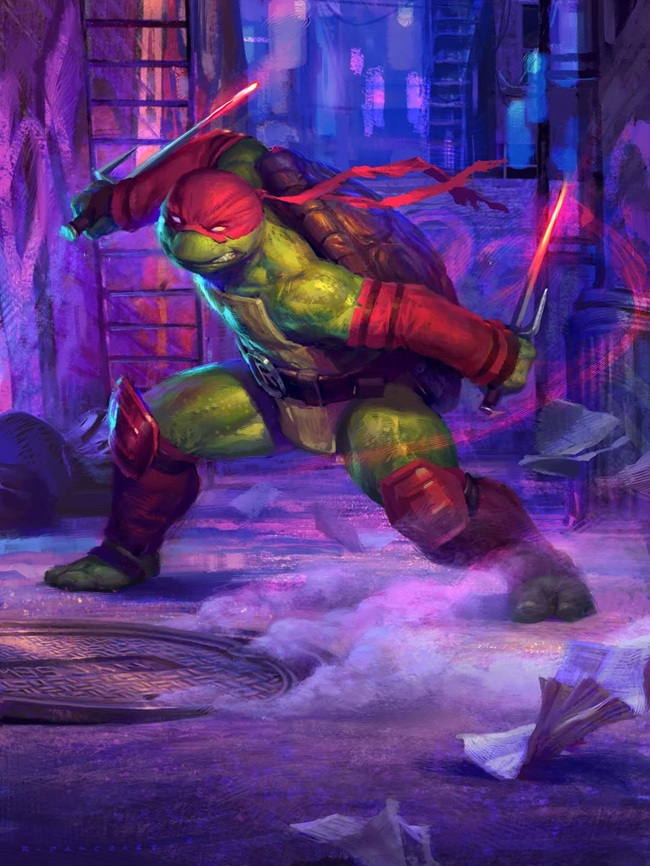
Raphael, the Muscle by Ryan Pancoast
Let's start with a change I enjoy, that is Hard-Won Jitte.
Folks noticed pretty quickly that a jitte had replaced Raph's traditional sai. I like the change, as it makes the set feel more like a Magic version of the TMNT with how iconic the card Umezawa's Jitte is.
It's also a bit of a cultural acknowledgement, with a sai being Okinawan while a jitte is the traditional Japanese equivalent. TMNT is based on a Japanese backstory, but Okinawa and Japan have distinct histories, so the jitte is more fitting here.
The Origin Story
In most versions of the story, the origin of the Ninja Turtles are more-or-less the same. Splinter, Hamato Yoshi and four turtles come into contact with The Ooze. Splinter raises the turtles as his sons to be ninja teens.
Most often this involves Utrom Scientists of some sort, who work out of the TCRI Building. The hows and whys vary (as does the name of the company. You can see TGRI, the 90s film version, on The Ooze), but that's the core of their origin.
In most early versions of the TMNT, they maintain their anonymity on the surface by wearing a trenchcoat, which makes it appear that they are Definitely Not a Turtle.
Mirage Comics (1984)
As we go along, I want to note that I'm using these eras as springboard to talk about TMNT history, not so much to say "this card is definitely from this comic/cartoon/game." So with that, let's talk about the original Mirage Studios comics, the grittiest media the franchise has ever offered.
In the first issue of TMNT, the turtles fight some Purple Dragon Punks, and then face off against their nemesis, Shredder, Unrelenting. And kill him. Yeah, the most iconic villain in TMNT was killed off in the very first issue of the source material.
In the next issue, we meet Baxter Stockman and his lab assistant April O'Neil, Hacktivist. Baxter has developed Mousers (Ravenous Robots) and sends them off into the sewers, where April meets the turtles, and the rest is history.
Within the first 12 issues and its character-focused one-shots, most of the core groundwork of the Teenage Mutant Ninja Turtles franchise is laid. The turtles meet Casey Jones, Vigilante, hide out above April's antique shop Second Time Around (Path of Ancestry), discover the Utrom Scientists in the TCRI Building and learn about The Ooze (the mutagenic alien chemical that made them).
The turtles also meet Zog, Triceraton Castaway and face off against his people on one of their asteroid colonies (Rootbound Crag), escape with a Fugitive Droid aptly named the Fugitoid.
They also fought the first of many battles for time and space against Savanti Romero, Time's Exile with the help of Renet, Temporal Apprentice and the Time Scepter (Chromatic Lantern) under the noses of the Time Masters (Hinterland Harbor), and finally retreated to April's Northampton Farm to recover.
Eastman and Laird weren't sure how many issues they'd have and weren't wasting time on a slow build. What made the TMNT unique is that despite all the wackiness, they played it completely straight. The world was weird, but it wasn't a joke.
The early death of Shredder had some longer-term consequences for Mirage's story, so when later stories wanted him back, they introduced necrotic colony worms called Paramecia Coloniex. These worms could feed on a body and create a replica of what they ate, which the Foot Mystics used in The Cloning of Shredder, creating three imperfect clones. Later, these worms would be used to form Shark Shredder, Killer Clone as well.
Mirage Miscellany
- Donatello, Mutant Mechanic features Donnie working on what appears to be a Mirage era Utrom body.
- Foot Elite have appeared in many adaptations, but this design appears to hew most closely to the design from the original Mirage comics.
The Classic Cartoon (1987)
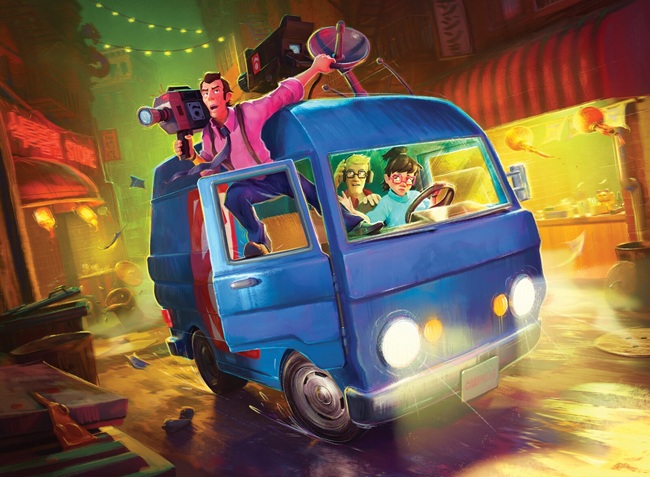
Action News Crew by Gabriel Tanko
While the original comic laid the groundwork, it was the 1987 cartoon that made Teenage Mutant Ninja Turtles a phenomenon. The original five-episode season exploded in popularity and became the most iconic version of the turtles overnight.
It introduced April O'Neil, Live on the Scene in her iconic yellow jumpsuit as a reporter with the Channel 6 Action News Crew (the card having Channel  is just delightful). The turtles had their Turtle Van, which every iteration since has introduced some version of.
Most importantly, it introduced Krang & Shredder as a villain duo, playing off one another.
Instead of the (mostly) peaceful Utrom people, Krang, Master Mind was a warlord in exile from Dimension X. He supplied Shredder the needed technology for their attempts to take over the Earth and launched their schemes from the Technodrome buried deep underground.
To reach the surface they use a Transport Mole Module, often appearing with robotic foot soldiers or other Henchbots.
"Turtle Tracks" is the name of the first episode of the cartoon. During the episode, April is kidnapped from a place called Ninja Pizza, depicted in Illegitimate Business.
Throughout the original five-episode arc, we meet General Traag, Heart of Stone and the Rock Soldiers, former servants of Krang, as well as the rebellious Kala, Dask, and Zak, The Neutrinos who flee Dimension X through a transdimensional portal.
The rock soldier's plans include using a Weather Maker to hide themselves from the military on Earth, but they're defeated and sent back to Dimension X.
In the fifth and final episode, Krang, the All-Powerful finally gets a robot body, which he uses another device to make grow into a massive size, taller than buildings. Donatello whips out his new creation, the Turtle Blimp, and the turtles launch their counterattack.
While Irma, Part-Time Mutant design here is closer to her 2012 counterpart, the name and ability here come straight from the 1987 cartoon. Irma is clumsy, which leads her to get mutated a couple times, among other problems.
In this version of things, Baxter Stockman was a (whitewashed) scientist who invents the Mousers, but later in a reference to The Fly (1986) is transformed from an Ooze Spill (although in the original cartoon, it's a transporter accident, I believe) into Stockman, Mad Fly-entist.
Theme Song
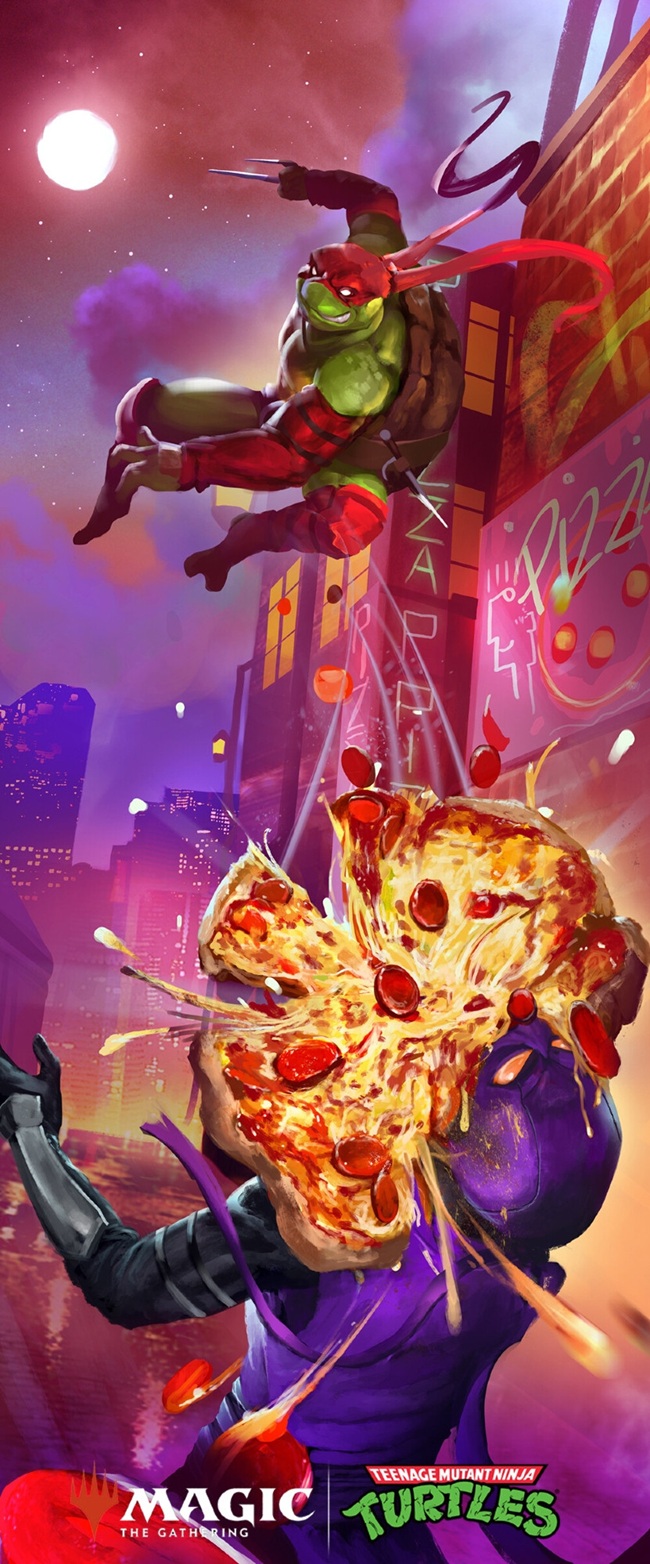
Cool But Rude by Pedro Sena
Several cards are based on the original theme song. Here's some of the lyrics, with the card references:
Splinter taught them to be Ninja Teens (He's a Splinter, Radical Rat!)
Leonardo Leads (Leader's Talent), Donatello Does Machines (That's a fact, jack!)
Raphael is Cool but Rude (Gimmie a break!)
Michelangelo is a Party Dude (Party!)
And of course, the song ends with:
Sewer Frames
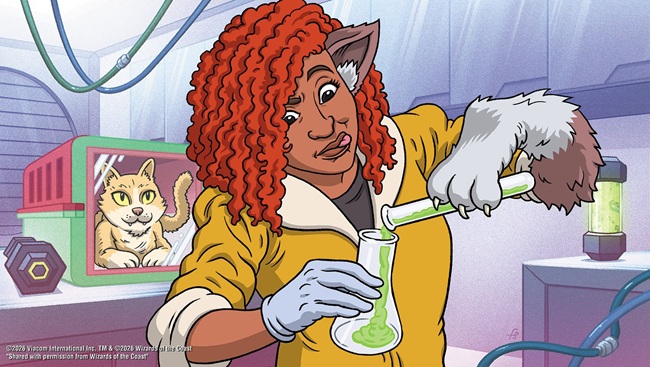
April O'Neil, Hacktivist by Felipe Sobriero
The Sewer Frames are alternate art treatments in the style of the original cartoon's animation. A rare few even reference specific things from the cartoon, for instance:
- April O'Neil, Hacktivist is a nod to the episode "The Catwoman from Channel Six" in which a teleporter accident begins transforming April into a cat.
- Michelangelo's Technique features a character named Zach, the original Fifth Ninja Turtle. The kid is really just a big fan.
- Krang & Shredder features a moment from the Archie comics where Krang takes over Shredder's body.
- Raph & Mikey, Troublemakers features another icon turtle vehicle, the Turtlecycle. That was my favorite.
- Donatello's Technique features the transdimensional portal and the turtle's mischievous Dimension Z foe, Mister Ogg (who is an analogue of DC Comic's Mister Mxyzptlk).
- Raphael's Technique references these characters from the final season of the show.
Turtle Toys
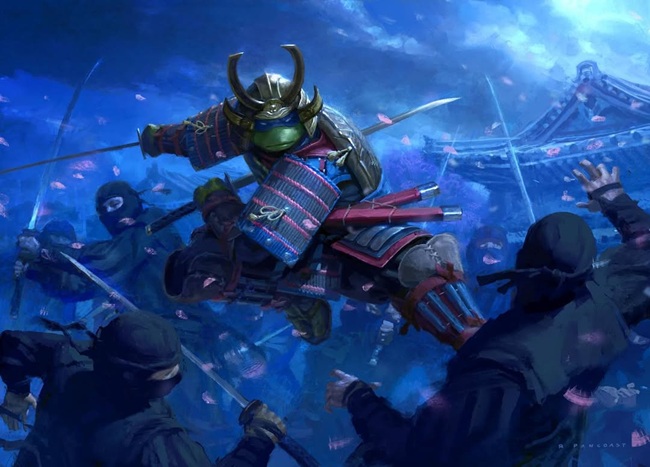
Leonardo, Sewer Samurai by Ryan Pancoast
Two characters here are only toys, just really famous ones. Leonardo, Sewer Samurai was an extremely popular figure from a line-up of turtles in costume (including an astronaut Raphael). Pizza Face, Gastromancer, however, was simply an infamously ugly toy. He didn't actually appear as a character until 2012's (much weirder) cartoon.
Other Strangeness
Here's a last few items from the classic cartoon worth noting:
- Arcane Signet is a turtle communicator, a flip phone with video chat well ahead of its time.
- Rat King, Pale Piper aligns more to the original design of the Rat King, who is a pied piper allegory able to control rats with music (and his mind).
- Tempestra, Dame of Games was a video game character, more notable for her recent video game boss appearances than her original cartoon one.
- Putrid Pals are a Toxic Avenger reference, a heroic pair named Muckman and Joe Eyeball.
- Leonardo, Cutting Edge depicts Leo actually cutting a foot ninja... android. The original cartoon had the foot ninja be robots to avoid issues with the turtles fighting them in a children's cartoon.
Archie Comics (1988)
I will admit that the TMNT Archie Comics (called Teenage Mutant Ninja Turtles Adventures) are not my area of expertise (I was a Sonic the Hedgehog comic kid) but I do know enough to know that they established a bunch of characters that both the mainline cartoon and the subsequent adaptations have used ever since.
The biggest one is the Mighty Mutanimals. A spin-off from the main line of the comics, the Mutanimals existed as a place to tell stories about the B- and C-list mutant characters (and sell more comic books).
The most well-known Mutanimal is probably skater boy Mondo Gecko, who was originally created for the comics and then later adapted for the show. Ray Fillet, Man Ray also comes from this group, initially known as Ray or Man Ray, the official name for the character today is Ray Fillet (voiced in the 2023 Mutant Mayhem film by noted Magic fan Post Malone).
April, Reporter of the Weird and Undergrowth Stadium depict Intergalactic Wrestling, an event (and story arc) from these comics. You can even see Cryin' Houn', a four-armed dog-like alien wrestler, on the screen behind April.
Other Strangeness
- Monster Mashup is a character called Monsterex, a mash-up of all the classic Universal monsters. The turtles have always had a close connection to the classic monsters, with many different iterations of them in those costumes over the years.
- Transdimensional Bovine is Cudley, an interdimensional talking cow head who originally appeared in the Archie Comics and seemingly exists across all TMNT continuities at once.
Original Film Trilogy (1990-1993)
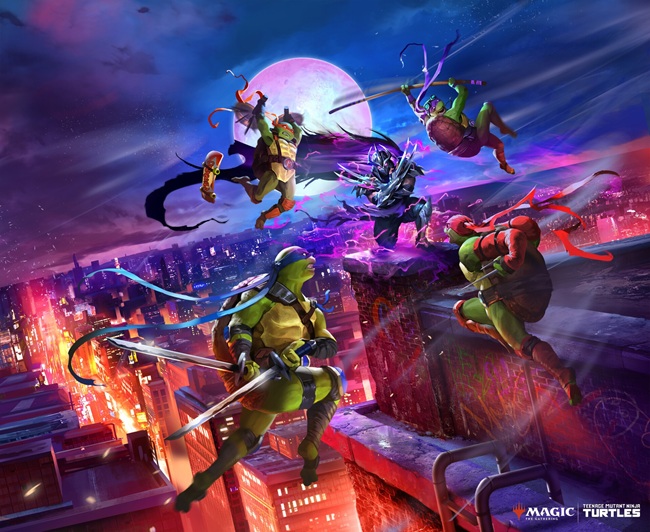
Collector Booster Box Art by Pedro Sena
The original TMNT film trilogy is something that should not have worked. Live action turtles doing martial arts? But through the artistry of Jim Henson's Creature Shop and Hong Kong's best martial arts production house, Golden Harvest, we got something truly special.
The first film, Teenage Mutant Ninja Turtles (1990), was a loose adaptation of the first issue of the Mirage comics mixed with the more grounded plot points from the first two years of the comics.
Raphael, Tag Team Tough embodies the vibe of the film, with Raph sporting the traditional trench coat look, complete with a quote from Casey Jones and Raph's first meeting. Vernal Fen is a nod to the Foot Clan hideout of the film, featuring thieving kids playing video games while the Foot Ninja recruit from their number.
The Foot clan captures Splinter, and Shredder interrogates Splinter (Assassin's Trophy), with a quote... more-or-less like what we get here. Shredder's Revenge depicts their final confrontation with Shredder on a rooftop, much like the Mirage version of events, ending with the Shredder knocked into a garbage truck waiting below (where Casey engages the compactor). Fabled Passage is a nod to the movie poster from this film.
The sequel, Secret of the Ooze, introduced a new human character in Kino, a Courier of Comestibles (although the card isn't his exact likeness, he's the inspiration for the quotes here). The turtles move their Hidden Hideout to an abandoned subway platform, the NYC City Hall Station.
A scientist kidnapped by Shredder (who miraculously survived being squished) uses the Tainted Treats to make Shredder his own mutant warriors, Tokka & Rahzar, Terrible Twos (this film's stand-ins for Bebop and Rocksteady).
The duo is revealed to be infant animals (hence the "Terrible Twos"), and their mutations are eventually reversed, but rather than admit defeat, Super Shredder (specifically the Spotlight series version) ingests the mutagen himself.
Teenage Mutant Ninja Turtles III was the final film in the series and didn't do well. It features the Turtles using the Time Scepter (again, Chromatic Lantern) and accidentally ending up in Feudal Japan. The only nod to this is from the Turtles in Time Japanese Showcase, depicting the turtles in full samurai armor.
Video Games
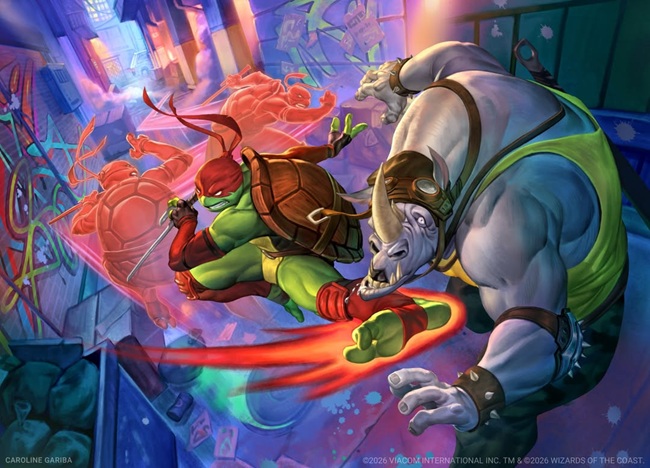
Super Combo by Caroline Garba
Before we move on from the 90s, there are a few iconic TMNT video games referenced in both the Commander and main sets. These were some of the biggest games of the era, with both arcade and home console releases. Most of them were arcade-style beat 'em ups, and the Commander deck uses a lot of tropes from the games.
Most of the games begin with a Broadcast Takeover of Shredder announcing whatever plot it is the turtles must stop. There are a lot of general arcade game nods here: Continue?, Here Comes a New Hero!, Level Up, High Score, and Game Over are all obvious references to video game tropes.
Some more specific references are Arcade Cabinet's PizzaTime game, which is both a nod to the classic arcade game BurgerTime and one of the in-game barks when the turtles collect a Ninja Pizza health item. Coin of Mastery has 'Video Madness' stamped on it, which is the arcade where Tempestra, Dame of Games came from in the cartoon.
There's a lot more here, from Manhole Missiles to Exploding Barrels, both of which are elements of the games. Shellshock and the Lightning Bolt promo both show off what happens when a turtle gets electrocuted in-game ("shellshock!" being the in-game bark for when it happens). Double Jump // Flying Kick are both moves common to the turtles in these classic arcade games.
There's also a few recurring game enemies here, from the Mechanized Ninja Cavalry, which is a Foot ninja riding a Mother Mouser, a Big Mother Mouser (which is typically a sub-boss style enemy), a Foot Chopper, and Roadkill Rodney, which technically existed before the video games but only got a name in the games. Shredder, Shadow Master references several of Shredder's boss fights, where he makes clones of himself in the battle.
Teenage Mutant Ninja Turtles (1989)
The first NES TMNT game was a side scrolling action game, and while there's not a ton of references to it in the set, the most infamously appropriate one is Electric Seaweed.
In the game, you have to deactivate a series of time bombs underwater, but the walls are lined with this seaweed that will kill you if you aren't careful as the clock ticks down. The frustration of this level is a core memory for many people who now experience back pain on a regular basis.
Teenage Mutant Ninja Turtles II: The Arcade Game (1990)
Although April's home gets burned down in several adaptations of the franchise, Blasphemous Act is in the video game deck, which means I'm attributing it to the opening of the 1989 game, where the opening level is a fight through a burning building to save April. Rain-Slicked Copse is a nod to a later level in that game, where the Weather Maker is activated in Central Park.
Turtles in Time (1991)
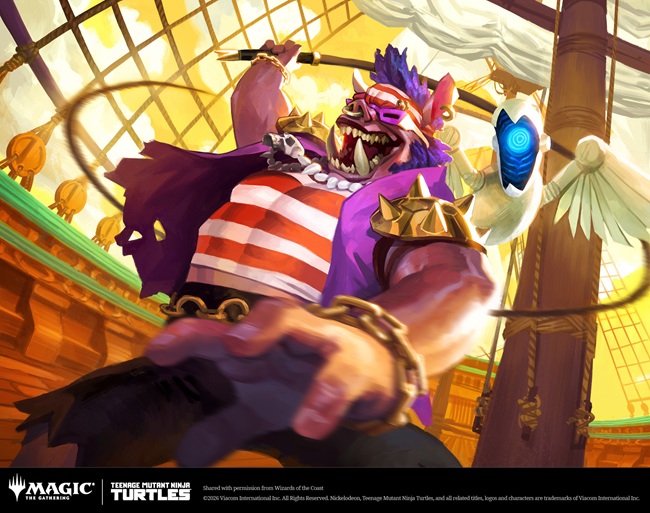
Bebop, Skull & Crossbones by Benjamin Ee
Arguably one of the best arcade games of all time, Turtles in Time (technically the 4th game in the Konami series) featured the turtles transported throughout time and space on a mission to defeat Krang and Shredder.
Please note there are multiple versions of Turtles in Time, with the Arcade and SNES game featuring some notable differences, and the Sega Genesis version being so different it has a different name, Hyperstone Heist. If you've got a Mandela effect about elements of this game, that's why.
The game begins with Krang, Utrom Warlord stealing the Statue of Liberty while April O'Neil, Live on the Scene reports it. Shredder initiates a Broadcast Takeover to taunt the turtles, and the game begins.
The first level is Big Apple, 3 a.m., featuring a silhouette of the first level's boss, Baxter, Fly in the Ointment. You can see the same purple silhouette from the loading screen in the land art, here. Baxter's art is even in the same construction site as that level, and he's depicted using one of his boss moves from the game.
A number of other cards from the Commander set feature references to Turtles in Time. The jet skateboards seen in Donatello, Way with Machines are from the third level, "Sewer Surfing." In the third level, you fight Shredder on the Technodrome and need to throw foot soldiers at the screen like in Go Ninja Go to beat him. That card name is also a reference to the "Ninja Rap" from Secrets of the Ooze (1991). A lot of these cards have layers; way more than I can dive into.
"Prehistoric Turtlesaurus" is the name of the fourth level of the game, starting the turtles' journey through time, featuring the gang going back to 25,000,000 B.C. I believe Smoldering Marsh is also a nod to this level.
Bebop, Skull & Crossbones and Rocksteady, Mutant Marauder are the bosses of the fifth level, "Skull and Crossbones," set on a pirate ship (Sunken Hollow) in 1530 A.D. (SNES only, the original arcade game featured Tokka and Rahzar here).
Leatherhead, Iron Gator and Cinder Glade are nods to the sixth level, set on a wild west train ride in 1885. Fast Forward and City of Brass are references to "Neon Night Riders," the (now quaint) future of 2020, which also features hoverboard-style combat.
Both cards also allude to a later season of the 2003 cartoon, called Fast Forward, whose theme song includes the lyrics "It's like the future's a party that these brothers just crashed ..."
Shredder's Revenge (2022)
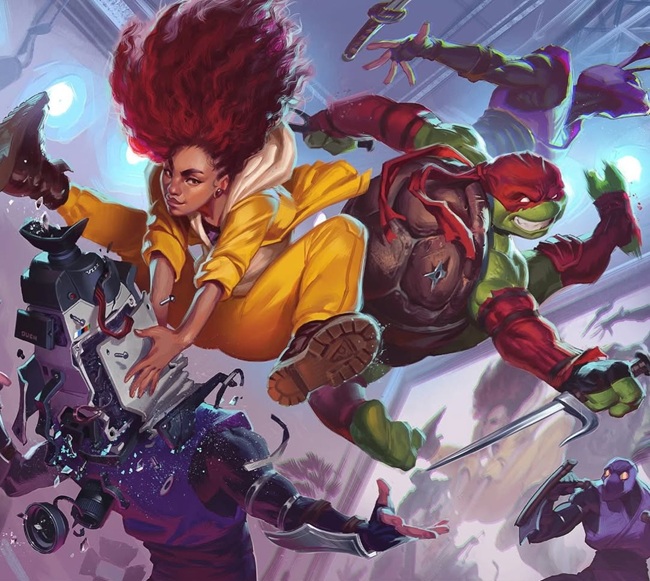
Special Move by Victor Maury
The last TMNT game I want to talk about is way more recent, a love letter to these classic games. Shredder's Revenge is loaded with everything you could want in a TMNT game. For the first time, April O'Neil is playable, with Special Move referencing her air attack where she swings her camera. Super Combo is a nod to the super moves in this game, which leave colorful image trails behind you.
Zoo Escapees is a nod to the "Rumble in the Zoo" level from this game, where you need to dodge these animals as they charge across the screen. Mouser Mark III is an enemy from this game as well, a robot walker-like head with two mouser hands. Dimension X Pizzasaur is the redesigned Pizza Monster from this game (the classic version being an extremely obvious Alien xenomorph homage).
Tokka & Rahzar, Unsupervised appears to be based on the Tempestra boss fight in this game, which happens in an arcade (you can see the pair throwing around arcade cabinets here).
Finally, Negate features April unplugging a Knucklehead, a spider-legged foot clan vehicle. These mechs have appeared in several of the games (but given April is only playable in this one, I'm referencing it here), and need to be defeated with jump kicks, hence the flavor text.
Mutant Turtles: Chojin Densetsu Hen (1995)
In 1995, there was a two-part Japanese original video animation called Mutant Turtles: Ch?jin Densetsu Hen. It's not good, and you shouldn't try to find it, but it does feature some very funny sentai-like transformations for the turtles. Leonardo, Cutting Edge's Japanese Showcase depicts this version of Leonardo.
The Next Mutation (1997)
Following the success of Power Rangers and the live action Turtle movies, the Next Mutation was a live-action TMNT show that only lasted one season. It was notably bad, but introduced Venus, the long-lost sister of the turtles who had studied kung fu instead of ninjutsu.
Perhaps due to licensing issues, this character disappeared for 20 years until the IDW comics created Venus, Torn Between Worlds. That version of Venus was one of the Punk Frogs that was surgically and magically altered to be a turtle.
The Revival Cartoon (2003)
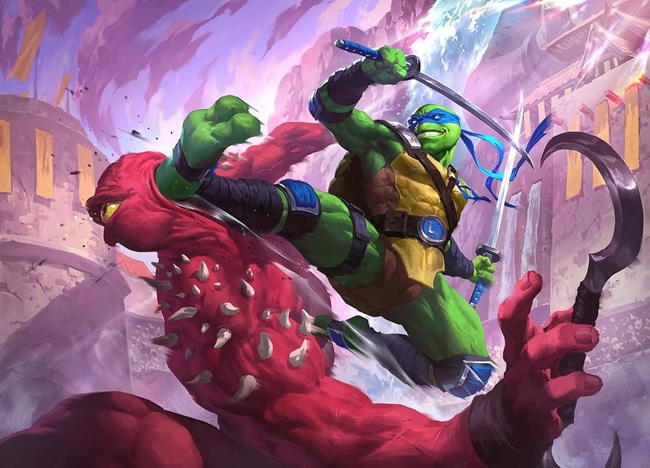
Leonardo, Worldly Warrior by Nathaniel Himawan
After the TMNT craze died out in the mid-90s, a new show was launched in the early 2000s. This one split the difference between the original cartoon's humor and the comic's dark tone.
The theme song, featuring the lyrics Mutant Chain Reaction, was pretty catchy. It also introduced some new villains, like Agent Bishop, Man in Black and the Earth Protection Force (EPF Point Squad), a team of MIB-like government agents tasked with containing aliens and mutants alike. A version of Bishop has appeared in most adaptations since.
It also introduced the Battle Nexus, an interdimensional battle hub sort of like a less-Mortal Kombat, over which Splinter, Aging Champion had once reigned. Leonardo, Worldly Warrior, Splinter & Leo, Father & Son, and Grand Coliseum all reference this version of the Battle Nexus.
Buzz Bots has appeared throughout turtle history, but the creative text references Stocktronics, which is Baxter Stockman's company in this show. The Vigor (Heralds of the Shredder) are this show's Foot Mystics, the elemental heralds of the true Shredder from this show (spoilers for a 23-year-old cartoon, the Shredder we meet early on is actually an Utrom).
In 2009, Mirage Studios released Turtles Forever, a made-for-TV movie that was their farewell to their era of the TMNT, featuring the 2003 cartoon's turtles teaming up with the 1987 and original comic book iterations to stop an interdimensional threat. The art we see here also includes the film version of the turtles.
The Turtles were sold to Viacom not long after.
TMNT (2007)
After the modest success of the 2003 cartoon, a new film series was planned, titled simply TMNT. With great CG animation and a stacked voice cast, it surprised everyone when it flopped.
The only reference to it I could find in this set was the name Raphael, the Nightwatcher. The Nightwatcher is Raph's vigilante name he takes on during this film. It would later be reused in the IDW comics.
IDW Comics (2011)
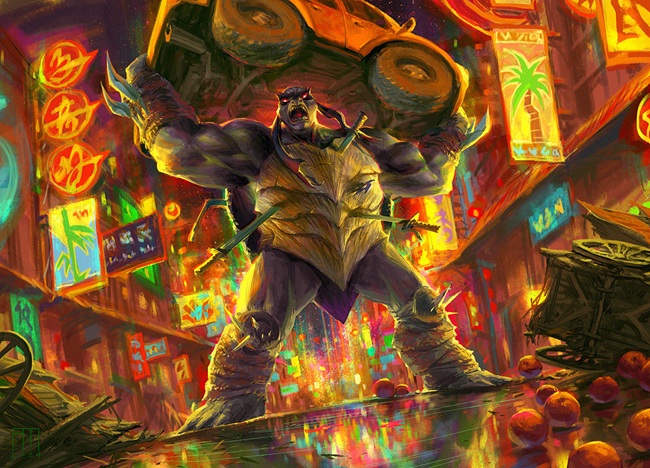
Slash, Reptile Rampager by Andrew Mar
I've talked a lot about the IDW comics up until this point, and there's a good reason for that: They've been running for 15 years, have adapted almost everything of note from other earlier iterations of the franchise, and the IDW version of the characters is often what gets licensed out for games and crossovers.
Because this art style best gels with Magic's art style as a whole, it's also where a lot of the 'modern' designs for classic characters in this set come from.
Classic Updates
While the character of Slash, Reptile Rampager is an 'evil turtle from Dimension X' in the original cartoon (basically the turtles' Wario), this version of Slash is pretty clearly IDW's version. Slash was a snapping turtle mutated as a tool to hunt down the turtles and 'remote controlled' by Agent Bishop.
This version of Slash ends up befriending the turtles thanks to Mikey's unrelenting kindness. The Slash Clones (Steelbane Hydra (Slash Clone)) were attempts to replicate Slash's abilities without his intelligence.
Featherbrained Filcher is Pigeon Pete. In the original cartoon, Pete was a regular pigeon that the turtles gave a bandanna to. The 2012 cartoon used Pete as one of their many weird and grotesque mutant designs, an idea that was picked up just a couple years later by IDW. In most iterations, Pete is kind of an endearing moron.
Madame Null, Power Broker is a gender swapped version of an Archie Comics character, but they're otherwise pretty similar. Null is a business person with designs on the Earth but achieves their nefarious goals through business means. She's in charge of the Null Group, which is responsible for creating several mutants in the IDW canon.
Triceraton Regenta is the Triceraton Seri, who comes from the Mirage comics but has since been adapted into the IDW comics. In both versions, Seri is a voice for peace among the war-like Triceraton people.
Mona Lisa, Science Geek is a human college student mutated into a lizard form (specifically a salamander) in both the original cartoon and the IDW comics. She becomes good friends with the turtle's extended social group during the Mutant Town era of the comics.
Mutagen Man, Living Ooze is one of the grossest mutants, a human (aptly, named Seymour Guts) so completely mutated they're mostly ooze now. [Marauding Mutagen] is another example of this character. Seymour was mutated by the Null Group in the IDW continuity and joins the Mutanimals alongside his best friend Mondo Gecko.
Groundchuck & Dirtbag were an attempt to create a new villain duo for the classic show, with their TV debut, toys, and video game boss fights all happening the same year in 1991. In the IDW comics, they're called Chuck and D.B., and they both work for Dr. Barlow, the mad scientist who created Venus, Torn Between Worlds.
Mind Transfer Protocol is a nod to a story arc in the comic where Donatello, on the verge of death, has his mind swapped into Metalhead's body. Metalhead himself has appeared in a lot of Turtles media, being a robotic turtle that's frequently both ally and enemy.
Nobody is a superhero persona that varies between adaptations. This version is an exo-suit used by a former Purple Dragon gang member named Angel, who herself has appeared in several adaptations.
The original Punk Frogs are silly Hawaiian shirt wearing foils for the turtles led by Genghis Frog. In the IDW comics, they're a mutated gang from Mutant Town who come to blows with the turtles over Venus. She was once one of them, but was kidnapped and experimented on by Dr. Barlow, transforming her into a turtle.
Bebop & Rocksteady have been staples of the TMNT franchise since the 1987 cartoon, appearing in almost every iteration. Although their origins vary, they're generally a couple of street punks transformed into boar and rhino mutants. They frequently work for the Foot clan, although there's nothing subtle (or particularly smart) about them. Voracious Hydra (Aggro Amalgam) is a nod to a story arc in the comic where there's a fused version of them.
Karai, Future of the Foot is the descendant or successor of Oroku Saki, AKA the Shredder. Unlike the Shredder, Karai is more anti-hero than villain, and frequently befriends the turtles, or at least regrets when their goals are opposed. She's loyal to the Foot clan, not necessarily Shredder, and is often sidelined, leading to resentment.
Her character was created in the original Mirage comics but was never adapted into anything during the early 90s except for the Street Fighter clone Tournament Fighters. The 2003 series changed that, and a version of Karai has appeared in most adaptations since.
High-Flying Ace depicts Ace Duck, who was originally a yellow-feathered duck but changed to white with the IDW comics. Ace Duck is hilariously not a mutant in any of his incarnations, but instead a duck-like alien from another dimension. My assumption is that Ace Duck was inspired by Launchpad McQuack from rival 1987 cartoon DuckTales.
IDW Originals
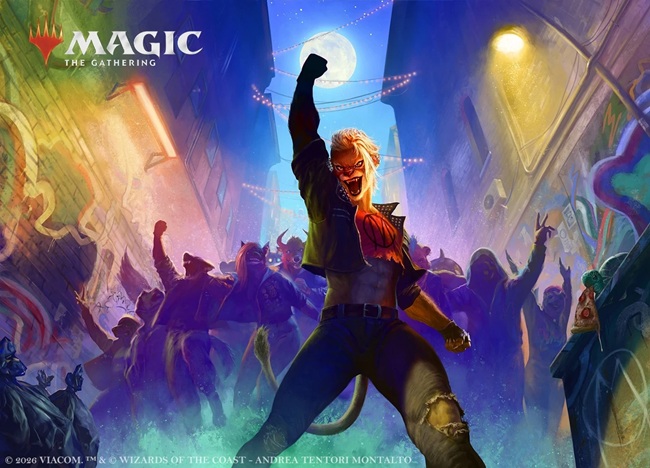
Sally Pride, Lioness Leader by Andrea Tentori Montalto
There are a few characters in this set created for the IDW comics. The most major is Jennika, Bad Apple Big Sister. Jennika was a runaway from an abusive home who found a new home with the Foot clan, becoming an assassin (you can see her Foot clan outfit in the background of Jennika's Technique).
Growing more murderous, she's surprised by Splinter's mercy and pledges her loyalty to him and the turtles. Later she is fatally wounded, and a blood transfusion from Leonardo saves her, but also mutates her into a turtle as well, becoming the longest running fifth ninja turtle.
Turncoat Kunoichi depicts Alopex, an arctic fox mutated and trained in ninjutsu by the Shredder. It's not long before she rebels against the Shredder and falls in love with Raphael. Alopex was one of the earliest original characters created for the IDW comics.
Koya, Death from Above was Shredder's falcon and was similarly mutated, presumably in part to take Alopex's place. Fiercely loyal to the Foot clan, Koya holds a grudge against the turtles (but not their friends) for clipping her wings in battle.
Prehistoric Pet and Ragamuffin Raptor are Pepperoni and Anchovy, respectively. Raphael befriended Pepperoni while stuck in the distant past, even giving her a ninja mask. When the turtles returned to the past, they brought her back with them after discovering her fighting with Anchovy. Anchovy joins Bebop and Rocksteady, gets mutated, and eventually joins their gang.
The big bads of the IDW universe are the Pantheon, god-like beings descended from the Dragon (seen, defeated, on Dragonskull Summit). Each member of the pantheon is animal themed and are playing a part in some grand game.
While the Rat King, Verminister and Kitsune, Dragon's Daughter playing their own games for power, others, like Mammoth (Primordial Pachyderm) largely mind their own business, or are too engaged in their hedonism (like the Toad Baron, served by the Frog Butlers) to bother.
Kitsune is the main villain of much of the IDW comics, manipulating most of the events from behind the scenes. Kitsune's Technique depicts her spell warping Leonardo's mind, which leads to Leo serving as the Foot clan chunin, depicted in Dark Leo & Shredder.
The Mutanimals of the IDW comics are led early on by Old Hob, Alleycat Blues (the epithet there is another Turtles in Time reference). Old Hob was an alley cat who stole baby Raphael, getting mutated in the process. Hob is a mutant extremist, willing to go to any length to achieve his goals.
Sally Pride, Lioness Leader is a Mutanimals that is loyal and optimistic, a stark contrast with Hob's pessimism. She was mutated, alongside Mutagen Man and Ray Fillet by the Null Group.
Null Group later improved their mutagen process, creating Zodi and Krisa, the Null Group Biological Assets. Whereas the scorpion Zodi is a sociopath, Krisa isn't so sure about the Null Group's goals.
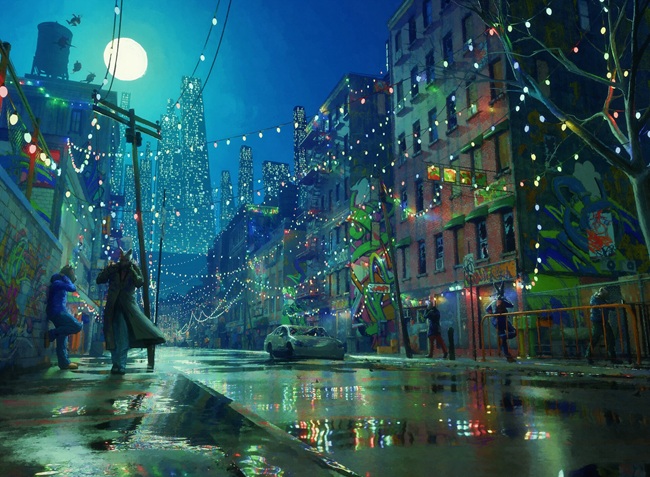
Mutant Town by Josu Solano
Crustacean Commando is Herman the Hermit Crab, a military oriented hermit crab with a ton of explosive ordinance and no compunction about how to use it. Herman uses a dumpster as his shell. He was mutated by Old Hob alongside Mondo Gecko to join the Mutanimals. You can see him and Mondo hanging out with Mikey and April in Study the Classics.
Old Hob's extremism eventually leads him to detonate a mutagen bomb in New York, transforming an entire neighborhood into mutants overnight. This creates Mutant Town, a segregated neighborhood where all the new mutants are corralled.
The turtles have mixed feelings about Mutant Town, glad to finally be able to exist in public but sad about why it happened. A community is formed and the turtles get to act like normal people for a time. Michelangelo, On the Scene shows him breezing through town.
Jennika's girlfriend Sheen (a pig mutant) is one of the Mutant Town Musicians playing at the venue depicted in Exotic Orchard. During their time in Mutant Town, the turtle's family grows to include Lita, Little Orphan Amphibian, and her chaotic young weasel friends (also seen in Mikey & Mona, Mutant Sitters and Mona Lisa, Ever Adaptable).
Lita was a little girl with albinism abandoned by her guardian. "Little Orphan Amphibian" is a play on "Little Orphan Annie," and notably turtles get called amphibians incorrectly (on purpose) throughout the franchise.
Lita warns the turtles about the Slithering Cryptid who is kidnapping mutants from Mutant Town. Lessons from Life depicts the turtles teaching Lita to play Magic: The Gathering. Vanquish the Horde is just a cute nod to the major women character of the comic, with April, Alopex, and Jennika teaming up in a royal derby battle.
Although originally from the Archie Comics, the Four Winds (Glyph the North Wind Avatar, Azrael the East Wind Avatar, Snake-Eyes the South Wind Avatar, and Yaguaro the West Wind Avatar) take their look here from their minor appearance in the IDW comics. Be sure to check out Creative Lead Crystal Frasier's thread on the Four Winds
Nickelodeon Begins (2012)
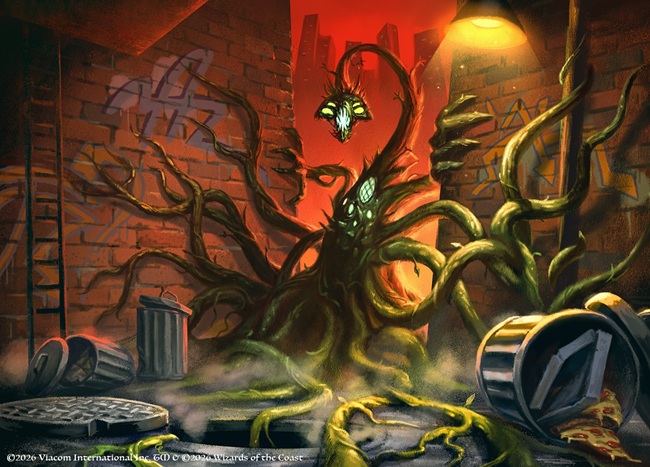
Biogenic Ooze by James Bousema
After the sale to Viacom, the first Nickelodeon TMNT was a CG animated series. To differentiate itself from previous entries in the franchise, it focused on the "Mutant" part of Teenage Mutant Ninja Turtles, creating a rogue gallery of grotesque but still kid-friendly mutants. A few of the weirdest mutants in the TMT set originate from this series. Foot Headquarters is based on the look from this series.
Sewer-veillance Cam was a creation of Donatello's, and I'll let creative lead Crystal Frasier tell you about it. The Super Shredder depicted on the main set is a version from this show, as is Slash, Reptile Rampager's scene card.
Snakeweed was the debut monster-of-the-week of the 2012 show, who as a human nicknamed Snake was a driver for the Kraang (this series' name for the Utrom). He gets splashed with mutagen and becomes this plant-hybrid mutant. Biogenic Oozes is Creepweed, which is a clone of Snakeweed fused with a villain named Creep.
Corpsejack Menace (Humongous Fungus) (aka Fungus Humungous) and Dream Beavers are both one-off villains from this series. There's not much else to say about them except they have great names.
Lord Dregg, Insect Invader is a recurring villain in later seasons of both the classic cartoon and the 2012 cartoon (which largely means most viewers fell off before he appeared). This version is based on his 2012 cartoon design.
Squirrelanoids, like the original look for the Dimension X Pizzasaur, was heavily inspired by Alien's xenomorphs. Ice Cream Kitty is a Mikey's pet, and a staple of the absolute weirdness this series embraced.
Rise of the Teenage Mutant Ninja Turtles (2018)
Winding down the 2012 cartoon, Nickelodeon quickly launched a new series called Rise of the Teenage Mutant Ninja Turtles, heavily inspired by the success, humor, and format of the Teen Titans Go! series. It never found its audience and was cancelled after just two seasons. Novel Nunchaku nods to this series' Splinter having been a martial arts movie star named Lou Jitsu. Hamato Ninpo also comes from this series' focus on magic and mysticism.
However, during COVID the series found cult popularity on Netflix, and Netflix greenlit a film sequel. The 2022 Rise of the TMNT features a version of Krang, Master Mind turning Raphael into a Krang Zombie, which the Sewer Frame art depicts.
The Last Ronin (2020)
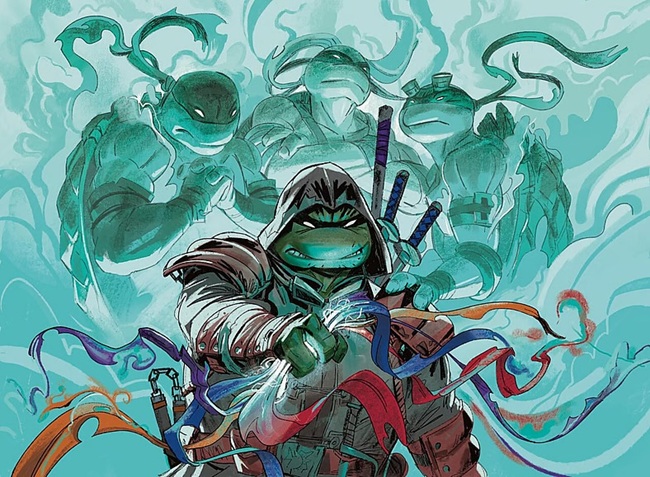
The Last Ronin's Technique by Adam Volker
The Last Ronin is a very popular reunion of original TMNT creators Kevin Eastman and Peter Laird. It takes place in a cyberpunk dystopian future where three of the turtles have died, and the last survivor has returned to New York to take revenge on Karai's son for their deaths.
It's known for its gritty tone (in keeping with the original Mirage comics) and the mystery surrounding which of the turtles is The Last Ronin.
The Last Ronin's Technique's art makes it easy to guess. The sequel introduces a new generation of turtles (New Generation's Technique) raised and trained by Casey and April's daughter.
Mutant Mayhem (2023) and Magic (2026)
Thanks to set lead times for Universes Beyond, it's likely there wasn't any time to incorporate any of 2023's Mutant Mayhem characters or designs into the set, but there's a few interesting parallels between the two worth noting.
The original Leatherhead, Swamp Stalker and most of his later adaptations were a sewer crocodile strongly inspired by Lizard, Connors's Curse, but the classic cartoon took a different tactic.
The animated Leatherhead spoke in a Louisiana Cajun accent and dressed like Crocodile Dundee, and both Mutant Mayhem and the new Magic set took that version and gender swapped it.
A similar update happened for both versions of Wingnut, Bat on the Belfry, who were both male in every adaptation up until recently. You can see Wingnut's mosquito pal Screwloose in the art as well.
There's a few cool designs here that seem to be mostly Magic-original. Armaggon, Future Shark is a cyborg shark who has ranged from silly to terrifying, and this version definitely leans scary.
Chrome Dome is a robotic foot soldier that looks a bit like a Shredder stand-in (and has never looked this cool before). Insectoid Exterminator appears to be a version of Scumbug, an exterminator that gets mutated with a cockroach. The Scumbug here appears to use the coloring of the IDW version, but with the blue shirt of the classic cartoon.
Game Over
That just about wraps it up, but I wanted to make two final notes that didn't quite fit anywhere else. Improvised Arsenal features Casey Jones' masks from the 2012 cartoon (top left), the 2022 Netflix film (right), and the 1994 comic mini-series Bodycount (center). Donatello, Gadget Master's Japanese showcase looks a lot like the mech turtles from Heatboys that made a splash on the internet a few years ago.
That's it for today (isn't that enough), but I'll be back soon in the lead-up to Secrets of Strixhaven with my usual background on the plane. Before I go, be sure to check out Crystal Frasier's ongoing thread of her ten favorite deep cuts from the set!