



 Locations


Battlebox is one of the best casual formats Magic has to offer players. It allows players to solve a puzzle of how to take down their opponent using only the tools given to them. Each player has access to 10 lands (5 basics and 5 ally tap lands) that they can play once per turn. Other than that it is Magic as normal with a large shared pool of cards. Previously, I covered a more detailed dive into Battlebox as a whole, so if you are still questioning what this format is about I encourage you to give that a quick read first. If you are ready to dive into building your own Battlebox to enjoy with a friend, then read on as I dive into the Dos and Don'ts when building this environment.
First Things First...
Before we go any further, the main deck is built around the number 200. This is not a set metric. If you would like to build your box around more or less cards this is perfectly reasonable. The joy of building a box is that there really is no wrong answer of what to include, but there are some things to watch for, both good and bad. The Battlebox is an expression of how you want to play Magic. Be sure to include cards that you love to play and want to find a home for even if they break some of these loose rules I am going to go over.
The Dos of Building a Battlebox
1. Include cards that require players to think
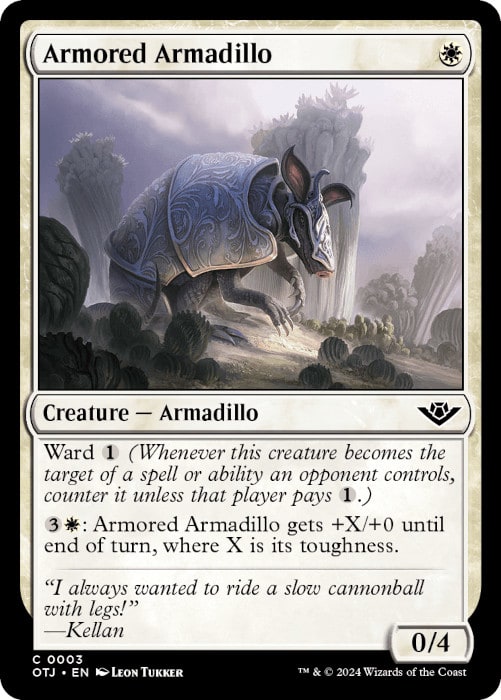
This sounds incredibly weird at first. Doesn't every action in a game of Magic require a player to think critically? Well, yes, however, I am talking about cards that are more than just a vanilla creature. Cards that have activated abilities, like Armored Armadillo, give players options on how they want to use the cards they are given. Do you decide to activate Armored Armadillo to deal some damage or do you decide to cast another creature to help flood the board? This decision making is a common trope that makes the game of Magic an incredibly fun puzzle that begs to be solved.
2. Cards that have two color pips are perfect
Cards with lots of colored pips in their casting cost can be difficult to cast the more colors you decide to play with. In Battlebox, however, you have access to each color you will need. You have 5 basic lands (one of each color) and five tap lands. This means you must play a tap land in order to reach two White pips for a card's casting cost. Do you decide to play a tap land in the early game to make sure you have the right colors or do you decide to cast some early game pieces to chip in for damage? Three color pip cards are also something you can experiment with, but I think they might be too slow for players to want to use them. Experiment instead with a mix of two color pips and hybrid pips to make games more interesting even when deciding which land to play for turn.
3. Encourage Combat
Games with two massive board states where players are taking few game actions are boring. Nothing is really happening and players are waiting to draw the perfect card to remove some of the board. Find ways to get around this. Goad is a great keyword that forces your opponent to swing into your creatures. Suspect is also a great way to do this as well. Putting a clock on the game with cards like Vindictive Warden are also great inclusions. If you sit there pinging your opponent turn after turn, eventually they will need to make a move or lose the game.
Battlebox games are supposed to be quick. Don't overthink inclusions based on the "power level" of them. Put cards in to test them and remove them down the line. However, there are some cards to straight up not include and here's a few examples:
The Don'ts
1. Card Draw

Spells that draw cards are incredibly broken. The Battlebox is full of only nonland spells and permanents. Drawing two cards guarantees that you have more game actions to take and that could easily overpower your opponent. The way to get around this is looting effects or rummage effects. Drawing and discarding a card in the same action keeps your hand the same level of cards in hand. You aren't gaining more cards in hand, just selecting what you keep in your hand. I am a huge fan of cycling for this reason. Do not include cards that say "Draw a card" unless followed by "discard a card."
2. Land Destruction
Stone Rain could be an incredibly interesting piece for a project like this. However, with the point of the game being to guarantee you have lands in play, removing them from play feels against the natural grain. I don't think this thought is bad though. I have found a way to force opponents to play their lands in a different way than they normally would with landwalk abilities. Cave People, River Boa, and Trailblazer's Boots are not land removal spells. These cards make players think twice about what lands they decide to play for the turn and encourage more decision making, which is exactly what we are after.
3. Ramp
Mana acceleration is a foundation of Magic as we know it. Battlebox doesn't require it. The format is more healthy with the exclusion, since players are drawing for a random pile of cards. No player can accelerate faster than the other. Leave your Birds of Paradise at home and exclude it from your box. Cards like Pixie Illusionist are encouraged though. These types of cards can change your lands to help fix your mana a little more efficiently and could help cast something that has two colored pips without a tap land. I think this is a really interesting brew space and opens players' minds about some of these lesser-known cards.
That wraps it up for the Dos and Don'ts of Battlebox. I hope this list is helpful to those starting their own journey into the format. I think this format is so much fun and encourages you to dust off those bulk boxes and get to searching. Be on the lookout for some of the things I talked about in this article and you should have an awesome balanced environment to toy with!
See you on the battlefield!
-Nigel