


 Locations



Riftbound is a new TCG using characters, settings, and ideas from the popular MOBA video game League of Legends, which you may also know from the hit Netflix show Arcane. Riot Games and UVS Games has been showing Riftbound to players around the world for the last year, and now it has finally hit print worldwide. The game had an early launch in China, so there's already some competitive metadata for players to analyze - but for now, let's hit some basics to help you understand the game and some intermediate tips to help contextualize key aspects.
Creating a deck in Riftbound is a little more complicated than most other TCGs. Before you build your Main Deck, you need to choose a few parameters that you'll build around. While there are no real order of operations you need to take, these steps are presented in a way that appears logical. If you're inspired by a particular Battlefield, Unit, etc. you can assemble the deck in whatever order your heart desires.
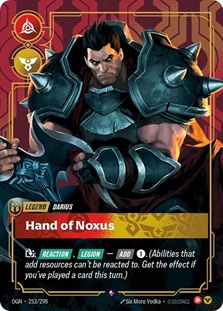
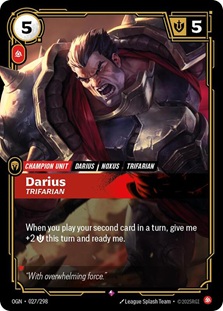
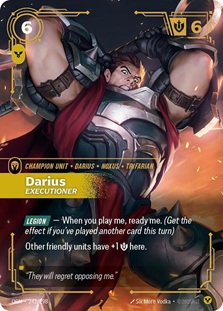
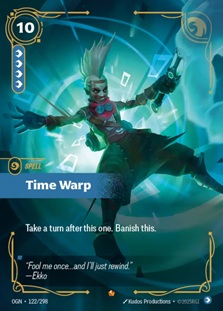
First, you'll pick a Legend which represents one of the many characters in League lore - and each Legend dictates what colors you'll use to create your Main Deck. In addition to a Legend you'll need to choose a Champion Unit - a version of that Legend that you can summon onto the field, but begins the game in the Champion Zone. In the first set, Origins, each Legend has 2 versions to pick from as your Champion Unit (one for each of that Legends 2 colors.)
 |  |  |
Next, you'll need to assemble 40 cards in your Main Deck and 12 cards in your Rune Deck. These are the bulk of the cards you'll be drawing and playing during your turn. Main Deck cards are made up of Units, Spells, and Gears - and you can include Champion Units. It's important to note that your chosen starting Champion Unit counts toward the 40 cards you need to make up here. What you won't see here is getting resource screwed since you'll be making a separate deck for your Runes. Among these cards you'll usually want a majority of unit cards which you use to Conquer the Battlefields and gain points. Typically, you want to see the spread of costs before assembling your Rune deck. Riftbound cards have two costs; Energy and Power. Energy costs can be paid by exhausting Runes in play - no matter what type or color. Power costs typically require a certain type of Rune to be recycled, so keeping an eye on these symbols will dictate what the ratio of your two Rune types should be.
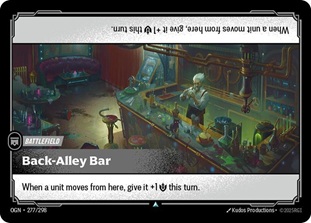
Finally, you'll pick 3 different Battlefield cards to accompany your deck. At the beginning of each game players will each choose one Battlefield and fight over control of them. This means in competitive best-of-three you're likely to only see 2-out-of-3 that you chose. After a game or two and looking over the Legends special effects it's easy to understand which Legends prefer what Battlefields.
While deck-building has more depth with more restrictions than many other games, gameplay in Riftbound is quite simple. Units have only a single value to keep track of after playing; Might. The goal of the game is to reach 8 points through conquering or holding Battlefields. To conquer a Battlefield you must move units with a total Might value higher than your opponents to a Battlefield, though most units can't move the turn they're played. When you take a Battlefield from your opponent you conquer it and gain 1 point. At the beginning of your turn if you still control a Battlefield you hold it, gaining another 1 point for each Battlefield you hold. This creates a tense back-and-forth with your opponent, but with at least 2 Battlefields in play at a time there's also a sense of forgiveness since most decks struggle to host an army big enough to split attention. This creates interesting decisions on whether to attack a smaller, less defended Battlefield or wait to attack the larger one - giving your opponent a point in order to shore up your legion.
Sometimes getting the first point early feels good, but the last point is always more important. Riftbound is more concerned about timing than most games, though you may not notice at first blush. Your units coming in exhausted isn't much more different than summoning sickness in Magic or Star Wars Unlimited. But more critically than those your units also start in your base instead of a Battlefield and can't get into the fray until readied, which creates more of a sense of urgency. This might be the illusion of design, but that sense of urgency makes a compelling idea of moving your units around and mobility, making Riftbound feel unique in an ocean of TCGs where you summon Guys to Turn Them Sideways to win.
Having players vie for different Battlefields creates a sense of lane division that emulates League of Legends' popular playstyle, but also adjusts for playing in physical space, something that many modern video game to board game adaptations (like Slay the Spire the board game) have done successfully.
If you're like me and skeptical about yet another TCG launching in the last 2 years, let me tell you that Riftbound has won me over. Not only that but both Riot and UVS Games have a good track record, and seem to be doing a good job of gathering community and listening to players. I'll be heading to my local game store weekly to play this one for a while, at least. Welcome to the Rift.