


 Locations


I can't count how many times the discussions of Shroud vs. Hexproof has come up in my local game store, but it's a topic that most people have a hard time wrapping their heads around. Shroud, Hexproof, and most recently Ward have been the ways that Magic gives protection in the form of dissuading targeting.
Each of them is different in how they approach the problem, but they all share one common thread: they make it difficult to target a creature for the opponent. But before we can look at the question of Shroud vs. Hexproof, we need to look at where these keywords come from.
Can't Touch This

The first of these keywords to ever be printed was Shroud, which was released in Legends. Shroud says that no one is allowed to target the creature. Eventually, Shroud would extend to players, thanks to the card Ivory Mask printed in 9th Edition. One of the unique interactions of Shroud is that it would cause whatever was previously attached to the creature or player to fall off, since it's no longer a valid target.
This was useful in some cases, such as casting a Spiritual Asylum to ensure that your pillow-fort was set up properly. Shroud remains one of the most powerful mechanics ever printed, coming in at a nine on the Storm Scale (Wizards of the Coast's internal metric for how likely a mechanic is to return in a future set).
However, changes in how Wizards of the Coast see interaction in the game moved design theory away from Shroud and into something a little different in Hexproof.
Only I Can Touch This

Originally, Hexproof debuted in Portal Three Kingdoms, but it wasn't called Hexproof back then. Mechanically, it was what we now know as Hexproof: the creature can't be the target of spells or abilities your opponents control. The term Hexproof came from its inclusion in the Magic 2012 Core Set which codified the name, and turned it into a (then) evergreen keyword. Prior to this, the keyword was informally known as "Troll Shroud" referencing Troll Ascetic, the most popular of cards printed with the ability.
Hexproof also spawned an entire deck subset known as Bogles (after its flagship card, Slippery Bogle). The archetype would aim to stick a Hexproof creature on the field, and then slowly build up Aura enchantments on that creature until it became an unstoppable threat. The archetype still sees play in Pauper and some Modern tournaments.
Eventually, Wizards of the Coast moved away from Hexproof as it was problematic to have a player with an untargetable creature on the field, blanking removal from the opponent's hand. The compromise was a keyword called Ward, which countered a spell or ability from an opponent unless the opponent paid an additional X, where X was the value of the Ward. It made Hexproof a situational thing, and while Ward is powerful, it never feels as one-sided as Hexproof did.
Shroud vs. Hexproof: Which one is better?

Both Shroud and Hexproof are juggernauts in their own right, but is one better than the other? Most players would say that Hexproof is demonstrably better since you can still target your creature, but your opponent can't. From a player perspective, Hexproof is the better option but Shroud is the fairer option.
If that's the case, why did they stop printing Shroud cards? In the early days of Magic, the internet was nowhere near as easily available as a resource as it is today, so you were stuck playing with the people in your local game store. Sometimes those people "creatively" interpreted the rules, thinking that Shroud only applied to the opponent and not to them. Hexproof was created to make the ruling more intuitive. Unfortunately, it created a heavily imbalanced keyword as a result.
Frequently Asked Questions
Does Shroud protect against board wipes?
Shroud stops targeting creatures, so it doesn't stop board wipes, since there's no targeting involved. If someone board wipes, your Shroud creature will go to the graveyard (unless it has another ability like Indestructible preventing that).
Does Deadpool get around Shroud and Hexproof?
Yes, he does. Deadpool's rules text says "another creature's" specifically not stating target creature. Shroud and Hexproof only stop targeting. "Choose a creature," gets around that, as does wording like Deadpool's.
What beats Hexproof?
Not being able to target your opponents' creatures is a headache, but there's ways around it. Edict effects (effects that cause an opponent to sacrifice a creature) are one of the best ways to deal with Hexproof creatures. The downside is that most edict effects leave the choice to the controller of the creature. This means, if the controller has multiple creatures, they can choose another one, and save the Hexproof creature. Cards like Crackling Doom specify the creature with the most power, making it invaluable as removal against Hexproof decks.
What does Shroud not protect against?
As we mentioned above, Shroud or Hexproof doesn't protect against board wipes or edict effects. Additionally, Shroud or Hexproof doesn't protect against combat damage, static effects, or non-targeting effects. As a rule of thumb, if it doesn't say "target" then Hexproof or Shroud doesn't care.
Shroud vs. Hexproof: Fair vs. Fun
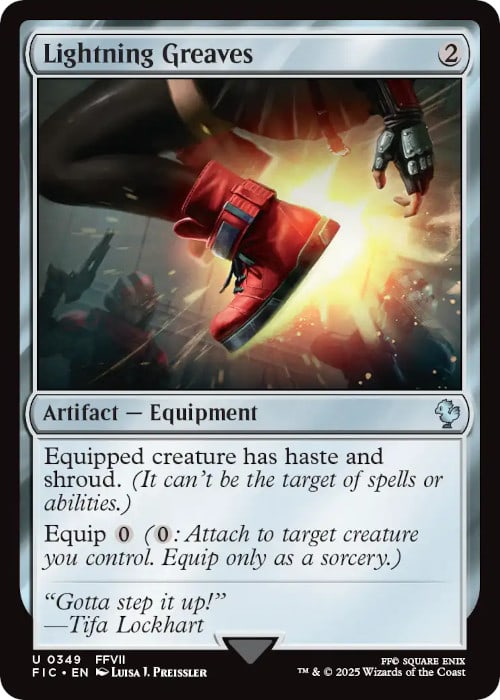 | 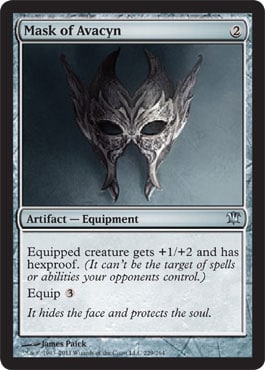 |
As a Bogles player, I think Hexproof is fun. I think it's awesome that there's a way I can stack enchantments on a creature and go to town with it. However, having been on the other end of this interaction, I can also see how frustrating it is for my opponent.
In building anti-interaction card design, it's important to balance the fair with the fun. Ward seeks to do that, giving Bogles players like me some level of protection, but also allowing the opponent to answer once they have enough mana. It stops the inherent snowball that's built into Hexproof's design.
Both of these see some level of play in Commander, and you might run into them at your local game store more than once. When you do, remember this: Hexproof is stronger, but Shroud is fairer. If your opponent's running something with Shroud, it's probably not as big a priority to remove as if they're running something with Hexproof.