 Locations


Magic, as the world's first trading card game (TCG), has been around for more than 30 years. In all that time, the game has gone through evolutions, one of which is the development of formats. With anywhere between 29,000 and 31,000 unique cards (the number varies, depending on who you ask) it would be madness to have only one type of game to play. That's where formats come in.
Magic: The Gathering Formats Explained
Magic: The Gathering Formats were designed as a way to introduce limitations to deck construction. They're split into two types: Constructed and Limited.
In a Constructed format, you're asked to build a deck given a pool of cards, a banlist, and sometimes other limitations (for example, deck size).
In Limited, you're expected to draft cards out of a pool and build your deck based on what you manage to draft. With over 40 recognized formats between paper and MTG Online, there's going to be a lot to explain here, so I might as well dive in.
Commander: A Multiplayer Free-For-All

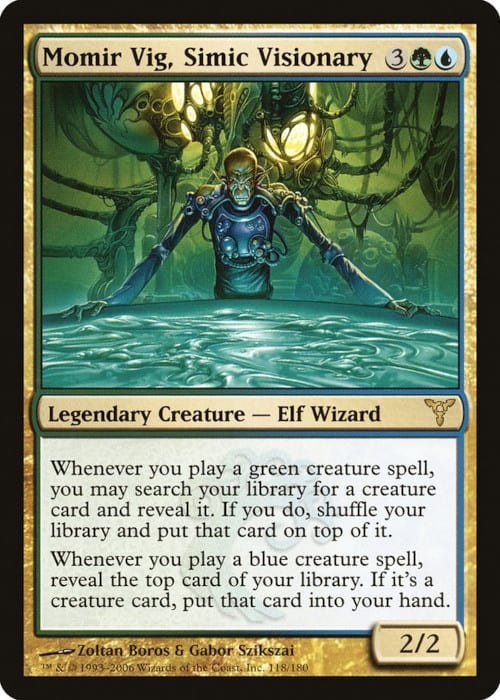
Commander is the most popular Magic: The Gathering format at present, and it started off as a fan-made format. The earliest versions of Commander (originally called Elder-Dragon Highlander, or EDH) were a place for older MTG players to use their old, no-longer-top-tier cards and have a bit of fun with their friends casually.
From these humble beginnings, Commander became one of the most played formats in existence today.
Commander is a Constructed format with a twist: One card, a Legendary Creature, is your deck's Commander. Your deck can only consist of cards that fall into the Commander's "color identity" or any colors that show up on the Commander's card as mana pips.
It's usually played in pods of four, but I've seen some eight-player Commander games which last for quite a long time. Commander decks are ranked by the Bracket system, with Bracket One being a just out-of-the-box preconstructed deck's power level and a Bracket Five being a competitive deck.
As a Magic: The Gathering format, Commander is played in almost every local game store. There are even subformats such as Competitive Commander (cEDH), Emperor, Pauper Commander, Tiny Leaders, and Duel Commander, each with their own ruleset and banlist.
There's a lot of depth of play in the Commander community, and it's always a fun experience going to a new game store and falling into a game with your deck, meeting new people and making new friends.
Commander Deck Construction Limitations
- Commanders must be Legendary Creatures
- Decks must be exactly 100 cards including the Commander (99 in deck, one in the Command Zone)
- All cards must be in the Commander's color identity
- There must always be no more than one copy of any card in a player's deck, with the exception of basic Lands
- A Commander deck has no sideboard
Standard or Type 2: A Rotating Format
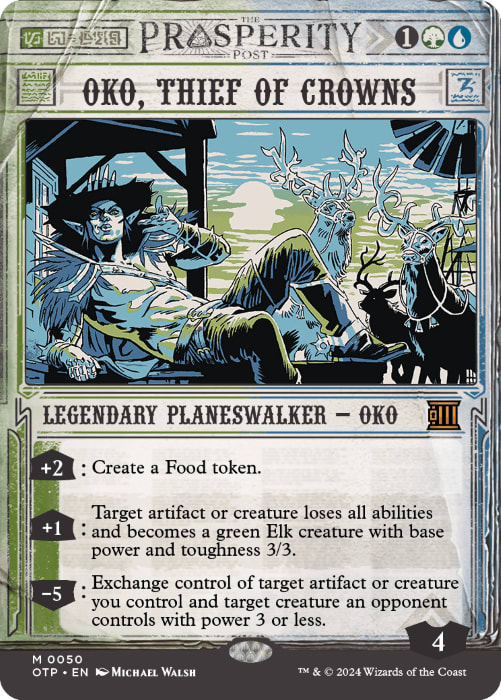
Standard or Type 2 is possibly the oldest continually existing MTG format since it debuted in January 1995. It remains the most widely sanctioned Magic: The Gathering format at every level of Constructed play. It's also the flagship format of the TCG, and new sets release every few months directly into Standard rotation. But what is Standard rotation anyway?
Standard is a rotating format, meaning that every so often, new sets enter the format, and older sets leave. The current Standard format, for example, encompasses 16 sets, with more on the way. It's got a massive card pool (some 4,000+ cards to choose from) making it a deck-builder's dream to play in.
However, it is worth mentioning that this iteration of Standard has access to the most sets in rotation in history.
Standard is one of the most approachable Magic: The Gathering formats and it's played both in paper and digitally (Arena and MTG Online). A game typically takes between 20 and 40 minutes, with a best-of-three in most of the sanctioned formats (Arena also has a best-of-one variant).
Decks are limited to no fewer than 60 cards in the main deck and no more than 15 in the sideboard. It's an interesting place for new players to get into the game, although competitive decks can get quite expensive.
Standard Deck Construction Limitations
- No less than 60 cards in the main deck and no more than 15 cards in the sideboard. There is no maximum deck size
- A maximum of four copies of the same named card is allowed across the deck and sideboard
- Only cards printed (or reprinted) in the current Standard-legal sets can be used for deck construction with the exception of cards on the banlist
- Rotation happens every so often, refreshing the card pool and removing some sets from the format
- Games are typically played in best-of-three, although a best-of-one format exists solely on Magic Arena
Modern: A Rapid, Pseudo-Rotating Format
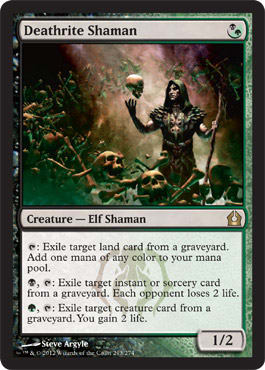
Modern is one of the most competitive formats around, and many older Magic players still love playing it. Another 60-card Constructed format, its card pool contains all cards printed after Eighth Edition, with the exception of the banlist.
Originally released as an MTG Online only format in 2011, it eventually became a paper format, and has quite a lot of lore attached to it.
While Modern is an eternal (or non-rotating) Magic: The Gathering format, there have been sets released directly to the Modern card pool in the past, which have forced adaptation and rotation of the format to warp around these new sets.
The Modern Horizons sets and some Universes Beyond sets most recently were responsible for introducing cards to the format that made it impossible not to play them and remain competitive. The One Ring, for example, warped the entire format until it was banned.
Despite its rocky past and the debates around the Modern banlist, it's still a very active and fun format to play. The power level is far more epic than Standard, and games sometimes end by turn three or four.
It is a format that gives you a taste of how older Magic sets used to play alongside each other. If you've played Standard before, Modern is just Standard, but with a much, much larger card pool and far more degenerate strategies.
Modern Deck Construction Limitations
- No less than 60 cards in the main deck and no more than 15 cards in the sideboard. There is no maximum deck size
- A maximum of four copies of the same named card is allowed across the deck and sideboard
- All cards printed from Eighth Edition including direct-to-Modern sets are legal, with the exception of cards on the banlist
- Games are played as best-of-three matches
Booster Draft: A Limited, Deck-Builder Magic Subgame Format
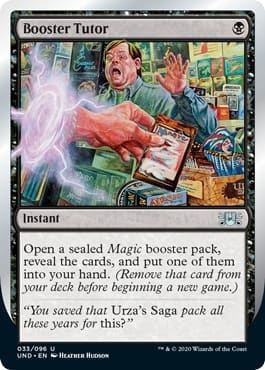
Booster Draft is the MTG format that sees the most play at every level. Booster Draft combines Magic as a game and as a puzzle.
In a Booster Draft, you and anywhere between three and seven other players sit around a table. You open a pack, remove the spacer, and select one card, face down, to be your card pool. You then pass the remainder of the pack to the left and receive a pack from the player on your right. You keep going until all three packs are drafted.
From there, you build a 40-card deck (basic Lands are usually provided by the store or the event organizer) and play three to four rounds, with the winner of the mini-tournament being determined at the end. Occasionally, the winner gets more prizes in the form of packs or store credit.
Booster Draft has a soul all its own, and it's the favorite Magic: The Gathering format of people who love deck-building as much as they love playing.
Seeing the pieces fit together into a powerful deck makes you fall more deeply in love with the game, but seeing your well-planned strategy evaporate because of a single card makes you wonder why you even bothered to buy three packs in the first place.
It's a love-hate relationship for many players, but it's still one of the more fun (if not as popular anymore) formats for new players who want to build up a card pool on the cheap.
Booster Draft Deck Construction Limitations
- Minimum deck size of 40 cards. All other drafted cards form the sideboard
- Best-of-three matches
- No limitation on the number of copies of a single card that can be included in a deck. Once a player drafts a card, they can include it in the deck
Sealed Deck: The Prerelease Format

If you're a fan of randomization, Sealed Deck might just be your format. It's long been the go-to for Prereleases, allowing players to experiment with the new set by building a Sealed Deck out of six sealed packs of product.
Sealed Deck typically has twice the cards in the pool as Booster Draft, but it's for a good reason. In Booster Draft, you get to curate the entire pool you use.
In Sealed Deck, it's a randomized collection that comes from six packs. Having more packs means it's more likely you have a playable deck when you're done.
There is a lot of overlap with Booster Draft, such as a minimum deck size of 40 and no limitations on individual copies within the deck. It also tests deck-building, and while the card pool is larger, it's also a lot messier to find what the good cards are and how to use them.
Sealed Deck Construction Limitations
- Minimum deck size of 40 cards. All other drafted cards form the sideboard
- Best-of-three matches
- No limitation on the number of copies of a single card that can be included in a deck. Once a player drafts a card, they can include it in the deck
Pioneer (Explorer): The Almost Forgotten Magic: The Gathering Format
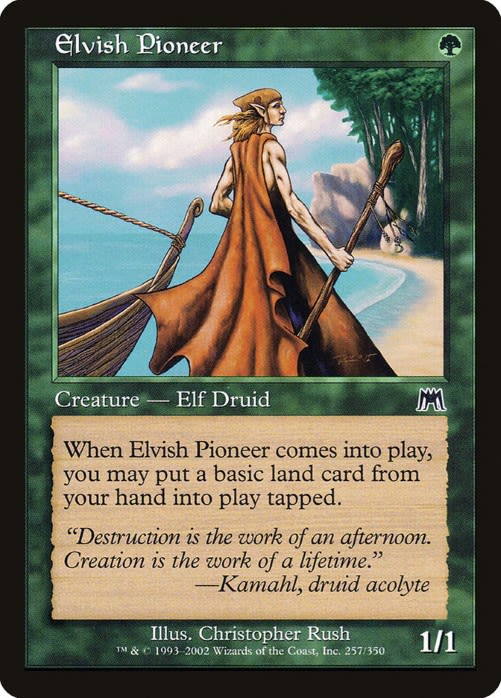
One of the biggest problems players have with Modern as a format is that the cards are ridiculously expensive. When it was originally released, Modern was a way for people to reuse their cards that they played in a previous Standard iteration.
The power level and cost of Modern made it impossible for current-day players to see Modern the same way. As a trade-off, Pioneer was launched as a format, but it's mostly fallen by the wayside.
Pioneer takes all cards from Return to Ravnica to present-day as legal, with the exception of the Pioneer banlist. It was launched in October of 2019, but the COVID-19 outbreak and the cessation of paper tournaments for a year severely impacted the format's ability to make a foothold and find an audience.
Magic Arena introduced Explorer as the digital version of Pioneer, with the intention of having Explorer with the same card pool as Pioneer at some point in the future. While Pioneer is not as popular a format as other eternal formats, it's still quite fun to play.
The large card pool gives players a chance to experiment with new and interesting tactics and opens the door to Standard players turning their previous decks into something that won't rotate. It's a shame the format doesn't have as big a following as it should.
Pioneer Deck Construction Limitations
- Minimum deck size of 60 cards with a sideboard of maximum 15 cards. There is no maximum deck size
- Best-of-three matches, although a best-of-one Explorer variant exists
- No more than four copies of the same named card across the deck and sideboard
- All cards released from Return to Ravnica to current-day are legal, with the exception of the banlist
Premodern: The Blast-from-the-Past MTG Format
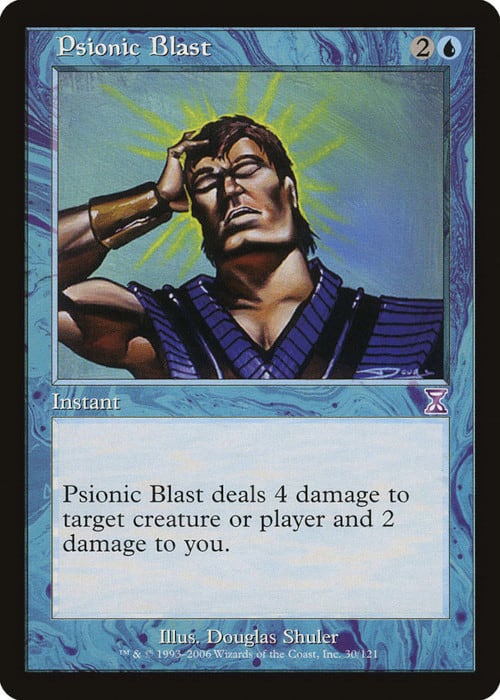
One of the newest MTG formats to come out uses some of the oldest cards ever printed. Premodern is a format that encompasses all the cards printed from Fourth Edition to Scourge.
It's a community-created format (like Commander) but it's exploded in popularity with a lot of players wanting to relive the glory days of early Magic. The banlist is curated to ban certain super-powerful cards that see play in other formats like Vintage and Legacy, such as Force of Will and Brainstorm, while letting other cards like Gaea's Cradle get a chance to shine.
Playing Magic in a time capsule is the best way to describe Premodern.
Decks like Stiflenought that are no longer heavy hitters in the current iteration of Vintage have a playground they can stomp around in. The card pool is static and will never change, meaning that the format is mostly "solved."
There are a lot of weird and interesting interactions that exist in the format, even though the decks are sometimes way too expensive to think about.
Premodern Deck Construction Limitations
- Minimum deck size of 60 cards with a sideboard of maximum 15 cards. There is no maximum deck size
- Best-of-three matches
- No more than four copies of the same named card across the deck and sideboard
- All cards released between Fourth Edition and Scourge are legal, apart from the banlist
Vintage & Legacy: Exactly What It Says on the Tin
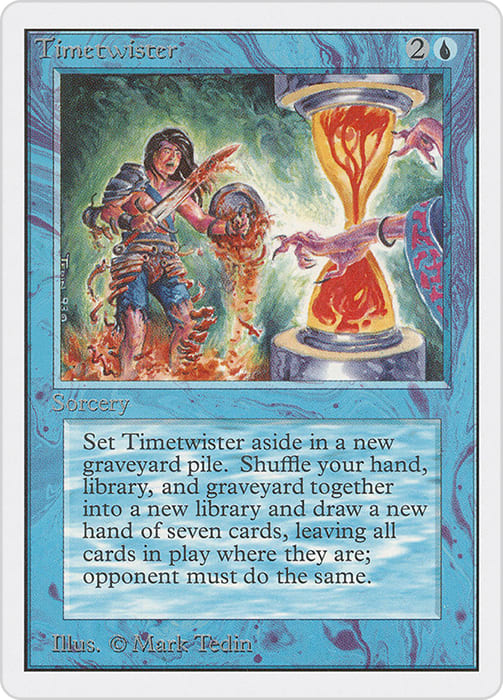
If Standard is Type 2, what's Type 1? The answer to that is Vintage, a format that encompasses almost all printed cards. Vintage (and its more affordable cousin, Legacy) offer one of the largest card pools for a format, allowing for some really interesting decks to be created.
To control the power level of cards like The Power Nine, Vintage introduces a restricted list, with a deck only able to have one copy of any card on the list. Legacy moves all cards from the restricted list to its banlist, which is why it's more affordable.
In the past, Legacy (known as Type 1.5) used to have a massive following in North America, but when Star City Games cut support for the formatt in 2020, the pool of players has been steadily dwindling. It still has a cult following, but tournaments have started seeing fewer players.
While these formats aren't completely dead, their player base is smaller than most of the others. Despite being eternal formats in themselves, the price of entry has made it extremely difficult to get into these MTG formats.
Vintage/Legacy Deck Construction Limitations
- Minimum deck size of 60 cards with a sideboard of maximum 15 cards. There is no maximum deck size
- Best-of-three matches
- No more than four copies of the same named card across the deck and sideboard. In the case of Vintage, cards on the restricted list are limited to one copy between the main deck and sideboard
- All cards released are legal, with the exception of the banlist
Pauper: The True Budget MTG Format
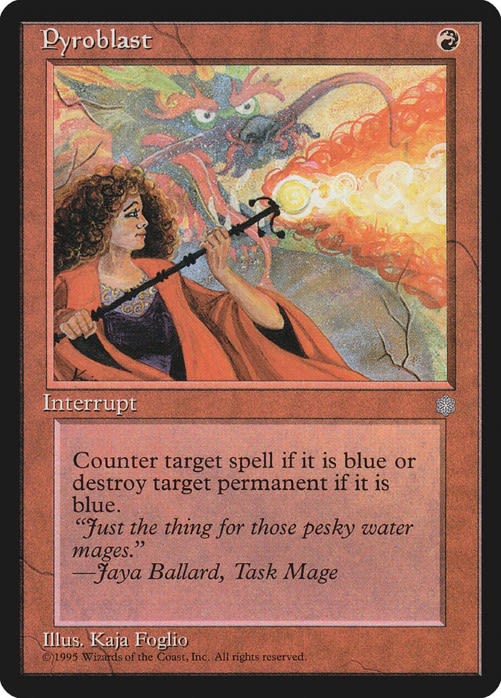
Magic has a reputation (a well-earned one) of being https://www.cbr.com/magic-the-gatherings-monetization-is-worse-than-a-mobile-game/>a very expensive hobby. Pauper is a competitive format that challenges that long-held opinion.
Pauper format only deals in commons, and while some of those commons are sort of expensive, you can still get four copies of them for less than the price of one Gaea's Cradle, for example.
That doesn't mean that Pauper is a low-power format. Quite the opposite. Some of the best Pauper decks prosecute their game plan quickly and with lines of play and counterplay. A few games can be grindy and long, but others wrap up pretty quickly. There's also room for rogue decks to make a showing in a well-established metagame (meta).
What makes Pauper such an interesting format is that there are always new commons entering when new sets get released. Some of them lead to interesting experimental decks like No-Land Spy or Boros Synthesizer. Pauper combines the fun of early Magic with the affordability of building a deck out of only commons.
Pauper Deck Construction Limitations
- Minimum deck size of 60 cards with a sideboard of maximum 15 cards. There is no maximum deck size
- Best-of-three matches
- No more than four copies of the same named card across the deck and sideboard
- All cards released (or have ever been released) at common rarity are legal, with the exception of the banlist
Notable Others
It would be crazy trying to explain all the formats and variants of Magic out there. As I mentioned before, there are more than 40 variants between the paper and online game. The few I mentioned above make up the majority of the formats you'll encounter, but there are a few others that are niche but still pretty interesting side-formats played with MTG cards.
Dandan
Another fan-made MTG format, this one recently had its own Secret Lair printing, bringing the format into a whole new set of players' radars. Dandân is a mind game, and the format as originally designed sees both players use a single 80-card deck to play it.
The deck construction is simple, just 10 copies of the titular Dandan and eight copies of Memory Lapse. Both players start at 20 life and the game ends when either player is reduced to zero or the deck runs out. It's a great format to explore when you're waiting for a Commander game to finish, for example.
Brawl
Brawl is a scaled-down version of Commander that limits the card pool to only Standard-legal sets and uses life totals of 25 instead of 40. It was invented as an Arena-only format, but many people play Brawl casually outside of Arena.
Pick-Two Draft
This Booster Draft variant lets players pick two cards from each pack instead of one. It speeds up the drafting process and results in stronger, more consistent decks.
The format works especially well with smaller sets, giving players more flexibility to build synergies and explore strategies without being as limited by individual picks.
Alchemy
A digital-only format that uses "rebalanced" versions of cards that were deemed too powerful as printed, and a few digital-only cards added to the set. Alchemy is like Standard in some sense but uses mechanics such as "Seek" to digitally create copies of a spell and "Perpetually" to add a state to something that would be impossible to track in paper. As a digital-only format, it's solely available on Magic Arena.
Historic
This is another digital-only MTG format limited to Magic Arena that allows players to access a slightly larger card pool. The decks are quite powerful, and the format sits somewhere between Pioneer and Modern on the power scale.
Momir Basic
This digital-only Magic: The Gathering format is available only on MTG Online, but occasionally shows up as a midweek challenge on Arena.
In Momir, you have a deck of only basic Lands, and your goal is to spend mana to create a token copy of any Creature in all of Magic's history with that mana value at random. It's named after the Momir Vig emblem that grants the token-creation ability.
If you're someone who enjoys chaotic Magic, then this format is right up your alley.
Two-Headed Giant (2HG)
One of Magic's earliest sanctioned multiplayer formats, Two-Headed Giant (2HG) uses 60-card decks with 15-card sideboards, but pairs players together under one life total which is increased to 30 instead of 20.
Life is the only resource both players share.
Players can block on behalf of their team, so attacking one player may encourage the other player to block for them. It's a great format for learning the game, pairing with an experienced player who can guide you through it.
Cube
Cube is a casual format that creates a Draft experience. Building a Cube is an undertaking in itself, but if you've got a friend who already has one, or have a local game store with an in-store Cube, it's a fun way to play Draft while keeping things affordable. Cube is a community-building format, and win or lose, you learn a little more about Magic.
What To Play Next

This isn't an exhaustive list of formats, but I tried to cover the most common ones you're likely to run into.
Whichever format you feel most comfortable to play in, there's likely a community that you can run into where you live that's into the same format. And if it's just you and your friends, you can always hang out around the kitchen table.
Magic, as a game, offers something for every type of player and every budget range. Have you heard of these formats? Which ones are your favorite?