 Locations




Strixhaven has become a fan favorite setting for many Magic: The Gathering players. The magical school trope is a classic that's loved by audiences of all ages, making it an instant classic when Strixhaven: School of Mages released in 2021.
Much like the students of Lorehold, I'm a sucker for history. With Secrets of Strixhaven previews currently in full swing, it seems like a perfect time to go back and look at the set that started it all.
This set would prove hugely influential for coming up with a brand-new way for enemy color pairs to interact and support eachother. Some succeed quite well at this, turning them completely on their heads. This, plus the beloved Mystical Archive bonus sheet, made Strixhaven: School of Mages - or just Strixhaven for short - one for the books.
Strixhaven: School of Mages Essential Info
Strixhaven: School of Mages, the 87th Magic expansion, was released on April 23, 2021 in paper and digitally on April 15 of the same year. This happened in the middle of the COVID-19 Pandemic so the majority of player experiences were digital.
Several stories published leading up to the release focused on the twin Planeswalkers Will and Rowan Kenrith's adventures studying at the school. As they do, they uncover a plot by the Oriq that comes to have a major impact on their lives and future events in later sets.
The Design Teams
Several people worked on the various design teams for Strixhaven: School of Mages. These include Exploratory Design, Vision Design, and Set Design as the three core elements of Design before it moves on to Play Design.
Here are the teams involved in the various states of Design for this set.
Exploratory Design:
- Mark Rosewater (Lead)
- Ari Nieh
- Daniel Holt
- George Fan
- Sydney Adams
Vision Design:
- Mark Rosewater (Lead)
- Andrew Veen (Strong Second)
- Ari Nieh
- George Fan
- Yoni Skolnik
Set Design:
- Yoni Skolnik (Lead)
- Erik Lauer
- Ian Duke
- Mark Gottlieb
- Daniel Holt
- Ken Nagle
- Michael Hinderaker
- Andrew Brown
- Ben Hayes
- Kazu Negri
- Ari Nieh
- Andrew Veen
- Chris Mooney
- Reggie Valk
The Products of Strixhaven
Strixhaven: School of Mages had a wide variety of products associated with it. We don't have all seven years of MSRP data but we can still take a walk down memory lane.
Draft Boosters
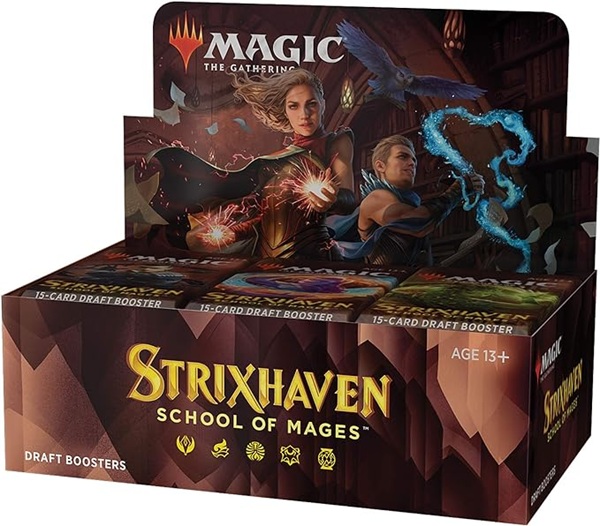
Draft Boosters were the core type of Booster Pack until being replaced by Set Boosters and Collector Boosters. As the name would imply, these were meant to be drafted with.
In Strixhaven: School of Mages, Draft Boosters contained 15 cards including at least one Land. Each pack would also include a Mystical Archive card as well as a Lesson, tying into two of the set's most notable features.
Occasionally, a Common would be replaced with a premium foil card.
Set Boosters
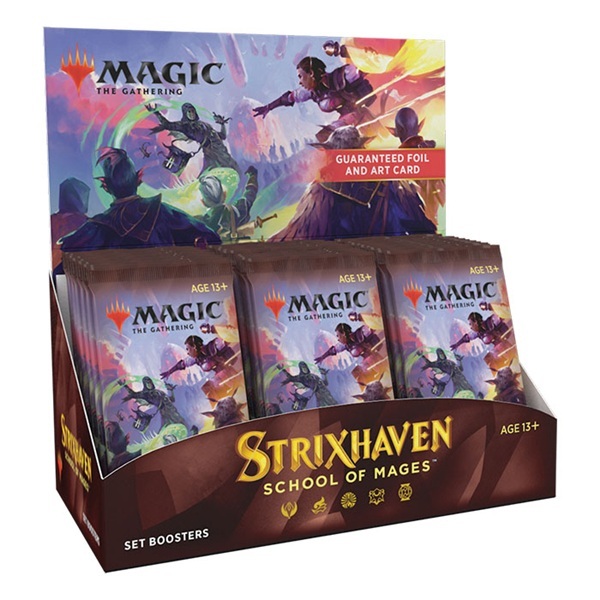
Strixhaven: School of Mages was the third set to use Set Boosters after Zendikar Rising and Kaldheim. These boosters were designed to provide players who enjoyed cracking packs with a better opening experience, more value, and less "draft chaff."
Each Set Booster came with 12 cards and had a chance for multiple rares. Each would have a roughly 1/8 chance of opening a card from The List, a set of reprinted cards with a Planeswalker symbol in the bottom left corner to differentiate them from their original release.
Collector Boosters
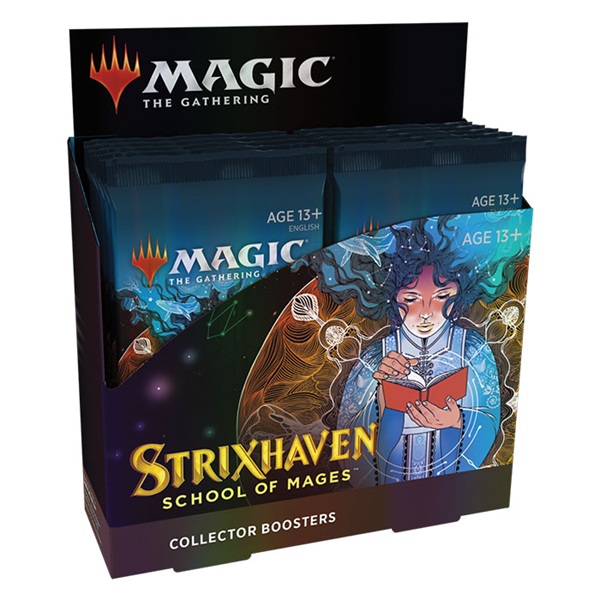
Strixhaven also saw the return of Collector Boosters. At the time, Collector Boosters were still fairly new, having only started with Throne of Eldraine.
The Collector Boosters for this set were in hot demand. Each pack not only contained an English Mystical Archive card but also a Japanese one. As it was one of the only ways for non-Japanese players to obtain these special arts, it made these Boosters sell fast with prices much higher than your average Collector Booster of the time.
Theme Boosters
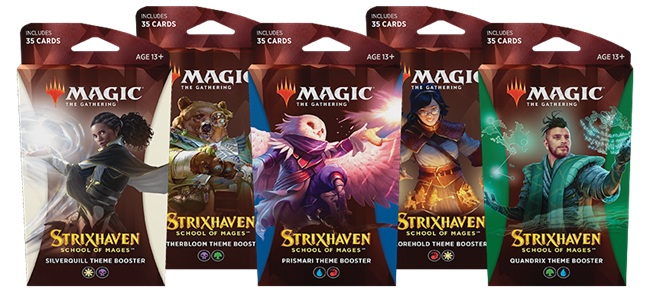
Theme Boosters presented players with an opportunity to focus on a specific theme without getting shorted on cards. In this case, that means you can choose a Booster themed after your favorite Strixhaven college and open only cards that suit that school and their philosophies.
These packs were lambasted for their lower card quality compared to their price point. It was generally seen as better to either buy a preconstructed deck or just get regular boosters. These products would eventually go on to become Jumpstart releases.
Bundles
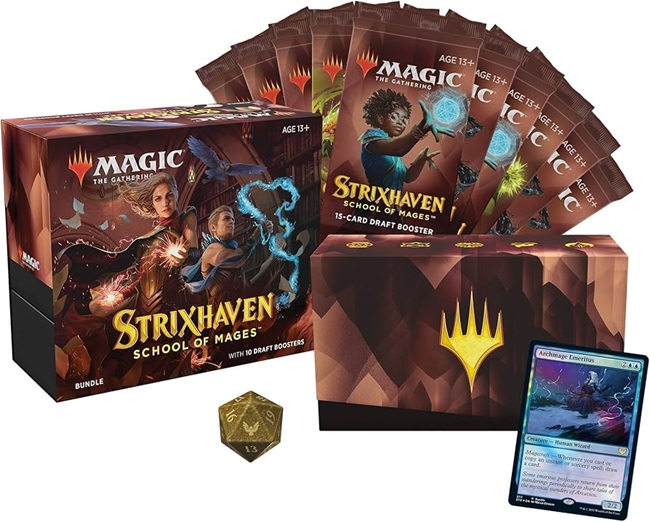
A mainstay of Magic products has been Bundles, which are a happy medium between buying a few Booster Packs and buying a full Booster Box.
Each Strixhaven Bundle came with ten Draft Booster Packs, 40 basic Lands (20 foil, 20 nonfoil), and a special Bundle Promo Archmage Emeritus. There were also some goodies, including a Spindown life counter, a storage box, and a small poster featuring "school spirit" designs for each of the five colleges.
Commander 2021
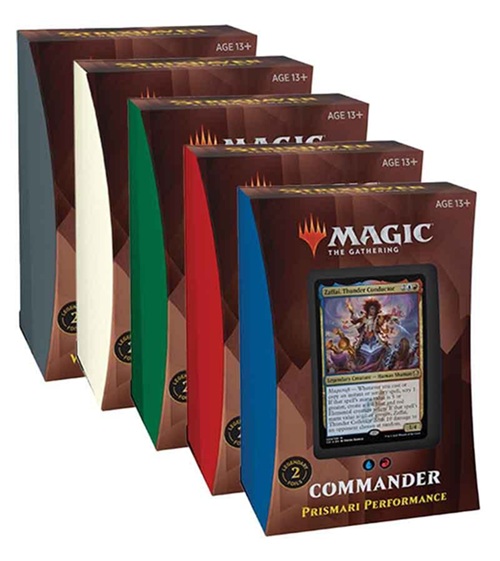
The Commander 2021 expansion - known sometimes as Strixhaven Commander - was the last annual Commander release before WotC switched to set-specific releases instead.
In the same way Commander 2020 tied into the Ikoria: Lair of Behemoths, Commander 2021 released alongside Strixhaven.
The Mystical Archive Bonus Sheet
The major highlight of Strixhaven: School of Mages was not in the main set. By all accounts, many found the core set weak for Constructed play with many players falling in love with it for its flavor and utility in the Commander format.
The real appeal for opening booster packs was easily the Mystical Archive bonus sheet. The lore of Arcavios - and Strixhaven - suggested that many spells from throughout the multiverse made their way to Strixhaven's Biblioplex. As such, the Mystical Archive was meant to represent several famous spells from throughout Magic's long history.
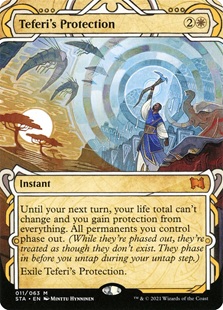 | 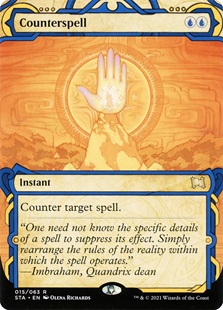 | 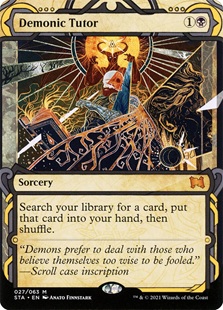 |
The bonus sheet delivered a wave of high-impact reprints, bringing back cards that are notoriously difficult to slot into standard releases. This included the likes of Teferi's Protection, Demonic Tutor, and Natural Order. Even smaller cards like Opt and Lightning Bolt got fantastic new art that had players excited to open boosters for both drafting or just for fun.
As an extra bit of fun for collectors, each of these cards would include a special alternate art treatment in Japanese. These would be the normal versions of cards found in Japanese packs of Strixhaven while they would come in Collector Boosters for everyone else. This would also lead to the sale of Japanese Set Boosters in non-Japanese territories to ensure players would get a chance at upgrading their favorite cards.
Both versions of these Mystical Archive cards came with a special Foil Etched version. Unlike prior Foil Etched cards which had a special foiling across the entire card, these ones merely accented small elements of the card frame. This change was criticized by some players for not meeting expectations while others enjoyed the subtle flair it added to the cards.
The Mystical Archive was a smash hit for not only its rich reprint selection but also the additional texture it added to the set's Limited environment. This would lead to multiple other sets seeing bonus sheets in the years since, including the return of Mystical Archive in Secrets of Strixhaven.
Booster Fun Treatments
Thanks to the inclusion of the Mystical Archive, Booster Fun treatments for this set were sparse. That subset's unique frame was treated as the showcase frame for the set, which meant none of the main set cards had any showcase frames this time around.
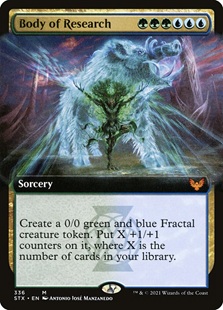 | 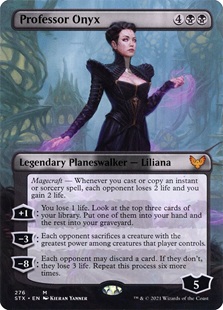 | 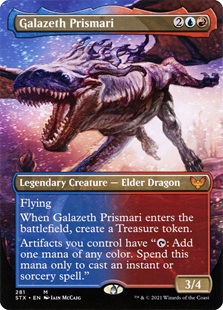 |
A small handful of treatments did appear all the same, though. The usual Extended Art Frame appeared on most Rares and Mythic Rares for the set as Collector Booster exclusives. Nine cards did not have this treatment. Each of these provided special Borderless treatments to the set's four Planeswalker cards as well as the five Elder Dragon Legendary Creatures.
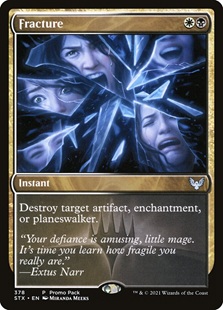 | 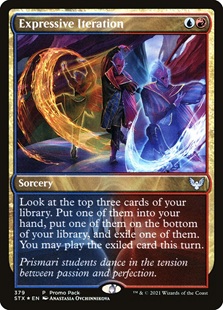 | 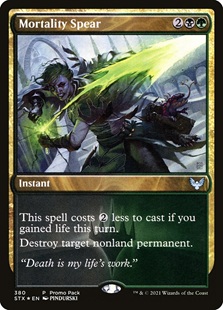 | 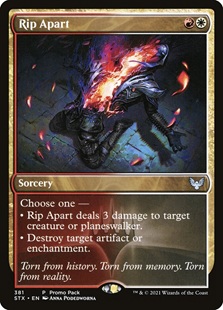 | 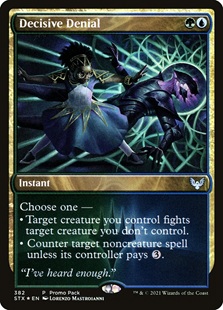 |
A set of special treatment cards were handed out at local events in the Strixhaven: School of Mages Promo Packs, too. Each of these cards represented one of each of the schools.
The Mechanics of Strixhaven
Strixhaven: School of Mages featured a handful of unique mechanics. Magecraft, Learn, and Lessons all played a critical role in the set. Additionally, Ward made its debut as an evergreen keyword.
Magecraft
 |  |  |
Magecraft is an ability that rewards you for casting Instants and Sorceries. Whenever you cast one of these, it will trigger Magecraft, which can be one of several different abilities. Think of it like Landfall, but instead of getting a bonus for playing Lands, you get it for casting your spells.
Learn and Lessons
 |  |  |
The Learn mechanic was possibly the most notable of the bunch. Whenever you cast a spell with Learn on it, you could either discard a card to draw a new one or search your Sideboard for a Lesson and put it into your hand.
Lessons are simply Instants and Sorceries with a subtype on them. Currently, Learn is the only mechanic that cares about Lessons, though it was used on several cards in the Avatar: The Last Airbender set.
The synergy between Learn and Lessons made for some deadly plays throughout its tenure in Standard. Now it's being felt in other formats such as Pioneer where Academic Dispute is able to find the more powerful Lessons from Avatar.
While the majority of the set's Lessons were of a specific color, there were five that were colorless. These spells were meant to represent beginner-level courses at a typical school.
Ward
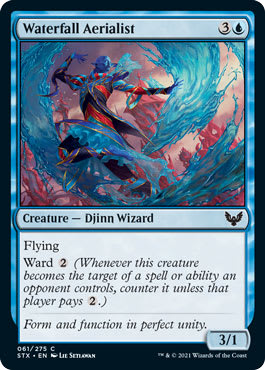 |  | 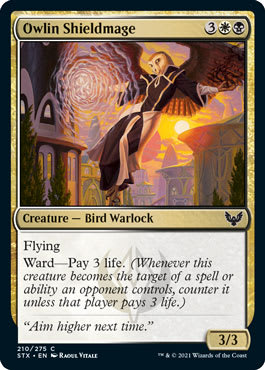 |
Ward is a common mechanic in just about every Magic release of the modern era but, it all started here. This mechanic requires a player to pay an additional cost in order to target any permanent they don't control if it has Ward. Sometimes this is paying extra mana, discarding a card, or even paying life.
The mechanic started here as an attempt to try something different in place of Hexproof, which had proven to be a little too problematic at times. Ward would also cause its own issues along the way, but it would prove to have better gameplay over time.
Mana Value
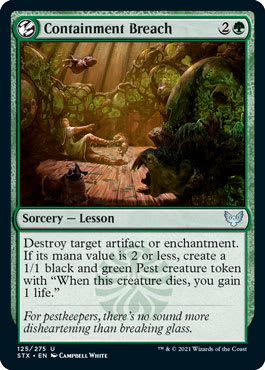 | 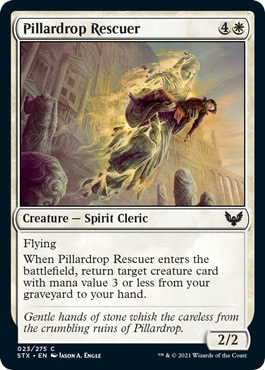 | 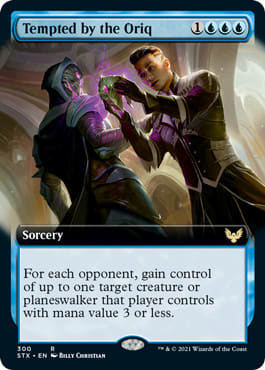 |
The set also brought with it a minor change to common terminology seen in the game up to this point. The term "Converted Mana Cost" - or "CMC" as it was often abbreviated to - turned into "Mana Value" - or MV.
This change happened for two reasons. For one, Wizards found that the term "Converted Mana Cost" was difficult for newer players to understand. Secondly, the smaller term opened up more space in the textbox, cleaning up many cards in the process.
Mascot Tokens
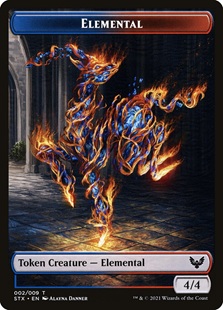 | 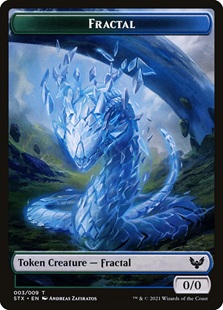 | 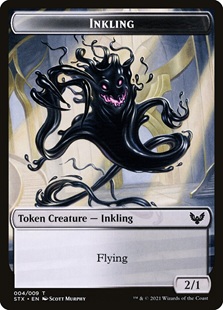 | 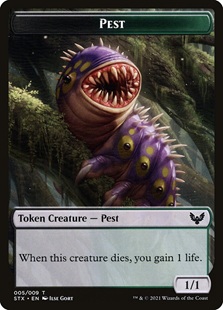 | 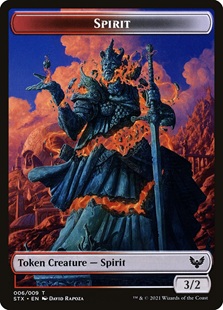 |
In addition to these various mechanics, a minor theme throughout the set involved the use of five "mascot" tokens for each college. These appeared on several cards for their appropriate color combinations, though they weren't necessarily a core mechanic.
These tokens included:
- 4/4 Blue and Red Elemental (Prismari).
- 0/0 Green and Blue Fractal (Quandrix). These tokens would always enter with a certain number of +1/+1 counters on them.
- 2/1 White and Black Inkling with Flying (Silverquill).
- 1/1 Black and Green Pest (Witherbloom). These tokens also had an ability that reads "When this creature dies, you gain 1 life."
- 3/2 Red and White Spirit (Lorehold).
Strixhaven Limited Archetypes and The Five Colleges
Strixhaven: School of Mages had five major Limited Archetypes as opposed to the usual ten. Unlike Secrets of Strixhaven, which gives each college its own unique mechanic, this set reflects their identities through five distinct archetypes.
Lorehold - Leaving The Graveyard Synergies
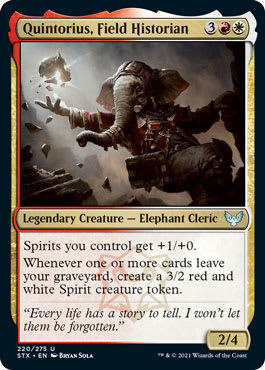 |  | 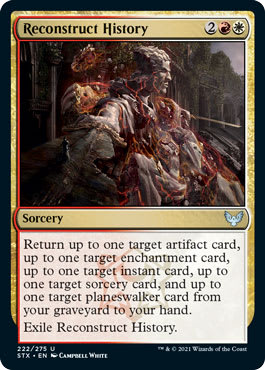 |
Lorehold, the Red-White college of Strixhaven, is centered around the idea of uncovering history. In this case, it's done by playing up the idea of cards leaving the graveyard.
This includes finding ways to return cards from your graveyard to your hand or the battlefield as well as exiling cards from your graveyard for an effect. Additionally, some cards would give you bonuses when cards left the graveyard.
This was heralded by many players as an outstanding innovation on Red-White (popularly known as Boros) strategies. Too often this color pair offers strategies that are little more than Aggro decks and/or Equipment/Auras matter-based. Taking this different approach provided far more nuance to the color pair that just about everyone seemed to adore.
Prismari - Big Spells (and Treasures)
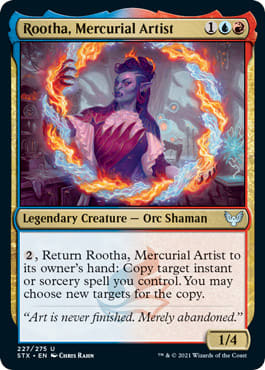 |  |  |
It's been some time since I played Strixhaven Limited so I didn't remember this one well. The Prismari colors 
 care a lot about making Treasure tokens and spells can be costly. The conclusion I came to is that this is all about casting big spells.
However, there's one small issue this: there aren't really many payoffs to casting those big spells. The Prismari mechanic in Secrets of Strixhaven - Opus - is based on the minor theme of casting Instants and Sorceries with mana value five or greater. Two cards cared about this element in the original set that I can tell: Prismari Apprentice and Spectacle Mage.
Neither really takes it to the degree it could and instead largely boils down to my original analysis: making Treasures to pay for spells that just happen to cost a lot. Still, this lines up well with the core philosophy of Prismari, which involves a love of artistry and the craft behind it, as well as doing something big and flashy for the sake of said art.
Quandrix - Ramp (And Reach Eight Lands)
 |  |  |
Green and Blue as an enemy pair - commonly referred to as Simic - is often seen as the "Good Stuff" color pair. It's such a value train all the way down that the color combination frequently plays out the same way: make lots of mana, draw lots of cards, and play big threats.
In many ways, Quandrix isn't beating those allegations.
The core concept of the color pair here revolves around ramping to have eight Lands on the battlefield at once. Doing so will grant several cards like Scurrid Colony and Vortex Runner boons, but it also serves a secondary purpose: casting big spells. Hey, that synergizes with Prismari a little bit on the Blue side, doesn't it?
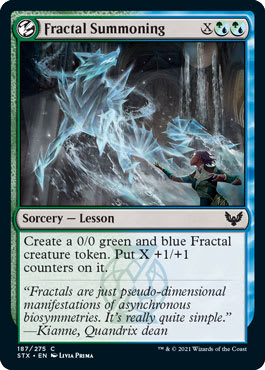
This school is centered heavily around math, with many cards enabling you to cast large Fractal tokens. The more mana you have access to, the bigger your Fractals will often become. This is either thanks to the amount of mana you have to dump into them (Fractal Summoning) or having the ability to cast more spells (Serpentine Curve).
Silverquill - Aggro and +1/+1 Counters
 |  |  |
While Red-White tends to take on the Aggro role in most sets' Limited Archetypes, it takes on a much slower and more deliberate pace in Strixhaven. Something has to be the Aggro strategy, though, and Silverquill, in Orzhov colors 
 , fills that role spectacularly.
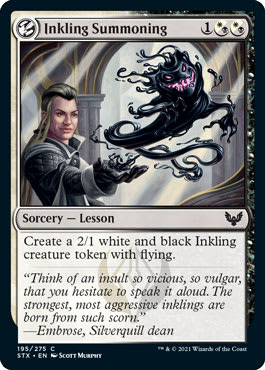
This school is all about being aggressive through their words. Inklings are quite literally summoned by hurling the most inflammatory verbiage imaginable, so it makes perfect sense to have that translate into the gameplay itself.
This leads to you casting a number of cheap, efficient threats - including Flying Inkling tokens. As you do this, you distribute +1/+1 counters across your board to make them hit harder. At the same time, you utilize the removal common in these colors in order to clear the way for mighty attacks that wipe your opponents out.
Witherbloom - Life Gain (and Sacrifice)
 | 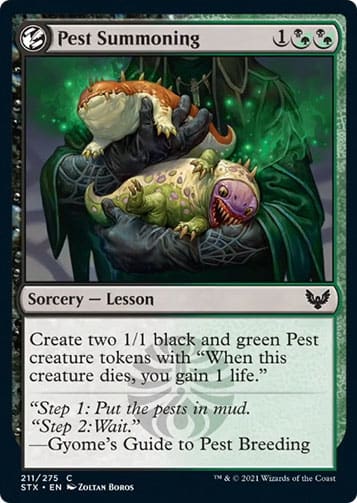 |  |
The Witherbloom cards throughout the set love gaining life and reward you for doing so, which is no surprise in Black and Green. A great example of this is the signpost Legendary Creature Dina, Soul Steeper. As you gain more life, you also drain your opponents' life totals - something that made it a great card in Pioneer Amalia Benavides Aguirre Combo decks for a time.
Dina also highlights the other core element of Witherbloom in this set: sacrificing. The token Creatures made by many cards in this set (Pests) give you a bonus of life gain when you they die. As a result, there's incentive to utilize them to sacrifice outlets in order to fuel life gain synergies.
Not only does this make a card like this Soul Steeper an excellent signpost to showcase the Limited format, but Witherbloom as a whole. The school is defined by its embrace of life and death in harmony with one another, making the unity of sacrificing stuff to gain life and offering synergy for both incredibly apt.
Major Cards
For this section, I'm sticking to the new cards from the main Strixhaven release. The Mystical Archive added some heavy hitters as well but, since it's mostly reprints, I want to spotlight the new cards first.
Elite Spellbinder
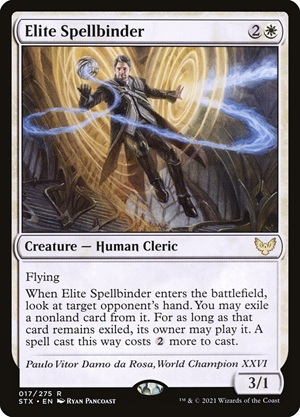
Renowned pro player Paulo Vitor Damo da Rosa took down the Magic World Championship in 2020 on the back of a powerful Azorius Control deck. As a result, he became the second person to be immortalized on a card for winning the World Championship.
That card would be Elite Spellbinder, a powerful Creature which would rip cards out of opponents' hands and tax them to be able to cast them. These effects have become much more commonplace as time has gone on, but even now Paulo's Elite Spellbinder can be seen showing up occasionally, especially in Pioneer.
Divide by Zero
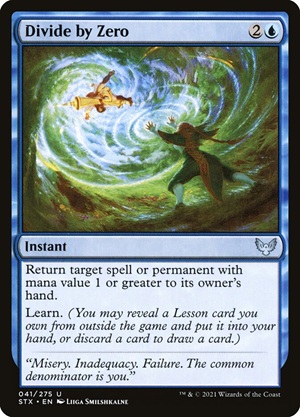
You might not think so upon first look but, Divide by Zero would prove to be extremely problematic in Standard. Thanks to Control decks being so prevalent, you could use Divide by Zero to slow the game down to a crawl. At the same time, you would find powerful Lessons or simply filtered through your deck.
This, combined with powerful game-ending threats like Hullbreaker Horror and Lier, Disciple of the Drowned would lead to this equation eventually being banned in Standard. This came alongside the banning of other powerful cards of the era, Alrund's Epiphany and Faceless Haven.
First Day of Class
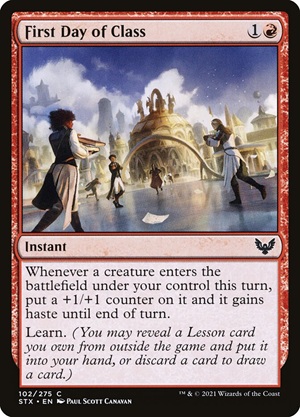
First Day of Class represents another powerful Learn spell. Unlike Divide by Zero, this one saw basically no Standard play as well as most other Competitive formats.
Despite this, it became a major player in the Pauper format thanks to its Combo applications in a handful of decks. When Modern Horizons 2 came out and brought Chatterstorm with it, it would make the Squirrel tokens more resilient to board wipes while also giving them Haste.
First Day of Class would also enable a powerful Goblin Combo deck thanks to its Combo potential with Putrid Goblin.
Thanks to these unique interactions and more, it continues to see play in the format to this day as a somewhat fringe inclusion.
Expressive Iteration
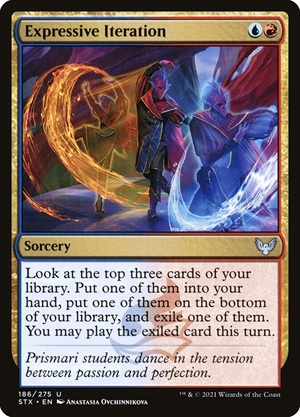
These days, Stock Up is all the rage if you're looking for some powerful card selection. In 2021, though, it was hard to do much better than Expressive Iteration.
This powerful spell gave you your choice of three cards to play for just 2 mana. That might seem like a lot compared to cards like Brainstorm, Ponder, and Preordain, but it turned out to be strong enough that it would find itself banned in both Pioneer and Legacy.
It has been a fairly solid player in Modern as well, though its impact in that format has been somewhat lesser by comparison. It also sees a good bit of play in Standard, though hardly enough to see a ban there.
Vanishing Verse
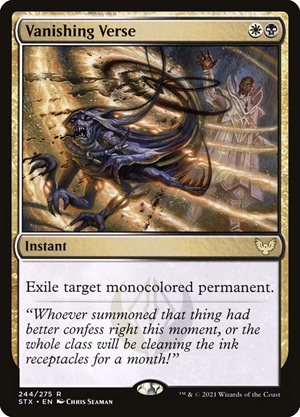
Rarely had a White-Black removal spell been quite as strong as Vanishing Verse. Typically, these spells came with a minimum mana cost of three, exemplified on cards like Vindicate, Mortify, and Anguished Unmaking. Seeing it at 2 mana proved especially interesting and unsurprisingly powerful.
Despite a high number of Multicolored cards running around thanks to this set and the future release of Streets of New Capenna, there was still plenty of Mono-colored stuff being played.
Vanishing Verse became a premium removal spell in a number of single-color Standard decks at the time and continued to see play in Pioneer well after it rotated.
Professor Onyx and Witherbloom Apprentice
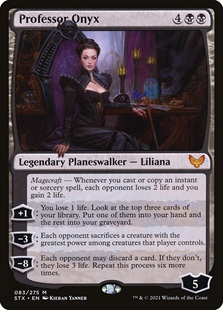 | 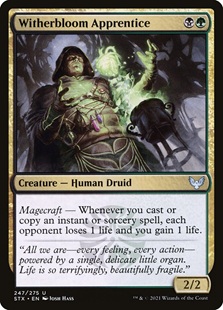 |
Strixhaven's Magecraft mechanic provided several interesting cards, but few were more noteworthy than these two. Both Professor Onyx and Witherbloom Apprentice drained your opponents' life whenever you cast Instant or Sorcery spells.
That kind of effect is great when you play it straight, but it's even better when you play it in a way that's kind of broken or unfair.
As it happens, these cards both created an infinite combo with Chain of Smog. If you cast it targeting yourself, you could endlessly copy the spell at no cost. Every time you do, it causes the Magecraft ability to trigger, establishing a loop that lets you win the game on the spot.
This combo made some splashes in Commander, Cube, and even Legacy in a variety of ways. Professor Onyx even managed to see some Standard play in a few different decks.
Elemental Masterpiece, Creative Outburst, and Magma Opus
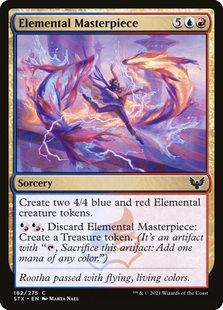 | 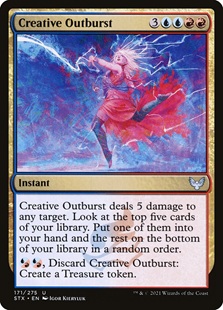 | 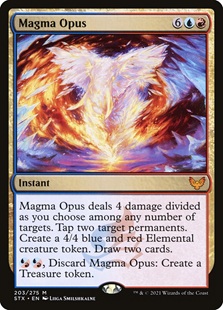 |
Each of these three cards saw play in a number of formats due to one simple reason: they allow you to pay 2 mana and discard them to make a Treasure token. This helps you ramp into big threats faster than this color pair normally can.
This fueled a variety of decks and was a leading factor in the banning of Geological Appraiser in Pioneer shortly after its release.
Magma Opus would also go on to be a powerful finisher for Izzet Control decks. Not only could you play it straight, but by discarding it in formats like Pioneer and Historic you could then cast it for free with cards like Torrential Gearhulk and Mizzix's Mastery.
Magma Opus was a serious threat for players to contend with for a period of time, although it sees very little play today.
Prismari Command and Witherbloom Command
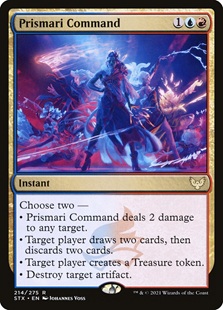 | 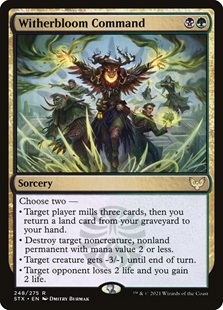 |
Strixhaven: School of Mages saw the return of a fan favorite cycle of cards: the Commands.
Previously, we saw these in Lorwyn as Mono-Colored options and again in Dragons of Tarkir as allied color versions. This time, Wizards provided enemy color versions for each of the five colleges.
While most of them saw play in some way, apart from Silverquill Command, two stood head and shoulders above the rest.
Prismari Command and Witherbloom Command weren't just good enough to see play in Standard but showed up a solid amount in older formats. These cards offer powerful abilities at a cheap rate, making them great options in certain decks.
The Commander 2021 Precons
Commander 2021 was technically its own release separate from Strixhaven, and the last time Commander got a standalone launch like this (excluding 2012, when nothing released).
That said, it still dropped alongside Strixhaven and was heavily tied to it mechanically, which likely influenced the shift toward bundling Commander decks with main set releases going forward.
Naturally, there were five decks released, each one representing a different Strixhaven college.
Lorehold Legacies
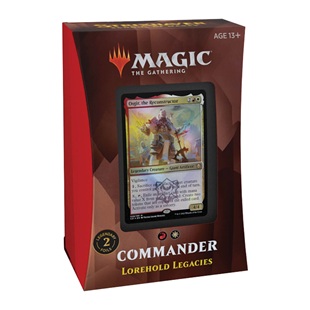 |  |  |
This deck leaned into what made the Lorehold such a cool aspect of the set: pulling cards out of your graveyard.
Lorehold Legacies | Commander | Wizards of the Coast
- Commander (1)
- 1 Osgir, the Reconstructor
- Creatures (30)
- 1 Alibou, Ancient Witness
- 1 Angel of the Ruins
- 1 Audacious Reshapers
- 1 Bosh, Iron Golem
- 1 Bronze Guardian
- 1 Burnished Hart
- 1 Combustible Gearhulk
- 1 Digsite Engineer
- 1 Duplicant
- 1 Feldon of the Third Path
- 1 Hellkite Igniter
- 1 Hellkite Tyrant
- 1 Hoard-Smelter Dragon
- 1 Jor Kadeen, the Prevailer
- 1 Laelia, the Blade Reforged
- 1 Losheel, Clockwork Scholar
- 1 Meteor Golem
- 1 Myr Battlesphere
- 1 Pia Nalaar
- 1 Pilgrim's Eye
- 1 Quicksmith Genius
- 1 Ruin Grinder
- 1 Sanctum Gargoyle
- 1 Scrap Trawler
- 1 Solemn Simulacrum
- 1 Steel Hellkite
- 1 Steel Overseer
- 1 Sun Titan
- 1 Thopter Engineer
- 1 Triplicate Titan
- Planeswalkers (1)
- 1 Daretti, Scrap Savant
- Instants (3)
- 1 Boros Charm
- 1 Dispatch
- 1 Return to Dust
- Sorceries (9)
- 1 Chain Reaction
- 1 Cleansing Nova
- 1 Excavation Technique
- 1 Faithless Looting
- 1 Reconstruct History
- 1 Rip Apart
- 1 Rout
- 1 Secret Rendezvous
- 1 Wake the Past
- Enchantments (2)
- 1 Darksteel Mutation
- 1 Monologue Tax
- Artifacts (16)
- 1 Arcane Signet
- 1 Archaeomancer's Map
- 1 Battlemage's Bracers
- 1 Boros Locket
- 1 Commander's Sphere
- 1 Cursed Mirror
- 1 Dispeller's Capsule
- 1 Hedron Archive
- 1 Ichor Wellspring
- 1 Key to the City
- 1 Mind Stone
- 1 Mycosynth Wellspring
- 1 Sculpting Steel
- 1 Sol Ring
- 1 Thousand-Year Elixir
- 1 Unstable Obelisk
- Lands (38)
- 8 Plains
- 12 Mountain
- 1 Ancient Den
- 1 Battlefield Forge
- 1 Boros Garrison
- 1 Command Tower
- 1 Darksteel Citadel
- 1 Exotic Orchard
- 1 Forgotten Cave
- 1 Great Furnace
- 1 Lorehold Campus
- 1 Myriad Landscape
- 1 Phyrexia's Core
- 1 Rogue's Passage
- 1 Secluded Steppe
- 1 Slayers' Stronghold
- 1 Study Hall
- 1 Sunhome, Fortress of the Legion
- 1 Temple of the False God
- 1 Temple of Triumph
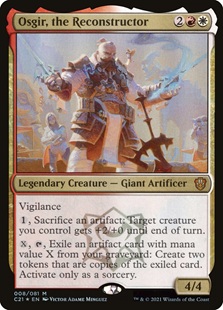
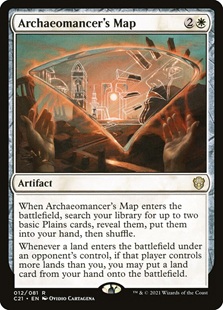
In this case, your goal was to play out lots of big Artifact cards, have them die, and then return them to the battlefield with Osgir for serious value. Very few discard outlets appear in the deck to help enable this, though cards like Faithless Looting and Daretti, Scrap Savant do an excellent job of this all the same.
Prismari Performance
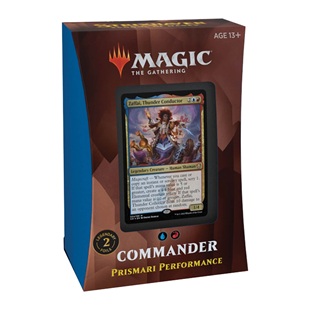 | 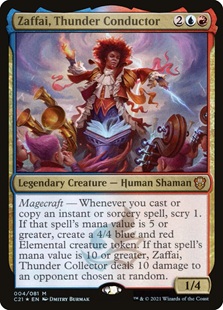 | 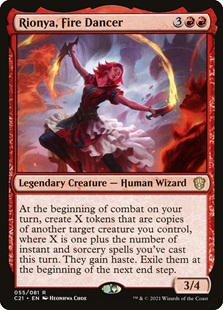 |
While Prismari in the main Strixhaven set aims to encourage a "big spells" strategy, it doesn't provide many payoffs. Instead, you'll find those payoffs right here in the Prismari Performance precon, especially with the face Commander Zaffai, Thunder Conductor.
Prismari Performance | Commander | Wizards of the Coast
- Commander (1)
- 1 Zaffai, Thunder Conductor
- Creatures (20)
- 1 Charmbreaker Devils
- 1 Crackling Drake
- 1 Dazzling Sphinx
- 1 Diluvian Primordial
- 1 Dualcaster Mage
- 1 Erratic Cyclops
- 1 Etali, Primal Storm
- 1 Humble Defector
- 1 Inferno Project
- 1 Living Lore
- 1 Naru Meha, Master Wizard
- 1 Octavia, Living Thesis
- 1 Radiant Performer
- 1 Rionya, Fire Dancer
- 1 Rootha, Mercurial Artist
- 1 Sly Instigator
- 1 Storm-Kiln Artist
- 1 Talrand, Sky Summoner
- 1 Veyran, Voice of Duality
- 1 Wildfire Devils
- Planeswalkers (1)
- 1 Jaya Ballard
- Instants (8)
- 1 Aetherspouts
- 1 Brainstorm
- 1 Dig Through Time
- 1 Fiery Fall
- 1 Reinterpret
- 1 Resculpt
- 1 Seething Song
- 1 Traumatic Visions
- Sorceries (21)
- 1 Aether Gale
- 1 Apex of Power
- 1 Blasphemous Act
- 1 Brass's Bounty
- 1 Call the Skybreaker
- 1 Creative Technique
- 1 Elemental Masterpiece
- 1 Epic Experiment
- 1 Expressive Iteration
- 1 Faithless Looting
- 1 Fiery Encore
- 1 Inspiring Refrain
- 1 Mana Geyser
- 1 Mind's Desire
- 1 Muse Vortex
- 1 Ponder
- 1 Rousing Refrain
- 1 Serum Visions
- 1 Surge to Victory
- 1 Treasure Cruise
- 1 Volcanic Vision
- Enchantments (3)
- 1 Metallurgic Summonings
- 1 Sunbird's Invocation
- 1 Swarm Intelligence
- Artifacts (9)
- 1 Arcane Signet
- 1 Elementalist's Palette
- 1 Hedron Archive
- 1 Izzet Signet
- 1 Letter of Acceptance
- 1 Mind Stone
- 1 Pyromancer's Goggles
- 1 Sol Ring
- 1 Talisman of Creativity
- Lands (37)
- 9 Mountain
- 10 Island
- 1 Blighted Cataract
- 1 Command Tower
- 1 Desert of the Fervent
- 1 Desert of the Mindful
- 1 Exotic Orchard
- 1 Forgotten Cave
- 1 Izzet Boilerworks
- 1 Lonely Sandbar
- 1 Mage-Ring Network
- 1 Memorial to Genius
- 1 Myriad Landscape
- 1 Prismari Campus
- 1 Reliquary Tower
- 1 Scavenger Grounds
- 1 Shivan Reef
- 1 Study Hall
- 1 Temple of Epiphany
- 1 Temple of the False God
The deck both encourages you to cast plenty of big spells and gives you the setup to do so. Some of the ways to do so, however, are a bit dubious - namely with the inclusion of Elementalist's Palette.
Quantum Quandrix
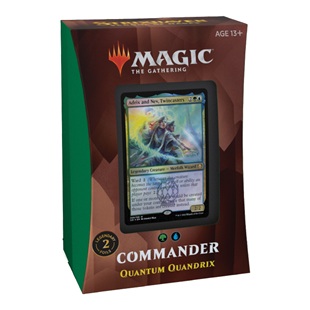 | 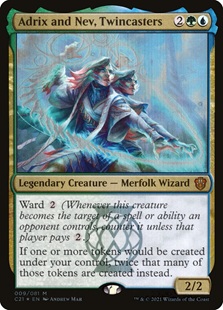 | 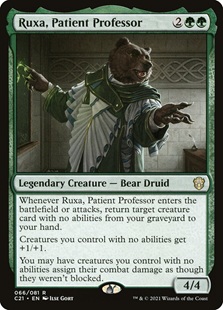 |
This deck is a textbook example of how Green-Blue decks embody the Good Stuff philisophy.
Quantum Quandrix | Commander | Wizards of the Coast
- Commander (1)
- 1 Adrix and Nev, Twincasters
- Creatures (28)
- 1 Arashi, the Sky Asunder
- 1 Biomathematician
- 1 Champion of Wits
- 1 Coiling Oracle
- 1 Crafty Cutpurse
- 1 Curiosity Crafter
- 1 Deekah, Fractal Theorist
- 1 Desolation Twin
- 1 Esix, Fractal Bloom
- 1 Forgotten Ancient
- 1 Guardian Augmenter
- 1 Hornet Nest
- 1 Hornet Queen
- 1 Hydra Broodmaster
- 1 Incubation Druid
- 1 Kaseto, Orochi Archmage
- 1 Kazandu Tuskcaller
- 1 Managorger Hydra
- 1 Master Biomancer
- 1 Plaxcaster Frogling
- 1 Quandrix Cultivator
- 1 Rampaging Baloths
- 1 Reef Worm
- 1 Ruxa, Patient Professor
- 1 Spawning Kraken
- 1 Terastodon
- 1 Trygon Predator
- 1 Zimone, Quandrix Prodigy
- Planeswalkers (1)
- 1 Garruk, Primal Hunter
- Instants (9)
- 1 Beast Within
- 1 Biomass Mutation
- 1 Commander's Insight
- 1 Eureka Moment
- 1 Krosan Grip
- 1 Perplexing Test
- 1 Rapid Hybridization
- 1 Return of the Wildspeaker
- 1 Theoretical Duplication
- Sorceries (12)
- 1 Curse of the Swine
- 1 Ezuri's Predation
- 1 Golden Ratio
- 1 Incubation // Incongruity
- 1 Kodama's Reach
- 1 Nissa's Expedition
- 1 Oversimplify
- 1 Rampant Growth
- 1 Replication Technique
- 1 Rite of Replication
- 1 Shamanic Revelation
- 1 Spitting Image
- Enchantments (2)
- 1 Paradox Zone
- 1 Primal Empathy
- Artifacts (7)
- 1 Arcane Signet
- 1 Fractal Harness
- 1 Geometric Nexus
- 1 Idol of Oblivion
- 1 Sequence Engine
- 1 Simic Signet
- 1 Sol Ring
- Lands (40)
- 10 Island
- 11 Forest
- 1 Blighted Woodland
- 1 Command Tower
- 1 Exotic Orchard
- 1 Llanowar Reborn
- 1 Lonely Sandbar
- 1 Lumbering Falls
- 1 Mosswort Bridge
- 1 Myriad Landscape
- 1 Novijen, Heart of Progress
- 1 Opal Palace
- 1 Oran-Rief, the Vastwood
- 1 Quandrix Campus
- 1 Rogue's Passage
- 1 Simic Growth Chamber
- 1 Study Hall
- 1 Temple of Mystery
- 1 Temple of the False God
- 1 Tranquil Thicket
- 1 Yavimaya Coast
As you can see, it's packed with mana ramp, card draw, and token generation. The latter acts as a core fixture of the deck thanks to its face Commander, Adrix and Nev, Twincasters, who have gone on to become a fairly popular option both at the helm and in the 99 of many Commander decks.
Silverquill Statement
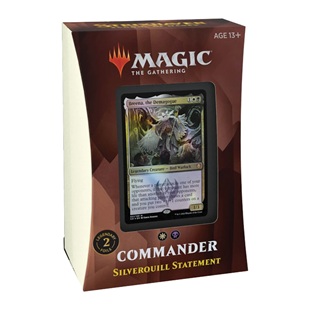 |  | 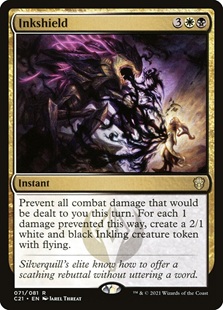 |
As Silverquill in Strixhaven took a more Aggro-based approach involving +1/+1 counters, the Silverquill Statement precon takes a similar approach.
This precon was famously created with heavy involvement by the late Sheldon Mennery. He designed the card Inkshield and was so proud of it, that he would later become immortalized on a Secret Lair printing of the card in 2024.
Silverquill Statement | Commander | Wizards of the Coast
- Commander (1)
- 1 Breena, the Demagogue
- Creatures (26)
- 1 Angel of Serenity
- 1 Author of Shadows
- 1 Bold Plagiarist
- 1 Boreas Charger
- 1 Combat Calligrapher
- 1 Deathbringer Liege
- 1 Deathbringer Regent
- 1 Elite Scaleguard
- 1 Fain, the Broker
- 1 Felisa, Fang of Silverquill
- 1 Guardian Archon
- 1 Hunted Lammasu
- 1 Keen Duelist
- 1 Knight of the White Orchid
- 1 Magister of Worth
- 1 Necropolis Regent
- 1 Nils, Discipline Enforcer
- 1 Oreskos Explorer
- 1 Orzhov Advokist
- 1 Scholarship Sponsor
- 1 Selfless Squire
- 1 Stalking Leonin
- 1 Sunscorch Regent
- 1 Teysa, Envoy of Ghosts
- 1 Windborn Muse
- 1 Zetalpa, Primal Dawn
- Planeswalkers (1)
- 1 Gideon, Champion of Justice
- Instants (5)
- 1 Fracture
- 1 Inkshield
- 1 Oblation
- 1 Stinging Study
- 1 Utter End
- Sorceries (6)
- 1 Ambition's Cost
- 1 Incarnation Technique
- 1 Infernal Offering
- 1 Promise of Loyalty
- 1 Secret Rendezvous
- 1 Tragic Arrogance
- Enchantments (11)
- 1 Citadel Siege
- 1 Cunning Rhetoric
- 1 Curse of Disturbance
- 1 Debtors' Knell
- 1 Duelist's Heritage
- 1 Ghostly Prison
- 1 Martial Impetus
- 1 Parasitic Impetus
- 1 Soul Snare
- 1 Together Forever
- 1 Vow of Duty
- Artifacts (10)
- 1 Arcane Signet
- 1 Bloodthirsty Blade
- 1 Coveted Jewel
- 1 Mind Stone
- 1 Orzhov Signet
- 1 Pendant of Prosperity
- 1 Sol Ring
- 1 Spectral Searchlight
- 1 Tempting Contract
- 1 Victory Chimes
- Lands (40)
- 10 Swamp
- 14 Plains
- 1 Barren Moor
- 1 Bojuka Bog
- 1 Caves of Koilos
- 1 Command Tower
- 1 Exotic Orchard
- 1 Mikokoro, Center of the Sea
- 1 Myriad Landscape
- 1 Opal Palace
- 1 Orzhov Basilica
- 1 Rogue's Passage
- 1 Secluded Steppe
- 1 Silverquill Campus
- 1 Study Hall
- 1 Tainted Field
- 1 Temple of Silence
- 1 Temple of the False God
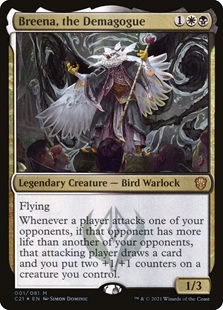
Thanks to the main Commander, Breena, the Demagogue, the deck also manages to take on a more political approach to its gameplay. It encourages your opponents to attack one another as both you and them profit by doing so while you build your board.
Witherbloom Witchcraft
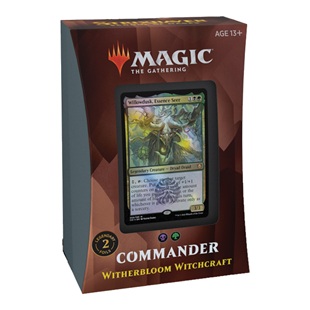 |  | 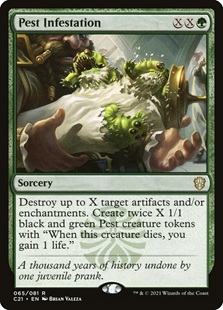 |
While the main set aspect of Witherbloom leans into the combination of life gain and Creature sacrifice, the Witherbloom Witchcraft goes all in on the former.
Witherbloom Witchcraft | Commander | Wizards of the Coast
- Commander (1)
- 1 Willowdusk, Essence Seer
- Creatures (23)
- 1 Ageless Entity
- 1 Bloodthirsty Aerialist
- 1 Bloodtracker
- 1 Blossoming Bogbeast
- 1 Defiant Bloodlord
- 1 Dina, Soul Steeper
- 1 Epicure of Blood
- 1 Ezzaroot Channeler
- 1 Gluttonous Troll
- 1 Gyome, Master Chef
- 1 Honor Troll
- 1 Leyline Prowler
- 1 Marshland Bloodcaster
- 1 Noxious Gearhulk
- 1 Sangromancer
- 1 Sapling of Colfenor
- 1 Silversmote Ghoul
- 1 Sproutback Trudge
- 1 Tivash, Gloom Summoner
- 1 Vampire Nighthawk
- 1 Veinwitch Coven
- 1 Verdant Sun's Avatar
- 1 Yedora, Grave Gardener
- Planeswalkers (1)
- 1 Ob Nixilis Reignited
- Instants (4)
- 1 Mortality Spear
- 1 Pulse of Murasa
- 1 Reckless Spite
- 1 Suffer the Past
- Sorceries (13)
- 1 Ancient Craving
- 1 Cultivate
- 1 Damnable Pact
- 1 Deadly Tempest
- 1 Essence Pulse
- 1 Feed the Swarm
- 1 Gaze of Granite
- 1 Healing Technique
- 1 Nissa's Renewal
- 1 Pest Infestation
- 1 Rampant Growth
- 1 Revival Experiment
- 1 Taste of Death
- Enchantments (6)
- 1 Blight Mound
- 1 Gift of Paradise
- 1 Greed
- 1 Moldervine Reclamation
- 1 Sanguine Bond
- 1 Trudge Garden
- Artifacts (12)
- 1 Alhammarret's Archive
- 1 Arcane Signet
- 1 Druidic Satchel
- 1 Elixir of Immortality
- 1 Loxodon Warhammer
- 1 Paradise Plume
- 1 Pristine Talisman
- 1 Sol Ring
- 1 Sun Droplet
- 1 Talisman of Resilience
- 1 Venser's Journal
- 1 Well of Lost Dreams
- Lands (40)
- 11 Forest
- 11 Swamp
- 1 Blighted Woodland
- 1 Command Tower
- 1 Exotic Orchard
- 1 Gingerbread Cabin
- 1 Golgari Rot Farm
- 1 High Market
- 1 Jungle Hollow
- 1 Llanowar Wastes
- 1 Myriad Landscape
- 1 Radiant Fountain
- 1 Rogue's Passage
- 1 Sapseep Forest
- 1 Study Hall
- 1 Tainted Wood
- 1 Temple of Malady
- 1 Temple of the False God
- 1 Witch's Clinic
- 1 Witherbloom Campus
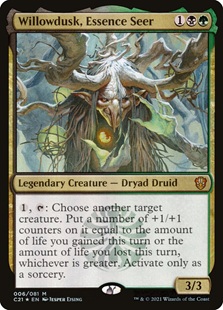
The more life you gain, the more benefits you can provide to your board, with the face Commander Willowdusk, Essence Seer providing lots of +1/+1 counters along the way. This combined with the plethora of removal and painful card draw makes for a fun and engaging synergy-heavy precon.
Tournament Decks of the Era
Strixhaven: School of Mages is one of the sets that was released in the middle of the COVID-19 pandemic. There wasn't much paper play for the set due to regulations preventing large gatherings.
The first major paper event of this era wouldn't happen until the ChannelFireball-run event in Las Vegas would take place in November around the release of Innistrad: Crimson Vow.
Most events were played digitally at this time, including Pro Tour-level events and the World Championship. Despite the online-only presence, there are still a handful of noteworthy decks of the era.
Very few cards from Strixhaven were making an impact around the time of its release, though. This was because powerful sets like Throne of Eldraine and Ikoria: Lair of Behemoths were continuing to dominate.
Because of that, I'll focus on other formats instead, including the MTG Arena-exclusive Historic format, which gained a lot from the Mystical Archive expansion.
Jeskai Turns
 | 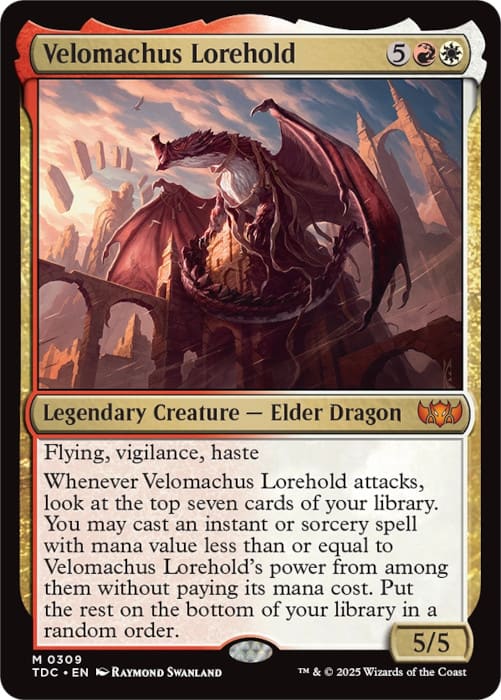 | 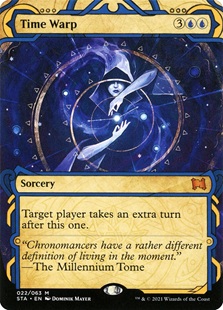 |
This deck, originally from Sam Pardee, used the powerful Velomachus Lorehold in combination with Time Warp to repeatedly take turns and kill your opponent fast.
Jeskai Turns | Historic | Sam Pardee, 1st Place Strixhaven Championship
- Creatures (2)
- 2 Velomachus Lorehold
- Instants (16)
- 4 Brainstorm
- 4 Magma Opus
- 4 Memory Lapse
- 4 Prismari Command
- Sorceries (14)
- 2 Expressive Iteration
- 4 Indomitable Creativity
- 4 Mizzix's Mastery
- 4 Time Warp
- Enchantments (2)
- 2 Shark Typhoon
- Lands (26)
- 2 Island
- 6 Mountain
- 2 Sulfur Falls
- 4 Dwarven Mine
- 4 Fabled Passage
- 4 Raugrin Triome
- 4 Steam Vents
- Sideboard (15)
- 1 Aether Gust
- 2 Commence the Endgame
- 2 Fry
- 2 Perilous Voyage
- 2 Shark Typhoon
- 3 Anger of the Gods
- 3 Mystical Dispute
You would set this up with Control spells such as Memory Lapse while making Treasures with Magma Opus and Prismari Command. You'd then cast Indomitable Creativity on the tokens to find Velomachus Lorehold or else just cast it outright if it was in your hand.
With every attack of Lorehold, you'd try to find a copy of Time Warp, which you could also set up effectively thanks to the addition of Brainstorm to the deck. Even if you couldn't hit a Time Warp, finding a Mizzix's Mastery would often do the trick just fine as it allowed you to re-cast copies you already played.
This would often let you take out your opponents fast thanks to the Combo nature of this setup. It proved so strong, in fact, that it would lead to the banning of Time Warp in Historic as well as present strong evidence for the banning of Brainstorm and Memory Lapse.
Tainted Oracle
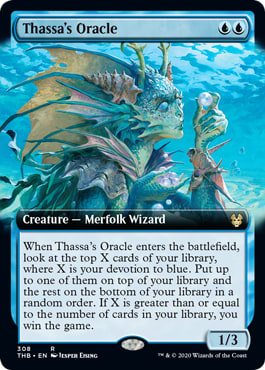 | 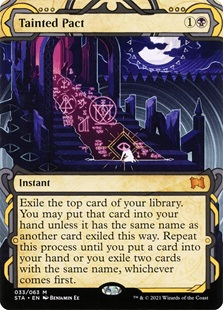 |  |
The Jeskai Turns deck wasn't the only powerful deck enabled by cards in the Mystical Archives bonus sheet. There was also Zan Syed's Tainted Oracle.
Tainted Oarcle | Historic | Zan Syed, 1st Place Hooglandia Open
- Creatures (7)
- 1 Augur of Bolas
- 1 Bonecrusher Giant
- 1 Crackling Drake
- 1 Fae of Wishes
- 1 Sea Gate Stormcaller
- 2 Thassa's Oracle
- Planeswalkers (2)
- 1 Jace, Wielder of Mysteries
- 1 Narset, Parter of Veils
- Instants (16)
- 1 Baleful Mastery
- 1 Behold the Multiverse
- 1 Brainstorm
- 1 Censor
- 1 Cling to Dust
- 1 Fatal Push
- 1 Heartless Act
- 1 Memory Lapse
- 1 Opt
- 1 Pact of Negation
- 1 Prismari Command
- 1 Silundi Vision // Silundi Isle
- 1 Supreme Will
- 1 Valakut Awakening // Valakut Stoneforge
- 2 Tainted Pact
- Sorceries (9)
- 1 Anger of the Gods
- 1 Bloodchief's Thirst
- 1 Inquisition of Kozilek
- 1 Languish
- 1 Mastermind's Acquisition
- 1 Solve the Equation
- 1 Storm's Wrath
- 1 Sweltering Suns
- 1 Thoughtseize
- Enchantments (1)
- 1 Search for Azcanta // Azcanta, the Sunken Ruin
- Artifacts (3)
- 1 Coldsteel Heart
- 1 Mazemind Tome
- 1 Wishclaw Talisman
- Lands (22)
- 1 Island
- 1 Mountain
- 1 Swamp
- 1 Snow-Covered Island
- 1 Snow-Covered Swamp
- 1 Blightstep Pathway // Searstep Pathway
- 1 Blood Crypt
- 1 Canyon Slough
- 1 Clearwater Pathway // Murkwater Pathway
- 1 Dragonskull Summit
- 1 Drowned Catacomb
- 1 Evolving Wilds
- 1 Fabled Passage
- 1 Fetid Pools
- 1 Raugrin Triome
- 1 Riverglide Pathway // Lavaglide Pathway
- 1 Spirebluff Canal
- 1 Steam Vents
- 1 Sulfur Falls
- 1 Temple of Deceit
- 1 Watery Grave
- 1 Zagoth Triome
Players familiar with cEDH quickly realized that you could combine both Tainted Pact and Thassa's Oracle to win the game. With a singleton deck, Pact can exile your entire library, letting Oracle immediately close the game. And thanks to plenty of cantrips and tutors, building that way isn't much of a drawback.
The deck had one interesting issue, though, in that Arena's rope mechanic often made it hard to pull the combo off properly at times. This could cause players to unsuccessfully finish their Tainted Pact progression by the time the ropes ran out.
The power and play issues of the deck would lead to Thassa's Oracle being banned in Historic. Tainted Pact is still legal, however, if you want to try making it work alongside Jace, Wielder of Mysteries instead.
Goblin Combo
Goblins have always been a deck in Pauper, though they previously took the form of an all-in Mono-Red Aggro deck. While it mostly featured Goblin Creatures, it would often be known as Red Deck wins thanks to the inclusion of cards like Jackal Familiar and Valley Dasher.
Here, the Hamuda deck combined First Day of Class with Putrid Goblin.
Goblin Combo | Pauper | Hamuda, 2nd Place MTGO Pauper Challenge
- Creatures (16)
- 1 Flamewake Invoker
- 1 Goblin Sledder
- 2 Impulsive Pilferer
- 4 Goblin Matron
- 4 Putrid Goblin
- 4 Skirk Prospector
- Instants (8)
- 1 Pyromantics
- 1 Shred Memory
- 2 Manamorphose
- 4 First Day of Class
- Sorceries (17)
- 2 Ransack the Lab
- 3 Faithless Looting
- 4 Duress
- 4 Night's Whisper
- 4 Unearth
- Lands (19)
- 4 Swamp
- 6 Mountain
- 2 Ash Barrens
- 3 Rakdos Carnarium
- 4 Bloodfell Caves
If you cast a copy of First Day of Class during your combo turn, Putrid Goblin's Persist ability putting a -1/-1 counter on it would be negated. This allows you to then repeatedly sacrifice it to Skirk Prospector to generate infinite Red mana.
With this mana, you can cast a variety of cards to help sift through your deck in search of one of two cards: Goblin Sledder or Flamewake Invoker.
Goblin Sledder allows you to sacrifice the Putrid Goblin for power-ups instead of mana to go for a kill-shot. Ideally, though, you'd simply want to find the Flamewake Invoker and deal infinite damage straight to your opponent's face.
This deck is quite fragile with a number of interaction points, though it has remained a fan favorite in the years since Strixhaven's release.
Weird Facts
Here are a few interesting bits of trivia from Strixhaven: School of Mages. It's a newer set, so there's less to pull from, but there are still some fun details that stand out.
Abundant Harvest
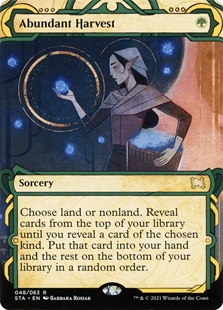 | 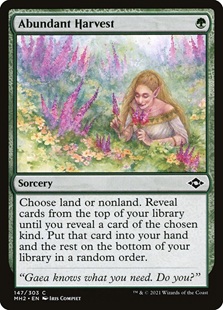 |
While the Mystical Archive set was made up primarily of reprints, there was one unusual exception: a single pre-print.
The card Abundant Harvest was first printed in this set, as a little hint at what was coming in a future release. Players wouldn't need to wait long to see where it was from, as it was included in Modern Horizons 2 just a few months later as a Common.
Interestingly, this was the second time this happened in 2021. In the lead-up to Time Spiral Remastered, the old-frame copy of Cranial Plating could be found in Kaldheim Set Boosters as part of The List featuring the Time Spiral Remastered set symbol.
Crux of Fate Controversy
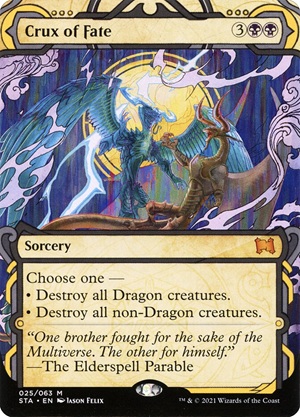
Thanks to the artist Scarypet, it came to the public's attention that some fan art of Nicol Bolas done by them was used in the art for the non-Japanese print of Crux of Fate. Many elements of Nicol Bolas were pretty much one-to-one with a direct visual comparison, though their positioning was slightly altered.
Additionally, many players quickly realized that the Ugin in the piece was directly lifted from Raymond Swanland's art for Ugin, the Spirit Dragon.
The artist, Jason Felix, released an apology online noting that he did it in a moment of weakness due to being overworked. Unfortunately, this meant little to most and led to Wizards no longer commissioning pieces from him. They continue to reprint his older pieces.
His last Magic artworks would be Arcane Infusion and Mask of Griselbrand in Innistrad: MIdnight Hunt.
Digital Exclusive Rebalances
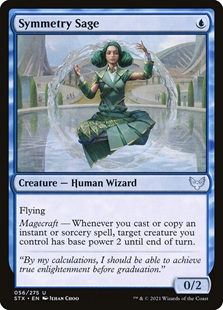 | 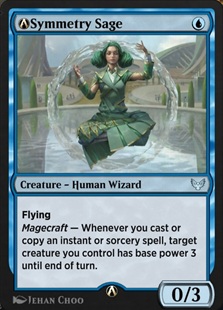 |
Ten cards from Strixhaven eventually received digital rebalances to make them a bit better in formats like Historic and Alchemy. This notably led to Symmetry Sage becoming a major player in Historic's Izzet Wizards deck.
The original version of the card is a 0/2 normally and turns into a 2/2 when you cast a spell. The rebalanced version starts as a 0/3 that turns into a 3/3, which made for an extremely efficient threat in multiples and dominated the meta at the time.
Minor Text Errors
A handful of cards have a handful of misprinted text variants.
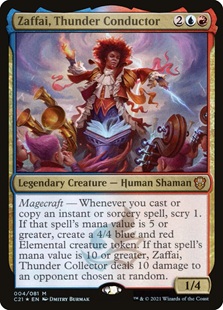 | 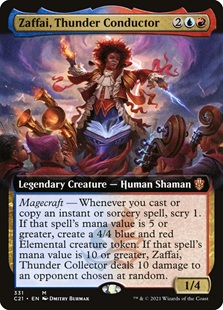 |
The Commander 2021 printing of Zaffai, Thunder Conductor accidentally refers to itself as "Zaffai, Thunder Collector" in its text box. This is true on all three versions of the card, including the normal version, the Extended Art version, and the thick Display Commander printing.
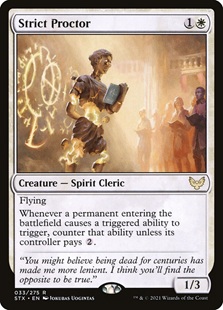 | 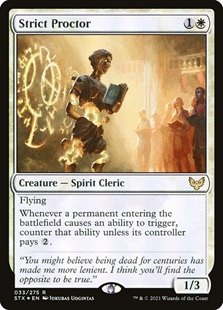 |
The foil, non-Extended Art version of Strict Proctor also had a minor error in its text box. Rather than saying "causes a triggered ability to trigger" it says "causes an ability to trigger." This is an extremely minor error that could be easily missed unless you were seriously looking for it.
Conclusion
Strixhaven: School of Mages came out at a rough time in Magic's history. No one could plan for a global pandemic ahead of the set's release and you'd be forgiven if you thought the set did somewhat poorly as a result.
Despite the setbacks, Strixhaven would go on to be a slam dunk. Wizards took note of this leading to the more recent Secrets of Strixhaven in one of the shortest turnarounds for a return set ever.
I hope you have enjoyed this retrospective on Magic's take on the classic Magical School trope. It will be interesting to see where the next chapter takes us.
Paige Smith
Bluesky: https://bsky.app/profile/themaverickgirl.bsky.social
Twitch: twitch.tv/themaverickgirl
YouTube: TheMaverickGal