


 Locations



I've been playing Magic: The Gathering for 27 years now and I've enjoyed the game through all its ups and downs. Through both the good and the bad, there's always some element from a specific point in time that I love to talk about.
I don't just love talking about the game's past, though. I love hearing others talk about it as well.
I'm a big fan of audio/visual form retrospectives such as The Resleevables, Shivam and Wheeler Love Magic, Mark Rosewater's Drive to Work, and Rhystic Studies. I'll often listen to them while I'm working or while I'm driving, and I enjoy the additional insight and thoughts they provide while looking back at the game's long line of releases.
Given this, I've wanted to start producing my own retrospective write-ups for a wide array of sets from Magic's rich history.
Today, I'm going to kick this off with one of my favorite sets of all time: Modern Masters - the original 2013 release.
What is Modern Masters?
Modern Masters was an experiment.
The Modern format was officially announced in May 2011, spanning every release from Eighth Edition and Mirrodin onward. Extended was failing as a format and Modern was created as an experiment to try and replace it. Naturally, it succeeded.
However, there was a small problem. Many cards from this format hadn't been reprinted in years. Worse still, some of the sets of this era - especially Time Spiral block and Lorwyn-Shadowmoor blocks - sold rather poorly. As a result, players needed better access to the format's cards.
Enter Modern Masters.
This set was designed to provide players with a specialty reprint-only set to put these cards into players' hands. It would be full of powerful cards and - if successful - would provide Wizards with a new way to reprint rare and difficult to obtain cards.
There was just one problem. The only other time Wizards did this that wasn't for a Core Set was for the set Chronicles. In case you're unfamiliar with the history of that set, it demolished the value of players' collections, caused the creation of the infamous Reserved List, and led to WotC swearing off similar releases going forward.
Time seems to have eased WotC's stance on the last part at least. Thus, we got Modern Masters as an attempt to see if they could make it work.
Just to be on the safe side, the release would be extremely limited. Make no mistake - it was. Many stores barely got a couple of cases and could hardly run drafts, but it was worth it.
Modern Masters lived up to the hype and then some. I couldn't stop drafting it whenever I got the chance and cracking packs just felt awesome. The huge gamble led to Wizards continuing the Masters line for years to come.
Modern Masters (2013) Essential Info
Modern Masters was released on June 7th, 2013 between the release of Dragon's Maze and Magic 2014. While I was unable to find a specific date, it also released around this time on Magic Online for a limited time.
The set was announced in a video played on October 20, 2012 during Pro Tour Return to Ravnica. Over the next year, further info was revealed including a few brief announcement articles following PTRTR and packaging reveals which showcased new art in 2013.
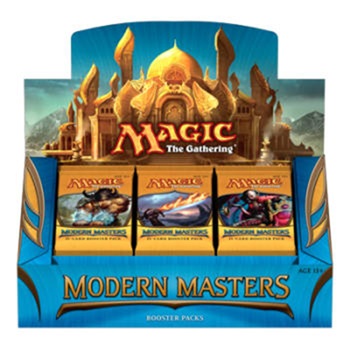
Unlike many sets then and now, it was released exclusively in Booster Packs (and, similarly, Booster Boxes).
Each Booster Pack of 15 cards had a MSRP of $6.99 both in paper and on MTGO. In place of the Basic Land that appears in traditional Booster Packs, a premium foil card was included in each Pack.
Booster Boxes featured an unusual design and included only 24 packs per box - perfect for a draft and to ease the cost for local game stores.
Despite this MSRP, many stores would charge higher amounts due to the set's notoriously low print run. As a result, the typical market price appeared to be about $10 per pack, which was later reflected in the MSRP for Modern Masters 2015. The $6.99 pricing would continue for all Masters-level releases on Magic Online going forward.
Modern Masters was designed by the following team:
- Max McCall
- Erik Lauer
- Ryan Spain
- Shawn Main
- Aaron Forsythe
While many sets often have different design and development teams, the development team for this set was the same as the design team.
Limited Archetypes
Modern Masters Limited is well known for its incredible Draft environment, provided you could find the product to play, that is.
I know that I personally loved the format. Whenever I could play it in person or on Magic Online I would spend plenty of time doing so. The richness of the various Limited archetypes played a huge role in making it as good as it was.
Now, let's talk about each of the ten archetypes in Modern Masters (2013).
Azorius (
 ) - Artifacts
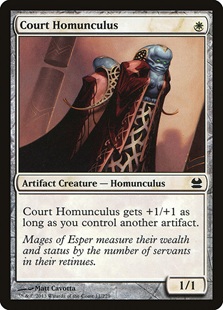 | 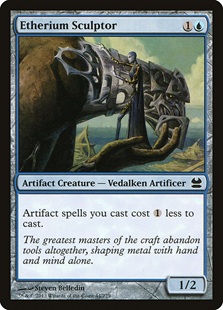 | 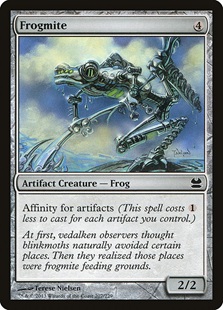 |
The Azorius strategy for this set focused on Artifact synergy. This primarily utilized cards from Mirrodin block and Alara block, as both had plenty of powerful Artifacts and Artifact creatures.
Very little was used in terms of classic Affinity cards, though Frogmite still managed to make an appearance all the same.
Orzhov ( ) - Rebels
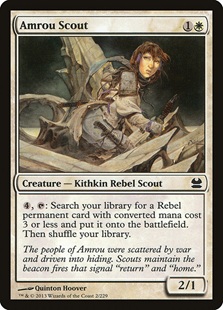 |  | 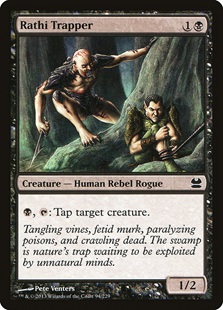 |
Rebels was a classic archetype of a bygone era at the turn of the millennium. This led to it being brought back throughout the Time Spiral block in a variety of cards.
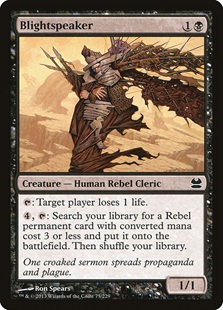
Modern Masters takes this subset of cards and boils them down to the best of the best. While each card may look somewhat innocuous on its own, the ability to search up other Rebels allows you to dominate games.
If you ever get to play Modern Masters or Time Spiral Remastered Limited, do not sleep on Blightspeaker.
Dimir () - Faeries
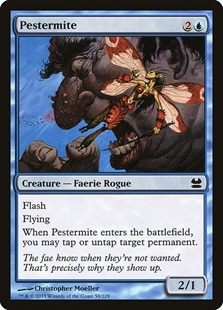 | 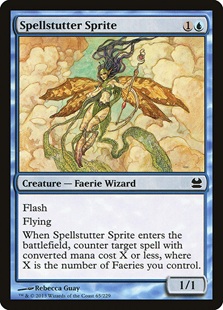 | 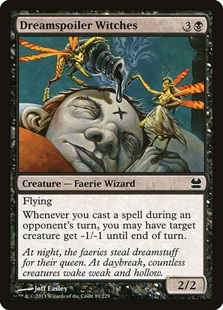 |
Faeries were a mainstay of the Lorwyn era. Many of these cards proved powerful in the block's Limited formats as well as the Standard format of the time.
Naturally, this means they make for formidable plays game after game. Flash in Faeries with splashy abilities and use cards like Dreamspoiler Witches to synergize as you do to drown your opponents in value.
Izzet ( ) - Splice into Arcane
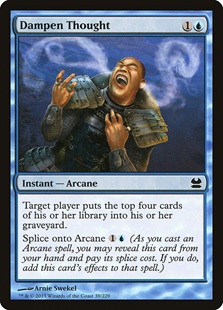 | 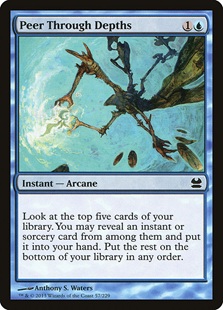 | 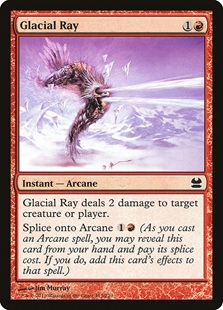 |
Splice onto Arcane is one of the weirdest mechanics from the original Kamigawa block. Not only that, but it's one of the most infamous examples of a parasitic mechanic in the game's history.
This makes it an unconventional choice for a Limited archetype, but a surprisingly potent one as well. This was achieved by downshifting Dampen Thought from Uncommon to Common. Doing this provided a truly viable win condition for the deck, allowing you to decimate opponents' libraries in record time.
Rakdos () - Goblins
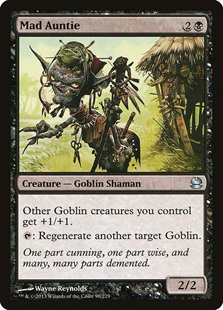 | 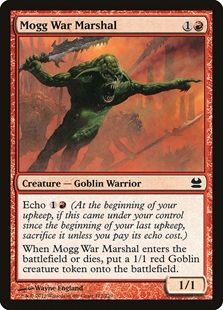 | 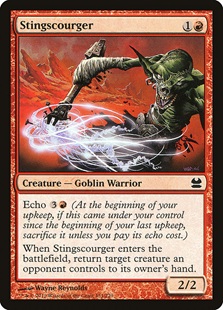 |
While Faeries only really showed up en masse in Lorwyn block, with a handful of appearances in other sets, Goblins have been everywhere. During this period in Magic's history, you'd be hard-pressed to find a set that didn't have Goblins in some form or fashion.
As a result, Goblins makes for an especially interesting archetype here. Many of the cards do end up coming from the Lorwyn era, but you can still find some other sweet inclusions like the powerful Stingscourger and Festering Goblin.
Golgari ( ) - Graveyard Synergy
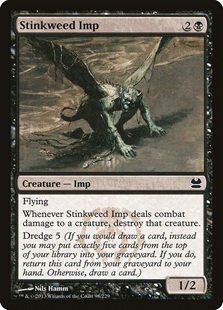 | 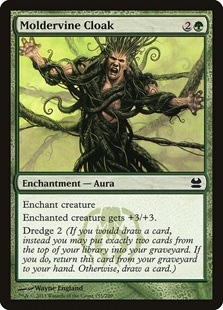 |  |
Do you like Dredge? Then this is the archetype for you.
This powerful Mechanic is used sparingly throughout the set, albeit still on some powerful cards. Stinkweed Imp, Moldervine Cloak, Greater Mossdog, and Dakmor Salvage provide your best options to Dredge with.
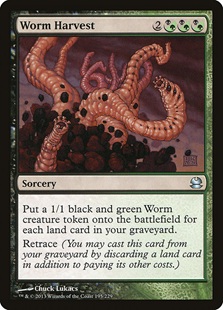
The real value, though, is in your other Graveyard synergies. These can include Bridge from Below, the handful of Delve cards in the set, or, better still the mighty Worm Harvest that will end games in no time flat.
Gruul () - Storm
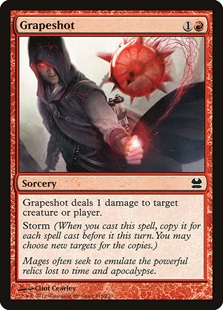 | 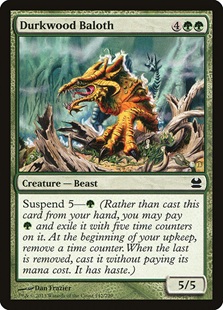 | 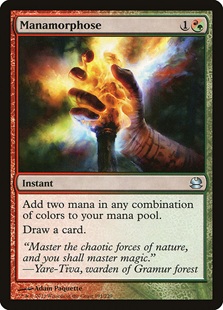 |
What's this? You can play Storm as a Limited archetype? In Modern Masters, you absolutely can.
The set features powerful Storm finishers like Grapeshot and Empty the Warrens at Common. More important, though, are the handful of Ritual effects in Desperate Ritual and Manamorphose.
When you combine these with a variety of Suspend spells, you can combo off with ease, making for a shockingly viable archetype.
Boros () - Giants
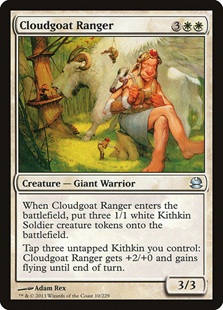 | 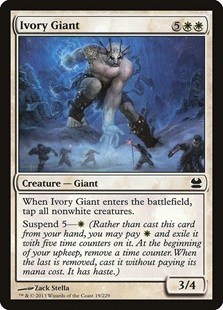 | 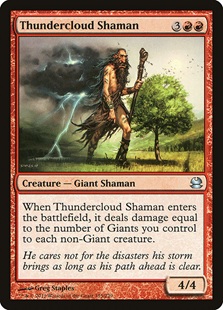 |
Typically, Boros archetypes tend to be low to the ground Aggressive decks. This couldn't be farther from the truth with Modern Masters where the focus is on big, expensive Giants.
Once again, this strategy gets a lot of shine from the Lorwyn sets with cards like Cloudgoat Ranger and Thundercloud Shaman acting as powerful game-ending effects. Use a variety of smaller cards to hold out until you can reach your big Giants.
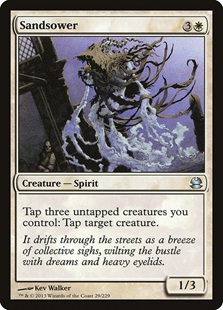
Selesnya () - Tokens
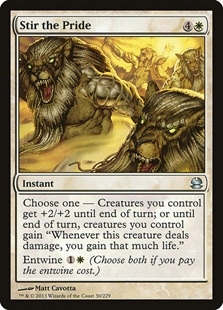 |  | 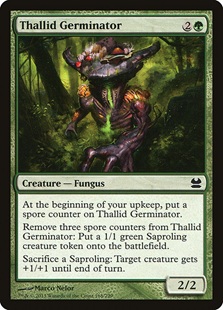 |
This archetype is exactly what it sounds like. You generate tons of tokens. Generally, you do this with the multitude of Thallids throughout the set, though cards like Cenn's Enlistment get the job done as well.
Once you swarm the board with plenty of small creatures, you can use them to use board pumping effects to take your opponents down. If you can't do that, using something like Sandsower to lock down opposing creatures works too. This allows you to continue building up your board until you can achieve victory.
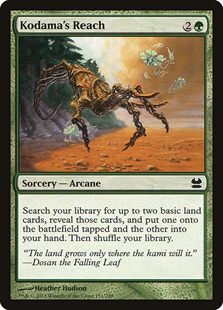
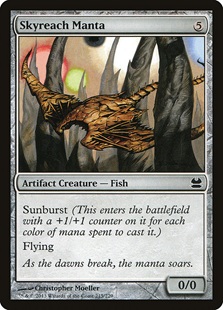
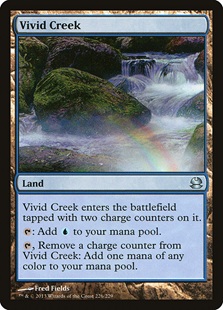
Simic - Ramp/Sunburst
 |  |  |
If you've played a bunch of Lorwyn Eclipsed Limited, this will likely look a bit familiar to you. It's more or less the Simic Vivid archetype for that set.
The main focus of Simic in this set is using cards like Kodama's Reach and Search for Tomorrow to ramp into your one-off lands. Using these and any Vivid lands you happen to pick up along the way, you can generate a variety of mana to maximize the different Sunburst cards throughout the set.
It's a difficult goal to pull off, but having access to this strategy allows for much better cohesion between the other archetypes in the process.
Major Cards
With each retrospective article, I'd like to take a moment and highlight some of the most iconic cards from the set.
You might think this a bit tricky for a set that only contains reprints, but that couldn't be further from the truth. In fact, every Masters release had a number of core chase cards everyone wanted for one reason or another. Looking back on the context that made them so desirable is part of the fun.
Here's six of the bigger reprints from the set as it was coming out (so sorry, Chalice of the Void).
Tarmogoyf
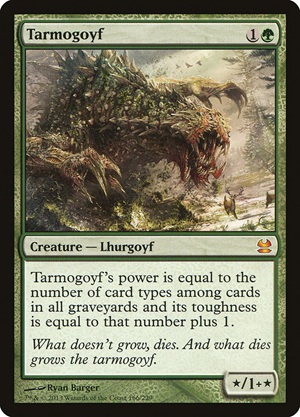
The biggest card of the set by a substantial margin was easily Tarmogoyf. Thanks to high demand, the card was the very first card revealed for the set.
This card was originally only printed in Future Sight - a small set at the end of a block which sold poorly. As a result, card availability of Tarmogoyf was quite limited when the Modern format was established.
Not only was Tarmogoyf a massive threat - often a 4/5 for two mana, if not bigger - it was difficult to remove from the board of at this point in time. Aside from some direct kill spells like Path to Exile, Doom Blade, and Smother, there wasn't a lot of ways to deal with this powerful beater.
As a result, copies of Tarmogoyf were commanding prices around $200 per copy at one point. That price would only go down marginally for the next few years until the eventual printing of Fatal Push in 2017.
Dark Confidant
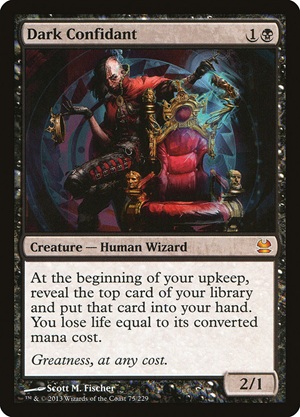
For a long time, Dark Confidant was frequently cited as the best Black two-drop of all time.
If the card came down early enough, it would frequently drown your opponent in card advantage. This was even more true if you could build your deck entirely around low mana value spells, ensuring the damage you take will be minimal.
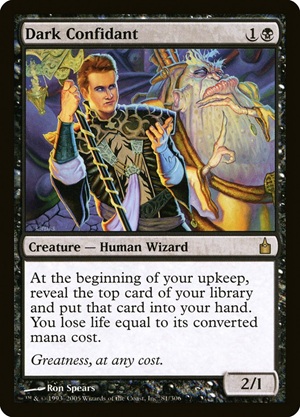
This particular printing of Dark Confidant also proved to be somewhat controversial due to its artwork. This original printing of the card in Ravnica: City of Guilds featured art of its designer and Magic Invitational winner Bob Maher. As a result, this card earned itself the nickname "Bob."
The Modern Masters printing did what many players considered unthinkable: replace the art with someone other than the Invitational winner. The art was first revealed on the Booster Pack art alongside new art for Sword of Fire and Ice, Vedalken Shackles, and City of Brass.
When players discovered it was for Dark Confidant, it was met with harsh criticism. Due to the distinct look of the subject in the art, versions with this art on them would come to be nicknamed "Skrillex" for some time.
Vendilion Clique
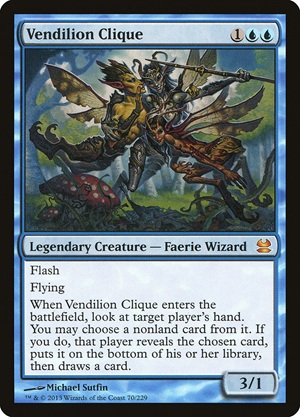
Vendilion Clique rounds out the three top-tier Mythic Rare cards from Modern Masters as one of the cards boasting the highest price tag in the set at time of release.
This was thanks to the role Vendilion Clique often played in a variety of decks including Control, Midrange, and Tempo. You would frequently cast it during your opponent's draw step to rip the best card out of their hand.
Afterward, you would be left with an extremely powerful, evasive threat that demanded an answer. However, if your opponents did have a way to answer it, you would often simply follow it up with another one and make it that much more difficult to close out the game.
These days, Vendilion Clique isn't nearly as playable. Nevertheless, it still gets plenty of love from longtime fans. This has resulted in notable reprints like its Secret Lair printing and the textless promo from Spotlight: Eclipsed accompanying Lorwyn Eclipsed.
Cryptic Command
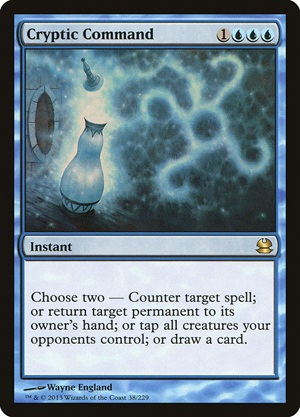
These days, Cryptic Command is too slow to be particularly relevant. After all, we now have cards like Counterspell and Force of Negation in the format. Who needs four mana to counter a spell?
At the time, though, Cryptic Command was the real deal. If you were playing a deck where Blue was a core color, odds were good that you were running multiple copies of the card.
As a result, Cryptic Command was far and away the hottest non-Mythic Rare card in the set. Players were eager to get more copies, and this reprint was a huge shot in the arm for Modern fans everywhere.
Arcbound Ravager
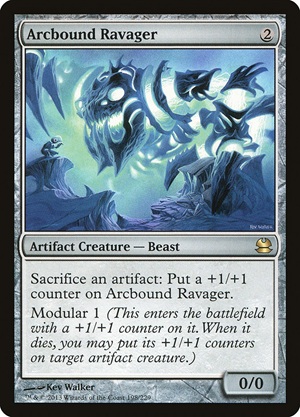
The other major non-Mythic Rare of the set was easily Arcbound Ravager.
This fearsome Beast absolutely devastated Mirrodin-era Standard thanks to the classic Ravager Affinity archetype. Naturally, a more current version of the deck was tearing up Modern after the format's creation.
This once again made Arcbound Ravager a red hot card in dire need of a reprint which it got here. Other Affinity staples of the era Blinkmoth Nexus and Glimmervoid also got reprints in the set, which made it all the more important to be able to source your Ravagers if you wanted to jam the classic Artifact Aggro gameplan.
The new art by Kev Walker was also seen as a wonderful new addition for a classic card, giving players a bit of choice between which version they preferred.
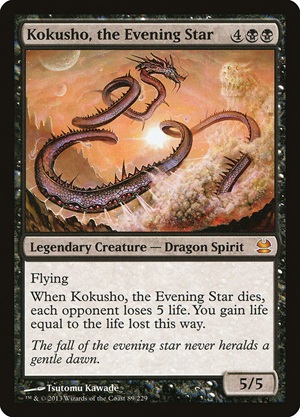
Kokusho, the Evening Star
While the primary focus of Modern Masters took aim squarely at bringing Modern staples into the hands of the players, it was clear that wasn't the only audience Wizards was catering to.
The Commander format was beginning to blossom at this time and Cubes were gaining in popularity. As a result, the set boasted a number of cards that appealed to fans of both while also managing to heighten the set's own Limited experience in the process.
A great, if somewhat controversial, example of this was putting all five Legendary Dragon Spirits from Champions of Kamigawa into the set. Some of them (Ryusei, the Falling Star and Jugan, the Rising Star) were seen as junk inclusions, especially at Mythic Rare, but Kokusho, the Evening Star turned out to be a timely reprint.
The card had just been unbanned in Commander, while remaining banned as an actual Commander, thereby allowing players to use it in their 99s and raising the price tremendously. In 2014, Kokusho was unbanned entirely when "banned as a commander" went away completely, making it even more hotly in demand.
Precons
Normally in these retrospectives, I'd like to highlight the various preconstructed decks that accompanied each release. Modern Masters was a fairly unique release for its time in that it was a strictly booster release, and therefore did not have any preconstructed products alongside it.
In an effort to help highlight the Modern format, though, Wizards did release a Modern-specific preconstructed item early in 2014. This item was the Modern Event Deck (aka March of the Multitudes) and is such a unique piece that it seems hard to talk about anywhere else. As such, let's take a look at it now.
The Modern Event Deck
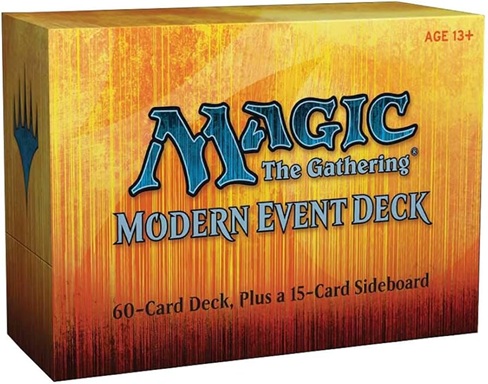
The Modern Event Deck was a product that riffed off of the existing Event Deck products of the era. These releases were aimed at giving newer players an option to be able to compete locally at the Friday Night Magic level.
If you're familiar with the Challenger Decks that have come and gone over the last eight years, they're similar to those. The difference is that Challenger Decks were usually based on existing and established archetypes. Event Decks were a bit more questionable as to whether or not they were based on a viable strategy or if they were just trying to come up with something interesting.
This deck met halfway, taking a lower-tier strategy and turning it into an easy-to-play list that could be presented in an affordable manner. Additionally, it provided players with a spindown die for tracking life, tokens, and - surprisingly - a pack of 80 sleeves featuring a foil Planeswalker symbol.
The Decklist
March of the Multitudes | Modern | Wizards of the Coast
- Creatures (5)
- 2 Soul Warden
- 3 Tidehollow Sculler
- Planeswalkers (1)
- 1 Elspeth, Knight-Errant
- Instants (10)
- 3 Path to Exile
- 3 Zealous Persecution
- 4 Raise the Alarm
- Sorceries (10)
- 2 Inquisition of Kozilek
- 4 Lingering Souls
- 4 Spectral Procession
- Enchantments (7)
- 3 Honor of the Pure
- 4 Intangible Virtue
- Artifacts (3)
- 1 Sword of Feast and Famine
- 2 Shrine of Loyal Legions
- Lands (24)
- 4 Swamp
- 5 Plains
- 1 Vault of the Archangel
- 2 City of Brass
- 4 Caves of Koilos
- 4 Isolated Chapel
- 4 Windbrisk Heights
- Sideboard (15)
- 2 Burrenton Forge-Tender
- 2 Dismember
- 2 Ghost Quarter
- 3 Duress
- 3 Kataki, War's Wage
- 3 Relic of Progenitus
The deck in question played off the Orzhov Tokens archetype, which would show up from time to time as a simple deck for players to pick up and play with.
Thanks to cards like Honor of the Pure and Intangible Virtue, it was quite easy to pump up your small tokens. You would generate these tokens simple spells like Raise the Alarm, Lingering Souls, and Spectral Procession.
A handful of other cards would offer you additional support. Soul Warden gains you a ton of life, Path to Exile is your spot removal, and Zealous Persecution wipes out plenty of other small Aggro decks. Additionally, the one-two punch of Inquisition of Kozilek and Tidehollow Sculler would rip apart your opponent's hand as you continued to build your board.
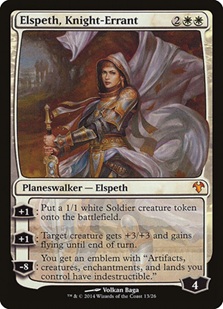 | 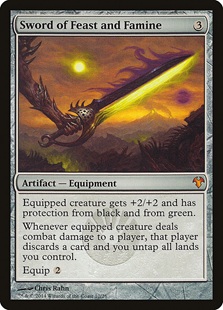 |
The deck also boasted single copies of both Elspeth, Knight-Errant and Sword of Feast and Famine. These added a tremendous amount to the value of the deck at the time and offered a small amount of support to your tokens.
The deck was criticized for its poor mana base, which lacked Shock Lands and Fetch Lands, as well as a lack of other powerful essentials like Dark Confidant and Thoughtseize. Without many of these cards, the deck struggles to compete. This ultimately resulted in several of these decks - released in limited quantities - to be opened for the valuable cards as opposed to playing with it.
Given the deck's high price tag ($74.99 MSRP), the product was seen as a flop and it's unlikely that Wizards returns to the concept in the future.
Tournament Decks of the Era
As I put together these retrospective pieces, I'd like to touch on the tournament decks you might see from around each release. This provides a fun snapshot into what decks looked like during a bygone era and highlights what made certain sets awesome.
This won't be something I can always do as some releases didn't have connected tournaments, but if possible, it makes for a fun addition.
In this case, Modern Masters was a 100% reprint set, so the release itself didn't necessarily impact a number of tournaments directly. However, I was able to find the results of Grand Prix Kansas City 2013. This event took place right around the release of Modern Masters and featured the Modern format. As such, I think it'd be great to look at a few decks from the event's Top 8.
Let's check three of them now.
Melira Pod
 |  |  |
Melira Pod | Modern | Seth Manfield, 1st Place GP Kansas City 2013
- Creatures (28)
- 1 Cartel Aristocrat
- 1 Eternal Witness
- 1 Orzhov Pontiff
- 1 Phyrexian Metamorph
- 1 Qasali Pridemage
- 1 Ranger of Eos
- 1 Reveillark
- 1 Spellskite
- 1 Viscera Seer
- 1 Wall of Roots
- 2 Melira, Sylvok Outcast
- 2 Murderous Redcap
- 3 Deathrite Shaman
- 3 Voice of Resurgence
- 4 Birds of Paradise
- 4 Kitchen Finks
- Instants (5)
- 2 Abrupt Decay
- 3 Chord of Calling
- Artifacts (4)
- 4 Birthing Pod
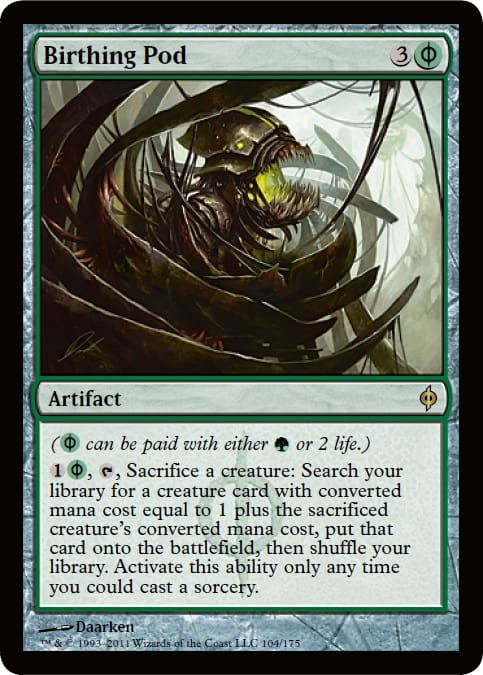
Birthing Pod decks were all the rage in 2013, as the Pod itself wouldn't be banned in Modern until January 2015. What made these decks so popular was their toolbox nature that allowed players to go up the chain and find the most efficient way to combo off and win the game.
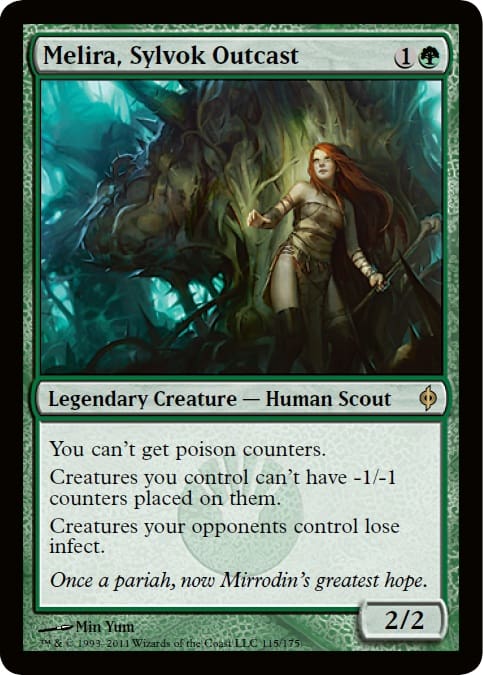
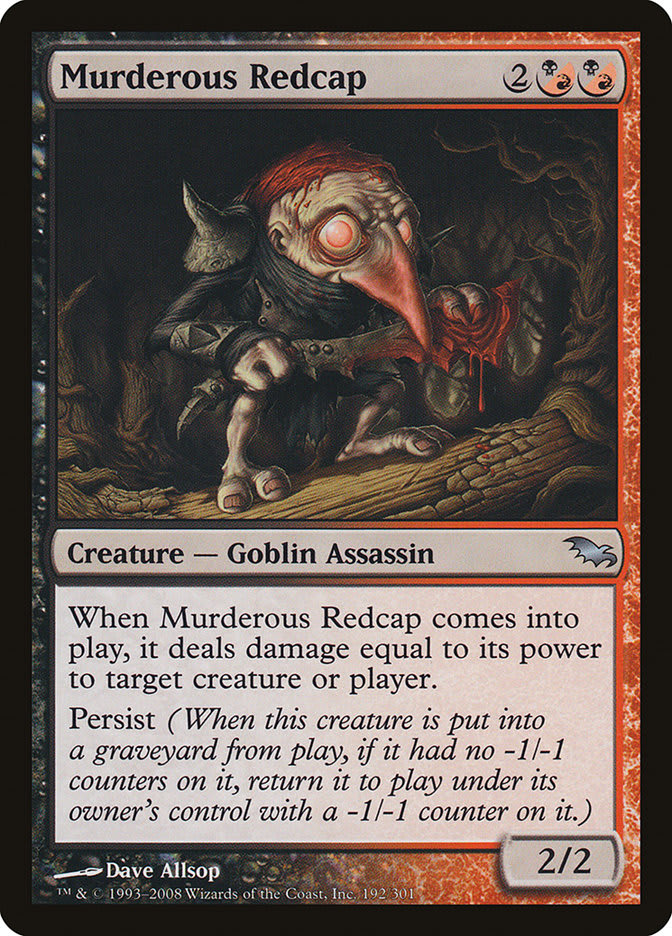
This particular variant won by utilizing Melira, Sylvok Outcast and a Persist Creature. Using a sacrifice outlet like Viscera Seer or Cartel Aristocrat, you would sacrifice the Persist Creature. When it enters again, you can't put the -1/-1 counter on it, so it lets you sacrifice it again and again, continuing to enter without the counter.
Doing this combo successfully can end in one of two ways. If you do this with a Kitchen Finks, you'll gain infinite life, which will keep you in the game long enough to win via other means. The other option is Murderous Redcap, which deals damage allowing you to defeat your opponent easily if you can successfully establish the loop.
Seth Manfield - a two time World Champion following his 2025 victory - took the trophy for the event on the back of this powerful deck.
Izzet Kiki-Twin
 |  |  |
Izzet Kiki-Twin | Modern | Robert Berni, 3rd Place GP Kansas City 2013
- Creatures (12)
- 2 Kiki-Jiki, Mirror Breaker
- 2 Spellskite
- 4 Deceiver Exarch
- 4 Pestermite
- Sorceries (10)
- 2 Flame Slash
- 4 Serum Visions
- 4 Sleight of Hand
- Enchantments (4)
- 4 Splinter Twin
- Lands (23)
- 1 Mountain
- 3 Island
- 1 Breeding Pool
- 1 Cascade Bluffs
- 2 Desolate Lighthouse
- 3 Steam Vents
- 4 Misty Rainforest
- 4 Scalding Tarn
- 4 Sulfur Falls
- Sideboard (15)
- 1 Counterflux
- 1 Negate
- 1 Vendilion Clique
- 2 Ancient Grudge
- 2 Combust
- 2 Mizzium Skin
- 3 Blood Moon
- 3 Slagstorm
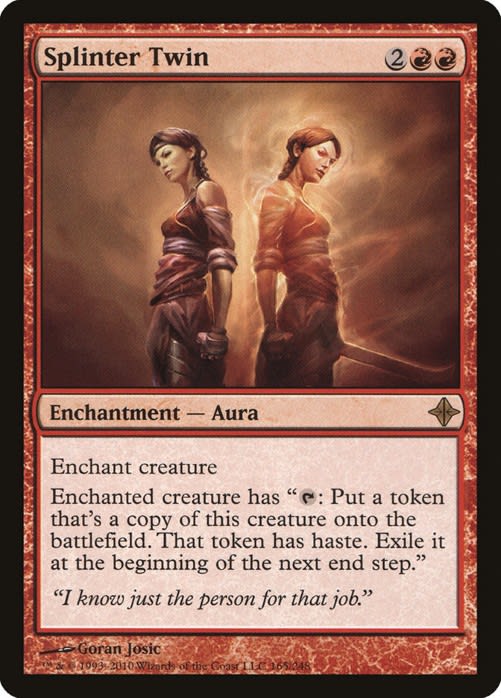
Splinter Twin was finally unbanned in Modern in December 2024 to great fanfare. The powerful Aura was banned in January 2016 and players have clamored for it back ever since.
Now that the card is back, you'd be forgiven if you're left wondering what all the hoopla was about. After all, Splinter Twin - and its namesake deck - haven't done very much in the tournament scene since the unbanning.
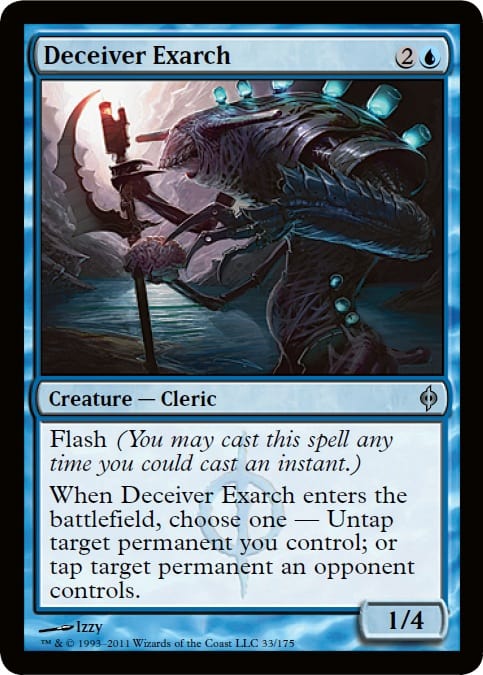
At the time, though, it was a genuine force to be reckoned with and this is a great example of why. Putting a Splinter Twin onto Pestermite or Deceiver Exarch would be enough to combo kill your opponent as you set it up with a variety of Tempo spells. Even if you couldn't make Splinter Twin work, sometimes a well-timed Kiki-Jiki, Mirror Breaker or just attacking normally was good enough to get the job done.
Two copies of the deck made Top 8 and two more made the Top 16 - a remarkable showing in what should be a fairly diverse format.
Jeskai Control
 |  |  |
Jeskai Control | Modern | Brandon Nelson, 5th Place GP Kansas City 2013
- Creatures (3)
- 3 Snapcaster Mage
- Planeswalkers (2)
- 1 Ajani Vengeant
- 1 Gideon Jura
- Instants (26)
- 1 Shadow of Doubt
- 2 Lightning Helix
- 2 Path to Exile
- 2 Sphinx's Revelation
- 2 Think Twice
- 3 Lightning Bolt
- 3 Mana Leak
- 3 Spell Snare
- 4 Cryptic Command
- 4 Electrolyze
- Sorceries (3)
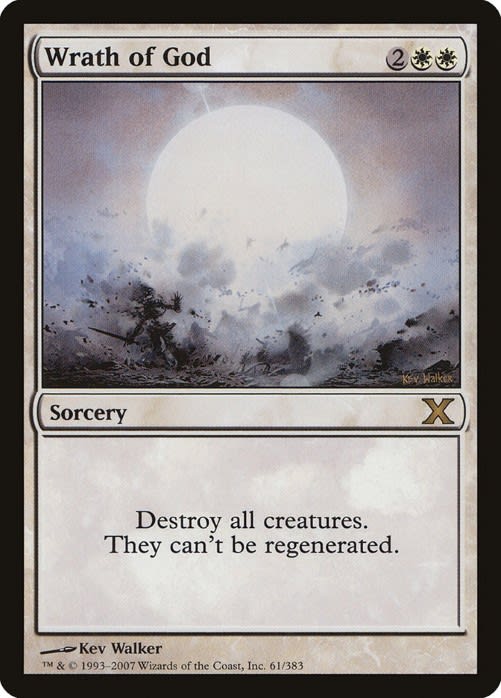
- 1 Wrath of God
- 2 Supreme Verdict
- Lands (26)
- 1 Mountain
- 1 Plains
- 3 Island
- 1 Glacial Fortress
- 1 Sacred Foundry
- 1 Steam Vents
- 2 Hallowed Fountain
- 3 Arid Mesa
- 3 Scalding Tarn
- 3 Sulfur Falls
- 3 Tectonic Edge
- 4 Celestial Colonnade
- Sideboard (15)
- 1 Magma Spray
- 1 Surgical Extraction
- 1 Wear // Tear
- 2 Celestial Purge
- 2 Counterflux
- 2 Relic of Progenitus
- 2 Sowing Salt
- 2 Spellskite
- 2 Stony Silence
Last but not least, this classic take on Control from the era. Long before we had powerful cards like Solitude, White-Blue Planeswalker Teferis, and The Wandering Emperor, this is what the decks would look like.
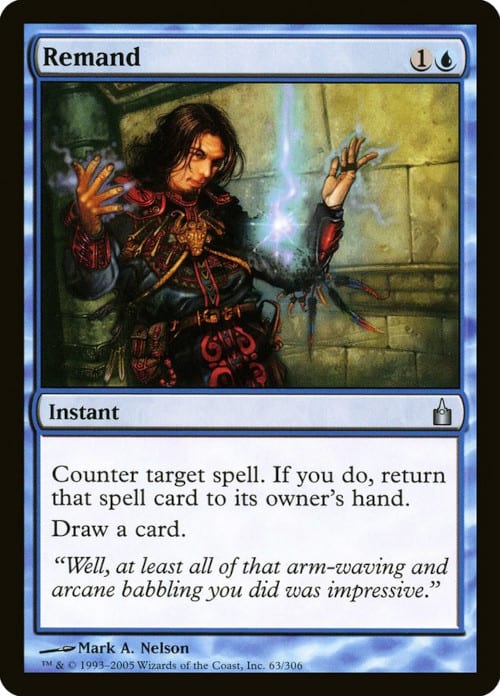
You'd simply fill your deck with as much removal and counter magic as you possibly could. From there, you'd use Snapcaster Mage to reuse these spells and start attacking for damage. Once you opened your window enough, you'd really start to close things out with a Celestial Colonnade, Ajani Vengeant, or Gideon Jura.
It's not that different from what a Control deck might look like today, but the card quality is starkly lower. Nevertheless, it's the kind of deck that will give many long-time Modern players a lot of joy to look back on.
Weird Facts
Normally in these articles, I'd like to reserve this space to speak on interesting tidbits about the set. While there aren't too many aspects of the set that are worth mentioning, there was one thing I stumbled onto recently as I was stumbling through my BlueSky feed.
Grand Prix Las Vegas 2013
Grand Prix Las Vegas 2013 was a monumental event using Modern Masters as the set of the event. With 4,499 players, the event was far and away the largest Magic tournament of its time. Neal Oliver would go on to win the entire event.
Typically, high-level events like this will feature stamped cards in their drafts to help curb cheating attempts. Given how the event was unprecedentedly large, though, there weren't nearly enough stamped cards. This led to about half of the cards having the letters "LV" scribbled across them with marker.
To better accompany the follow-up Grand Prix for Modern Masters 2015, the event would instead feature two separate Limited events. Each of these saw well over 3500 players with 3687 players for the first event and 3864 players for the second.
Additional Tidbits
Here are a few other small factoids about Modern Masters that are more bite-sized elements compared to other aspects covered in this article.
The set includes no cards that were on the banned list as the set was released. Additionally, no cards that were being considered for banning were included either.
Modern Masters was one of the first major releases to feature a large number of rarity shifts. This would become a staple of Masters releases going forward due to how they impact the sets' special Limited environment as well as formats like Pauper and Peasant/Artisan.
Here is the breakdown of those rarity shifts:
- Common to Uncommon: 9 cards.
- Uncommon to Common: 16 cards.
- Uncommon to Rare: 2 cards..
- Rare to Uncommon: 9 cards.
- Rare to Mythic: 12 cards.
Of the cards downshifted to Common, these three have made an impact in the Pauper format over the years:
Many of the tokens in the set were first time token printings. This was because they were associated with cards that were originally released in sets that did not have token cards in their Booster Packs.
Conclusion
The original Modern Masters was a bold experiment that paid off in spades. The set was a smash hit the likes of which had never been seen before and would spawn numerous releases going forward.
Not only would there be more Modern Masters sets as time went on, but it would lead to other Masters releases and special Draft Innovation sets like Conspiracy. Even sets like Modern Horizons can in some way trace their lineage back to Modern Masters.
If you ever get a chance to draft it, I highly recommend doing so. If you can't, you can at least be thankful that it kicked off an initiative that would seek to ensure players receive regular reprints of essential cards. We wouldn't get the level of awesome reprints and card accessibility we have today without it.
Paige Smith
Bluesky: https://bsky.app/profile/themaverickgirl.bsky.social
Twitch: twitch.tv/themaverickgirl
YouTube: TheMaverickGal