


 Locations



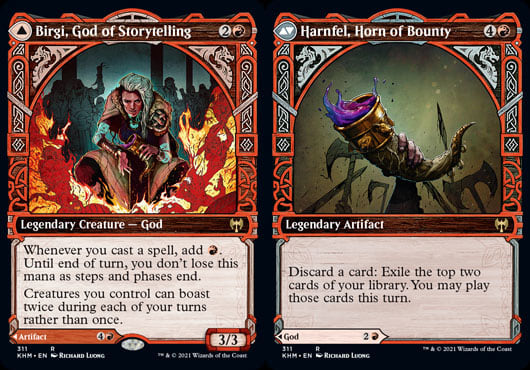
Whether you love Vikings, Norse mythology, or just find yourself out in the snow every year, oh boy, do I have the MTG set for you!
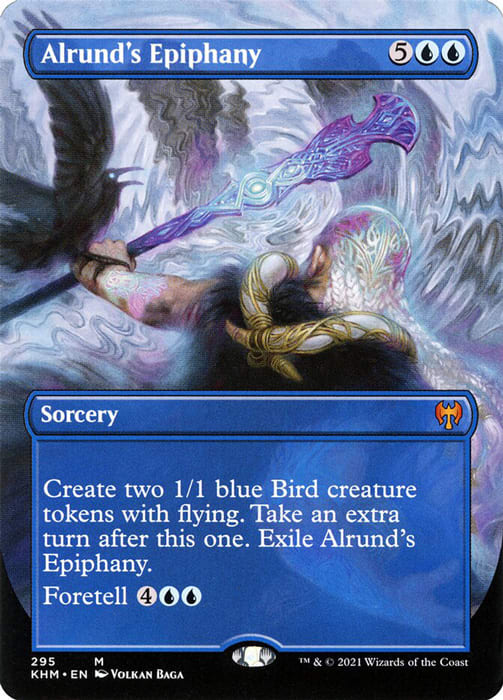
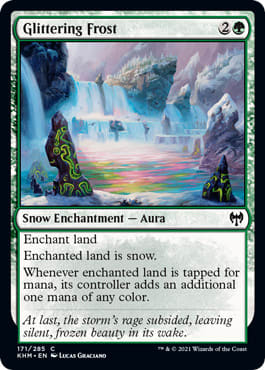
Even a few years on, Kaldheim remains one of the best examples of mechanics and flavor reinforcing each other at every level. The Foretell mechanic gave us a strange sense of "throwing down a face-down" as if we were playing old-school Yu-Gi-Oh!. Then there was Vorinclex, Monstrous Raider, just showing up out of nowhere, hinting at something much bigger in the multiverse. And then, of course, there was the return of snow Lands in Magic.
 |  |  |
For newer players, these lands probably feel like a normal part of the game but, that wasn't always the case. For a long time, if someone showed up to FNM with snow Lands, it was like we were being graced by the presence of a legend. And, if those snow Lands happened to be foil - like, I can't even!
Today, though, I'm happy to report that snow Lands are no longer relics of Magic history. They are a real deck-building option, a flavorful aesthetic choice in multiple formats, and can even offer a strategic edge in some games.
So, that said, let's get into snow Lands: what they are, how they differ from regular basics, whether they matter in gameplay, and why you might want to snag a few playsets (they're gorgeous, if nothing else).
Grab your trusty Goldvein Pick and let's break down everything you need to know about MTG snow Lands.
What is a snow Land?
The snow Lands MTG players most often think of are probably the five snow basic lands:
- Snow-Covered Forest
- Snow-Covered Island
- Snow-Covered Mountain
- Snow-Covered Plains
- Snow-Covered Swamp
 |  | 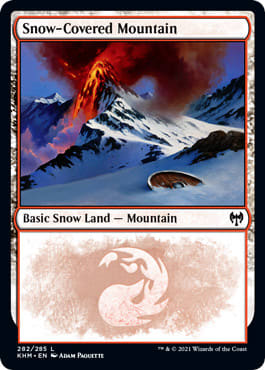 | 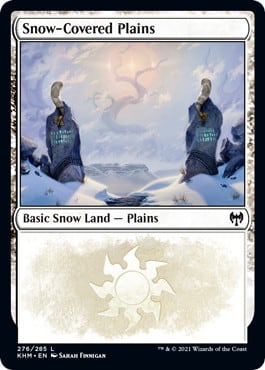 |  |
These basic snow Lands work just like the typical basic Lands in most situations. Your Snow-Covered Mountain still taps for  . Your Snow-Covered Plains still taps for
  . They are also still basic Lands, which means you can run as many of them as your format allows, grab them with Cultivate effects, and generally treat them like normal mana sources.
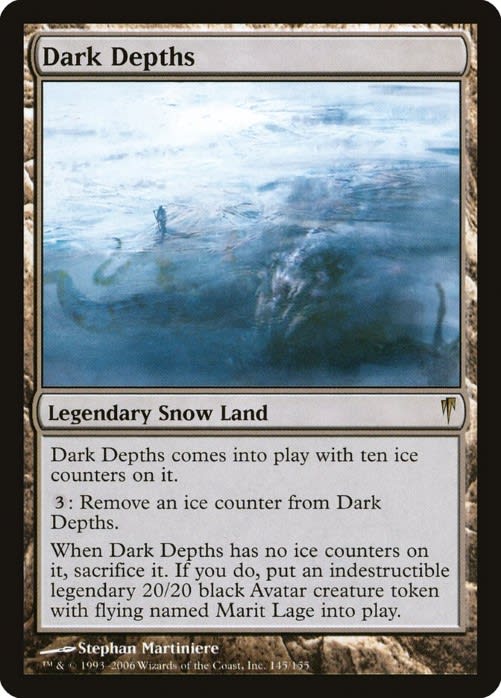
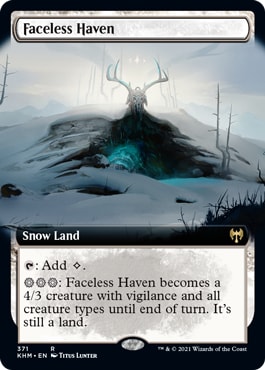
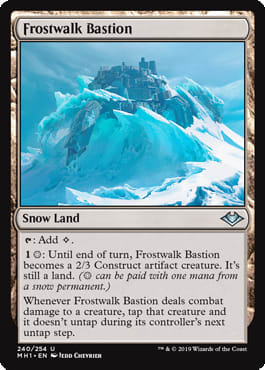
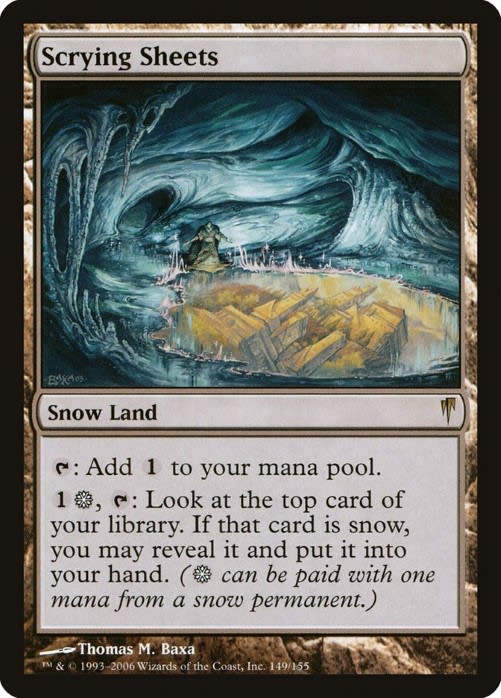
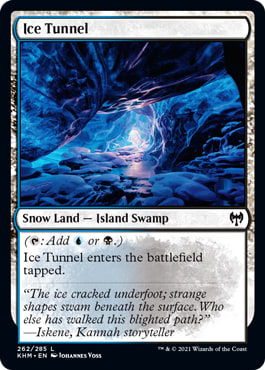
But snow basics are only part of the story. There are also plenty of non-basic snow Lands.
 |  |  |
 |  |  |
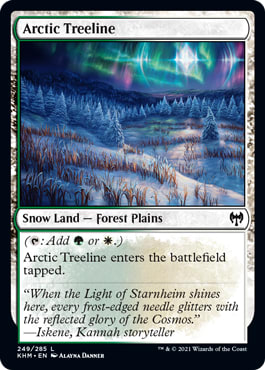
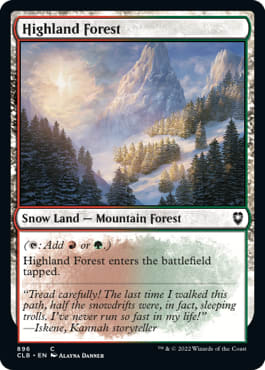
Oh, and if you want to use your fancy fetch Lands to grab some snow dual Lands, Kaldheim's got you covered there as well.
 |  |  |  |  |
You really do have the free reign when it comes to snow Lands. But, at this point, you may be asking yourself, "So, what makes snow lands any different from just regular lands?"
Regular Lands can't produce snow mana.
What is snow mana in MTG?
Simply put, snow mana is mana produced by a snow permanent.
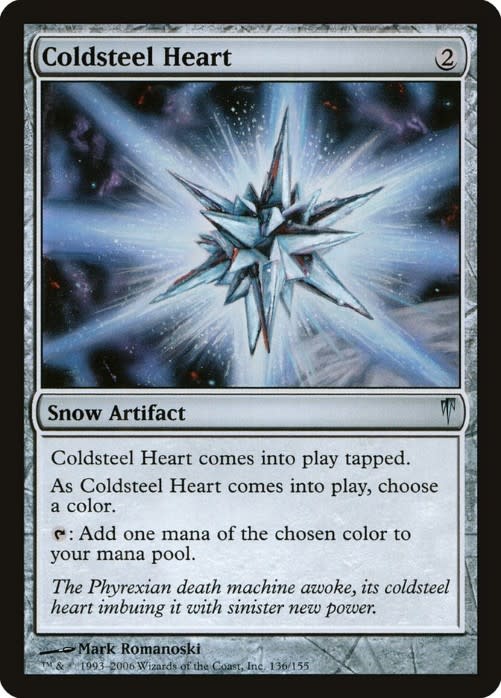
If a card asks for snow mana, it usually shows the snow symbol, which is a whimsical little snowflake. The snow symbol dictates that you must spend mana produced by a snow source to cast the card or activate that ability. On that note, the color of snow mana does not matter unless the cost also specifies an additional colored requirement.

For example, let's take a quick look at Diamond Faerie and its activated ability, which requires one generic mana and one snow mana. Considering how it's a Bant creature in a presumably snow deck, you should be able to comfortably pay for its activated ability's snow cost with any combination of the Snow-Covered Forests, Snow-Covered Islands, and/or Snow-Covered Plains that you used to cast it.
Now, if you somehow cast Diamond Faerie using only regular basic Lands and mana rocks, you could still get it onto the battlefield, but you'll likely find it quite difficult to activate its ability.
Regular basic Lands do not produce snow mana, and, similarly, most mana rocks can't either unless they specifically have the snow supertype. So even if you have infinite mana at your disposal, none of it can be used to give all the snow creatures you control that much needed +1/+1 boost.
As you can see from this niche example, snow Lands are the only reliable way to enable snow mana in MTG. Without them, many snow cards may simply not work as intended.

Have you ever had an Icehide Golem in your opening hand with only utility non-snow Lands available? 'Cause I certainly have.
Why play snow Lands?
Like most players, I agree that there are only really two legitimate reasons to be rocking snow Lands: strategy and style.
Snow-Matters Strategy & Synergy
The most obvious reason to use snow Lands is to support all the cards that care about snow.
 |  |
 |  | 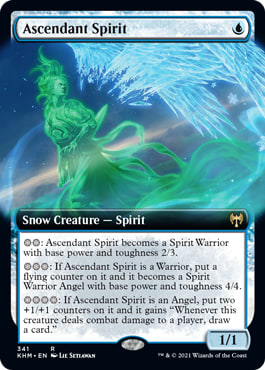 |
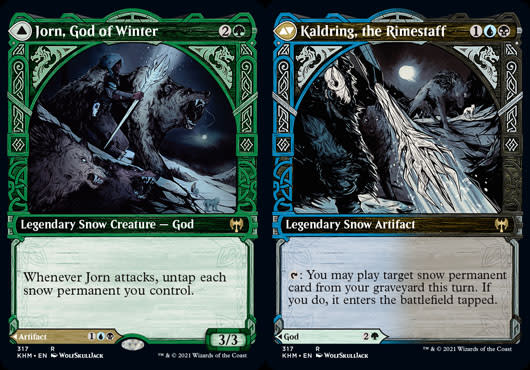
Just from reading these cards, it's clear that they become significantly better when you're running snow:
- On Thin Ice: Not a particularly strong start here since it requires a snow Land to enchant, but a 1 mana exile effect is still far and few in between.
- Jorn, God of Winter: Jorn doesn't specify just Lands with its triggered ability. Untap your snow Lands. Untap your snow Creatures, and your Icy Manaliths from Svella, Ice Shaper. Untap them all!
- Blood on the Snow: If you used six Snow-Covered Swamps to cast this board wipe, then you get one Creature back with converted mana cost of six or less back for free.
- Frost Bite: This was practically a Lightning Bolt back in Standard.
- Ascendant Spirit: The missing piece of the puzzle for Spirits' tribal back in the day. If you were thinking about playing Spirits back then but didn't have Snow-Covered Islands yet, you can bet an order for 24 of them was placed that same day.
Oh, and snow cards like Skred. We can't forget about Skred.

May I present to you:  mana deal ten?
Land Stylin'
Okay, so snow lands look absolutely stunning.
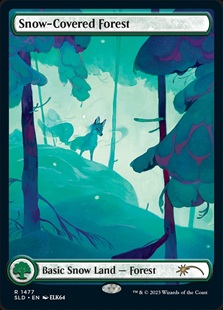 | 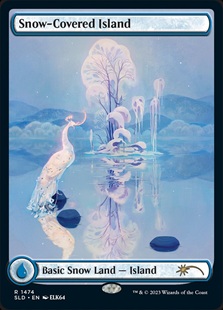 | 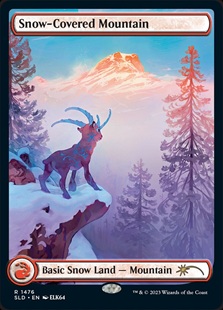 | 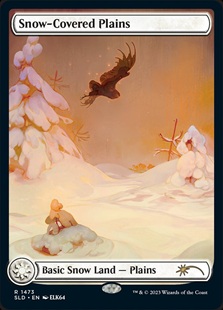 | 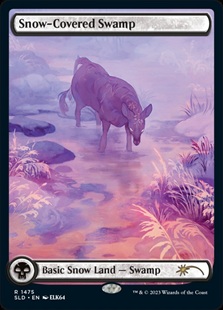 |
I understand that Magic is first and foremost a strategy game, but it is also a personal one. The Lands you choose to slot in say something about your deck and often something about your taste. Some players want the old-border basics. Some want all matching full-art Lands. And some may even want all white-border Lands, but we don't really talk to those people.
So, regardless of whether you have any snow cards in your deck, I'm here to assure you that there's absolutely nothing wrong with choosing snow Lands. Because, at the end of the day, if they happen to make your deck feel more like yours, then, go for it. In fact, I highly recommend it.
FAQ: MTG Snow Lands
A twist on a familiar thing, like Lands, can be a little strange at first since it looks simple on the surface; but snow mana has a few unique rules and nuances once you start digging into it. So, before we wrap things up completely, let's run through some of the most common player questions.
Can snow Lands be used as regular Lands?
Yes. In normal gameplay, snow Lands work just like regular ones unless a card specifically cares about the snow supertype. A Snow-Covered Forest still taps for  , a Snow-Covered Island still taps for
  , and so on. In terms of gameplay, the only real benefit of using snow over regular is that snow Lands produce snow mana when a card or ability asks for it.
How do snow Lands work?
Snow Lands work by having the snow supertype. That supertype does not automatically grant them an ability beyond what is printed on the card, but it matters because other cards reference it from time to time. Snow basics tap for the same colors as their normal basic Land counterparts, while snow non-basics can provide you with multiple colors and/or utility abilities.
Why are snow Lands good in MTG?
Snow Lands are considered good because they often come with very little opportunity cost. A Snow-Covered Mountain typically plays just like a normal Mountain, but it also enables cards that care about snow mana or the number of snow permanents you control. This often means snow Lands could hypothetically open additional niche synergies, all without thinning out your mana base in any way.
Are snow Lands Standard legal?
Not in 2026, unfortunately. Standard legality depends on whether a currently Standard-legal set includes those snow lands. And with Kaldheim rotated and snow Lands not having been reprinted since then, we may be in it for the long haul until we get to play with our foil playsets of them in Standard.
Do you need snow Lands to cast snow Creatures?
Not always. A snow Creature can be cast with ordinary mana unless its mana cost specifically includes the snow symbol. What snow lands really matter for is paying snow mana costs. So, you might be able to cast a snow Creature with regular basics, mana rocks, or Treasure, but if that Creature has an activated ability or additional cost that requires snow, then you will need a snow permanent producing that mana.
How many snow Lands can you have in Commander?
In Commander, you are welcome to run as many basic snow Lands as you want, just like with regular basic Lands, as long as they fit your Commander's color identity. So, a mono-Green Commander deck can play any number of Snow-Covered Forests, and a colorless deck can play any number of Snow-Covered Wastes. Non-basic snow Lands still follow the normal singleton rule, though, so you will only get to play one copy of each of those.
Can you use snow Lands in Draft?
Yes, but with a caveat. In Limited, you generally cannot just pull snow-covered Lands from your binder or a nearby station unless the event specifically allows it. Naturally, if the set(s) happen to include snow Lands, you're more than welcome to use them from your packs.
How expensive are basic snow Lands?
Today, most basic snow Lands are not especially expensive, thanks to Kaldheim reprinting them. You'll find that basic snow Lands are still usually a little pricier than bulk regular basics because they have slightly more utility and often have more desirable arts, but they are still among the cheaper upgrades you can make to a deck.
Are snow Lands two card types?
No, snow Lands are not two card types. So, let's take a quick look at a Snow-Covered Forest, which is a Basic Snow Land - Forest. "Basic" and "Snow" are the card's supertypes, while "Land" is its actual type.
What is the disadvantage of snow Lands?
To be honest, the biggest disadvantage of snow Lands is that they can randomly expose you to narrow snow hate cards that punish snow permanents or snow mana. While these cards are not particularly common in any format, they do certainly exist.
 |  |
 |  |  |
The other downside is more on the practical side of things: snow Lands are only legal in formats where their printings are legal, and some players may prefer not to use them if they want to avoid giving away information, relying on niche synergies, or paying a bit more than they would for ordinary basics.
Conclusion
At the end of the day, snow Lands in Magic: The Gathering are just another one of those little design wins that manage to be flavorful, functional, and just plain cool all at once.
On the surface, they may not look all that different from your regular Lands. But really, snow Lands are way more than just frosty alternate basics. Not only do they enable snow mana, but they can also give certain decks, along with their players, a unique identity that regular basics simply can't replicate.
And honestly, I think that's why so many players still gravitate toward throwing down all that snow. Sometimes you play them because you're playing mono-Red and need a Skred or four to deal with a Ferrafor, Young Yew's Big Stompy strategy.
Sometimes you play them because they give you access to cool snow-matters Commanders like Isu the Abominable. Sometimes you play them because they just look incredible spread across the battlefield. And all three are totally valid.
So, should you play snow Lands? If your deck wants/needs snow mana, absolutely. If you love the aesthetic, yes, please go for it. Or if you've been waiting for an excuse to finally blinging out your mana base with those gorgeous Secret Lair snow basic lands, consider this your sign.



